Loading...
Al-Amin vs Dantidurga
Dantidurga leads by 18.8 pts · 2 figures compared
…

Al-Amin
Emperor · Medieval
39.9Total
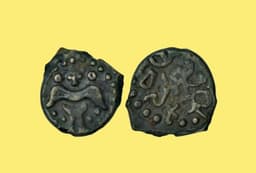
Dantidurga
Emperor · Medieval
58.7Total
Basic Information
Born
787
735
Died
813
756
Era
Medieval
Medieval
Nationality
Abbasid Caliphate
India
Occupation
Emperor
Emperor
Civilization
Middle Eastern
Indian
Score Comparison
Military (10%)
50.0
67.5
Political (20%)
30.7
68.0
Influence (20%)
47.9
56.4
Legacy (20%)
38.3
50.0
Leadership (15%)
33.6
65.7
Strategy (15%)
36.8
52.5
TOTAL
39.9
58.7
Al-Amin — Complete Timeline
811 AD
Fourth Fitna (Civil War)War
Al-Amin's reign was dominated by the Fourth Fitna, a civil war against his brother al-Mamun. The conflict began when al-Amin tried to remove al-Mamun from succession, leading to a devastating war that weakened the Abbasid Caliphate.
Impact: regionaldestructive
812 AD
Siege of BaghdadWar◆ Major
Al-Mamun's forces, led by Tahir ibn Husayn, besieged Baghdad in 812-813. The siege lasted over a year, causing widespread destruction and famine. Al-Amin was captured and executed in 813, ending his caliphate.
Impact: regionaltragic
813 AD
Execution of Al-AminPolitical Action◆ Major
After the fall of Baghdad, al-Amin was captured by Tahir's forces. He was executed on al-Mamun's orders, marking the end of the civil war and the beginning of al-Mamun's sole rule.
Impact: nationaltragic
Dantidurga — Complete Timeline
753 AD
Founding of the Rashtrakuta DynastyPolitical Action
Dantidurga overthrew his overlord, the Chalukya king Kirtivarman II, in a coup. He established the Rashtrakuta dynasty as the dominant power in the Deccan, with Manyakheta as his capital. This marked the beginning of a new imperial era.
Impact: regionalconstructive
754 AD
Performance of the Hiranyagarbha RitualCultural
Dantidurga performed the Hiranyagarbha (golden womb) ritual, a Vedic ceremony that symbolically rebirthed him as a Kshatriya. This legitimized his rule by claiming a higher caste status, as the Rashtrakutas were originally of humble origin.
Impact: nationalconstructive
755 AD
Conquest of MalwaWar◆ Major
Dantidurga led a military campaign into Malwa, defeating the Gurjara-Pratihara ruler Nagabhata I. He annexed the region, expanding Rashtrakuta territory northward. This victory established Rashtrakuta influence in central India.
Impact: regionaldestructive
Expert Analysis
Al-Amin vs Dantidurga
### The Caliph and the Kingmaker: Two Paths to Power in a Fractured World
In the year 813, the city of Baghdad, the jewel of the Abbasid Caliphate, was a city undone. Its streets, once lined with the poetry of scholars and the hum of commerce, now ran with the blood of its defenders. A year-long siege had shattered its walls and its spirit. Inside, the Caliph al-Amin, a man who had inherited the richest throne on earth, was dragged from a boat where he had tried to flee. Within hours, he was dead, executed on the orders of his own brother. Across the world, just over half a century earlier, another scene was unfolding. In the rocky Deccan plateau of India, a chieftain named Dantidurga had not inherited a throne—he had seized one. After a swift and decisive coup against his Chalukya overlord, he performed an ancient Vedic ritual, the Hiranyagarbha, a "golden womb" ceremony that symbolically rebirthed him as a king. Where one man lost everything because he could not hold what was given, the other created everything from nothing. Why did their fates diverge so completely? The answer lies not just in their skills, but in the very nature of the worlds they tried to rule.
### Origins: The Heir and the Upstart
Al-Amin was born in 787 into the very heart of power. He was the son of Harun al-Rashid, the legendary Abbasid caliph of *One Thousand and One Nights* fame, and his childhood was one of silk, ceremony, and certainty. His world was a vast, centralized empire stretching from North Africa to Central Asia, a machine of bureaucracy and military might. He was groomed to inherit it all, but he was not alone. His half-brother, al-Mamun, was equally ambitious and equally capable. Harun, in a fateful decision, divided the empire between them in his will, planting the seeds of a fratricidal war.
Dantidurga, born in 735, came from a different world entirely. The Deccan was a land of shifting alliances, petty kingdoms, and ambitious clans. The Rashtrakutas were not emperors; they were vassals, serving the powerful Chalukya dynasty. Dantidurga was a feudatory, a local strongman in a patchwork of powers. His origin was not one of divine right but of raw ambition. He had no palace to inherit, only a sword to wield. His world demanded that a man prove his worth, not claim it by blood. This fundamental difference—the heir versus the upstart—shaped their entire approach to power.
### Rise to Power: The Throne and the Coup
Al-Amin’s rise was a formality. When Harun al-Rashid died in 809, al-Amin became caliph in Baghdad, inheriting the western half of the empire. His brother, al-Mamun, ruled the eastern provinces from Merv. The path was laid before him, but it was a path paved with traps. His rise was not a conquest but a coronation, and he lacked the wisdom to see that a throne is not a fortress; it is a target.
Dantidurga’s rise was a calculated gamble. In 753, he saw his moment. The Chalukya king Kirtivarman II was weak, and the old loyalties were fraying. Dantidurga did not wait for a noble cause or a legal pretext. He launched a coup, overthrowing his overlord in a single, decisive stroke. He did not inherit an empire; he created a dynasty, the Rashtrakutas, in its place. It was a raw, pragmatic act of will. He understood the first law of power in a fractured world: you cannot wait for permission to take what you can hold.
### Leadership & Governance: The Reckless and the Ritualist
As caliph, al-Amin proved disastrous. His leadership score of 32.0 reflects a man ill-suited for command. He was arrogant, impulsive, and surrounded by sycophants. When al-Mamun refused to recognize his supremacy, al-Amin declared war, igniting the Fourth Fitna in 811. He sent an army east, but it was crushed by al-Mamun’s brilliant general, Tahir ibn Husayn. Instead of negotiating or consolidating, al-Amin doubled down, retreating to Baghdad and hoping its walls would save him. He governed through fear and favor, not wisdom. His political score of 35.7 reveals a man who could not build alliances, only enemies.
Dantidurga was different. His leadership score of 42.4 and political score of 52.3 show a man who understood that power must be legitimized. After his coup, he did not simply rule by the sword. He performed the Hiranyagarbha ritual in 754, a profound act of political theater. By being symbolically "reborn" as a Kshatriya (warrior caste), he claimed a divine mandate for his new dynasty. He was not just a conqueror; he was a founder. He then proved his military genius with a campaign into Malwa in 755, defeating the powerful Gurjara-Pratihara ruler Nagabhata I. He annexed the region, expanding his realm through strategic conquest, not reckless war. He built a state, not a siege.
### Triumph & Tragedy: The Siege and the Golden Womb
Al-Amin’s greatest moment was also his worst. The Siege of Baghdad in 812-813 was his final stand. For over a year, his city held out against Tahir’s forces. The people starved, the walls crumbled, and the Caliph’s authority evaporated. His triumph was merely survival, and it was short-lived. When Baghdad fell in 813, he was captured and executed. His tragedy was not that he lost a war, but that he never understood that an empire is a living thing, not a possession. It must be nurtured, not hoarded.
Dantidurga’s triumph was the founding of the Rashtrakuta dynasty itself. The Hiranyagarbha ritual was his moment of glory—a cultural and political masterstroke that transformed a coup into a coronation. His tragedy was one of time. He died in 756, just three years after his greatest victory in Malwa. He built a foundation, but he would not see the palace rise. His empire would be completed by his successors, like his nephew Krishna I.
### Character & Destiny: The Fragile Prince and the Forged King
Al-Amin’s character was his undoing. He was a man of privilege who believed his birth made him invincible. He was indecisive in crisis, cruel in victory, and blind to reality. His personality was a mirror of his world: a decaying, over-centralized empire that could not adapt. His destiny was sealed not by his brother’s ambition, but by his own inability to lead.
Dantidurga’s character was forged in the crucible of the Deccan. He was a pragmatist, a gambler, and a builder. He knew that in a world of petty kingdoms, the only way to rise was to take risks and to sanctify those risks with ritual and law. His personality matched his era: a time of fluid borders and rising dynasties, where a man could carve a kingdom from chaos.
### Legacy: The Warning and the Foundation
Al-Amin’s legacy is a cautionary tale. He is remembered as the caliph who lost the Abbasid Empire, a symbol of how power without wisdom leads to ruin. His influence score of 60.5 is a ghost of what might have been, and his legacy score of 48.2 reflects a man erased by his own failure. His name survives only in the chronicles of the civil war he started.
Dantidurga’s legacy is a foundation. He is remembered as the founder of the Rashtrakuta dynasty, which would go on to become one of the great powers of medieval India. His influence score of 73.4 and legacy score of 65.8 are testaments to a man who built something that lasted. He is not a household name, but his dynasty would produce the magnificent Kailasa temple at Ellora and rule the Deccan for over two centuries.
### Conclusion: The Two Faces of Ambition
Standing at the end of their stories, we see two men who both wanted power, but who understood it in entirely different ways. Al-Amin saw power as a birthright, a golden cup to be drained. Dantidurga saw it as a weight to be carried, a structure to be built. Their fates were not accidents of luck but products of character and context. In the end, the heir who had everything lost it all, while the upstart who had nothing created a world. Their stories remind us that history is not written by those who inherit thrones, but by those who know how to keep them.
Rankings
🥇
DantidurgaLeader
Mil: 67.5Pol: 68.0Inf: 56.4
58.7
🥈
Al-Amin
Mil: 50.0Pol: 30.7Inf: 47.9
39.9
+18.8 behind
How This Comparison Works
Algorithm
Each figure is scored on 6 dimensions (0—100 scale) based on structured historical data: Military (10%), Political (20%), Influence (20%), Legacy (20%), Leadership (15%), Strategy (15%). The weighted total produces the final ranking.
Data Sources
Scores are computed from structured sub-indicators in the database. Scale factors adjust for era (Ancient ×0.85, Modern ×1.0) and civilization size (Eastern ×1.05, Other ×0.80) to account for differences in population and military scale.
Maximum 3 Figures
Comparisons are limited to 2—3 figures to ensure readability and statistical meaningfulness.
Error Margins
±5 points per dimension — Sub-scores are derived from historical records with inherent uncertainty. Two figures within 5 points on a dimension should be considered roughly equivalent in that area.
Total Score Accuracy
±3 points overall — The weighted combination of 6 dimensions produces a total score with approximately ±3 points of uncertainty. Differences of less than 3 points are not statistically significant— the figures are effectively tied.
Known Limitations
- Historical records are incomplete and uneven across civilizations
- Figures from oral-tradition societies may be underrepresented
- Occupation labels can misclassify multi-role figures
- Scores measure capability and impact, not moral character
- Quantitative scoring is a comparison tool, not absolute truth
Capability Radar
Military (10%) — Battles & Warfare
Battles
20
60
Win Rate
15
65
Expansion
5
65
Political (20%) — Governance & Reform
Reform
10
45
Diplomacy
10
55
Economy
15
50
Influence (20%) — Cultural & Global Reach
Cultural
15
40
Global
10
30
Legacy (20%) — Historical Impact
Historical
20
55
Longevity
10
50
Leadership (15%) — Power & Stability
Tenure
20
40
Stability
10
45
Strategy (15%) — Tactics & Innovation
Strategy
10
60
Tactics
15
55
Reform
5
40
Similar Comparisons
Comments & Discussion
CaliphCrusher6/16/2026
Al-Amin was a pampered product of palace intrigue, not a ruler. He spent the siege of Baghdad partying with poets while his brother Tahir’s troops tightened the noose. Compare that to Dantidurga, who personally led the coup against the Chalukyas and then performed the Hiranyagarbha ritual to legitimize his rule. One inherited silk robes, the other earned his crown through blood and strategy. History rewards the builder, not the trust fund baby.
数据侦探6/16/2026
这个比较故意拔高Dantidurga,但Al-Amin的失败主因是阿拔斯王朝的结构性危机,而非个人能力。他接手的是已经内斗分裂的帝国——哈伦·拉希德临终前将领土分给两个儿子,埋下内战种子。反观Dantidurga,破坏的是相对弱小的遮娄其王朝,规模根本不在一个量级。用局部政变对比帝国崩溃,纯属偷换参照系。
SanskritSmith6/16/2026
The Hiranyagarbha ritual wasn't just symbolic theater—it was a masterstroke of political theology. Dantidurga, a vassal with no kshatriya lineage, used the Vedic "golden womb" ceremony to claim rebirth as a legitimate king, bypassing caste restrictions entirely. Al-Amin had no such cultural toolkit; his legitimacy depended on Abbasid blood alone. When that bloodline fractured in civil war, he had no ideological backup. Dantidurga built his throne on ritual innovation; Al-Amin watched his crumble
历史老饕6/16/2026
Dantidurga最骚的操作是篡位后没急着改年号,而是先搞宗教仪式合法化。遮娄其王朝末代君主Vikramaditya II被夺权时,他甚至允许对方保留部分领地,这招软硬兼施比Al-Amin强太多。后者在巴格达围城战中居然想用金币收买敌军将领——结果塔希尔拿到钱后立刻翻脸。中印两位权谋家的高下,早在用人细节里注定了。
RevisionistFury6/16/2026
This whole narrative reeks of Western romanticism—framing Dantidurga as a "self-made" hero while painting Al-Amin as decadent. Read the copper plate inscriptions: Dantidurga's "coup" was actually a calculated power transfer with the Rashtrakutas already controlling key trade routes. He wasn't a lone upstart; he was the regional strongman everyone knew would take over. Al-Amin at least tried to hold a real empire together. Dantidurga just got lucky with geography—and historians love a good underd