Loading...
Al-Amin vs Alp Tigin
Alp Tigin leads by 10.6 pts · 2 figures compared
…

Al-Amin
Emperor · Medieval
39.9Total
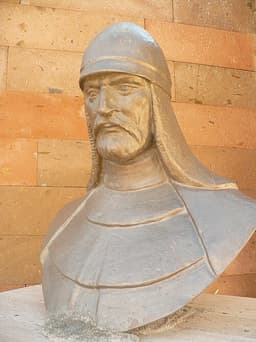
Alp Tigin
Emperor · Medieval
50.5Total
Basic Information
Born
787
911
Died
813
963
Era
Medieval
Medieval
Nationality
Abbasid Caliphate
Ghaznavid Empire
Occupation
Emperor
Emperor
Civilization
Middle Eastern
Middle Eastern
Score Comparison
Military (10%)
50.0
55.0
Political (20%)
30.7
33.6
Influence (20%)
47.9
56.4
Legacy (20%)
38.3
49.2
Leadership (15%)
33.6
50.7
Strategy (15%)
36.8
60.0
TOTAL
39.9
50.5
Al-Amin — Complete Timeline
811 AD
Fourth Fitna (Civil War)War
Al-Amin's reign was dominated by the Fourth Fitna, a civil war against his brother al-Mamun. The conflict began when al-Amin tried to remove al-Mamun from succession, leading to a devastating war that weakened the Abbasid Caliphate.
Impact: regionaldestructive
812 AD
Siege of BaghdadWar◆ Major
Al-Mamun's forces, led by Tahir ibn Husayn, besieged Baghdad in 812-813. The siege lasted over a year, causing widespread destruction and famine. Al-Amin was captured and executed in 813, ending his caliphate.
Impact: regionaltragic
813 AD
Execution of Al-AminPolitical Action◆ Major
After the fall of Baghdad, al-Amin was captured by Tahir's forces. He was executed on al-Mamun's orders, marking the end of the civil war and the beginning of al-Mamun's sole rule.
Impact: nationaltragic
Alp Tigin — Complete Timeline
961 AD
Rebellion against the SamanidsPolitical Action◆ Major
Alp Tigin rebelled against the Samanid ruler Mansur I after being passed over for a governorship. He marched from Nishapur to Ghazni, defeating Samanid forces along the way, and established his own rule in eastern Afghanistan.
Impact: regional
963 AD
Consolidation of GhazniPolitical Action
Alp Tigin fortified Ghazni and organized a military state based on slave soldiers (ghilman). He established a stable administration that attracted scholars and merchants, turning Ghazni into a major regional power center.
Impact: regionalconstructive
Expert Analysis
Alp Tigin vs Al-Amin
### The Slave Who Built a Kingdom and the Caliph Who Lost an Empire
On a dusty road in Khorasan in the year 961, a Turkic slave commander named Alp Tigin made a decision that would alter the map of the Islamic world. He had just been passed over for the governorship of Khurasan by the Samanid ruler Mansur I—a slight that stung all the more because he had served the dynasty loyally for decades. Instead of bowing in submission, Alp Tigin rebelled. He marched his army eastward, away from the heart of the Samanid realm, toward the remote fortress city of Ghazni. Two decades earlier and a thousand miles to the west, another man had faced a different kind of rejection. Al-Amin, the sixth Abbasid caliph, had inherited the most powerful throne in Islam from his father Harun al-Rashid. Yet within four years, he would be dead—executed on the orders of his own brother, his capital starved and shattered, his name a byword for ruin. Both men were rulers of the medieval Middle East. One founded a dynasty; the other destroyed one. The difference lay not in their circumstances, but in how they read the currents of their age.
**Origins**
Alp Tigin was born a slave. The exact details of his early life are lost, but he emerged as a *ghulam*—a military slave—in the service of the Samanid Empire, which ruled much of Central Asia and Persia. In the tenth century, the slave markets of the steppes produced some of the finest soldiers in the world: Turkic boys raised in the saddle, trained in archery and discipline, and utterly dependent on their masters. For such men, loyalty was a currency, and ambition a secret vice. Alp Tigin rose through the ranks not by birth but by merit, becoming a commander of the Samanid army and eventually the de facto power behind the throne. He was a man of the frontier, hardened by war and familiar with the precariousness of power.
Al-Amin, by contrast, was born into the purple. His father, Harun al-Rashid, was the most famous caliph of the Abbasid dynasty, the ruler celebrated in *The Thousand and One Nights*. Al-Amin’s mother was a princess of the Abbasid line, making him a pure-blooded Hashimite. His brother and rival, al-Mamun, was the son of a Persian slave concubine. This difference in maternal lineage would prove catastrophic. Al-Amin was raised in the palaces of Baghdad, surrounded by eunuchs and poets, taught that his right to rule was absolute and divinely ordained. He inherited a world of silk and gold, but also one of simmering tensions between Arab and Persian factions, between the caliph’s court and the provincial governors who paid only nominal allegiance.
**Rise to Power**
Alp Tigin’s path to power was forged in rebellion. After being denied the governorship of Khurasan in 961, he did not seek reconciliation. He understood that in the Samanid system, a disgraced commander was a dead commander. So he led his followers—a core of loyal Turkic slave soldiers—on a desperate march eastward. They seized the fortress city of Ghazni, in what is now eastern Afghanistan, and established a base. The Samanids sent armies to dislodge him, but Alp Tigin held. He fortified the city, organized a military state built entirely around his *ghilman*—his personal slave army—and waited. Within two years, by 963, he had transformed a rebellious outpost into the nucleus of a new dynasty. He did not claim the title of sultan or king; he simply ruled, and his successors would turn Ghazni into the capital of an empire stretching from the Caspian to the Indus.
Al-Amin’s rise was smoother and swifter. He became caliph in 809 upon his father’s death, as per Harun’s arrangement: al-Amin would rule in Baghdad, while al-Mamun governed the eastern provinces from Merv. But this division was a recipe for war. Al-Amin, surrounded by courtiers who whispered that his half-brother was plotting rebellion, made the first move. In 811, he tried to strip al-Mamun of his governorship and sent an army east. The Fourth Fitna—the great civil war of the Abbasid Caliphate—had begun. Al-Amin had all the advantages of legitimacy, wealth, and the imperial capital. He squandered them all.
**Leadership & Governance**
Alp Tigin governed as a soldier-king. His state was lean, disciplined, and pragmatic. He relied on his *ghilman* not just as soldiers but as administrators, creating a system where loyalty was rewarded and competence was paramount. There were no elaborate court rituals, no philosophical debates about the nature of rule. He taxed trade routes, maintained a standing army, and kept his subjects fed. His greatest political wisdom lay in knowing his limits: he did not try to conquer the Samanid heartland or claim the caliphate. He built a small, defensible kingdom that could grow organically. His leadership score of 47.0 reflects a man who was competent rather than dazzling—but competence, in a world of chaos, is a rare gift.
Al-Amin, by contrast, governed through indolence and arrogance. His political score of 35.7 and military score of 11.4 tell the story. He neglected the army, alienated the Persian bureaucracy, and surrounded himself with sycophants. When the crisis came, he could not raise effective forces. His brother’s general, Tahir ibn Husayn, marched on Baghdad with a well-disciplined army of easterners, Persians and Khurasanians who had little love for the Arab caliph. Al-Amin’s response was to alternate between bluster and despair. He issued grand proclamations, then failed to provision the city. He trusted no one, and no one trusted him.
**Triumph & Tragedy**
Alp Tigin’s triumph was the founding of the Ghaznavid dynasty. He did not live to see its greatest glories—that would come under Mahmud of Ghazni, who invaded India seventeen times and turned the dynasty into a major power—but he laid the foundation. His tragedy was that he died in 963, only two years after consolidating Ghazni. He left behind a state that was stable but fragile, dependent on the loyalty of his slave soldiers. Yet his legacy endured: the Ghaznavids would rule for nearly two centuries.
Al-Amin’s tragedy was total and swift. The siege of Baghdad in 812-813 was one of the most devastating in Islamic history. The canals were cut, the markets burned, the population starved. When the city finally fell, al-Amin was captured while trying to flee by boat. He was executed—some accounts say beheaded, others say he was killed in his cell—on the orders of his brother. He died at twenty-six, his name forever linked with civil war and collapse. His greatest moment was his birth; his worst was everything that followed.
**Character & Destiny**
Alp Tigin’s character was shaped by the slave market. He knew that power was not a right but a responsibility, and that trust had to be earned. He was cautious, calculating, and resilient. He did not dream of glory; he dreamed of survival. And in surviving, he achieved more than many conquerors.
Al-Amin’s character was shaped by the palace. He believed that his blood made him invincible. He was impulsive, vain, and incapable of listening to advice. When his brother’s armies approached, he could not adapt. His destiny was to be a warning: that the most dangerous thing a ruler can inherit is a throne he does not deserve.
**Legacy**
Alp Tigin is remembered as a founder. The Ghaznavid dynasty he established became a bridge between the Turkic steppe and the Persian court, blending military discipline with administrative sophistication. His name appears in the chronicles of Central Asia as a man who turned defeat into opportunity.
Al-Amin is remembered as a failure. His name is synonymous with the Fourth Fitna, the civil war that permanently weakened the Abbasid Caliphate. After his death, the caliphs never fully recovered their authority. The provinces drifted away, and the golden age of Baghdad began its slow decline. He is a footnote, a cautionary tale, a name on a list of those who could not hold what they were given.
**Conclusion**
In the end, the difference between Alp Tigin and Al-Amin is not a matter of talent or luck, but of understanding. Alp Tigin knew that power was a tool, not a birthright. He built from nothing and left something. Al-Amin believed that power was an inheritance, and he treated it as a toy. He lost everything and left nothing. The slave who became a king and the king who became a corpse: both were men of their time, but only one learned the lesson that the medieval world—and every world—teaches: that rule is not about who you are, but what you do.
Rankings
🥇
Alp TiginLeader
Mil: 55.0Pol: 33.6Inf: 56.4
50.5
🥈
Al-Amin
Mil: 50.0Pol: 30.7Inf: 47.9
39.9
+10.6 behind
How This Comparison Works
Algorithm
Each figure is scored on 6 dimensions (0—100 scale) based on structured historical data: Military (10%), Political (20%), Influence (20%), Legacy (20%), Leadership (15%), Strategy (15%). The weighted total produces the final ranking.
Data Sources
Scores are computed from structured sub-indicators in the database. Scale factors adjust for era (Ancient ×0.85, Modern ×1.0) and civilization size (Eastern ×1.05, Other ×0.80) to account for differences in population and military scale.
Maximum 3 Figures
Comparisons are limited to 2—3 figures to ensure readability and statistical meaningfulness.
Error Margins
±5 points per dimension — Sub-scores are derived from historical records with inherent uncertainty. Two figures within 5 points on a dimension should be considered roughly equivalent in that area.
Total Score Accuracy
±3 points overall — The weighted combination of 6 dimensions produces a total score with approximately ±3 points of uncertainty. Differences of less than 3 points are not statistically significant— the figures are effectively tied.
Known Limitations
- Historical records are incomplete and uneven across civilizations
- Figures from oral-tradition societies may be underrepresented
- Occupation labels can misclassify multi-role figures
- Scores measure capability and impact, not moral character
- Quantitative scoring is a comparison tool, not absolute truth
Capability Radar
Military (10%) — Battles & Warfare
Battles
20
45
Win Rate
15
50
Expansion
5
50
Political (20%) — Governance & Reform
Reform
10
20
Diplomacy
10
30
Economy
15
20
Influence (20%) — Cultural & Global Reach
Cultural
15
30
Global
10
30
Legacy (20%) — Historical Impact
Historical
20
45
Longevity
10
40
Leadership (15%) — Power & Stability
Tenure
20
25
Stability
10
25
Strategy (15%) — Tactics & Innovation
Strategy
10
45
Tactics
15
40
Reform
5
30
Similar Comparisons
Comments & Discussion
HISTORY_SMACKDOWN6/16/2026
Alp Tigin’s real weapon wasn’t his sword, but his patience. While al-Amin burned Baghdad’s treasury on circus animals and poetry slams, Alp Tigin spent decades building loyalty among his ghulams, one man at a time. Result? Alp Tigin’s followers marched to Ghazni through a blizzard for him. Al-Amin’s allies abandoned him the moment his brother’s siege engines arrived. That’s the difference between a leader who earns respect and one who expects it by birthright. Alp Tigin wins on pure organization
历史碾压机6/16/2026
说Alp Tigin是“奴隶崛起”?太浪漫化了。看看时间线:他叛变后花了整整20年才真正控制Ghazni,而al-Amin从登基到被杀只有4年。但关键不在速度——Alp Tigin的优势是地理。他选了远离巴格达的阿富汗山区,让任何远征军都累死在路上。al-Amin困在伊拉克中部,四面平原,兄弟部队三天就能围城。不是勇气问题,是地图问题。Alp Tigin赢在选了战场,al-Amin输在没得选。
DATA_DOUBTER6/16/2026
Let's talk numbers. Alp Tigin's army at Ghazni? Probably around 2,000 ghulams and a few thousand local levies at best. Al-Amin could muster 100,000+ on paper. Yet al-Amin lost. The analysis ignores one massive factor: Harun al-Rashid's estate division. He gave al-Ma'mun Khurasan as a semi-independent kingdom, effectively splitting the caliphate. Al-Amin inherited a poisoned chalice—brothers with separate armies and treasuries. Alp Tigin inherited nothing, built everything from scratch. That's wh
冷数据人6/16/2026
“叛变奴隶 vs 落魄哈里发”这个叙事太电视剧了。但寿命对比才是真相:Alp Tigin死于约975年,统治Ghazni约14年。al-Amin生于787年,死于813年,享年26岁。一个活了半百,一个没过而立。这意味着什么?Alp Tigin有时间培养继承人、建立行政体系、熬死对手。al-Amin连儿子都没养大就死了。战略再正确,活不够长也白搭。历史往往不是智者的胜利,是长寿者的胜利。
CLASSICS_NERD6/16/2026
Read Tabari's history of the fitna between al-Amin and al-Ma'mun. The siege of Baghdad (812-813 CE) was a grinding nightmare—disease, starvation, neighborhood-by-neighborhood fighting. Al-Amin surrendered expecting clemency. Instead,