Loading...
Al-Amin vs Albert III of Austria
Albert III of Austria leads by 13.5 pts · 2 figures compared
…

Al-Amin
Emperor · Medieval
39.9Total
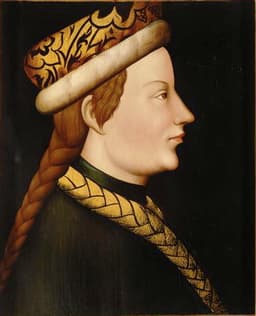
Albert III of Austria
Emperor · Medieval
53.4Total
Basic Information
Born
787
1349
Died
813
1395
Era
Medieval
Medieval
Nationality
Abbasid Caliphate
Austria
Occupation
Emperor
Emperor
Civilization
Middle Eastern
Western
Score Comparison
Military (10%)
50.0
50.0
Political (20%)
30.7
54.7
Influence (20%)
47.9
53.3
Legacy (20%)
38.3
44.2
Leadership (15%)
33.6
80.0
Strategy (15%)
36.8
38.6
TOTAL
39.9
53.4
Al-Amin — Complete Timeline
811 AD
Fourth Fitna (Civil War)War
Al-Amin's reign was dominated by the Fourth Fitna, a civil war against his brother al-Mamun. The conflict began when al-Amin tried to remove al-Mamun from succession, leading to a devastating war that weakened the Abbasid Caliphate.
Impact: regionaldestructive
812 AD
Siege of BaghdadWar◆ Major
Al-Mamun's forces, led by Tahir ibn Husayn, besieged Baghdad in 812-813. The siege lasted over a year, causing widespread destruction and famine. Al-Amin was captured and executed in 813, ending his caliphate.
Impact: regionaltragic
813 AD
Execution of Al-AminPolitical Action◆ Major
After the fall of Baghdad, al-Amin was captured by Tahir's forces. He was executed on al-Mamun's orders, marking the end of the civil war and the beginning of al-Mamun's sole rule.
Impact: nationaltragic
Albert III of Austria — Complete Timeline
1379 AD
Founded the Albertinian Line of the HabsburgsPolitical Action◆ Major
Albert III, along with his brother Leopold III, divided the Habsburg territories in the Treaty of Neuberg. Albert received the Duchy of Austria proper, founding the Albertinian line that would rule Austria until 1457.
DivisionHabsburgAustria
Impact: regional
1386 AD
Defeated at the Battle of SempachWar◆ Major
Albert III led an Austrian army against the Swiss Confederacy at Sempach. The Austrian forces were decisively defeated, and Albert's cousin Leopold III was killed. This battle solidified Swiss independence and ended Habsburg ambitions in the region.
BattleSwiss ConfederacyDefeat
Impact: regionaltragic
Expert Analysis
Albert III of Austria vs Al-Amin
### The Caliph and the Duke: Two Paths to Power in a Turbulent Age
History rarely offers a cleaner contrast than the one between Al-Amin, the seventh Abbasid caliph, and Albert III, the Habsburg duke of Austria. One was born to absolute power, only to lose it—and his life—in a fratricidal war. The other inherited a divided duchy and spent decades patiently stitching it back together, founding a dynasty that would shape Europe for centuries. Both men ruled during the same broad medieval era, yet their fates could not have been more different. Why did one end up executed by his own brother’s soldiers, while the other died in his bed, his lands intact and his line secure? The answer lies not in the stars, but in the very different worlds that shaped them.
### Origins
Al-Amin was born in 787 into the heart of the Abbasid Caliphate, a vast empire stretching from North Africa to Central Asia. His father, Harun al-Rashid, was the legendary caliph of *One Thousand and One Nights*, a ruler of immense wealth and sophistication. Al-Amin grew up in the glittering palaces of Baghdad, surrounded by poets, scholars, and the machinery of imperial power. His mother, Zubaidah, was a princess of the Abbasid house, ensuring his bloodline was pure. In contrast, Albert III, born in 1349, came from a world of fractured loyalties and constant warfare. The Habsburgs were a rising but still provincial dynasty in the Holy Roman Empire, and Albert’s Austria was a jumble of territories held together by marriage and force. His father, Duke Albert II, had died when he was just nine, leaving him and his brother Leopold to navigate a treacherous landscape of ambitious nobles, hostile Swiss cantons, and a distant emperor in Prague.
These origins dictated their entire approach to power. Al-Amin saw rule as a birthright, a divine gift to be enjoyed and defended. Albert saw it as a burden, a trust to be earned and managed. The Caliph’s world was one of absolute authority, where a single order could summon armies or silence rivals. The Duke’s world was one of negotiation, compromise, and the constant threat of revolt.
### Rise to Power
Al-Amin’s path to the throne was smooth, almost effortless. His father Harun had designated him as first successor, with his half-brother al-Mamun as second. When Harun died in 809, Al-Amin became caliph at the age of twenty-two, inheriting the full machinery of the Abbasid state. He had only to maintain what his father had built. Albert’s rise was far more complicated. He and his brother Leopold III initially ruled jointly after their father’s death in 1365, but the arrangement was fraught with tension. In 1379, they formally divided their lands in the Treaty of Neuberg, with Albert taking the core Austrian duchies and Leopold the outer territories. This was not a sign of strength but of necessity—a recognition that Austria was too unwieldy for two ambitious brothers to govern together. Albert’s rise was not a coronation but a compromise.
### Leadership & Governance
As caliph, Al-Amin ruled through the traditional Abbasid bureaucracy, but he lacked his father’s political acumen. He was more interested in pleasure than policy, and his court became known for its extravagance rather than its wisdom. When he tried to remove al-Mamun from the succession in 811, he ignited the Fourth Fitna, a civil war that would consume his reign. His military leadership was disastrous: he appointed incompetent generals, failed to secure Baghdad’s defenses, and underestimated his brother’s support in the eastern provinces. By 812, al-Mamun’s general Tahir ibn Husayn was at the gates of Baghdad, beginning a siege that would last over a year. Al-Amin’s political score of 35.7 reflects a ruler who could not even manage his own family, let alone an empire.
Albert III, by contrast, was a master of consolidation. His political score of 57.6 and leadership score of 74.0 point to a ruler who understood the art of the possible. He focused on strengthening the internal administration of his lands, reforming the tax system, and supporting the Church as a stabilizing force. He founded the University of Vienna, a move that would pay intellectual dividends for centuries. But he was no pacifist: in 1386, he led an army against the Swiss Confederacy at the Battle of Sempach. The result was a devastating defeat, with Austrian knights cut down by Swiss pikemen. Albert learned from the disaster. He did not seek revenge but instead negotiated a truce, preserving his remaining forces for more winnable conflicts. Where Al-Amin doubled down on failure, Albert adapted.
### Triumph & Tragedy
Al-Amin’s greatest triumph was simply becoming caliph—a moment that should have been the beginning of a great reign but turned out to be its peak. His tragedy was total: the siege of Baghdad in 812-813 reduced parts of the city to rubble, and his execution in 813 at the hands of Tahir’s men was a humiliation that echoed through Islamic history. He died as he had lived, a pawn in a game he never understood.
Albert’s tragedy was the Battle of Sempach, where he lost not only the battle but also his brother Leopold, who died fighting alongside him. Yet his triumph was more profound: he founded the Albertinian line of the Habsburgs, which would eventually produce rulers like Albert II of Germany and Frederick III, Holy Roman Emperor. By the time he died in 1395, he had secured his dynasty’s future in a way that Al-Amin could not even imagine.
### Character & Destiny
Al-Amin was a man of privilege and impatience. He could not wait for power, and he could not share it. His decision to provoke a civil war was not strategic but emotional—a petulant refusal to honor his father’s will. His character was his destiny: arrogant, impulsive, and isolated. Albert was the opposite: pragmatic, resilient, and collaborative. He knew when to fight and when to bend. His defeat at Sempach did not define him; his response to it did. He rebuilt, negotiated, and planned for the long term.
### Legacy
Al-Amin’s legacy is a cautionary tale. He is remembered as the caliph who lost the Abbasid throne, whose civil war weakened the dynasty and paved the way for its eventual decline. His legacy score of 48.2 reflects a ruler who is more a footnote than a founder. Albert’s legacy is far richer. His Albertinian line continued for centuries, and his reforms laid the groundwork for a stronger, more unified Austria. His legacy score of 58.4 and influence score of 71.0 speak to a ruler who shaped the future even if he never conquered it.
### Conclusion
In the end, Al-Amin and Albert III are mirrors of two different kinds of power. One was given everything and lost it all; the other was given little and built something lasting. Al-Amin’s story is a warning about the dangers of entitlement and the fragility of absolute rule. Albert’s is a testament to the virtues of patience, resilience, and the quiet work of governance. Both men were products of their time, but only one understood what his time demanded. As the Persian poet Ferdowsi wrote, “The world is like a cloud that passes away; only what you have done remains.” Al-Amin’s cloud vanished in a storm of his own making. Albert’s cloud, though often stormy, left a lasting rain.
Rankings
🥇
Albert III of AustriaLeader
Mil: 50.0Pol: 54.7Inf: 53.3
53.4
🥈
Al-Amin
Mil: 50.0Pol: 30.7Inf: 47.9
39.9
+13.5 behind
How This Comparison Works
Algorithm
Each figure is scored on 6 dimensions (0—100 scale) based on structured historical data: Military (10%), Political (20%), Influence (20%), Legacy (20%), Leadership (15%), Strategy (15%). The weighted total produces the final ranking.
Data Sources
Scores are computed from structured sub-indicators in the database. Scale factors adjust for era (Ancient ×0.85, Modern ×1.0) and civilization size (Eastern ×1.05, Other ×0.80) to account for differences in population and military scale.
Maximum 3 Figures
Comparisons are limited to 2—3 figures to ensure readability and statistical meaningfulness.
Error Margins
±5 points per dimension — Sub-scores are derived from historical records with inherent uncertainty. Two figures within 5 points on a dimension should be considered roughly equivalent in that area.
Total Score Accuracy
±3 points overall — The weighted combination of 6 dimensions produces a total score with approximately ±3 points of uncertainty. Differences of less than 3 points are not statistically significant— the figures are effectively tied.
Known Limitations
- Historical records are incomplete and uneven across civilizations
- Figures from oral-tradition societies may be underrepresented
- Occupation labels can misclassify multi-role figures
- Scores measure capability and impact, not moral character
- Quantitative scoring is a comparison tool, not absolute truth
Capability Radar
Military (10%) — Battles & Warfare
Battles
20
20
Win Rate
15
25
Expansion
5
20
Political (20%) — Governance & Reform
Reform
10
40
Diplomacy
10
45
Economy
15
40
Influence (20%) — Cultural & Global Reach
Cultural
15
30
Global
10
20
Legacy (20%) — Historical Impact
Historical
20
35
Longevity
10
30
Leadership (15%) — Power & Stability
Tenure
20
60
Stability
10
35
Strategy (15%) — Tactics & Innovation
Strategy
10
25
Tactics
15
20
Reform
5
15
Similar Comparisons
Comments & Discussion
HABSBURG_HYMN6/16/2026
Patience over pomp, every time. Albert III understood something Al-Amin never did: consolidation > conquest. While the caliph was busy alienating his generals and bungling the siege of Rayy in 811, Albert was quietly buying back mortgaged Austrian lands from petty nobles around Vienna. The result? Al-Amin got his head delivered to his brother on a platter; Albert III got a stable duchy and a dynasty that laughed all the way to the 20th century. No contest.
SARACEN_SKEPTIC6/16/2026
Spare me the "turbulent age" framing. This is a classic mismatch of samples: imperial Caliph vs. minor duke. Albert's "achievement" was not losing what little he had in a regional backwater; Al-Amin's failure was losing the richest empire of its era. Statistically, Albert's survival rate among medieval rulers was average. Al-Amin's total collapse, while dramatic, is a one-off data point. You can't draw grand lessons from comparing a Habsburg footnote to an Abbasid catastrophe. Context matters mo
城楼守望者6/16/2026
都说阿尔伯特三世稳健,但别忘了,他接手时哈布斯堡家族已经攒了两代人的家底,他不过是没败光而已。相反,阿明面对的也是盛世遗产,却能在四年内把帝国从巅峰推入内战深渊——这种败家速度才叫本事。一个守成有余,一个败家有方,但“成就”这东西,有时候得看起点。阿尔伯特三世守住的,不过是块中欧拼图;阿明输掉的,可是半个文明世界。
教法书虫6/16/2026
阿明的悲剧在于,他把哈里发当成了拜占庭式的独裁皇帝,忘了阿拔斯王朝的合法性建立在教法和协商之上。他对维齐尔和军队将领的态度傲慢到近乎愚蠢,特别是在麦蒙已经亮明姿态后,他仍然选择硬碰硬。阿尔伯特三世至少懂得和奥地利贵族签订《拉亨堡协议》,用法律换忠诚。阿明要是稍微读点马瓦迪的《政制规范》,也不至于落得身首异处的下场。
草鞋王朝6/16/2026
从底层视角看,这俩人没什么高下之分。阿尔伯特三世稳住了领土,但奥地利农民照样交租服役;阿明败了国,但巴格达的胡同里照样有人拉磨卖饼。历史书夸前者“奠基”,骂后者“昏聩”,可对普通人来说,公爵赢了不过是税收换个名字,哈里发输了也只是宫廷换个主子。百年之后,维也纳的哪块砖是阿尔伯特三世亲手砌的?谁又在乎塔伊夫的哪场雨是为阿明下的?