Loading...
Ahuitzotl vs Emperor Go-Toba
Ahuitzotl leads by 21.7 pts · 2 figures compared
…
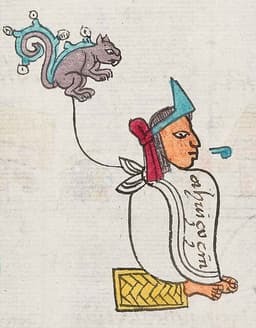
Ahuitzotl
Emperor · Medieval
62.6Total
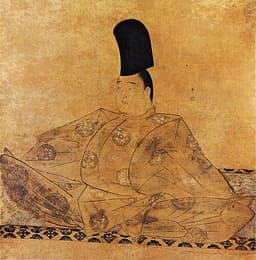
Emperor Go-Toba
Emperor · Medieval
40.9Total
Basic Information
Born
1440
1180
Died
1502
1239
Era
Medieval
Medieval
Nationality
Aztec Empire
Japan
Occupation
Emperor
Emperor
Civilization
Other
Eastern
Score Comparison
Military (10%)
78.5
21.2
Political (20%)
55.0
27.9
Influence (20%)
61.0
53.3
Legacy (20%)
54.0
46.7
Leadership (15%)
72.0
34.6
Strategy (15%)
70.0
43.7
TOTAL
62.6
40.9
Ahuitzotl — Complete Timeline
1486 AD
Expanded the Aztec Empire to its Greatest ExtentWar
Ahuitzotl launched extensive military campaigns that expanded the Aztec Empire to its maximum territorial extent, conquering regions from the Gulf of Mexico to the Pacific coast, including parts of modern-day Guatemala. He subjugated over 50 city-states.
Aztec ExpansionMilitary ConquestImperial Peak
Impact: regional
1487 AD
Dedicated the Great Temple of TenochtitlanCultural◆ Major
Ahuitzotl presided over the rededication of the Templo Mayor in Tenochtitlan, a massive ceremony involving the sacrifice of thousands of captives. The event reinforced Aztec religious authority and demonstrated the empire's military power.
Human SacrificeReligious CeremonyAztec Religion
Impact: regionaldestructive
1490 AD
Conquest of the Mixtec and Zapotec RegionsWar◆ Major
Ahuitzotl led campaigns into Oaxaca, conquering Mixtec and Zapotec strongholds such as Coixtlahuaca and Tehuantepec. These victories secured control over key trade routes and tribute sources, including gold and cotton.
Military CampaignOaxacaTribute
Impact: regional
Emperor Go-Toba — Complete Timeline
1200 AD
Patronage of poetry and the artsCultural◆ Major
Go-Toba was a noted poet and patron of waka poetry, sponsoring the compilation of the Shin Kokin Wakashu, an imperial anthology. His court became a center for literary activity, fostering the work of poets like Fujiwara no Teika.
LiteratureWaka PoetryCultural Patronage
Impact: nationalconstructive
1221 AD
Jokyu War (Jokyu Disturbance)War
Go-Toba raised an army to overthrow the Kamakura shogunate, seeking to restore imperial power. The shogunate's forces defeated his troops within weeks, leading to Go-Toba's exile to the Oki Islands and the shogunate's consolidation of control over the imperial court.
Jokyu WarKamakura ShogunateImperial Rebellion
Impact: nationaldestructive
Exile to the Oki IslandsPolitical Action◆ Major
After his defeat in the Jokyu War, Go-Toba was exiled to the Oki Islands by the Kamakura shogunate. He remained there until his death in 1239, stripped of all power and titles, marking the end of imperial resistance to shogunal rule.
ExileKamakura ShogunateImperial Decline
Impact: nationaltragic
Expert Analysis
Origins
Ahuitzotl, born around 1440, was the eighth Aztec emperor (tlatoani) of Tenochtitlan, succeeding his brother Tizoc in 1486. He was a member of the royal family, trained in warfare and governance from a young age. The Aztec Empire was a militaristic state centered on tribute and sacrifice. In contrast, Emperor Go-Toba was born in 1180, the 82nd emperor of Japan, ascending the throne in 1183 at age three. He was a figurehead in a period when real power rested with the Kamakura shogunate, a military government established after the Genpei War. Go-Toba was raised in the imperial court, immersed in literature and poetry, but also aware of the diminished political authority of the emperor.
Rise to Power
Ahuitzotl became emperor after Tizoc's short and ineffective reign. He immediately launched military campaigns to expand the empire. His first major campaign in 1487 targeted the Huastec region, securing victories. Over his 16-year reign, he conquered territories from the Gulf of Mexico to the Pacific coast of Oaxaca, including the Mixtec and Zapotec regions. His military score of 78.5 reflects his success. Go-Toba, however, did not rise to power through military means; he was born into the imperial line. His influence grew after his abdication in 1198, when he became a retired emperor (cloistered emperor) and sought to reassert imperial authority against the shogunate. He gathered support from disaffected warrior families and planned the Jokyu War in 1221.
Leadership & Governance
Ahuitzotl centralized power in Tenochtitlan, imposing tribute and quelling rebellions. He built infrastructure, including an aqueduct and the expansion of the Templo Mayor, whose dedication in 1487 involved the sacrifice of thousands of captives. His political score of 55.0 indicates moderate governance skills, as his rule was primarily militaristic. Go-Toba, with a political score of 27.9, attempted to restore imperial rule but lacked administrative control. His leadership was based on traditional authority and cultural patronage rather than military or political organization. He sponsored the Shin Kokin Wakashu, an imperial poetry anthology, which earned him an influence score of 53.3.
Triumph & Tragedy
Ahuitzotl's greatest triumph was expanding the Aztec Empire to its maximum territorial extent, covering much of central and southern Mexico. However, his heavy reliance on tribute and sacrifice created resentment among conquered peoples, which later contributed to the empire's vulnerability to Spanish conquest. His greatest failure was the lack of a stable succession; his nephew Moctezuma II succeeded him but could not maintain the same level of control. Go-Toba's triumph was his cultural legacy: the Shin Kokin Wakashu remains a classic of Japanese literature. His tragedy was the Jokyu War: his army was defeated within weeks, leading to his exile to the Oki Islands, where he died in 1239. His rebellion resulted in the shogunate further restricting imperial power.
Character & Destiny
Ahuitzotl was a decisive and ambitious leader, driven by expansion and religious duty. His character led to military success but also overextension. He died in 1502, possibly from illness or wounds, leaving an empire at its peak but strained. Go-Toba was a cultured and proud emperor, unwilling to accept subordination. His character led him to challenge the shogunate, but his strategic miscalculation (strategy score 43.7) resulted in failure. His destiny was to be a symbol of imperial resistance, but his actions cemented shogunal dominance.
Legacy
Ahuitzotl's legacy is mixed: he is remembered as the emperor who brought the Aztec Empire to its greatest extent, but also as a ruler whose militarism and tribute system sowed seeds of discontent. His legacy score of 54.0 reflects this. The empire he built fell to the Spanish within two decades of his death. Go-Toba's legacy is more cultural: the Shin Kokin Wakashu is a major literary work, and his attempt to restore imperial power is seen as a noble but failed effort. His legacy score of 46.7 is lower due to the political failure.
Conclusion
Ahuitzotl had a greater impact on history due to his military expansion (military score 78.5 vs 21.2) and the scale of his empire. While Go-Toba's cultural contributions are significant, Ahuitzotl's actions directly shaped the fate of millions in Mesoamerica and the eventual Spanish conquest. His total score of 62.6 far exceeds Go-Toba's 40.9, confirming his greater historical weight.
Rankings
🥇
AhuitzotlLeader
Mil: 78.5Pol: 55.0Inf: 61.0
62.6
🥈
Emperor Go-Toba
Mil: 21.2Pol: 27.9Inf: 53.3
40.9
+21.7 behind
How This Comparison Works
Algorithm
Each figure is scored on 6 dimensions (0—100 scale) based on structured historical data: Military (10%), Political (20%), Influence (20%), Legacy (20%), Leadership (15%), Strategy (15%). The weighted total produces the final ranking.
Data Sources
Scores are computed from structured sub-indicators in the database. Scale factors adjust for era (Ancient ×0.85, Modern ×1.0) and civilization size (Eastern ×1.05, Other ×0.80) to account for differences in population and military scale.
Maximum 3 Figures
Comparisons are limited to 2—3 figures to ensure readability and statistical meaningfulness.
Error Margins
±5 points per dimension — Sub-scores are derived from historical records with inherent uncertainty. Two figures within 5 points on a dimension should be considered roughly equivalent in that area.
Total Score Accuracy
±3 points overall — The weighted combination of 6 dimensions produces a total score with approximately ±3 points of uncertainty. Differences of less than 3 points are not statistically significant— the figures are effectively tied.
Known Limitations
- Historical records are incomplete and uneven across civilizations
- Figures from oral-tradition societies may be underrepresented
- Occupation labels can misclassify multi-role figures
- Scores measure capability and impact, not moral character
- Quantitative scoring is a comparison tool, not absolute truth
Capability Radar
Military (10%) — Battles & Warfare
Battles
85
15
Win Rate
90
10
Expansion
90
5
Political (20%) — Governance & Reform
Reform
70
15
Diplomacy
65
20
Economy
80
10
Influence (20%) — Cultural & Global Reach
Cultural
60
40
Global
45
20
Legacy (20%) — Historical Impact
Historical
65
45
Longevity
50
35
Leadership (15%) — Power & Stability
Tenure
75
30
Stability
70
10
Strategy (15%) — Tactics & Innovation
Strategy
85
25
Tactics
80
20
Reform
70
10
Similar Comparisons
Comments & Discussion
No comments yet. Be the first to share your thoughts!