Loading...
Ahmed Sanjar vs Christian II of Denmark
Ahmed Sanjar leads by 6.9 pts · 2 figures compared
…
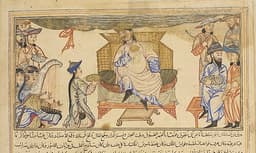
Ahmed Sanjar
Emperor · Medieval
61.0Total
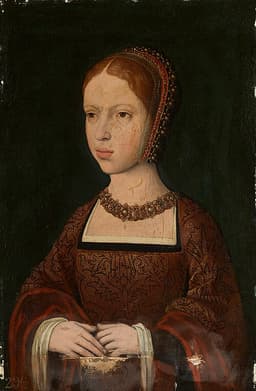
Christian II of Denmark
Emperor · Medieval
54.1Total
Basic Information
Born
1085
1481
Died
1157
1559
Era
Medieval
Medieval
Nationality
Seljuk Empire
Denmark
Occupation
Emperor
Emperor
Civilization
Middle Eastern
Western
Score Comparison
Military (10%)
64.4
45.0
Political (20%)
68.0
68.0
Influence (20%)
59.0
54.9
Legacy (20%)
49.2
45.8
Leadership (15%)
74.0
65.7
Strategy (15%)
62.5
43.3
TOTAL
61.0
54.1
Ahmed Sanjar — Complete Timeline
1141 AD
Battle of QatwanWar◆ Major
Ahmed Sanjar was defeated by the Kara Khitai at the Battle of Qatwan near Samarkand. This defeat ended Seljuk dominance in Transoxiana and led to the loss of Khorasan to the Kara Khitai, marking the beginning of the Seljuk decline.
BattleKara KhitaiSeljuk Decline
Impact: regionaltragic
1153 AD
Revolt of the Oghuz TurksWar◆ Major
Oghuz Turk tribes in Khorasan revolted against Sanjar's rule, capturing him in battle. Sanjar was held captive for three years, during which the Oghuz plundered Khorasan and destroyed Seljuk authority in the region.
RevoltOghuzCaptivity
Impact: regionaltragic
1156 AD
Restoration and DeathPolitical Action◆ Major
Sanjar escaped Oghuz captivity in 1156 and returned to Merv, but his authority was shattered. He died the following year, and his death marked the end of the Great Seljuk Empire, as his successors could not reunite the fragmented territories.
EscapeDeathEnd of Empire
Impact: regionaltragic
Christian II of Denmark — Complete Timeline
1520 AD
Stockholm BloodbathPolitical Action
After conquering Sweden, Christian II invited Swedish nobles to a coronation banquet in Stockholm, then arrested and executed about 80-90 people, including bishops and leading figures of the Swedish independence party. This massacre aimed to crush Swedish resistance but instead galvanized opposition.
MassacreSwedish IndependenceUnion of Kalmar
Impact: regionaldestructive
1523 AD
Deposition and exilePolitical Action◆ Major
Following the Stockholm Bloodbath, a Swedish rebellion led by Gustav Vasa succeeded in driving out Danish forces. Christian II was deposed in Denmark by his uncle Frederick I, who took the throne. Christian fled to the Netherlands, seeking support from his brother-in-law, Emperor Charles V.
DepositionExileUnion of Kalmar Collapse
Impact: regionaltragic
1526 AD
Introduction of the Reformation in DenmarkReform◆ Major
During his reign, Christian II showed early support for Lutheran ideas, inviting reformers and translating the New Testament into Danish. Though his deposition interrupted this, his actions laid groundwork for the official Reformation under his successor, Christian III.
ReformationLutheranismReligious Change
Impact: regionalprogressive
1531 AD
Attempted reconquest of NorwayWar◆ Major
Christian II launched a military expedition from the Netherlands to reclaim his thrones, landing in Norway. He failed to gain sufficient support and was captured by his rival, Frederick I. He was imprisoned for the rest of his life, first at S
Military CampaignImprisonmentFailed Restoration
Impact: regionaltragic
Expert Analysis
Origins
Ahmed Sanjar was born in 1085 in the Seljuk Empire, the son of Sultan Malik Shah I. He grew up in a period of Seljuk dominance, receiving military and administrative training typical for a prince. His early years were spent in Khorasan, where he was appointed governor at a young age. The Seljuk Empire at its peak stretched from Anatolia to Central Asia, and Sanjar was immersed in a world of Persianate culture, Turkic military traditions, and Islamic governance.
Christian II of Denmark was born on July 1, 1481, at Nyborg Castle, the son of King Hans of Denmark and Christina of Saxony. He was raised in the Kalmar Union, a personal union of Denmark, Norway, and Sweden. His education included Renaissance humanism and military training. Christian's early life was marked by political intrigue, as the union was fragile and Swedish nobles resisted Danish dominance. He became regent at age 20 and king in 1513.
Rise to Power
Ahmed Sanjar rose to power in 1097 when he was appointed governor of Khorasan by his brother, Sultan Berkyaruq. Over the next decades, he consolidated control over eastern Iran and Central Asia. In 1118, after the death of his nephew Sultan Muhammad I, Sanjar declared himself sultan, ruling from Merv. His legitimacy came from his lineage and his military campaigns against the Ghaznavids and the Khwarezmians. By 1130, he was the most powerful ruler in the eastern Islamic world, with vassals including the Khwarezm Shah and the Ghurids.
Christian II became king of Denmark and Norway in 1513 after his father's death. He immediately pursued centralization, curbing the power of the nobility and the Hanseatic League. His ambition to restore the Kalmar Union led him to invade Sweden in 1518 and 1520. After a decisive victory, he was crowned king of Sweden in November 1520. To secure his rule, he orchestrated the Stockholm Bloodbath (November 7-10, 1520), executing about 80-90 Swedish nobles and clergy, including Bishop Mattias and the father of Gustav Vasa.
Leadership & Governance
Ahmed Sanjar ruled as a traditional Islamic sultan, combining Persian bureaucracy with Turkic military patronage. He maintained a network of iqta (land grants) to support his cavalry, and his court in Merv was a center of learning, hosting poets like Anvari and scholars. Sanjar's governance was marked by tolerance: he allowed the Shi'a population to practice freely and even had a Christian vizier, Sadr al-Din. However, his reliance on Turkic tribes for military support created long-term instability, as these tribes resented central control.
Christian II was a reformist monarch with absolutist tendencies. He introduced legal reforms, supported the translation of the New Testament into Danish (1524), and encouraged Lutheran ideas, earning him the support of commoners but opposition from the Catholic Church and nobility. His economic policies aimed to break the Hanseatic monopoly by promoting Dutch merchants. However, his ruthless methods, exemplified by the Stockholm Bloodbath, alienated the Swedish nobility and triggered a rebellion. His leadership scores 65.7, reflecting his strong will but flawed execution.
Triumph & Tragedy
Ahmed Sanjar's greatest success was his long reign (1118-1157), during which he maintained Seljuk authority in the east despite external threats. He defeated the Ghurids and forced the Khwarezm Shah to pay tribute. His greatest failure was the Battle of Qatwan in 1141, where he was decisively defeated by the Kara Khitai, a Mongol-like confederation. This loss ended Seljuk influence in Transoxiana and exposed the empire's weakness. Subsequently, the Oghuz Turks revolted in 1153, captured Sanjar, and held him for three years. Though he escaped in 1156, his authority was shattered, and he died in 1157, effectively ending the Great Seljuk Empire.
Christian II's triumph was his initial success in conquering Sweden and briefly restoring the Kalmar Union. His support for the Reformation laid groundwork for Denmark's transition to Lutheranism. His tragedy was the Stockholm Bloodbath, which backfired catastrophically. The massacre galvanized Swedish resistance under Gustav Vasa, who expelled Danish forces and became king of an independent Sweden. Christian was deposed in Denmark in 1523 by his uncle Frederick I, and exiled. His attempted reconquest of Norway in 1531 failed, and he spent the rest of his life in captivity. His military score is 45.0, reflecting his strategic miscalculations.
Character & Destiny
Ahmed Sanjar was known for his patience and diplomatic skill, but also for his inability to adapt to changing military realities. He relied on Turkic tribes that were unreliable, and his defeat at Qatwan was partly due to underestimating the Kara Khitai. His captivity by the Oghuz was a humiliation that mirrored the decline of Seljuk power. Historians assess him as a capable ruler in a period of fragmentation, with a leadership score of 74.0.
Christian II was intelligent and ambitious, but impulsive and brutal. His decision to execute Swedish nobles was a calculated terror tactic that failed. He lacked the political finesse to consolidate his gains, and his reforms alienated the aristocracy. His destiny was shaped by his inability to compromise, leading to deposition and exile. His total score of 54.1 reflects a ruler with potential but fatal flaws.
Legacy
Ahmed Sanjar's legacy is mixed. He is remembered as the last great Seljuk sultan, but his reign marked the end of Seljuk unity. The Seljuk Empire fragmented after his death into smaller states, eventually falling to the Khwarezmians and Mongols. His cultural patronage left a mark on Persian literature, but his military failures hastened the decline. His legacy score is 49.2.
Christian II's legacy is defined by the Stockholm Bloodbath, which is seen as a catalyst for Swedish independence. His support for the Reformation influenced Denmark's eventual adoption of Lutheranism in 1536. However, his reign is often viewed as a cautionary tale of overreach. His legacy score is 45.8.
Conclusion
Ahmed Sanjar had a greater impact than Christian II. Sanjar's total score of 61.0 versus Christian's 54.1 reflects his longer reign and broader influence over the Islamic world. While both rulers ended in failure, Sanjar's rule maintained a major empire for decades, whereas Christian's reign was brief and destructive. Sanjar's defeat at Qatwan had lasting consequences for Central Asia, while Christian's bloodbath primarily affected Scandinavia. Therefore, Ahmed Sanjar is the more significant historical figure.
Rankings
🥇
Ahmed SanjarLeader
Mil: 64.4Pol: 68.0Inf: 59.0
61.0
🥈
Christian II of Denmark
Mil: 45.0Pol: 68.0Inf: 54.9
54.1
+6.9 behind
How This Comparison Works
Algorithm
Each figure is scored on 6 dimensions (0—100 scale) based on structured historical data: Military (10%), Political (20%), Influence (20%), Legacy (20%), Leadership (15%), Strategy (15%). The weighted total produces the final ranking.
Data Sources
Scores are computed from structured sub-indicators in the database. Scale factors adjust for era (Ancient ×0.85, Modern ×1.0) and civilization size (Eastern ×1.05, Other ×0.80) to account for differences in population and military scale.
Maximum 3 Figures
Comparisons are limited to 2—3 figures to ensure readability and statistical meaningfulness.
Error Margins
±5 points per dimension — Sub-scores are derived from historical records with inherent uncertainty. Two figures within 5 points on a dimension should be considered roughly equivalent in that area.
Total Score Accuracy
±3 points overall — The weighted combination of 6 dimensions produces a total score with approximately ±3 points of uncertainty. Differences of less than 3 points are not statistically significant— the figures are effectively tied.
Known Limitations
- Historical records are incomplete and uneven across civilizations
- Figures from oral-tradition societies may be underrepresented
- Occupation labels can misclassify multi-role figures
- Scores measure capability and impact, not moral character
- Quantitative scoring is a comparison tool, not absolute truth
Capability Radar
Military (10%) — Battles & Warfare
Battles
75
30
Win Rate
70
25
Expansion
68
30
Political (20%) — Governance & Reform
Reform
55
55
Diplomacy
60
30
Economy
58
40
Influence (20%) — Cultural & Global Reach
Cultural
50
40
Global
45
30
Legacy (20%) — Historical Impact
Historical
55
50
Longevity
40
35
Leadership (15%) — Power & Stability
Tenure
65
45
Stability
45
20
Strategy (15%) — Tactics & Innovation
Strategy
74
35
Tactics
72
30
Reform
60
40
Similar Comparisons
Comments & Discussion
No comments yet. Be the first to share your thoughts!