Loading...
Christian II of Denmark vs Napoleon Bonaparte
Napoleon Bonaparte leads by 16.8 pts · 2 figures compared
…
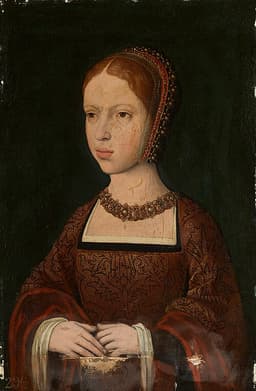
Christian II of Denmark
Emperor · Medieval
54.1Total

Napoleon Bonaparte
General · Modern
70.9Total
Basic Information
Born
1481
1769
Died
1559
1821
Era
Medieval
Modern
Nationality
Denmark
France
Occupation
Emperor
General
Civilization
Western
Western
Score Comparison
Military (10%)
45.0
94.0
Political (20%)
68.0
72.0
Influence (20%)
54.9
40.0
Legacy (20%)
45.8
80.0
Leadership (15%)
65.7
78.0
Strategy (15%)
43.3
90.0
TOTAL
54.1
70.9
Christian II of Denmark — Complete Timeline
1520 AD
Stockholm BloodbathPolitical Action
After conquering Sweden, Christian II invited Swedish nobles to a coronation banquet in Stockholm, then arrested and executed about 80-90 people, including bishops and leading figures of the Swedish independence party. This massacre aimed to crush Swedish resistance but instead galvanized opposition.
MassacreSwedish IndependenceUnion of Kalmar
Impact: regionaldestructive
1523 AD
Deposition and exilePolitical Action◆ Major
Following the Stockholm Bloodbath, a Swedish rebellion led by Gustav Vasa succeeded in driving out Danish forces. Christian II was deposed in Denmark by his uncle Frederick I, who took the throne. Christian fled to the Netherlands, seeking support from his brother-in-law, Emperor Charles V.
DepositionExileUnion of Kalmar Collapse
Impact: regionaltragic
1526 AD
Introduction of the Reformation in DenmarkReform◆ Major
During his reign, Christian II showed early support for Lutheran ideas, inviting reformers and translating the New Testament into Danish. Though his deposition interrupted this, his actions laid groundwork for the official Reformation under his successor, Christian III.
ReformationLutheranismReligious Change
Impact: regionalprogressive
1531 AD
Attempted reconquest of NorwayWar◆ Major
Christian II launched a military expedition from the Netherlands to reclaim his thrones, landing in Norway. He failed to gain sufficient support and was captured by his rival, Frederick I. He was imprisoned for the rest of his life, first at S
Military CampaignImprisonmentFailed Restoration
Impact: regionaltragic
Napoleon Bonaparte — Complete Timeline
1799 AD
Coup of 18 BrumaireOther◆ Major
Napoleon Bonaparte, with support from his brother Lucien and key political figures, overthrew the Directory in a bloodless coup. He established the Consulate with himself as First Consul, effectively becoming the ruler of France. This event ended the French Revolution's most unstable period.
French RevolutionCoupRise to Power
Impact: regional
1804 AD
Promulgation of the Napoleonic CodeOther◆ Major
Napoleon enacted the Civil Code of the French, known as the Napoleonic Code, a comprehensive set of laws that replaced the fragmented feudal legal systems. The code established legal equality, protected property rights, and secularized law. It became the basis for legal systems in many European and world countries.
Legal ReformNapoleonic CodeCivil Law
Impact: globalconstructive
1805 AD
Battle of AusterlitzWar◆ Major
Napoleon's Grande Arm
Napoleonic WarsBattleDecisive Victory
Impact: global
1812 AD
Invasion of RussiaWar◆ Major
Napoleon led the Grande Arm
Napoleonic WarsInvasionDisaster
Impact: globaldestructive
1815 AD
Battle of WaterlooWar◆ Major
Napoleon's French army was defeated by the combined forces of the Duke of Wellington's Anglo-Allied army and Gebhard Leberecht von Bl
Napoleonic WarsBattleFinal Defeat
Impact: globaldestructive
Expert Analysis
christian-ii-of-denmark-vs-napoleon-bonaparte
# Two Kings, Two Destinies: Napoleon and Christian II
In the spring of 1520, a Danish king invited Sweden’s most powerful nobles to a feast of reconciliation. Three days later, eighty-two of them lay dead in Stockholm’s main square, their blood washing over cobblestones in a massacre that would seal his fate. Three centuries later, another ambitious ruler stood on a hill overlooking Waterloo, watching his dreams of continental dominion dissolve into mud and smoke. Both men reached for supreme power; both fell from dizzying heights. But while one became a byword for genius, the other faded into historical footnote. Why?
Origins
Christian II was born in 1481 into a world of crumbling certainties. The Kalmar Union—that fragile alliance binding Denmark, Norway, and Sweden—was already fraying. His father, King Hans, spent his reign fighting to hold it together. Young Christian grew up in a court where loyalty was currency and betrayal a constant threat. He learned statecraft from the ground up, watching his father bribe, threaten, and negotiate with fractious Swedish nobles who saw Danish rule as foreign occupation.
Napoleon Bonaparte entered the world in 1769 on a Mediterranean island that had belonged to Genoa until weeks before his birth. Corsica was a place of vendettas and clan loyalties, where a boy learned early that the world owed him nothing. Unlike Christian, Napoleon had no royal lineage. His family were minor nobility, scraping by on modest incomes. What he had instead was a France in revolution—a society that had torn down its old hierarchies and was desperate for new leaders. Where Christian inherited a throne, Napoleon had to conquer his.
Rise to Power
Christian’s path was straightforward: he was the king’s son. He became regent of Norway at sixteen and king at thirty-two, inheriting a union that required constant maintenance. His great opportunity came in 1520, when he finally conquered Sweden after years of war. The Stockholm Bloodbath that followed was meant to be a brutal solution—eliminate the opposition once and for all. Instead, it created a martyr for every Swedish nationalist and turned Gustav Vasa into a rebel king.
Napoleon’s rise was a story of pure meritocracy. He was a young artillery officer who happened to be in the right place at the right time—the siege of Toulon in 1793, where his cannons drove out the British. From there, it was a rocket trajectory: general at twenty-four, commander of the Army of Italy, conqueror of Egypt, First Consul at thirty, Emperor at thirty-five. Each victory opened new doors. Each defeat—and there were early setbacks—taught him lessons he applied ruthlessly.
Leadership & Governance
Here the two men diverge most sharply. Christian II was a reformer at heart. He supported Lutheranism, translated the New Testament into Danish, and tried to curb the power of nobles and clergy. His vision was modern—a centralized state with a strong monarch and a reformed church. But he had no military genius to back it up. His score of 28.7 in military ability reflects a man who could not win the wars necessary to protect his reforms. When Gustav Vasa rebelled in 1523, Christian had no army capable of stopping him.
Napoleon, by contrast, was the greatest military commander of his age—scoring 93 in strategy and 94 in military skill. His campaigns are still studied in war colleges: the lightning marches of 1796, the crushing victory at Austerlitz in 1805, the brilliant crossing of the Alps. But he was also a political innovator. The Napoleonic Code standardized French law across Europe. He created a modern bureaucracy, reformed education, and made peace with the Catholic Church. His political score of 75 reflects a man who understood power as well as battle.
Triumph & Tragedy
Christian’s greatest moment was also his undoing. The Stockholm Bloodbath secured his rule—briefly. Within three years, he was deposed, his family fled to the Netherlands, and he spent the rest of his life trying to reclaim what he had lost. His 1531 attempt to reconquer Norway failed miserably. He died in 1559, a prisoner in his own former kingdom.
Napoleon’s triumphs were staggering. He dominated Europe from 1805 to 1812, placing his brothers on thrones, redrawing borders, and spreading revolutionary ideals. But his tragedy was equally grand. The invasion of Russia in 1812 destroyed his Grande Armée—half a million men lost to cold, hunger, and Cossacks. He was exiled to Elba, returned for one hundred days, and met his final defeat at Waterloo in 1815, scoring a legacy of 78 that would only grow with time.
Character & Destiny
Christian II was stubborn and vengeful, but also genuinely idealistic. He wanted to reform his kingdom, but he lacked the patience and military skill to make reform stick. His cruelty at Stockholm was not calculated—it was rage dressed up as policy. Napoleon was colder, more calculating. He believed in destiny and wrote his own script. His ambition was limitless, but so was his capacity for work. He once said, “Impossible is a word to be found only in the dictionary of fools.” Yet that same ambition led him to overreach, invading Russia when he should have consolidated, fighting on too many fronts when he should have negotiated.
Legacy
Christian II is remembered in Denmark as a flawed reformer, in Sweden as a tyrant. His scores tell the story: low military (28.7), moderate political (71.9), and a legacy of 60.7 that reflects a king who tried but failed. He is a cautionary tale about the limits of royal power in an age of rising nationalism.
Napoleon’s legacy is immense—82 in influence, 78 in legacy. He changed the map of Europe, inspired nationalism in Germany and Italy, and left legal and administrative systems that endure today. He is remembered as both liberator and tyrant, genius and megalomaniac.
Conclusion
Standing in the rain at Waterloo, Napoleon watched his Old Guard make their final charge. “They are mingled in a common ruin,” he later wrote. Christian II, in his Dutch exile, must have felt the same. Both men reached for everything and lost it. But Napoleon’s story became legend because he built something that outlasted him—an idea of merit, ambition, and order. Christian’s story became a footnote because he tried to hold together what was already breaking apart. In the end, the difference between triumph and tragedy is not just what you do, but what survives you.
Rankings
🥇
Napoleon BonaparteLeader
Mil: 94.0Pol: 72.0Inf: 40.0
70.9
🥈
Christian II of Denmark
Mil: 45.0Pol: 68.0Inf: 54.9
54.1
+16.8 behind
How This Comparison Works
Algorithm
Each figure is scored on 6 dimensions (0—100 scale) based on structured historical data: Military (10%), Political (20%), Influence (20%), Legacy (20%), Leadership (15%), Strategy (15%). The weighted total produces the final ranking.
Data Sources
Scores are computed from structured sub-indicators in the database. Scale factors adjust for era (Ancient ×0.85, Modern ×1.0) and civilization size (Eastern ×1.05, Other ×0.80) to account for differences in population and military scale.
Maximum 3 Figures
Comparisons are limited to 2—3 figures to ensure readability and statistical meaningfulness.
Error Margins
±5 points per dimension — Sub-scores are derived from historical records with inherent uncertainty. Two figures within 5 points on a dimension should be considered roughly equivalent in that area.
Total Score Accuracy
±3 points overall — The weighted combination of 6 dimensions produces a total score with approximately ±3 points of uncertainty. Differences of less than 3 points are not statistically significant— the figures are effectively tied.
Known Limitations
- Historical records are incomplete and uneven across civilizations
- Figures from oral-tradition societies may be underrepresented
- Occupation labels can misclassify multi-role figures
- Scores measure capability and impact, not moral character
- Quantitative scoring is a comparison tool, not absolute truth
Capability Radar
Military (10%) — Battles & Warfare
Battles
30
95
Win Rate
25
90
Expansion
30
95
Political (20%) — Governance & Reform
Reform
55
95
Diplomacy
30
80
Economy
40
85
Influence (20%) — Cultural & Global Reach
Cultural
40
85
Global
30
90
Legacy (20%) — Historical Impact
Historical
50
95
Longevity
35
90
Leadership (15%) — Power & Stability
Tenure
45
85
Stability
20
70
Strategy (15%) — Tactics & Innovation
Strategy
35
95
Tactics
30
98
Reform
40
92
Similar Comparisons
Comments & Discussion
StockholmBloodletter6/17/2026
Calling this a fair comparison is like comparing a bonfire to a supernova. Christian II was a provincial thug who botched a hostage negotiation—the Stockholm Bloodbath wasn't strategy, it was a drunken tantrum that cost him three crowns. Napoleon conquered Italy before turning 30, rewrote European law, and scared monarchs from Madrid to Moscow. One's a cautionary tale, the other's the textbook definition of ambition. Christian couldn't hold Napoleon's spyglass.|zh|这场对比毫无悬念。地摊文学就爱把地方性暴君跟全球征服者放一块儿