Loading...
Ahmed Sanjar vs Napoleon Bonaparte
Napoleon Bonaparte leads by 9.9 pts · 2 figures compared
…
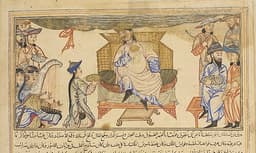
Ahmed Sanjar
Emperor · Medieval
61.0Total

Napoleon Bonaparte
General · Modern
70.9Total
Basic Information
Born
1085
1769
Died
1157
1821
Era
Medieval
Modern
Nationality
Seljuk Empire
France
Occupation
Emperor
General
Civilization
Middle Eastern
Western
Score Comparison
Military (10%)
64.4
94.0
Political (20%)
68.0
72.0
Influence (20%)
59.0
40.0
Legacy (20%)
49.2
80.0
Leadership (15%)
74.0
78.0
Strategy (15%)
62.5
90.0
TOTAL
61.0
70.9
Ahmed Sanjar — Complete Timeline
1141 AD
Battle of QatwanWar◆ Major
Ahmed Sanjar was defeated by the Kara Khitai at the Battle of Qatwan near Samarkand. This defeat ended Seljuk dominance in Transoxiana and led to the loss of Khorasan to the Kara Khitai, marking the beginning of the Seljuk decline.
BattleKara KhitaiSeljuk Decline
Impact: regionaltragic
1153 AD
Revolt of the Oghuz TurksWar◆ Major
Oghuz Turk tribes in Khorasan revolted against Sanjar's rule, capturing him in battle. Sanjar was held captive for three years, during which the Oghuz plundered Khorasan and destroyed Seljuk authority in the region.
RevoltOghuzCaptivity
Impact: regionaltragic
1156 AD
Restoration and DeathPolitical Action◆ Major
Sanjar escaped Oghuz captivity in 1156 and returned to Merv, but his authority was shattered. He died the following year, and his death marked the end of the Great Seljuk Empire, as his successors could not reunite the fragmented territories.
EscapeDeathEnd of Empire
Impact: regionaltragic
Napoleon Bonaparte — Complete Timeline
1799 AD
Coup of 18 BrumaireOther◆ Major
Napoleon Bonaparte, with support from his brother Lucien and key political figures, overthrew the Directory in a bloodless coup. He established the Consulate with himself as First Consul, effectively becoming the ruler of France. This event ended the French Revolution's most unstable period.
French RevolutionCoupRise to Power
Impact: regional
1804 AD
Promulgation of the Napoleonic CodeOther◆ Major
Napoleon enacted the Civil Code of the French, known as the Napoleonic Code, a comprehensive set of laws that replaced the fragmented feudal legal systems. The code established legal equality, protected property rights, and secularized law. It became the basis for legal systems in many European and world countries.
Legal ReformNapoleonic CodeCivil Law
Impact: globalconstructive
1805 AD
Battle of AusterlitzWar◆ Major
Napoleon's Grande Arm
Napoleonic WarsBattleDecisive Victory
Impact: global
1812 AD
Invasion of RussiaWar◆ Major
Napoleon led the Grande Arm
Napoleonic WarsInvasionDisaster
Impact: globaldestructive
1815 AD
Battle of WaterlooWar◆ Major
Napoleon's French army was defeated by the combined forces of the Duke of Wellington's Anglo-Allied army and Gebhard Leberecht von Bl
Napoleonic WarsBattleFinal Defeat
Impact: globaldestructive
Expert Analysis
Origins
Ahmed Sanjar (1085-1157) was born into the Seljuk dynasty, the son of Sultan Malik Shah I. He was raised in the imperial court of Merv, receiving a traditional Islamic education that emphasized military training, administration, and Persian culture. As a prince, he governed Khorasan from 1097, gaining experience in managing a vast territory with diverse ethnic groups, including Persian, Turkic, and Arab populations.
Napoleon Bonaparte (1769-1821) was born on the island of Corsica to a minor Italian noble family. He studied at French military academies, first at Brienne and later at the École Militaire in Paris, where he excelled in mathematics and history. His early exposure to Enlightenment ideas and revolutionary fervor shaped his ambition. Unlike Sanjar, Napoleon rose from relative obscurity through merit and revolutionary upheaval.
Rise to Power
Sanjar's rise was gradual and hereditary. He became the de facto ruler of the Seljuk Empire after the death of his brother Muhammad I in 1118, though he formally claimed the title of sultan only in 1119. His authority was challenged by other Seljuk princes and local governors, but he consolidated power through military campaigns in Transoxiana, Khwarezm, and against the Ismaili Assassins. Key allies included his loyal vizier, al-Mu'ayyad, and the Ghaznavid sultan Bahram Shah.
Napoleon's rise was meteoric. He gained fame during the Siege of Toulon (1793) at age 24, then crushed a royalist uprising in Paris in 1795. His Italian campaign of 1796-1797 made him a national hero. In 1799, he staged the Coup of 18 Brumaire, overthrowing the Directory and establishing himself as First Consul. By 1804, he crowned himself Emperor of the French. His rise was driven by personal ambition, military genius, and political opportunism.
Leadership & Governance
Sanjar ruled as a traditional Islamic monarch, relying on a bureaucracy of Persian ministers and Turkic military commanders. He maintained the iqta system (land grants for military service) and patronized Persian culture, including the poet Anvari. However, his governance was reactive: he spent much of his reign suppressing rebellions. His failure to integrate the Oghuz Turks into the imperial structure led to their revolt. In contrast, Napoleon centralized power, reformed French law through the Napoleonic Code (1804), established the Bank of France, and reorganized education. He created a meritocratic system but also placed family members on thrones. Napoleon's governance was proactive and transformative, while Sanjar's was conservative and defensive.
Triumph & Tragedy
Sanjar's greatest triumph was his early military successes: he defeated the Ghaznavids at the Battle of Ghazni (1117) and expanded Seljuk influence into India. He also repelled the Assassins and maintained stability in Khorasan for decades. His tragedy was the Battle of Qatwan (1141), where he was routed by the Kara Khitai, losing control of Transoxiana. Subsequently, the Oghuz revolt (1153) captured him; he spent three years in captivity. After escaping, he found his empire shattered and died in 1157. His total score of 61.0 reflects his mixed legacy.
Napoleon's triumphs include the Battle of Austerlitz (1805), where he defeated the Austro-Russian army, and the Napoleonic Code, which influenced legal systems worldwide. He also modernized French administration and spread nationalist ideas across Europe. His tragedy was the Invasion of Russia (1812), where his Grande Armée of over 600,000 men was destroyed by winter and scorched-earth tactics. He was exiled to Elba, returned for the Hundred Days, and finally defeated at Waterloo (1815). Napoleon scored 94.0 in military and 90.0 in strategy, but only 40.0 in influence and 72.0 in political.
Character & Destiny
Sanjar was described as just and cultured but indecisive and lenient. His reluctance to punish rebellious Oghuz tribes emboldened them. He trusted his ministers too much, leading to court intrigues. His character—pious and conservative—prevented him from adapting to new threats. Napoleon was ambitious, ruthless, and brilliant. His strategic genius was matched by his arrogance, which led him to overreach. He micromanaged campaigns but failed in logistics. Historians note that Napoleon's character—driven by glory and control—made him unable to accept limits, leading to his downfall. Sanjar's destiny was sealed by internal decay; Napoleon's by external coalition and his own hubris.
Legacy
Sanjar's legacy is limited: he is remembered as the last great Seljuk sultan, but his defeat at Qatwan marked the decline of Seljuk power. His reign is studied as an example of nomadic integration failure. The Seljuk Empire fragmented after his death, paving the way for the Khwarezmian and Mongol invasions. His score of 49.2 in legacy reflects this.
Napoleon's legacy is vast: the Napoleonic Code influenced civil law in Europe and beyond. He reshaped national boundaries, inspired nationalism, and ended feudalism in many regions. His military campaigns are studied in war colleges. However, his wars caused millions of deaths. His legacy score of 80.0 is high, but his influence score is only 40.0 due to his ultimate defeat and the restoration of monarchies.
Conclusion
Napoleon had greater impact than Ahmed Sanjar. Despite Sanjar's total score of 61.0 versus Napoleon's 70.9, the gap is significant in military (64.4 vs 94.0), strategy (62.5 vs 90.0), and legacy (49.2 vs 80.0). Napoleon's reforms and conquests changed Europe permanently, while Sanjar's reign was a final chapter in Seljuk history. Napoleon's influence on law, governance, and military strategy far exceeds Sanjar's regional and temporary control. Thus, Napoleon is the more consequential figure.
Rankings
🥇
Napoleon BonaparteLeader
Mil: 94.0Pol: 72.0Inf: 40.0
70.9
🥈
Ahmed Sanjar
Mil: 64.4Pol: 68.0Inf: 59.0
61.0
+9.9 behind
How This Comparison Works
Algorithm
Each figure is scored on 6 dimensions (0—100 scale) based on structured historical data: Military (10%), Political (20%), Influence (20%), Legacy (20%), Leadership (15%), Strategy (15%). The weighted total produces the final ranking.
Data Sources
Scores are computed from structured sub-indicators in the database. Scale factors adjust for era (Ancient ×0.85, Modern ×1.0) and civilization size (Eastern ×1.05, Other ×0.80) to account for differences in population and military scale.
Maximum 3 Figures
Comparisons are limited to 2—3 figures to ensure readability and statistical meaningfulness.
Error Margins
±5 points per dimension — Sub-scores are derived from historical records with inherent uncertainty. Two figures within 5 points on a dimension should be considered roughly equivalent in that area.
Total Score Accuracy
±3 points overall — The weighted combination of 6 dimensions produces a total score with approximately ±3 points of uncertainty. Differences of less than 3 points are not statistically significant— the figures are effectively tied.
Known Limitations
- Historical records are incomplete and uneven across civilizations
- Figures from oral-tradition societies may be underrepresented
- Occupation labels can misclassify multi-role figures
- Scores measure capability and impact, not moral character
- Quantitative scoring is a comparison tool, not absolute truth
Capability Radar
Military (10%) — Battles & Warfare
Battles
75
95
Win Rate
70
90
Expansion
68
95
Political (20%) — Governance & Reform
Reform
55
95
Diplomacy
60
80
Economy
58
85
Influence (20%) — Cultural & Global Reach
Cultural
50
85
Global
45
90
Legacy (20%) — Historical Impact
Historical
55
95
Longevity
40
90
Leadership (15%) — Power & Stability
Tenure
65
85
Stability
45
70
Strategy (15%) — Tactics & Innovation
Strategy
74
95
Tactics
72
98
Reform
60
92
Similar Comparisons
Comments & Discussion
No comments yet. Be the first to share your thoughts!