Loading...
Christian II of Denmark vs Frederick I Barbarossa
Frederick I Barbarossa leads by 6.2 pts · 2 figures compared
…
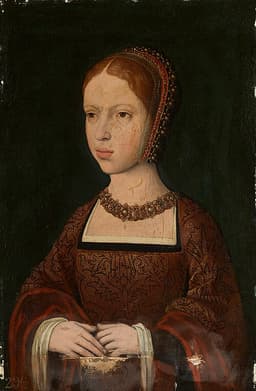
Christian II of Denmark
Emperor · Medieval
54.1Total
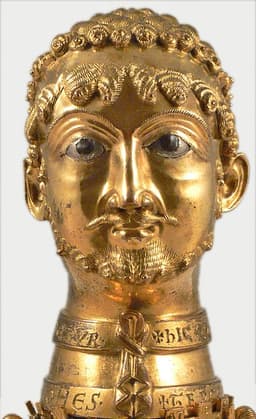
Frederick I Barbarossa
Emperor · Medieval
60.3Total
Basic Information
Born
1481
1122
Died
1559
1190
Era
Medieval
Medieval
Nationality
Denmark
Holy Roman Empire
Occupation
Emperor
Emperor
Civilization
Western
Western
Score Comparison
Military (10%)
45.0
67.3
Political (20%)
68.0
55.0
Influence (20%)
54.9
56.7
Legacy (20%)
45.8
55.0
Leadership (15%)
65.7
72.0
Strategy (15%)
43.3
66.3
TOTAL
54.1
60.3
Christian II of Denmark — Complete Timeline
1520 AD
Stockholm BloodbathPolitical Action
After conquering Sweden, Christian II invited Swedish nobles to a coronation banquet in Stockholm, then arrested and executed about 80-90 people, including bishops and leading figures of the Swedish independence party. This massacre aimed to crush Swedish resistance but instead galvanized opposition.
MassacreSwedish IndependenceUnion of Kalmar
Impact: regionaldestructive
1523 AD
Deposition and exilePolitical Action◆ Major
Following the Stockholm Bloodbath, a Swedish rebellion led by Gustav Vasa succeeded in driving out Danish forces. Christian II was deposed in Denmark by his uncle Frederick I, who took the throne. Christian fled to the Netherlands, seeking support from his brother-in-law, Emperor Charles V.
DepositionExileUnion of Kalmar Collapse
Impact: regionaltragic
1526 AD
Introduction of the Reformation in DenmarkReform◆ Major
During his reign, Christian II showed early support for Lutheran ideas, inviting reformers and translating the New Testament into Danish. Though his deposition interrupted this, his actions laid groundwork for the official Reformation under his successor, Christian III.
ReformationLutheranismReligious Change
Impact: regionalprogressive
1531 AD
Attempted reconquest of NorwayWar◆ Major
Christian II launched a military expedition from the Netherlands to reclaim his thrones, landing in Norway. He failed to gain sufficient support and was captured by his rival, Frederick I. He was imprisoned for the rest of his life, first at S
Military CampaignImprisonmentFailed Restoration
Impact: regionaltragic
Frederick I Barbarossa — Complete Timeline
1158 AD
Diet of RoncagliaPolitical Action◆ Major
Frederick I convened a diet at Roncaglia in northern Italy. He proclaimed the Regalian Rights, asserting imperial authority over Italian cities. The diet declared that all public authority derived from the emperor, leading to conflict with the Lombard League.
Imperial AuthorityItalyLegislation
Impact: regional
1176 AD
Battle of LegnanoWar
Frederick I Barbarossa was defeated by the Lombard League at Legnano in northern Italy. The League's infantry used a carroccio (war wagon) as a rallying point. This defeat forced Frederick to recognize the autonomy of Italian communes in the Peace of Venice.
Lombard LeagueItalian CampaignsDefeat
Impact: regional
1177 AD
Peace of VenicePolitical Action◆ Major
Frederick I signed a treaty with Pope Alexander III and the Lombard League in Venice. He recognized Alexander III as pope and agreed to a six-year truce with the Italian communes. The peace ended the schism in the Church and temporarily halted imperial campaigns in Italy.
TreatyPapacyLombard League
Impact: regionalconstructive
1190 AD
Death on the Third CrusadeWar◆ Major
Frederick I drowned in the Saleph River in Cilicia while leading the Third Crusade. His death caused the German contingent to largely return home, weakening the crusade. He was buried in Antioch, and his body later moved to Tyre.
CrusadeDeathAccident
Impact: globaltragic
Expert Analysis
Origins
Christian II of Denmark was born in 1481 at Nyborg Castle, the son of King Hans of Denmark and Christina of Saxony. He received a humanist education influenced by the early Reformation, but his upbringing was marked by political instability in the Nordic Kalmar Union. His father’s reign saw conflicts with Sweden and the Hanseatic League, shaping Christian’s later aggressive policies.
Frederick I Barbarossa was born in 1122 near Waiblingen, Swabia, to Frederick II, Duke of Swabia, and Judith of Bavaria. He was raised in the Hohenstaufen tradition, learning chivalric and military skills. His uncle, King Conrad III, appointed him Duke of Swabia in 1147. Barbarossa’s early exposure to the Investiture Controversy and Italian campaigns forged his imperial ambitions.
Rise to Power
Christian II became king of Denmark and Norway in 1513 upon his father’s death. He immediately faced opposition from the Swedish regent Sten Sture the Younger, who resisted Danish control over the Kalmar Union. Christian’s military campaigns in Sweden culminated in his coronation as King of Sweden in 1520, but his brutal execution of Swedish nobles at the Stockholm Bloodbath in November 1520 sparked a rebellion led by Gustav Vasa, who drove out Danish forces by 1523.
Frederick I Barbarossa was elected King of Germany in 1152 after Conrad III’s death, despite opposition from Henry the Lion of Saxony. He was crowned Holy Roman Emperor in 1155 by Pope Adrian IV, but tensions quickly arose over imperial rights in Italy. Barbarossa’s rise was marked by his assertion of authority over the Lombard cities and the papacy, leading to decades of conflict.
Leadership & Governance
Christian II implemented centralizing reforms in Denmark, seeking to reduce the power of the nobility and clergy. He supported Lutheran ideas, inviting reformer Hans Tausen and commissioning a Danish translation of the New Testament in 1524. His economic policies aimed to curtail Hanseatic trade privileges, but his authoritarian style alienated the Danish nobility, who deposed him in 1523 in favor of his uncle Frederick I.
Barbarossa governed through a combination of feudal loyalty and imperial law. At the Diet of Roncaglia in 1158, he proclaimed the Regalian Rights, asserting imperial control over Italian city revenues and appointments. He clashed with Pope Alexander III during the papal schism, supporting multiple antipopes. His leadership in Germany relied on balancing the power of ducal houses, especially the Welfs and Hohenstaufen, but his heavy-handedness provoked the Lombard League.
Triumph & Tragedy
Christian II’s greatest success was his early patronage of the Reformation, which laid groundwork for Denmark’s later Protestant state church. However, his Stockholm Bloodbath destroyed his reputation and led to his deposition. His attempt to reconquer Norway in 1531 failed due to lack of support, and he spent the rest of his life in captivity until his death in 1559.
Barbarossa’s triumphs include the Peace of Venice in 1177, where he recognized Pope Alexander III and ended the papal schism, securing his legitimacy. He also negotiated a settlement with the Lombard League after his defeat at Legnano in 1176. His tragedy was his unexpected death in 1190 while crossing the Saleph River during the Third Crusade, which caused the German army to disband and weakened the crusade.
Character & Destiny
Christian II was impulsive and ruthless, as shown by the Stockholm Bloodbath, but also intellectually curious and reform-minded. His inability to build lasting alliances led to his downfall. Historians like C. F. Allen describe him as a tragic figure whose potential was undermined by his cruelty.
Barbarossa was charismatic and determined, earning the nickname “Barbarossa” for his red beard. He was a skilled diplomat and military leader, but his inflexibility in Italy caused prolonged wars. His death in a river is seen as ironic for a master of European politics. Modern assessments, such as those by John B. Freed (2016), note his ability to restore imperial prestige despite setbacks.
Legacy
Christian II’s legacy is mixed: he is remembered as a tyrant in Sweden due to the Stockholm Bloodbath, but as a proto-reformer in Denmark. His support for Lutheranism influenced the Danish Reformation, though it was fully implemented after his reign. His political scores reflect a failed king: Military 45.0, Political 68.0, Influence 54.9, Legacy 45.8, Leadership 65.7, Strategy 43.3, Total 54.1.
Barbarossa left a lasting impact on the Holy Roman Empire. His efforts to centralize imperial authority influenced later emperors, and his mythologized death created a legend that he would return. His scores: Military 67.3, Political 55.0, Influence 56.7, Legacy 55.0, Leadership 72.0, Strategy 66.3, Total 60.3. The Lombard League’s resistance set precedents for Italian city-state autonomy.
Conclusion
Frederick I Barbarossa had a greater impact on European history than Christian II. Despite his ultimate failure to subdue Italy, Barbarossa’s leadership and military prowess (scoring 72.0 in leadership vs. Christian’s 65.7) shaped the medieval Empire. Christian II’s total score of 54.1 is significantly lower than Barbarossa’s 60.3, reflecting his short, violent reign and limited influence. While Christian’s reforms foreshadowed the Reformation, Barbarossa’s actions defined imperial-papal relations for centuries. Barbarossa emerges as the more consequential figure.
Rankings
🥇
Frederick I BarbarossaLeader
Mil: 67.3Pol: 55.0Inf: 56.7
60.3
🥈
Christian II of Denmark
Mil: 45.0Pol: 68.0Inf: 54.9
54.1
+6.2 behind
How This Comparison Works
Algorithm
Each figure is scored on 6 dimensions (0—100 scale) based on structured historical data: Military (10%), Political (20%), Influence (20%), Legacy (20%), Leadership (15%), Strategy (15%). The weighted total produces the final ranking.
Data Sources
Scores are computed from structured sub-indicators in the database. Scale factors adjust for era (Ancient ×0.85, Modern ×1.0) and civilization size (Eastern ×1.05, Other ×0.80) to account for differences in population and military scale.
Maximum 3 Figures
Comparisons are limited to 2—3 figures to ensure readability and statistical meaningfulness.
Error Margins
±5 points per dimension — Sub-scores are derived from historical records with inherent uncertainty. Two figures within 5 points on a dimension should be considered roughly equivalent in that area.
Total Score Accuracy
±3 points overall — The weighted combination of 6 dimensions produces a total score with approximately ±3 points of uncertainty. Differences of less than 3 points are not statistically significant— the figures are effectively tied.
Known Limitations
- Historical records are incomplete and uneven across civilizations
- Figures from oral-tradition societies may be underrepresented
- Occupation labels can misclassify multi-role figures
- Scores measure capability and impact, not moral character
- Quantitative scoring is a comparison tool, not absolute truth
Capability Radar
Military (10%) — Battles & Warfare
Battles
30
75
Win Rate
25
70
Expansion
30
70
Political (20%) — Governance & Reform
Reform
55
75
Diplomacy
30
72
Economy
40
68
Influence (20%) — Cultural & Global Reach
Cultural
40
65
Global
30
60
Legacy (20%) — Historical Impact
Historical
50
75
Longevity
35
70
Leadership (15%) — Power & Stability
Tenure
45
80
Stability
20
60
Strategy (15%) — Tactics & Innovation
Strategy
35
78
Tactics
30
72
Reform
40
65
Similar Comparisons
Comments & Discussion
No comments yet. Be the first to share your thoughts!