Loading...
Ahmed Qurei vs Hastings Banda
Ahmed Qurei leads by 3.4 pts · 2 figures compared
…

Ahmed Qurei
Politician · Modern
52.7Total
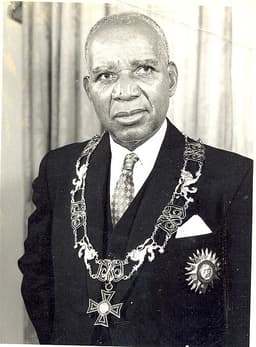
Hastings Banda
Politician · Modern
49.3Total
Basic Information
Born
1937
1898
Died
—
1997
Era
Modern
Modern
Nationality
Palestine
Malawi
Occupation
Politician
Politician
Civilization
Middle Eastern
Other
Score Comparison
Military (10%)
46.1
13.4
Political (20%)
61.3
48.0
Influence (20%)
52.5
54.9
Legacy (20%)
45.0
45.0
Leadership (15%)
67.0
74.0
Strategy (15%)
44.3
47.0
TOTAL
52.7
49.3
Ahmed Qurei — Complete Timeline
1993 AD
Led Oslo NegotiationsPolitical Action
Qurei headed the Palestinian delegation in secret talks with Israel in Oslo, Norway. The negotiations produced the Oslo Accords, which established the Palestinian Authority and set a framework for peace, though implementation faltered.
Oslo AccordsPeace processNegotiations
Impact: globalconstructive
2003 AD
Appointed Prime Minister of Palestinian AuthorityPolitical Action◆ Major
Qurei was appointed Prime Minister by Yasser Arafat during the Second Intifada. He faced challenges of Israeli military operations, internal Palestinian unrest, and the failure of the peace process.
Palestinian AuthorityPrime MinisterSecond Intifada
Impact: national
2006 AD
Resigned as Prime MinisterPolitical Action◆ Major
Qurei resigned after Hamas won the 2006 Palestinian legislative elections. His resignation reflected the political shift and the beginning of the Fatah-Hamas split that would lead to the Gaza takeover.
ResignationHamas victoryPalestinian Authority
Impact: national
Hastings Banda — Complete Timeline
1958 AD
Returned to Malawi and led independence movementPolitical Action◆ Major
Banda returned to Nyasaland after decades abroad and assumed leadership of the Nyasaland African Congress. He led the push for independence from British colonial rule, becoming the central figure in the nationalist movement.
IndependenceNationalismDecolonization
Impact: nationalconstructive
1963 AD
Became first Prime Minister of independent MalawiPolitical Action
Following constitutional changes and elections, Banda became Prime Minister of self-governing Nyasaland. On July 6, 1964, Malawi achieved full independence from Britain, with Banda as its first Prime Minister.
IndependenceGovernment Formation
Impact: nationalconstructive
1966 AD
Declared Malawi a one-party statePolitical Action◆ Major
Banda declared Malawi a republic and himself President. He consolidated power by making the Malawi Congress Party the sole legal party, banning all opposition and establishing an authoritarian regime that lasted for three decades.
AuthoritarianismOne-Party StateRepression
Impact: nationaldestructive
1967 AD
Established diplomatic relations with apartheid South AfricaPolitical Action◆ Major
Banda became the first African leader to establish formal diplomatic relations with apartheid South Africa. This controversial decision provided Malawi with economic aid and trade benefits but drew sharp criticism from other African nations.
Foreign PolicyApartheidDiplomacy
Impact: regional
1994 AD
Lost power in multi-party electionsPolitical Action◆ Major
After decades of authoritarian rule, Banda was defeated in Malawi's first multi-party elections since independence. Bakili Muluzi of the United Democratic Front won the presidency, ending Banda's 31-year rule.
ElectionTransitionDemocracy
Impact: national
Expert Analysis
Origins
Ahmed Qurei was born in 1937 in Abu Dis, Palestine. He studied at the Arab College in Jerusalem and later worked for the Arab Bank. His early career in finance and business contrasted with his later political role. Qurei joined Fatah in the 1960s, becoming a key figure in the Palestine Liberation Organization (PLO). His background in economics and management shaped his pragmatic approach.
Hastings Kamuzu Banda was born around 1898 in Kasungu, Nyasaland (now Malawi). He left Africa as a youth, working in South Africa and then the United States, where he earned a degree in history and political science. He later studied medicine in the UK and became a doctor. Banda spent decades abroad, building a professional career before returning to lead Malawi's independence movement.
Rise to Power
Qurei rose to prominence as a behind-the-scenes negotiator. In 1993, he headed the Palestinian delegation in secret talks with Israel in Oslo, Norway. These negotiations produced the Oslo Accords, signed in 1993, which established the Palestinian Authority (PA) and set a framework for peace. Qurei's role earned him the position of Minister of Economy and later Speaker of the Palestinian Legislative Council. In 2003, amid the Second Intifada, Yasser Arafat appointed him Prime Minister to manage the crisis.
Banda's rise was different. He returned to Nyasaland in 1958 after 40 years abroad, invited by the Nyasaland African Congress (NAC). He quickly became its leader, demanding independence from Britain. After the 1959 state of emergency and his imprisonment, Banda emerged as a nationalist hero. He negotiated the 1964 independence constitution, becoming Prime Minister and later President of Malawi. He declared a one-party state in 1966, centralizing power under the Malawi Congress Party.
Leadership & Governance
Qurei led the PA during a turbulent period. He focused on security coordination with Israel and internal reforms, but his authority was limited by Arafat's dominance and Israeli military operations. He advocated for negotiations over violence, scoring 67.0 in leadership, but his political score of 61.3 reflects his constrained effectiveness. His governance was technocratic but lacked the power to implement lasting change.
Banda ruled Malawi with an iron fist. He maintained diplomatic relations with apartheid South Africa, a controversial decision that provided Malawi with economic aid and trade. Domestically, he suppressed opposition, banned rival parties, and controlled the media. His leadership score of 74.0 reflects his strong control, but his political score is only 48.0 due to authoritarian excesses. He invested in education and infrastructure but at the cost of human rights.
Triumph & Tragedy
Qurei's greatest success was negotiating the Oslo Accords, a historic breakthrough that brought Palestinian self-rule. However, the Accords' failure to achieve a final peace and the subsequent collapse of the peace process became his tragedy. He resigned in 2006 after Hamas won elections, marking the end of Fatah's dominance.
Banda's triumph was leading Malawi to independence and maintaining stability. He built schools and hospitals, and his pro-Western stance attracted foreign aid. His tragedy was his authoritarian rule: he crushed dissent, detained opponents, and his policies left Malawi poor and unequal. His refusal to transition to democracy until forced in 1994 tarnished his legacy.
Character & Destiny
Qurei was pragmatic and patient, a deal-maker rather than a charismatic leader. His destiny tied to the Oslo process; when it stalled, his influence waned. His score of 46.1 in military reflects his non-military approach, but his strategy score of 44.3 indicates limited long-term vision.
Banda was autocratic and shrewd, with a messianic self-image. He believed in strong leadership and was ruthless against opposition. His destiny was to be both liberator and dictator; his character shaped a legacy of mixed achievements and repression.
Legacy
Qurei's legacy is intertwined with the Oslo Accords, which remain a reference point for peace efforts. He is remembered as a negotiator but not as a transformative leader. His influence score of 52.5 and legacy of 45.0 reflect his limited long-term impact.
Banda's legacy is more complex. He is celebrated as the father of Malawi's independence but also condemned for his authoritarian rule. His influence score of 54.9 and legacy of 45.0 are similar to Qurei's. However, his impact on Malawi's political culture—centralized and repressive—outlasted his rule.
Conclusion
While Qurei's total score (52.7) edges Banda's (49.3), Banda had greater impact. Qurei's influence was tied to a failed peace process, whereas Banda shaped an entire nation for three decades. Banda's leadership score (74.0) and influence (54.9) reflect his deeper imprint, despite his oppressive methods. Qurei's role was pivotal but temporary; Banda's legacy endures in Malawi's institutions and challenges. Therefore, Hastings Banda had greater historical impact.
Rankings
🥇
Ahmed QureiLeader
Mil: 46.1Pol: 61.3Inf: 52.5
52.7
🥈
Hastings Banda
Mil: 13.4Pol: 48.0Inf: 54.9
49.3
+3.4 behind
How This Comparison Works
Algorithm
Each figure is scored on 6 dimensions (0—100 scale) based on structured historical data: Military (10%), Political (20%), Influence (20%), Legacy (20%), Leadership (15%), Strategy (15%). The weighted total produces the final ranking.
Data Sources
Scores are computed from structured sub-indicators in the database. Scale factors adjust for era (Ancient ×0.85, Modern ×1.0) and civilization size (Eastern ×1.05, Other ×0.80) to account for differences in population and military scale.
Maximum 3 Figures
Comparisons are limited to 2—3 figures to ensure readability and statistical meaningfulness.
Error Margins
±5 points per dimension — Sub-scores are derived from historical records with inherent uncertainty. Two figures within 5 points on a dimension should be considered roughly equivalent in that area.
Total Score Accuracy
±3 points overall — The weighted combination of 6 dimensions produces a total score with approximately ±3 points of uncertainty. Differences of less than 3 points are not statistically significant— the figures are effectively tied.
Known Limitations
- Historical records are incomplete and uneven across civilizations
- Figures from oral-tradition societies may be underrepresented
- Occupation labels can misclassify multi-role figures
- Scores measure capability and impact, not moral character
- Quantitative scoring is a comparison tool, not absolute truth
Capability Radar
Military (10%) — Battles & Warfare
Battles
22
27
Win Rate
22
29
Expansion
30
31
Political (20%) — Governance & Reform
Reform
40
50
Diplomacy
60
40
Economy
30
30
Influence (20%) — Cultural & Global Reach
Cultural
20
40
Global
35
30
Legacy (20%) — Historical Impact
Historical
40
50
Longevity
30
30
Leadership (15%) — Power & Stability
Tenure
45
70
Stability
25
20
Strategy (15%) — Tactics & Innovation
Strategy
31
36
Tactics
35
36
Reform
34
42
Similar Comparisons
Comments & Discussion
No comments yet. Be the first to share your thoughts!