Loading...
Hastings Banda vs Megawati Sukarnoputri
Hastings Banda leads by 3.3 pts · 2 figures compared
…
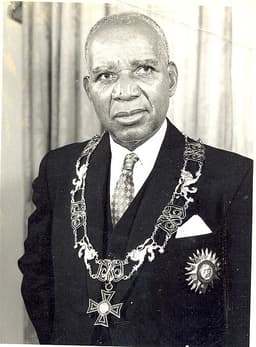
Hastings Banda
Politician · Modern
49.3Total

Megawati Sukarnoputri
Politician · Modern
46.0Total
Basic Information
Born
1898
1947
Died
1997
—
Era
Modern
Modern
Nationality
Malawi
Indonesia
Occupation
Politician
Politician
Civilization
Other
Eastern
Score Comparison
Military (10%)
13.4
13.7
Political (20%)
48.0
40.8
Influence (20%)
54.9
56.4
Legacy (20%)
45.0
45.0
Leadership (15%)
74.0
64.0
Strategy (15%)
47.0
36.0
TOTAL
49.3
46.0
Hastings Banda — Complete Timeline
1958 AD
Returned to Malawi and led independence movementPolitical Action◆ Major
Banda returned to Nyasaland after decades abroad and assumed leadership of the Nyasaland African Congress. He led the push for independence from British colonial rule, becoming the central figure in the nationalist movement.
IndependenceNationalismDecolonization
Impact: nationalconstructive
1963 AD
Became first Prime Minister of independent MalawiPolitical Action
Following constitutional changes and elections, Banda became Prime Minister of self-governing Nyasaland. On July 6, 1964, Malawi achieved full independence from Britain, with Banda as its first Prime Minister.
IndependenceGovernment Formation
Impact: nationalconstructive
1966 AD
Declared Malawi a one-party statePolitical Action◆ Major
Banda declared Malawi a republic and himself President. He consolidated power by making the Malawi Congress Party the sole legal party, banning all opposition and establishing an authoritarian regime that lasted for three decades.
AuthoritarianismOne-Party StateRepression
Impact: nationaldestructive
1967 AD
Established diplomatic relations with apartheid South AfricaPolitical Action◆ Major
Banda became the first African leader to establish formal diplomatic relations with apartheid South Africa. This controversial decision provided Malawi with economic aid and trade benefits but drew sharp criticism from other African nations.
Foreign PolicyApartheidDiplomacy
Impact: regional
1994 AD
Lost power in multi-party electionsPolitical Action◆ Major
After decades of authoritarian rule, Banda was defeated in Malawi's first multi-party elections since independence. Bakili Muluzi of the United Democratic Front won the presidency, ending Banda's 31-year rule.
ElectionTransitionDemocracy
Impact: national
Megawati Sukarnoputri — Complete Timeline
1999 AD
Appointed Vice President Under Abdurrahman WahidPolitical Action
Megawati was elected vice president by the People's Consultative Assembly, serving under President Abdurrahman Wahid. Her appointment was part of a power-sharing arrangement between secular nationalists and Islamic parties.
Vice PresidencyCoalitionReformasi
Impact: nationalconstructive
Led Indonesian Democratic Party of Struggle (PDI-P) to VictoryPolitical Action◆ Major
Megawati's PDI-P won the largest share of votes in the 1999 legislative election, securing 33.7% of the vote. Despite this victory, she was initially denied the presidency due to political maneuvering by Islamic parties.
Election VictoryPDI-PDemocracy
Impact: nationalconstructive
2001 AD
Became First Female President of IndonesiaPolitical Action
Megawati Sukarnoputri was sworn in as the fifth president of Indonesia, succeeding Abdurrahman Wahid after his impeachment. She became the first female president of Indonesia and the first woman to lead a Muslim-majority nation.
PresidencyGender EqualityFirst Female President
Impact: globalconstructive
2004 AD
Lost Presidential Election to Susilo Bambang YudhoyonoPolitical Action◆ Major
Megawati was defeated in the first direct presidential election by Susilo Bambang Yudhoyono. The election marked Indonesia's first direct presidential vote, and her loss ended her presidency after three years.
ElectionDefeatDemocracy
Impact: national
Expert Analysis
Origins
Hastings Kamuzu Banda was born around 1898 in Kasungu, Nyasaland (now Malawi). Of Chewa descent, he left Africa at a young age, traveling to the United States and then the United Kingdom, where he earned medical degrees and practiced as a physician. His long absence from his homeland shaped his outsider perspective.
Megawati Sukarnoputri was born on January 23, 1947, in Yogyakarta, Indonesia, the daughter of Sukarno, Indonesia's founding president. She studied agriculture at Padjadjaran University but did not complete her degree. Her upbringing in the presidential palace gave her political connections but also exposed her to the turbulence of Indonesian politics.
Rise to Power
Banda returned to Nyasaland in 1958 after decades abroad, invited by the Nyasaland African Congress (NAC) to lead the independence movement. He quickly became the face of the struggle, and after the 1961 elections, he became Prime Minister of self-governing Nyasaland. On July 6, 1964, Malawi achieved full independence, with Banda as its first Prime Minister. In 1966, he declared Malawi a republic and made the Malawi Congress Party the sole legal party, becoming President for life.
Megawati entered politics in the 1980s during the New Order regime of Suharto. She became a member of the Indonesian Democratic Party (PDI) and rose to prominence after her father's legacy. In 1996, after a split in the party, she formed the Indonesian Democratic Party of Struggle (PDI-P). Following Suharto's fall in 1998, her party won the 1999 legislative elections with 33.7% of the vote. However, she was initially blocked from the presidency by a coalition that elected Abdurrahman Wahid. After Wahid's impeachment in 2001, Megawati became president, scoring 40.8 in political skill compared to Banda's 48.0.
Leadership & Governance
Banda ruled Malawi with an iron fist from 1966 to 1994. He suppressed opposition, banned political parties, and controlled the media. His foreign policy was pragmatic: he established diplomatic relations with apartheid South Africa in 1967, becoming the first black African leader to do so. This brought economic aid and investment to landlocked Malawi, but it cost him support from fellow African leaders. Domestically, he pursued authoritarian modernization, building infrastructure and promoting education, but at the cost of human rights. His strategy score of 47.0 reflects his cautious but effective diplomacy.
Megawati's leadership style was more passive. As president from 2001 to 2004, she presided over Indonesia's transition to democracy. She continued economic reforms and maintained stability but faced criticism for indecisiveness. Her military score of 13.7 is similar to Banda's 13.4, as neither had military backgrounds. However, Megawati's leadership score of 64.0 is lower than Banda's 74.0, indicating her less assertive governance.
Triumph & Tragedy
Banda's greatest triumph was leading Malawi to independence and maintaining stability in a volatile region. He built schools, hospitals, and roads, and his agricultural policies achieved food self-sufficiency. However, his tragedy was his authoritarian rule: he banned opposition, imprisoned critics, and created a cult of personality. His legacy was tarnished by human rights abuses, including the 1983 murder of three cabinet ministers.
Megawati's triumph was becoming Indonesia's first female president and overseeing a peaceful democratic transition. Her presidency saw the end of military involvement in politics and the establishment of direct presidential elections. Her tragedy was losing the 2004 election to Susilo Bambang Yudhoyono, and her tenure was marked by a lack of major initiatives. She scored 56.4 in influence, slightly higher than Banda's 54.9, due to her symbolic role as Sukarno's daughter.
Character & Destiny
Banda was autocratic, meticulous, and deeply suspicious of others. His long absence from Africa made him an outsider, and he ruled with a sense of mission. His character shaped his destiny: his authoritarianism ensured his long rule but also led to his downfall when he was forced to accept multi-party elections in 1994. He lost power to Bakili Muluzi.
Megawati was reserved, often hesitant, and relied on her father's legacy. Her character made her a unifying figure but also a weak decision-maker. Her destiny was to be a transitional president, paving the way for more decisive leaders.
Legacy
Banda's legacy is mixed. He is remembered as the founding father of Malawi but also as a dictator. His policies of engagement with South Africa remain controversial. The one-party state he created lasted until 1994, and his influence on Malawi's political culture endures. His total score of 49.3 reflects this ambiguity.
Megawati's legacy is as a symbol of democracy and women's leadership. Her presidency helped consolidate Indonesia's democracy, but she is often seen as a placeholder. Her total score of 46.0 is lower, but her influence on gender equality in politics is significant.
Conclusion
Hastings Banda had a greater impact on Malawi than Megawati had on Indonesia, as reflected in his higher total score of 49.3 versus her 46.0. Banda's authoritarian rule shaped Malawi's post-independence trajectory, for better or worse, while Megawati's presidency was a brief chapter in Indonesia's democratic consolidation. Although Megawati's influence as a female leader is notable, Banda's control over a small, landlocked nation and his controversial foreign policy left a deeper mark. In a direct comparison, Banda's political and leadership scores (48.0 and 74.0) outweigh Megawati's (40.8 and 64.0), making him the more consequential figure.
Rankings
🥇
Hastings BandaLeader
Mil: 13.4Pol: 48.0Inf: 54.9
49.3
🥈
Megawati Sukarnoputri
Mil: 13.7Pol: 40.8Inf: 56.4
46.0
+3.3 behind
How This Comparison Works
Algorithm
Each figure is scored on 6 dimensions (0—100 scale) based on structured historical data: Military (10%), Political (20%), Influence (20%), Legacy (20%), Leadership (15%), Strategy (15%). The weighted total produces the final ranking.
Data Sources
Scores are computed from structured sub-indicators in the database. Scale factors adjust for era (Ancient ×0.85, Modern ×1.0) and civilization size (Eastern ×1.05, Other ×0.80) to account for differences in population and military scale.
Maximum 3 Figures
Comparisons are limited to 2—3 figures to ensure readability and statistical meaningfulness.
Error Margins
±5 points per dimension — Sub-scores are derived from historical records with inherent uncertainty. Two figures within 5 points on a dimension should be considered roughly equivalent in that area.
Total Score Accuracy
±3 points overall — The weighted combination of 6 dimensions produces a total score with approximately ±3 points of uncertainty. Differences of less than 3 points are not statistically significant— the figures are effectively tied.
Known Limitations
- Historical records are incomplete and uneven across civilizations
- Figures from oral-tradition societies may be underrepresented
- Occupation labels can misclassify multi-role figures
- Scores measure capability and impact, not moral character
- Quantitative scoring is a comparison tool, not absolute truth
Capability Radar
Military (10%) — Battles & Warfare
Battles
27
11
Win Rate
29
19
Expansion
31
21
Political (20%) — Governance & Reform
Reform
50
30
Diplomacy
40
40
Economy
30
25
Influence (20%) — Cultural & Global Reach
Cultural
40
35
Global
30
35
Legacy (20%) — Historical Impact
Historical
50
40
Longevity
30
30
Leadership (15%) — Power & Stability
Tenure
70
45
Stability
20
30
Strategy (15%) — Tactics & Innovation
Strategy
36
26
Tactics
36
24
Reform
42
27
Similar Comparisons
Comments & Discussion
No comments yet. Be the first to share your thoughts!