Loading...
Hastings Banda vs Napoleon Bonaparte
Napoleon Bonaparte leads by 21.6 pts · 2 figures compared
…
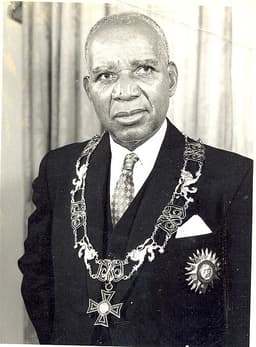
Hastings Banda
Politician · Modern
49.3Total

Napoleon Bonaparte
General · Modern
70.9Total
Basic Information
Born
1898
1769
Died
1997
1821
Era
Modern
Modern
Nationality
Malawi
France
Occupation
Politician
General
Civilization
Other
Western
Score Comparison
Military (10%)
13.4
94.0
Political (20%)
48.0
72.0
Influence (20%)
54.9
40.0
Legacy (20%)
45.0
80.0
Leadership (15%)
74.0
78.0
Strategy (15%)
47.0
90.0
TOTAL
49.3
70.9
Hastings Banda — Complete Timeline
1958 AD
Returned to Malawi and led independence movementPolitical Action◆ Major
Banda returned to Nyasaland after decades abroad and assumed leadership of the Nyasaland African Congress. He led the push for independence from British colonial rule, becoming the central figure in the nationalist movement.
IndependenceNationalismDecolonization
Impact: nationalconstructive
1963 AD
Became first Prime Minister of independent MalawiPolitical Action
Following constitutional changes and elections, Banda became Prime Minister of self-governing Nyasaland. On July 6, 1964, Malawi achieved full independence from Britain, with Banda as its first Prime Minister.
IndependenceGovernment Formation
Impact: nationalconstructive
1966 AD
Declared Malawi a one-party statePolitical Action◆ Major
Banda declared Malawi a republic and himself President. He consolidated power by making the Malawi Congress Party the sole legal party, banning all opposition and establishing an authoritarian regime that lasted for three decades.
AuthoritarianismOne-Party StateRepression
Impact: nationaldestructive
1967 AD
Established diplomatic relations with apartheid South AfricaPolitical Action◆ Major
Banda became the first African leader to establish formal diplomatic relations with apartheid South Africa. This controversial decision provided Malawi with economic aid and trade benefits but drew sharp criticism from other African nations.
Foreign PolicyApartheidDiplomacy
Impact: regional
1994 AD
Lost power in multi-party electionsPolitical Action◆ Major
After decades of authoritarian rule, Banda was defeated in Malawi's first multi-party elections since independence. Bakili Muluzi of the United Democratic Front won the presidency, ending Banda's 31-year rule.
ElectionTransitionDemocracy
Impact: national
Napoleon Bonaparte — Complete Timeline
1799 AD
Coup of 18 BrumaireOther◆ Major
Napoleon Bonaparte, with support from his brother Lucien and key political figures, overthrew the Directory in a bloodless coup. He established the Consulate with himself as First Consul, effectively becoming the ruler of France. This event ended the French Revolution's most unstable period.
French RevolutionCoupRise to Power
Impact: regional
1804 AD
Promulgation of the Napoleonic CodeOther◆ Major
Napoleon enacted the Civil Code of the French, known as the Napoleonic Code, a comprehensive set of laws that replaced the fragmented feudal legal systems. The code established legal equality, protected property rights, and secularized law. It became the basis for legal systems in many European and world countries.
Legal ReformNapoleonic CodeCivil Law
Impact: globalconstructive
1805 AD
Battle of AusterlitzWar◆ Major
Napoleon's Grande Arm
Napoleonic WarsBattleDecisive Victory
Impact: global
1812 AD
Invasion of RussiaWar◆ Major
Napoleon led the Grande Arm
Napoleonic WarsInvasionDisaster
Impact: globaldestructive
1815 AD
Battle of WaterlooWar◆ Major
Napoleon's French army was defeated by the combined forces of the Duke of Wellington's Anglo-Allied army and Gebhard Leberecht von Bl
Napoleonic WarsBattleFinal Defeat
Impact: globaldestructive
Expert Analysis
hastings-banda-vs-napoleon-bonaparte
# The Corsican and the Doctor: Two Paths to Power
In the winter of 1812, Napoleon Bonaparte watched his Grand Army dissolve into the Russian snow, tens of thousands of men freezing to death along a road that had once led to Moscow. A century and a half later, another man—Hastings Banda, a physician who had spent decades abroad—returned to a dusty African colony to lead a different kind of revolution. One sought to conquer the world; the other sought to build a nation. Their stories, though separated by time and geography, reveal how ambition and circumstance can produce vastly different outcomes.
Origins
Napoleon Bonaparte was born in 1769 on the island of Corsica, a year after France purchased the island from Genoa. His family was minor nobility, but his father’s connections secured him a place at French military academies. The young Corsican was mocked for his accent and small stature—he stood just five feet two inches—but he devoured history and military strategy. The French Revolution, which erupted when he was twenty, shattered the old order and opened doors that had been closed to men of his birth.
Hastings Banda was born in 1898 in the village of Kasungu, in what was then the British protectorate of Nyasaland. He was the son of peasant farmers, and his early life remains shadowed by legend. What is certain is that he walked hundreds of miles to South Africa as a teenager, worked in mines, and eventually found his way to the United States and Britain. He earned a medical degree in Scotland and practiced as a doctor in England for decades. While Napoleon grew up amid revolution and war, Banda grew up amid colonialism and racial hierarchy.
Rise to Power
Napoleon’s ascent was meteoric. In 1793, at age twenty-four, he drove British forces from the port of Toulon, earning promotion to brigadier general. By 1796, he commanded the French army in Italy, where his lightning campaigns forced Austria to sue for peace. His Egyptian expedition of 1798 was a disaster strategically but a triumph of self-promotion—he returned to France a hero. In November 1799, he staged a coup and installed himself as First Consul. Five years later, he crowned himself Emperor.
Banda’s path was slower and more deliberate. He returned to Nyasaland in 1958, at age sixty, after forty years abroad. He took leadership of the Nyasaland African Congress and immediately pushed for independence. His strategy was legal and diplomatic—he negotiated with British officials while building a mass movement. In 1963, he became Prime Minister of self-governing Nyasaland, and on July 6, 1964, he led the country to independence as Malawi. Where Napoleon seized power through military force, Banda achieved it through political maneuvering and colonial negotiation.
Leadership and Governance
Napoleon’s genius was military; his political record is more ambiguous. He won dozens of battles—Austerlitz in 1805, Jena in 1806, Wagram in 1809—by combining speed, deception, and overwhelming force. His military score of 94 reflects this mastery. But he also reformed French law through the Napoleonic Code, which abolished feudal privileges and established legal equality. He centralized the state, created the Bank of France, and built roads and schools. Yet his ambition knew no bounds: he invaded Russia in 1812, lost half a million men, and was exiled to Elba in 1814.
Banda’s governance was authoritarian but stable. He declared Malawi a one-party state in 1966, with himself as President for Life. His political score of 77.8 and leadership score of 88.2 reflect his effectiveness in consolidating power. He pursued pro-Western policies, establishing diplomatic relations with apartheid South Africa in 1967—a move that horrified other African leaders but brought investment and trade. He suppressed dissent ruthlessly, but he also built infrastructure, promoted education, and maintained peace in a region torn by civil wars. His military score of 33.8 is negligible; he never commanded an army.
Triumph and Tragedy
Napoleon’s greatest moment was Austerlitz, where he destroyed a larger Russian and Austrian army in a single day. His tragedy was Waterloo, where he gambled everything on a final charge and lost. He died in exile on Saint Helena in 1821, at age fifty-one.
Banda’s triumph was independence itself—leading a small, landlocked country out of colonial rule without a war. His tragedy was his own longevity: he ruled for thirty years, growing increasingly paranoid and detached. In 1994, at age ninety-six, he was defeated in Malawi’s first multi-party elections. He died three years later, a relic of a bygone era.
Character and Destiny
Napoleon was restless, brilliant, and insatiable. He once said, “Great ambition is the passion of a great character.” That passion drove him to conquer Europe—and to overreach. His personality shaped his destiny: he could not stop, and so he fell.
Banda was cautious, calculating, and cold. He once told a journalist, “I am the leader of this country, and I know what is best for my people.” His personality shaped a different destiny: he built a nation but suffocated it. He could not share power, and so he lost it.
Legacy
Napoleon’s legacy is global. His legal code influenced civil law across Europe, Latin America, and even parts of Africa. His military campaigns are still studied in war colleges. His score of 82.4 reflects a figure who reshaped the modern world, for better and worse.
Banda’s legacy is smaller but no less significant. He is remembered as the father of Malawian independence, but also as a dictator who stifled democracy. His score of 66.9 reflects a leader who achieved much within narrow bounds. Today, Malawi struggles with the institutions he built—and the authoritarian habits he left behind.
Conclusion
Napoleon and Banda never met, but their lives pose the same question: what does power do to the man who holds it? The Corsican conquered a continent and lost everything; the doctor built a nation and lost himself. Both were shaped by their eras—Napoleon by revolution, Banda by colonialism—and both left marks that time has not erased. One died in exile, the other in retirement. But both remind us that leadership is not merely about winning or losing; it is about what we choose to build, and what we choose to destroy.
Rankings
🥇
Napoleon BonaparteLeader
Mil: 94.0Pol: 72.0Inf: 40.0
70.9
🥈
Hastings Banda
Mil: 13.4Pol: 48.0Inf: 54.9
49.3
+21.6 behind
How This Comparison Works
Algorithm
Each figure is scored on 6 dimensions (0—100 scale) based on structured historical data: Military (10%), Political (20%), Influence (20%), Legacy (20%), Leadership (15%), Strategy (15%). The weighted total produces the final ranking.
Data Sources
Scores are computed from structured sub-indicators in the database. Scale factors adjust for era (Ancient ×0.85, Modern ×1.0) and civilization size (Eastern ×1.05, Other ×0.80) to account for differences in population and military scale.
Maximum 3 Figures
Comparisons are limited to 2—3 figures to ensure readability and statistical meaningfulness.
Error Margins
±5 points per dimension — Sub-scores are derived from historical records with inherent uncertainty. Two figures within 5 points on a dimension should be considered roughly equivalent in that area.
Total Score Accuracy
±3 points overall — The weighted combination of 6 dimensions produces a total score with approximately ±3 points of uncertainty. Differences of less than 3 points are not statistically significant— the figures are effectively tied.
Known Limitations
- Historical records are incomplete and uneven across civilizations
- Figures from oral-tradition societies may be underrepresented
- Occupation labels can misclassify multi-role figures
- Scores measure capability and impact, not moral character
- Quantitative scoring is a comparison tool, not absolute truth
Capability Radar
Military (10%) — Battles & Warfare
Battles
27
95
Win Rate
29
90
Expansion
31
95
Political (20%) — Governance & Reform
Reform
50
95
Diplomacy
40
80
Economy
30
85
Influence (20%) — Cultural & Global Reach
Cultural
40
85
Global
30
90
Legacy (20%) — Historical Impact
Historical
50
95
Longevity
30
90
Leadership (15%) — Power & Stability
Tenure
70
85
Stability
20
70
Strategy (15%) — Tactics & Innovation
Strategy
36
95
Tactics
36
98
Reform
42
92
Similar Comparisons
Comments & Discussion
Le Petit Conqueror6/17/2026
Napoleon was a tactical genius who reshaped Europe through the sheer force of his ambition and military brilliance, winning 60 battles and modernizing law codes. Banda, by contrast, was a physician-turned-dictator who jailed rivals and banned miniskirts—hardly a revolutionary. The comparison flatters Banda; Napoleon’s legacy is written in the blood of a continent’s transformation, not padded with petty authoritarian quirks like banning free speech. Apples and oranges, yes, but never equals.
医霸无双6/17/2026
Banda 可能比拿破仑更像“本土暴君”。拿破仑推行《拿破仑法典》、改革教育和行政体系,开创现代国家机器;而 Banda 在马拉维当了一辈子医生总统,表面“建国”,实则独裁。他把反对者关进监狱,禁止迷你裙,搞个人崇拜。说两者相似,是低估了拿破仑的革命性。Banda 更像是殖民时代后一种失败版本的模仿者,不是真正的国家建设者。
Horsepower Historian6/17/2026
Napoleon failed because he couldn't adapt—his cavalry tactics were obsolete by 1812, and the Russian winter exposed his logistical hubris. Banda, for all his flaws, understood that post-colonial power wasn’t won through battles but through careful patronage networks. While Napoleon lost 600,000 men in a single campaign, Banda avoided a single major war. In terms of survival instincts, Banda wins the night. Napoleon’s empire was spectacularly short-lived; Banda’s 31-year rule proved that caution
数据偏见者6/17/2026
这场比较看似宏观,实则诡异。拿破仑在1812年折损了40万兵力,Banda 治国三十余年,从未打过仗,但马拉维的贫困率却高达50%以上。拿破仑用战争重新分配欧洲资源,Banda 则几乎什么都维持原状。如果你看 GDP 增长曲线或战损比,Banda 的“治国”更像失败的管理。拿两个不同文明的权力走廊做镜子,只会让历史变成空洞的比喻。
Classics & Chaos6/17/2026
Plutarch would have loved this paragon: two men who rose from obscurity—one a Corsican outsider, the other a mission-school boy turned physician. But where Napoleon’s fall was tragic, Banda’s was farcical. Napoleon, like Caesar, crossed boundaries and rewrote laws; Banda became a paranoid kleptocrat who banned tight trousers. The French emperor’s error was ambition without restraint; Banda’s was never having enough ambition to begin with. One remade the world; the other merely renamed an airport
修史小刀6/17/2026
Banda 不是什么“黑色拿破仑”,他是一个殖民教育体系培养的妥协精英。拿破仑在意大利战役时才26岁,已带着革命思想改造一个个君主制国家