Loading...
Francesco Cossiga vs Hastings Banda
Francesco Cossiga leads by 8.1 pts · 2 figures compared
…

Francesco Cossiga
Politician · Modern
57.4Total
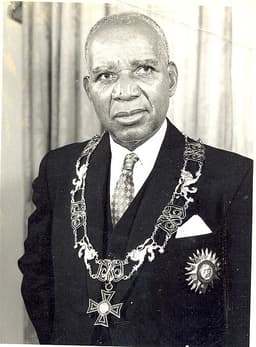
Hastings Banda
Politician · Modern
49.3Total
Basic Information
Born
1928
1898
Died
—
1997
Era
Modern
Modern
Nationality
Italy
Malawi
Occupation
Politician
Politician
Civilization
Western
Other
Score Comparison
Military (10%)
46.8
13.4
Political (20%)
68.0
48.0
Influence (20%)
62.0
54.9
Legacy (20%)
48.3
45.0
Leadership (15%)
72.0
74.0
Strategy (15%)
41.4
47.0
TOTAL
57.4
49.3
Francesco Cossiga — Complete Timeline
1976 AD
Minister of the InteriorPolitical Action◆ Major
Cossiga served as Minister of the Interior from 1976 to 1978 during the Years of Lead. He oversaw security measures against terrorism, including the response to the kidnapping and murder of Aldo Moro by the Red Brigades in 1978.
Italian PoliticsTerrorismYears of Lead
Impact: national
1979 AD
Prime Minister of ItalyPolitical Action◆ Major
Cossiga served as Prime Minister from August 1979 to October 1980. His government focused on combating terrorism and economic instability, but fell after losing parliamentary support over economic policies and the Bologna massacre.
Italian PoliticsGovernmentTerrorism
Impact: national
1985 AD
President of ItalyPolitical Action◆ Major
Cossiga was elected President of the Italian Republic in June 1985. His presidency was marked by a shift from a ceremonial role to an active political intervention, earning him the nickname 'picconatore' (pickaxe) for his attacks on the political establishment.
Italian PresidencyPolitical InterventionPicconatore
Impact: national
1992 AD
Resignation as PresidentPolitical Action◆ Major
Cossiga resigned as President in April 1992, two months before the end of his term, citing political isolation and frustration with the party system. His resignation was a dramatic gesture that highlighted the crisis of the First Italian Republic.
Italian PoliticsPresidential ResignationPolitical Crisis
Impact: nationaltragic
Senator for lifePolitical Action
After resigning as President, Cossiga automatically became a senator for life. He continued to be an active and controversial figure in Italian politics, often criticizing the political class and advocating for institutional reforms.
Italian PoliticsSenateInstitutional Reform
Impact: national
Hastings Banda — Complete Timeline
1958 AD
Returned to Malawi and led independence movementPolitical Action◆ Major
Banda returned to Nyasaland after decades abroad and assumed leadership of the Nyasaland African Congress. He led the push for independence from British colonial rule, becoming the central figure in the nationalist movement.
IndependenceNationalismDecolonization
Impact: nationalconstructive
1963 AD
Became first Prime Minister of independent MalawiPolitical Action
Following constitutional changes and elections, Banda became Prime Minister of self-governing Nyasaland. On July 6, 1964, Malawi achieved full independence from Britain, with Banda as its first Prime Minister.
IndependenceGovernment Formation
Impact: nationalconstructive
1966 AD
Declared Malawi a one-party statePolitical Action◆ Major
Banda declared Malawi a republic and himself President. He consolidated power by making the Malawi Congress Party the sole legal party, banning all opposition and establishing an authoritarian regime that lasted for three decades.
AuthoritarianismOne-Party StateRepression
Impact: nationaldestructive
1967 AD
Established diplomatic relations with apartheid South AfricaPolitical Action◆ Major
Banda became the first African leader to establish formal diplomatic relations with apartheid South Africa. This controversial decision provided Malawi with economic aid and trade benefits but drew sharp criticism from other African nations.
Foreign PolicyApartheidDiplomacy
Impact: regional
1994 AD
Lost power in multi-party electionsPolitical Action◆ Major
After decades of authoritarian rule, Banda was defeated in Malawi's first multi-party elections since independence. Bakili Muluzi of the United Democratic Front won the presidency, ending Banda's 31-year rule.
ElectionTransitionDemocracy
Impact: national
Expert Analysis
Origins
Francesco Cossiga was born on July 26, 1928, in Sassari, Sardinia, into a middle-class family. His father was a magistrate, and Cossiga studied law at the University of Sassari, where he became a professor of constitutional law. His early career was academic, but he entered politics in the 1950s as a member of the Christian Democracy party.
Hastings Kamuzu Banda was born around 1898 in Kasungu, Nyasaland (now Malawi), to a Chewa family. He left for South Africa at age 13, then traveled to the United States and the United Kingdom for education. He earned a medical degree from Meharry Medical College in 1937 and practiced medicine in England. He returned to Nyasaland in 1958 after decades abroad to lead the independence movement.
Rise to Power
Cossiga rose through the ranks of the Christian Democracy party. He served as Minister of the Interior from 1976 to 1978 during Italy's Years of Lead, a period of political terrorism. He implemented hardline security measures, including the use of special forces against the Red Brigades. He became Prime Minister from August 1979 to October 1980, focusing on combating terrorism and economic instability, but his government fell due to political infighting. In June 1985, he was elected President of Italy, a role traditionally ceremonial, but he transformed it into an active political platform.
Banda returned to Nyasaland in 1958 and assumed leadership of the Nyasaland African Congress. He led the push for independence from Britain, and on July 6, 1964, Malawi became independent with Banda as Prime Minister. He consolidated power by declaring Malawi a republic in 1966 and making the Malawi Congress Party the sole legal party, banning all opposition. His authoritarian rule lasted until 1994.
Leadership & Governance
Cossiga's leadership style was confrontational and unpredictable. As President, he publicly criticized political parties, the judiciary, and the media, earning the nickname "picconatore" (pickaxe) for his willingness to dismantle established structures. He used his powers aggressively, including dissolving parliament and calling for referendums. His governance score of 72.0 reflects his active but controversial style.
Banda ruled as a autocrat with a cult of personality. He was President for Life from 1971, and his Malawi Congress Party controlled all aspects of life. He suppressed dissent through a secret police force and maintained diplomatic relations with apartheid South Africa, which provided economic aid but isolated him from other African leaders. His leadership score of 74.0 indicates strong control but with authoritarian methods.
Triumph & Tragedy
Cossiga's greatest triumph was his role in combating terrorism as Interior Minister, notably the capture of Red Brigades leaders. As President, he pushed for political reforms and transparency. His tragedy was his isolation and resignation in 1992, two months before his term ended, feeling betrayed by the party system. He scored 41.4 in strategy, reflecting his impulsive decisions.
Banda's triumph was leading Malawi to independence and maintaining stability and economic growth through agricultural exports. He built infrastructure and education. His tragedy was his authoritarian crackdowns, including the murder of political opponents and the execution of cabinet ministers in 1964 after a split. He also faced international condemnation for his South Africa ties. His military score of 13.4 is low due to no military background.
Character & Destiny
Cossiga was known for his intellectual arrogance and erratic behavior. He often made startling public statements, leading to accusations of instability. His character shaped his fate: his confrontational style isolated him from allies, forcing his resignation. Historians view him as a complex figure who challenged the status quo but lacked political tact.
Banda was reserved, shrewd, and ruthless. He presented himself as a father figure but brooked no opposition. His character led to a long, stable rule but also to repression. He died in 1997, having lost power in 1994 after finally allowing multi-party elections.
Legacy
Cossiga's legacy is mixed: he is remembered for redefining the presidency as an active political role in Italy. His push for reform influenced later anti-establishment movements. He scored 48.3 in legacy and 62.0 in influence. His actions contributed to the collapse of the First Republic in the 1990s.
Banda's legacy is that of a founding father but also a dictator. He is credited with uniting Malawi and promoting agriculture, but his human rights abuses stain his record. He scored 45.0 in legacy and 54.9 in influence. His one-party state model was rejected after his fall.
Conclusion
Francesco Cossiga had a greater impact on his nation's political evolution than Hastings Banda. Cossiga's total score of 57.4 surpasses Banda's 49.3, reflecting higher political and strategic influence. While Banda was more dominant in leadership (74.0 vs 72.0), Cossiga's role in reshaping Italian democracy and his long-term influence on anti-establishment politics give him the edge. Banda's authoritarian legacy was ultimately overthrown, whereas Cossiga's actions helped precipitate a systemic change. Therefore, Cossiga's impact, though less totalitarian, was more transformative for Italy's political trajectory.
Rankings
🥇
Francesco CossigaLeader
Mil: 46.8Pol: 68.0Inf: 62.0
57.4
🥈
Hastings Banda
Mil: 13.4Pol: 48.0Inf: 54.9
49.3
+8.1 behind
How This Comparison Works
Algorithm
Each figure is scored on 6 dimensions (0—100 scale) based on structured historical data: Military (10%), Political (20%), Influence (20%), Legacy (20%), Leadership (15%), Strategy (15%). The weighted total produces the final ranking.
Data Sources
Scores are computed from structured sub-indicators in the database. Scale factors adjust for era (Ancient ×0.85, Modern ×1.0) and civilization size (Eastern ×1.05, Other ×0.80) to account for differences in population and military scale.
Maximum 3 Figures
Comparisons are limited to 2—3 figures to ensure readability and statistical meaningfulness.
Error Margins
±5 points per dimension — Sub-scores are derived from historical records with inherent uncertainty. Two figures within 5 points on a dimension should be considered roughly equivalent in that area.
Total Score Accuracy
±3 points overall — The weighted combination of 6 dimensions produces a total score with approximately ±3 points of uncertainty. Differences of less than 3 points are not statistically significant— the figures are effectively tied.
Known Limitations
- Historical records are incomplete and uneven across civilizations
- Figures from oral-tradition societies may be underrepresented
- Occupation labels can misclassify multi-role figures
- Scores measure capability and impact, not moral character
- Quantitative scoring is a comparison tool, not absolute truth
Capability Radar
Military (10%) — Battles & Warfare
Battles
30
27
Win Rate
34
29
Expansion
38
31
Political (20%) — Governance & Reform
Reform
60
50
Diplomacy
55
40
Economy
50
30
Influence (20%) — Cultural & Global Reach
Cultural
40
40
Global
40
30
Legacy (20%) — Historical Impact
Historical
45
50
Longevity
35
30
Leadership (15%) — Power & Stability
Tenure
65
70
Stability
45
20
Strategy (15%) — Tactics & Innovation
Strategy
35
36
Tactics
40
36
Reform
44
42
Similar Comparisons
Comments & Discussion
No comments yet. Be the first to share your thoughts!