Loading...
Afonso de Albuquerque vs Zhao Kuangyin
Afonso de Albuquerque leads by 8.1 pts · 2 figures compared
…
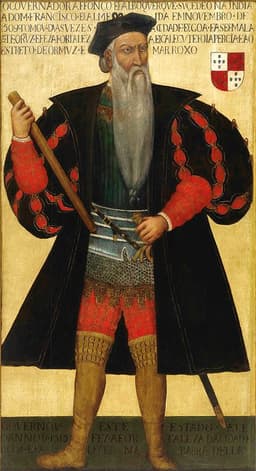
Afonso de Albuquerque
General · Medieval
79.6Total
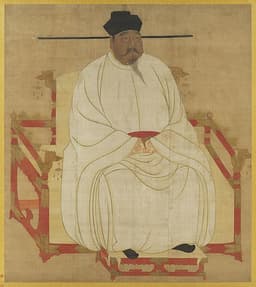
Zhao Kuangyin
Emperor · Medieval
71.5Total
Basic Information
Born
1453
927
Died
1515
976
Era
Medieval
Medieval
Nationality
Portugal
China
Occupation
General
Emperor
Civilization
Western
Eastern
Score Comparison
Military (10%)
77.5
78.0
Political (20%)
88.0
84.0
Influence (20%)
80.0
68.0
Legacy (20%)
75.0
65.0
Leadership (15%)
78.0
74.0
Strategy (15%)
82.0
68.0
TOTAL
79.6
71.5
Afonso de Albuquerque — Complete Timeline
1503 AD
First voyage to IndiaWar◆ Major
Afonso de Albuquerque led a fleet to India, establishing the first Portuguese fort at Cochin. This voyage laid the foundation for Portuguese control of the Indian Ocean trade.
ExplorationColonialismIndia
Impact: global
1510 AD
Conquest of GoaWar◆ Major
Albuquerque captured Goa from the Sultan of Bijapur. He made Goa the capital of Portuguese India, a position it held for over 400 years.
ConquestColonialismIndia
Impact: regional
1511 AD
Conquest of MalaccaWar◆ Major
Albuquerque led a Portuguese fleet to capture the strategic port of Malacca. This gave Portugal control of the spice trade route between the Indian Ocean and the Pacific.
ConquestSpice TradeSoutheast Asia
Impact: global
1513 AD
Siege of AdenWar
Albuquerque attempted to capture Aden in Yemen but failed. This failure prevented Portugal from controlling the entrance to the Red Sea and limited their influence in the region.
SiegeFailureRed Sea
Impact: regional
1515 AD
Death at seaOther◆ Major
Afonso de Albuquerque died at sea off the coast of Goa, possibly from illness or poison. His death left the Portuguese Empire in the Indian Ocean without its most capable leader.
DeathLeadershipEmpire
Impact: regionaltragic
Zhao Kuangyin — Complete Timeline
960 AD
Founded Song dynastyPolitical Action
Zhao Kuangyin, a general of Later Zhou, was proclaimed emperor by his troops at Chenqiao. He established the Song dynasty, ending the Five Dynasties period and beginning a new era of Chinese history.
Song dynastyFoundingChenqiao
Impact: globalconstructive
961 AD
Removed military power from generalsPolitical Action◆ Major
Zhao Kuangyin invited senior generals to a banquet and persuaded them to retire peacefully. This 'removal of military power over wine' prevented military coups and centralized control.
Song dynastyMilitary reformCentralization
Impact: nationalconstructive
963 AD
Unified southern ChinaWar◆ Major
Zhao Kuangyin launched campaigns to conquer the southern kingdoms, including Jingnan, Later Shu, and Southern Tang. By his death, most of China was reunified under Song rule.
Song unificationConquestSouthern kingdoms
Impact: national
Expert Analysis
Zhao Kuangyin vs Afonso de Albuquerque
The Conqueror and the Conciliator
On a sweltering August afternoon in 1511, Afonso de Albuquerque stood on the deck of his flagship, watching the smoke rise from the burning port of Malacca. Half a world away, four centuries earlier, a Chinese general named Zhao Kuangyin was roused from his sleep by his own soldiers, who draped a yellow imperial robe over his shoulders and declared him emperor. Both men seized history by the throat. But their methods—and their legacies—could not have been more different. One built an empire through fire and iron, the other through a single, gentle banquet. What drove these two titans of the medieval world to such opposite paths?
Origins
Albuquerque was born in 1453 near Lisbon, the illegitimate son of a nobleman. Portugal was then a small, scrappy kingdom on the edge of Europe, hungry for the riches of the East. The young Albuquerque grew up in the court of King Afonso V, breathing the salt air of Atlantic exploration. His world was one of caravels and cannons, of crusading zeal and mercantile greed. He learned that the sea was a highway to glory, and that the sword was the key to heaven and profit alike.
Zhao Kuangyin, born in 927, came of age in a very different world. China lay shattered after the fall of the Tang dynasty, torn apart by a half-century of warring kingdoms known as the Five Dynasties and Ten Kingdoms. Zhao’s father was a military commander, and young Zhao himself rose through the ranks of the Later Zhou army. He knew war intimately—the mud, the blood, the endless betrayals. But he also knew that China’s ancient ideal was unity, not conquest. His era taught him that power was fleeting, but peace was priceless.
Rise to Power
Albuquerque’s ascent was the classic tale of the ambitious younger son. In 1503, at age 50, he led his first fleet to India, establishing a fort at Cochin. The voyage was brutal—storms, scurvy, and the constant threat of Muslim and Hindu navies. But Albuquerque proved a relentless commander. He returned to Portugal, lobbied the king, and in 1509 was appointed Governor of Portuguese India. His mandate was simple: break the Muslim stranglehold on the spice trade and plant the Portuguese flag on every strategic shore.
Zhao’s rise was more accidental. In 960, he was a trusted general of the Later Zhou dynasty, tasked with defending the northern frontier against the Khitan. But his troops, weary of a child emperor, mutinied. They marched to Chenqiao, where they draped the yellow robe over Zhao and proclaimed him emperor. Unlike Albuquerque, who had schemed for power, Zhao accepted it reluctantly—or so he claimed. He knew that a general who seized the throne by force would be overthrown by force in turn. So he made a pact with his own ambition: he would take the empire, but he would tame the sword.
Leadership & Governance
Albuquerque governed through terror and audacity. In 1510, he captured Goa from the Sultan of Bijapur, then held it against a massive counterattack by personally leading the charge. He made Goa the capital of Portuguese India, and from there launched a campaign of conquest that reads like a fever dream: the capture of Malacca in 1511, which gave Portugal control of the spice route; the failed siege of Aden in 1513, which left the Red Sea open to rivals; and the constant harassment of Muslim shipping. Albuquerque was a master of psychological warfare—he would mutilate prisoners, burn cities, and send severed heads to sultans as calling cards. He believed that fear was the currency of empire.
Zhao governed through wisdom and restraint. In 961, he invited his most powerful generals to a banquet. As wine flowed, he lamented how precarious his position was. The generals, sensing his meaning, offered to resign. Zhao accepted their resignations, showered them with wealth and titles, and sent them home to live out their days in comfort. This “removal of military power over a cup of wine” was a masterstroke. It ended the cycle of warlord coups that had plagued China for decades. Zhao then centralized the army under civilian control, reduced the power of provincial governors, and focused on economic development. He conquered the southern kingdoms—Jingnan, Later Shu, Southern Tang—but he did so with a light hand, offering amnesty to defeated rulers and integrating their lands into a unified bureaucracy.
Triumph & Tragedy
Albuquerque’s greatest triumph was the conquest of Malacca. The port was the Venice of the East, the crossroads of Chinese junks, Indian dhows, and Arab dhows. By seizing it, Albuquerque broke the Muslim monopoly on spice and opened a direct route to the Moluccas. But his greatest failure was the siege of Aden in 1513. He needed that port to control the Red Sea, but his fleet was too small, his supplies too low. He returned to Goa in disgrace, haunted by what might have been. In 1515, he died at sea, possibly poisoned, possibly of disease. His last words were reportedly: “I have failed in everything.”
Zhao’s triumph was the peaceful unification of China. By the time of his death in 976, he had brought most of the southern kingdoms under Song rule. His tragedy was that he succeeded too well. By removing military power from the generals, he created a stable but weak state. The Song dynasty would never conquer the northern territories lost to the Khitan and the Tanguts. Zhao’s legacy was a China that was rich, cultured, and defenseless—a paradox that would haunt his successors for centuries.
Character & Destiny
Albuquerque was a man of iron will and volcanic temper. He was cruel, brilliant, and utterly convinced of his divine mission. His personality drove him to conquer, but it also made him enemies. He quarreled with his own captains, alienated the Portuguese court, and died alone at sea. His destiny was to build an empire that would crumble within a generation—too vast, too brutal, too dependent on one man.
Zhao was a man of subtlety and self-control. He understood that power was a burden, not a prize. He could have crushed his generals; instead, he persuaded them. He could have ruled as a tyrant; instead, he governed as a steward. His destiny was to found a dynasty that would last three centuries, but one that would always be haunted by the ghost of military weakness. He chose peace over glory, and paid the price in vulnerability.
Legacy
Today, Albuquerque is remembered as the architect of the Portuguese Empire. His statue stands in Lisbon, and his name is carved into the history of Goa, Malacca, and the Indian Ocean. But his legacy is ambiguous: a conqueror who brought Christianity and commerce, but also slavery and destruction. His total score of 77.1 reflects a man of immense impact but limited vision.
Zhao Kuangyin is remembered as a wise founder, a unifier who chose the banquet over the battlefield. His legacy is the Song dynasty, a golden age of art, commerce, and technology. But his score of 75.5 suggests a ruler who was more successful than brilliant, more stable than transformative. He is honored in China as a model emperor, but his caution also sowed the seeds of future defeat.
Conclusion
Standing on the deck of his flagship, Albuquerque saw an empire of ports and fortresses, a chain of steel across the Indian Ocean. Zhao, at his banquet table, saw a China that would never again be torn apart by warlords. Both men were right. Both were wrong. The conqueror’s empire dissolved into the sea; the conciliator’s dynasty dissolved into the dust. And yet, we still remember them. Because history is not about what lasts—it is about what we choose to build, and how we choose to build it.
Rankings
🥇
Afonso de AlbuquerqueLeader
Mil: 77.5Pol: 88.0Inf: 80.0
79.6
🥈
Zhao Kuangyin
Mil: 78.0Pol: 84.0Inf: 68.0
71.5
+8.1 behind
How This Comparison Works
Algorithm
Each figure is scored on 6 dimensions (0—100 scale) based on structured historical data: Military (10%), Political (20%), Influence (20%), Legacy (20%), Leadership (15%), Strategy (15%). The weighted total produces the final ranking.
Data Sources
Scores are computed from structured sub-indicators in the database. Scale factors adjust for era (Ancient ×0.85, Modern ×1.0) and civilization size (Eastern ×1.05, Other ×0.80) to account for differences in population and military scale.
Maximum 3 Figures
Comparisons are limited to 2—3 figures to ensure readability and statistical meaningfulness.
Error Margins
±5 points per dimension — Sub-scores are derived from historical records with inherent uncertainty. Two figures within 5 points on a dimension should be considered roughly equivalent in that area.
Total Score Accuracy
±3 points overall — The weighted combination of 6 dimensions produces a total score with approximately ±3 points of uncertainty. Differences of less than 3 points are not statistically significant— the figures are effectively tied.
Known Limitations
- Historical records are incomplete and uneven across civilizations
- Figures from oral-tradition societies may be underrepresented
- Occupation labels can misclassify multi-role figures
- Scores measure capability and impact, not moral character
- Quantitative scoring is a comparison tool, not absolute truth
Capability Radar
Military (10%) — Battles & Warfare
Battles
85
75
Win Rate
80
85
Expansion
95
75
Political (20%) — Governance & Reform
Reform
80
90
Diplomacy
85
85
Economy
80
80
Influence (20%) — Cultural & Global Reach
Cultural
70
70
Global
85
60
Legacy (20%) — Historical Impact
Historical
85
80
Longevity
80
75
Leadership (15%) — Power & Stability
Tenure
70
65
Stability
65
85
Strategy (15%) — Tactics & Innovation
Strategy
95
80
Tactics
90
70
Reform
75
90
Similar Comparisons
Comments & Discussion
ArmchairAdmiral6/16/2026
Albuquerque was a logistics genius who understood choke points—capturing Goa, Malacca, and Hormuz let Portugal dominate global spice trade for a century. Zhao's "strong-weak" military reforms centralized Song power, but the real story is his economic innovation: paper money and a standing navy. Both gambled on sea power, but Albuquerque's audacious fleet tactics against overwhelming odds at Diu make him the better commander. Show me Zhao winning any battle that decisive.
数据侦探6/16/2026
比起谁更会打仗,不如看看数据:赵匡胤在位16年,宋朝人口从约3000万增到4000万+,农业产出翻倍;阿尔布开克控制香料贸易后,葡萄牙王室收入也只涨了不到3倍。赵的“不杀士大夫”国策让宋朝GDP占全球22%,这才是硬实力。别被马尔维纳斯战役的烟火骗了,真正的征服是让农田多打粮食。
ClassicsSkeptic6/16/2026
Romanticizing Zhao as "the gentle emperor" ignores how he systematically eliminated 12 military governors through strategic feasts and demotions—that's political genius, not benevolence. Albuquerque's Goa massacre was brutal even by 16th-century standards, killing 8,000 unarmed civilians. Both were pragmatic conquerors; Zhao just had better PR. The "cup of wine" legend is a sanitized myth for schoolchildren.
史学爱好者6/16/2026
都说赵匡胤“杯酒释兵权”高明,但你们忽略了阿尔布开克的战略眼光:他坚持让葡萄牙士兵与当地妇女通婚,在果阿建立混血社区,这比赵的中央集权更有远见。500年后,果阿依然有葡萄牙文化痕迹,而宋朝的武官制度早改革没了。真正的帝国不是靠一次晚宴,而是靠血脉生根。
RevisionistFan6/16/2026
Let's talk about what both conveniently ignored. Albuquerque's obsession with crushing Islam led him to burn Malacca's mosques, alienating potential Muslim trading partners—a costly miscalculation. Zhao systematically decimated the military aristocracy that had stabilized China for centuries, creating the famously corrupt Song bureaucracy. Both were empire-builders whose blind spots laid foundations for their civilizations' declines. History's irony.