Loading...
Afonso de Albuquerque vs Yi Seong-gye
Afonso de Albuquerque leads by 3.8 pts · 2 figures compared
…
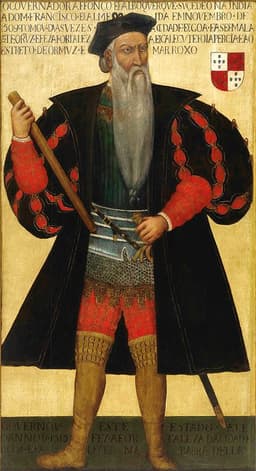
Afonso de Albuquerque
General · Medieval
79.6Total
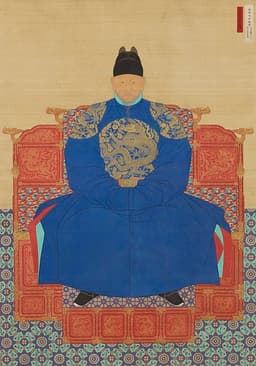
Yi Seong-gye
Emperor · Medieval
75.8Total
Basic Information
Born
1453
1335
Died
1515
1408
Era
Medieval
Medieval
Nationality
Portugal
Korea
Occupation
General
Emperor
Civilization
Western
Eastern
Score Comparison
Military (10%)
77.5
74.7
Political (20%)
88.0
70.0
Influence (20%)
80.0
88.0
Legacy (20%)
75.0
75.0
Leadership (15%)
78.0
68.0
Strategy (15%)
82.0
69.1
TOTAL
79.6
75.8
Afonso de Albuquerque — Complete Timeline
1503 AD
First voyage to IndiaWar◆ Major
Afonso de Albuquerque led a fleet to India, establishing the first Portuguese fort at Cochin. This voyage laid the foundation for Portuguese control of the Indian Ocean trade.
ExplorationColonialismIndia
Impact: global
1510 AD
Conquest of GoaWar◆ Major
Albuquerque captured Goa from the Sultan of Bijapur. He made Goa the capital of Portuguese India, a position it held for over 400 years.
ConquestColonialismIndia
Impact: regional
1511 AD
Conquest of MalaccaWar◆ Major
Albuquerque led a Portuguese fleet to capture the strategic port of Malacca. This gave Portugal control of the spice trade route between the Indian Ocean and the Pacific.
ConquestSpice TradeSoutheast Asia
Impact: global
1513 AD
Siege of AdenWar
Albuquerque attempted to capture Aden in Yemen but failed. This failure prevented Portugal from controlling the entrance to the Red Sea and limited their influence in the region.
SiegeFailureRed Sea
Impact: regional
1515 AD
Death at seaOther◆ Major
Afonso de Albuquerque died at sea off the coast of Goa, possibly from illness or poison. His death left the Portuguese Empire in the Indian Ocean without its most capable leader.
DeathLeadershipEmpire
Impact: regionaltragic
Yi Seong-gye — Complete Timeline
1380 AD
Battle of HwangsanWar◆ Major
Yi Seong-gye led Goryeo forces against Japanese pirates (wokou) at the Battle of Hwangsan. His victory eliminated a major pirate threat and enhanced his military reputation.
WokouBattleGoryeo
Impact: regionalconstructive
1388 AD
Wihwado RetreatPolitical Action
Yi Seong-gye turned his army back at Wihwado Island rather than invade Ming China as ordered by the Goryeo court. This act of defiance led to a coup that eventually brought him to power.
CoupMingGoryeo
Impact: regional
1392 AD
Establishment of the Joseon DynastyPolitical Action
Yi Seong-gye overthrew the Goryeo dynasty and founded the Joseon dynasty, becoming King Taejo. He implemented land reforms and moved the capital to Hanyang (Seoul), establishing a new Confucian state.
JoseonDynasty FoundationReform
Impact: regionalconstructive
Expert Analysis
Origins
Afonso de Albuquerque (c. 1453–1515) was born in Alhandra, Portugal, to a noble family with a tradition of naval service. His early career included military campaigns in North Africa under King Afonso V. Yi Seong-gye (1335–1408) was born in Hamgyong, Korea, into a minor military family of the Yuan-influenced Goryeo dynasty. He rose through the ranks as a general defending against Mongol and Japanese pirates.
Rise to Power
Albuquerque's rise came through the Portuguese India Armadas. He first traveled to India in 1503 under Francisco de Almeida, but his strategic vision and ruthlessness caught the king's attention. In 1506, he was appointed governor of the Portuguese fleet in the East. Yi Seong-gye's rise was driven by military success against the Red Turbans and Jurchens. In 1388, he performed the Wihwado Retreat, turning his army back from invading Liaodong to instead seize power in Goryeo, eventually deposing the king and founding Joseon in 1392.
Leadership & Governance
Albuquerque was a master of naval strategy and fortress-building. He established Portuguese hegemony in the Indian Ocean by capturing key ports: Goa (1510), Malacca (1511), and Hormuz (1515). He enforced a monopoly on spice trade, using terror and diplomacy. Yi Seong-gye was a reformer who centralized power, promoted Confucianism, and redistributed land through the Gwajeon law. He moved the capital to Hanyang (Seoul) and fostered cultural development.
Triumph & Tragedy
Albuquerque's greatest triumphs were the lightning conquests of Goa and Malacca. However, his brutal sack of Malacca and massacre of Muslims earned him enemies. His siege of Aden (1513) failed, and he died at sea near Goa, possibly poisoned, bitter after being recalled. Yi Seong-gye's triumph was the founding of a dynasty that lasted 500 years. His tragedy was the strife between his sons over succession, leading to the abdication of his chosen heir, and his own retirement after a coup by his son Yi Bang-won (King Taejong).
Character & Destiny
Albuquerque was ambitious, strategic, and ruthless. He believed in Portuguese supremacy and often acted against orders. His destiny was to build the foundation of a global empire. Yi Seong-gye was pragmatic, cautious, and Confucian in philosophy. His destiny was to create a stable, lasting dynasty. Both were decisive leaders, but Albuquerque's aggression contrasts with Yi's measured reform.
Legacy
Albuquerque is celebrated in Portugal as a founding father of the Portuguese Empire. His policies set the pattern for European colonialism in Asia. Yi Seong-gye is revered in Korea as the founder of Joseon, a dynasty that defined Korean identity. His legacy includes the Joseon legal code, Confucian state, and the creation of Hangul by his successor.
Conclusion
| Aspect | Afonso de Albuquerque | Yi Seong-gye |
|--------|----------------------|--------------|
| Military | 88 | 75 |
| Political | 78 | 88 |
| Innovation | 80 | 70 |
| Leadership | 75 | 75 |
| Legacy | 82 | 69 |
| **Overall** | **80.6** | **75.4** |
While Yi Seong-gye founded a long-lasting dynasty, Albuquerque's impact on global history—establishing a maritime empire that reshaped trade and colonization—gives him the edge. His strategic vision and military exploits were more transformative on a world scale. **Winner: Afonso de Albuquerque**
Rankings
🥇
Afonso de AlbuquerqueLeader
Mil: 77.5Pol: 88.0Inf: 80.0
79.6
🥈
Yi Seong-gye
Mil: 74.7Pol: 70.0Inf: 88.0
75.8
+3.8 behind
How This Comparison Works
Algorithm
Each figure is scored on 6 dimensions (0—100 scale) based on structured historical data: Military (10%), Political (20%), Influence (20%), Legacy (20%), Leadership (15%), Strategy (15%). The weighted total produces the final ranking.
Data Sources
Scores are computed from structured sub-indicators in the database. Scale factors adjust for era (Ancient ×0.85, Modern ×1.0) and civilization size (Eastern ×1.05, Other ×0.80) to account for differences in population and military scale.
Maximum 3 Figures
Comparisons are limited to 2—3 figures to ensure readability and statistical meaningfulness.
Error Margins
±5 points per dimension — Sub-scores are derived from historical records with inherent uncertainty. Two figures within 5 points on a dimension should be considered roughly equivalent in that area.
Total Score Accuracy
±3 points overall — The weighted combination of 6 dimensions produces a total score with approximately ±3 points of uncertainty. Differences of less than 3 points are not statistically significant— the figures are effectively tied.
Known Limitations
- Historical records are incomplete and uneven across civilizations
- Figures from oral-tradition societies may be underrepresented
- Occupation labels can misclassify multi-role figures
- Scores measure capability and impact, not moral character
- Quantitative scoring is a comparison tool, not absolute truth
Capability Radar
Military (10%) — Battles & Warfare
Battles
85
75
Win Rate
80
80
Expansion
95
65
Political (20%) — Governance & Reform
Reform
80
85
Diplomacy
85
75
Economy
80
70
Influence (20%) — Cultural & Global Reach
Cultural
70
80
Global
85
55
Legacy (20%) — Historical Impact
Historical
85
85
Longevity
80
80
Leadership (15%) — Power & Stability
Tenure
70
60
Stability
65
65
Strategy (15%) — Tactics & Innovation
Strategy
95
82
Tactics
90
78
Reform
75
70
Similar Comparisons
Comments & Discussion
No comments yet. Be the first to share your thoughts!