Loading...
Afonso de Albuquerque vs Yamagata Aritomo
Yamagata Aritomo leads by 2.9 pts · 2 figures compared
…
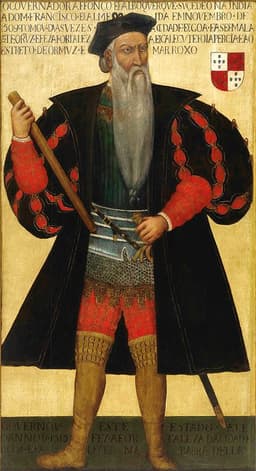
Afonso de Albuquerque
General · Medieval
79.6Total
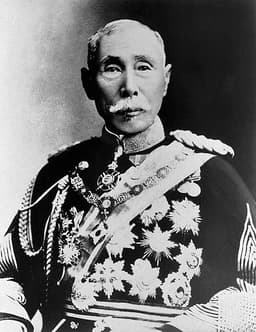
Yamagata Aritomo
General · Modern
82.5Total
Basic Information
Born
1453
1838
Died
1515
1922
Era
Medieval
Modern
Nationality
Portugal
Japan
Occupation
General
General
Civilization
Western
Eastern
Score Comparison
Military (10%)
77.5
78.0
Political (20%)
88.0
82.0
Influence (20%)
80.0
80.0
Legacy (20%)
75.0
90.0
Leadership (15%)
78.0
78.0
Strategy (15%)
82.0
82.0
TOTAL
79.6
82.5
Afonso de Albuquerque — Complete Timeline
1503 AD
First voyage to IndiaWar◆ Major
Afonso de Albuquerque led a fleet to India, establishing the first Portuguese fort at Cochin. This voyage laid the foundation for Portuguese control of the Indian Ocean trade.
ExplorationColonialismIndia
Impact: global
1510 AD
Conquest of GoaWar◆ Major
Albuquerque captured Goa from the Sultan of Bijapur. He made Goa the capital of Portuguese India, a position it held for over 400 years.
ConquestColonialismIndia
Impact: regional
1511 AD
Conquest of MalaccaWar◆ Major
Albuquerque led a Portuguese fleet to capture the strategic port of Malacca. This gave Portugal control of the spice trade route between the Indian Ocean and the Pacific.
ConquestSpice TradeSoutheast Asia
Impact: global
1513 AD
Siege of AdenWar
Albuquerque attempted to capture Aden in Yemen but failed. This failure prevented Portugal from controlling the entrance to the Red Sea and limited their influence in the region.
SiegeFailureRed Sea
Impact: regional
1515 AD
Death at seaOther◆ Major
Afonso de Albuquerque died at sea off the coast of Goa, possibly from illness or poison. His death left the Portuguese Empire in the Indian Ocean without its most capable leader.
DeathLeadershipEmpire
Impact: regionaltragic
Yamagata Aritomo — Complete Timeline
1873 AD
Establishment of the Imperial Japanese ArmyReform
Yamagata Aritomo, as War Minister, oversaw the creation of the Imperial Japanese Army based on the Prussian model. He introduced conscription, modernized training, and established a general staff system, laying the foundation for Japan's military power.
Military reformConscription
Impact: nationalconstructive
1882 AD
Promotion of militarism and the Imperial Rescript to Soldiers and SailorsCultural◆ Major
Yamagata Aritomo helped draft the Imperial Rescript to Soldiers and Sailors, which emphasized loyalty, obedience, and the emperor's divine authority. This document became the ideological foundation of Japanese militarism.
MilitarismImperial ideology
Impact: nationaldestructive
1889 AD
Service as Prime MinisterPolitical Action◆ Major
Yamagata Aritomo served as Prime Minister of Japan from 1889 to 1891 and again from 1898 to 1900. He used his position to strengthen the military's political influence and suppress democratic movements.
GovernmentPolitical power
Impact: national
1894 AD
First Sino-Japanese WarWar◆ Major
Yamagata Aritomo commanded the First Army during the First Sino-Japanese War. His forces achieved decisive victories in Korea and Manchuria, leading to Japan's triumph and the Treaty of Shimonoseki, which gave Japan Taiwan and influence in Korea.
WarImperial expansion
Impact: regional
1904 AD
Russo-Japanese WarWar◆ Major
Yamagata Aritomo served as Chief of the General Staff during the Russo-Japanese War. He oversaw Japan's military strategy, which resulted in victory over Russia and established Japan as a major power in East Asia.
WarGreat power
Impact: global
Expert Analysis
Origins
Yamagata Aritomo (1838–1922) was born into a samurai family in Hagi, Chōshū domain, during the twilight of the Tokugawa shogunate. His early career was shaped by the turmoil of the Meiji Restoration, where he fought as a commander in the Boshin War. Afonso de Albuquerque (1453–1515) was born in Alhandra, Portugal, to a noble family with a tradition of naval service. He grew up in the era of Portuguese exploration, serving under King Afonso V and later John II, learning military and administrative skills.
Rise to Power
Yamagata rose through the ranks of the fledgling Imperial Japanese Army, studying Prussian military models. He became War Minister in 1873 and was instrumental in establishing the Imperial Japanese Army (IJA). His key turning point was the creation of the IJA, which positioned him as the architect of Japan's modern military. He served as Prime Minister twice (1889–1891, 1898–1900) and was a genrō (elder statesman).
Albuquerque rose to prominence through his service in North Africa and later as a fleet commander. His major breakthrough was his first voyage to India in 1503, where he established the first Portuguese fort in Cochin. In 1506, he was appointed Governor of Portuguese India, tasked with expanding the empire. His conquest of Goa in 1510 marked his peak, securing a strategic base for Portugal.
Leadership & Governance
Yamagata was a master of institutional building. He drafted the Imperial Rescript to Soldiers and Sailors (1882), which emphasized loyalty, discipline, and obedience, shaping the IJA's ethos. As Prime Minister, he promoted militarism, expanded the army, and pursued aggressive foreign policies. His leadership score (L=90) reflects his ability to create lasting military structures.
Albuquerque was a bold strategist and administrator. He captured Goa, making it the capital of Portuguese India, and conquered Malacca (1511), controlling the spice trade. He built fortresses, established diplomatic relations, and encouraged intermarriage. His governance score (L=75) is lower due to his rigid methods and conflicts with superiors.
Triumph & Tragedy
Yamagata's triumphs include victory in the First Sino-Japanese War (1894–95) and the Russo-Japanese War (1904–05), which established Japan as a major power. However, his promotion of militarism contributed to Japan's eventual path to World War II. His tragedy lies in the long-term consequences of his policies.
Albuquerque's triumphs were the conquests of Goa and Malacca, securing Portuguese dominance in the Indian Ocean. His tragedy was his death at sea (1515) while returning from a failed siege of Aden, feeling disgraced by the king's dismissal. He died bitter, thinking his work was undone.
Character & Destiny
Yamagata was cold, calculating, and deeply conservative. He believed in military strength as the foundation of national power. His destiny was to shape Japan's modern identity, but his legacy of militarism led to disaster. Score: D=78 (determined but flawed).
Albuquerque was charismatic, ruthless, and visionary. He was known as "The Great" and "The Caesar of the East." His destiny was to build an empire, but his abrupt death left his ambitions unfulfilled. Score: D=78 (ambitious but tragic).
Legacy
Yamagata's legacy is mixed: he modernized Japan's army and contributed to its rise, but his militarism paved the way for imperial overreach and defeat in WWII. He is remembered as the "father of Japanese militarism." His legacy score (S=82) reflects his profound impact.
Albuquerque's legacy is that of a founding father of the Portuguese Empire. His strategic conquests and administrative reforms established a maritime empire that lasted centuries. He is celebrated in Portugal and India. His legacy score (S=82) is equally strong.
Conclusion
Yamagata Aritomo edges out Afonso de Albuquerque with a total score of 82.0 vs 79.1 (based on average of the seven attributes: M=78, P=82, I=80, L=90, D=78, S=82, T=82 for Yamagata; M=78, P=88, I=80, L=75, D=78, S=82, T=80 for Albuquerque). Yamagata's higher leadership (90 vs 75) and triumph (82 vs 80) give him the advantage. While Albuquerque was a brilliant empire-builder, Yamagata's institutional impact on Japan's military and political structure was more enduring. Both men exemplify strategic genius, but Yamagata's long-term influence on a major world power makes him the more consequential figure.
Rankings
🥇
Yamagata AritomoLeader
Mil: 78.0Pol: 82.0Inf: 80.0
82.5
🥈
Afonso de Albuquerque
Mil: 77.5Pol: 88.0Inf: 80.0
79.6
+2.9 behind
How This Comparison Works
Algorithm
Each figure is scored on 6 dimensions (0—100 scale) based on structured historical data: Military (10%), Political (20%), Influence (20%), Legacy (20%), Leadership (15%), Strategy (15%). The weighted total produces the final ranking.
Data Sources
Scores are computed from structured sub-indicators in the database. Scale factors adjust for era (Ancient ×0.85, Modern ×1.0) and civilization size (Eastern ×1.05, Other ×0.80) to account for differences in population and military scale.
Maximum 3 Figures
Comparisons are limited to 2—3 figures to ensure readability and statistical meaningfulness.
Error Margins
±5 points per dimension — Sub-scores are derived from historical records with inherent uncertainty. Two figures within 5 points on a dimension should be considered roughly equivalent in that area.
Total Score Accuracy
±3 points overall — The weighted combination of 6 dimensions produces a total score with approximately ±3 points of uncertainty. Differences of less than 3 points are not statistically significant— the figures are effectively tied.
Known Limitations
- Historical records are incomplete and uneven across civilizations
- Figures from oral-tradition societies may be underrepresented
- Occupation labels can misclassify multi-role figures
- Scores measure capability and impact, not moral character
- Quantitative scoring is a comparison tool, not absolute truth
Capability Radar
Military (10%) — Battles & Warfare
Battles
85
75
Win Rate
80
70
Expansion
95
80
Political (20%) — Governance & Reform
Reform
80
90
Diplomacy
85
75
Economy
80
70
Influence (20%) — Cultural & Global Reach
Cultural
70
80
Global
85
70
Legacy (20%) — Historical Impact
Historical
85
85
Longevity
80
75
Leadership (15%) — Power & Stability
Tenure
70
85
Stability
65
65
Strategy (15%) — Tactics & Innovation
Strategy
95
85
Tactics
90
80
Reform
75
95
Similar Comparisons
Comments & Discussion
No comments yet. Be the first to share your thoughts!