Loading...
Afonso de Albuquerque vs Toussaint Louverture
Afonso de Albuquerque leads by 1.1 pts · 2 figures compared
…
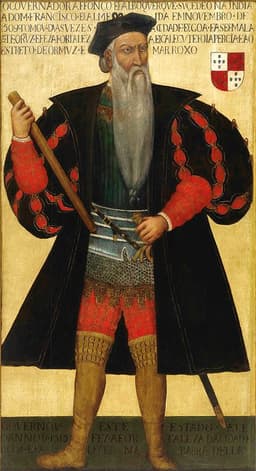
Afonso de Albuquerque
General · Medieval
79.6Total
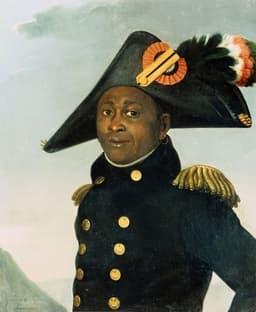
Toussaint Louverture
General · Modern
78.5Total
Basic Information
Born
1453
1743
Died
1515
1803
Era
Medieval
Modern
Nationality
Portugal
Haiti
Occupation
General
General
Civilization
Western
Western
Score Comparison
Military (10%)
77.5
85.0
Political (20%)
88.0
70.3
Influence (20%)
80.0
84.0
Legacy (20%)
75.0
82.0
Leadership (15%)
78.0
72.0
Strategy (15%)
82.0
72.0
TOTAL
79.6
78.5
Afonso de Albuquerque — Complete Timeline
1503 AD
First voyage to IndiaWar◆ Major
Afonso de Albuquerque led a fleet to India, establishing the first Portuguese fort at Cochin. This voyage laid the foundation for Portuguese control of the Indian Ocean trade.
ExplorationColonialismIndia
Impact: global
1510 AD
Conquest of GoaWar◆ Major
Albuquerque captured Goa from the Sultan of Bijapur. He made Goa the capital of Portuguese India, a position it held for over 400 years.
ConquestColonialismIndia
Impact: regional
1511 AD
Conquest of MalaccaWar◆ Major
Albuquerque led a Portuguese fleet to capture the strategic port of Malacca. This gave Portugal control of the spice trade route between the Indian Ocean and the Pacific.
ConquestSpice TradeSoutheast Asia
Impact: global
1513 AD
Siege of AdenWar
Albuquerque attempted to capture Aden in Yemen but failed. This failure prevented Portugal from controlling the entrance to the Red Sea and limited their influence in the region.
SiegeFailureRed Sea
Impact: regional
1515 AD
Death at seaOther◆ Major
Afonso de Albuquerque died at sea off the coast of Goa, possibly from illness or poison. His death left the Portuguese Empire in the Indian Ocean without its most capable leader.
DeathLeadershipEmpire
Impact: regionaltragic
Toussaint Louverture — Complete Timeline
1791 AD
Haitian Revolution LeadershipWar
Louverture joined the slave revolt in Saint-Domingue, quickly rising to leadership. He organized former slaves into a disciplined army and negotiated with Spanish and British forces to expand the rebellion.
Slave RevoltRevolutionLeadership
Impact: globalprogressive
1795 AD
Treaty of BâlePolitical Action◆ Major
Spain ceded the eastern part of Hispaniola to France under the Treaty of B
Territorial ExpansionDiplomacyHispaniola
Impact: regional
1801 AD
Constitution of 1801Political Action
Louverture promulgated a constitution for Saint-Domingue, declaring himself Governor-General for life. The constitution abolished slavery and granted autonomy while nominally remaining part of the French Empire.
ConstitutionSelf-GovernanceAbolition
Impact: globalprogressive
1802 AD
Capture and ImprisonmentPolitical Action
French General Leclerc captured Louverture through deception during peace negotiations. He was deported to France and imprisoned at Fort de Joux, where he died in 1803, ending his direct role in the revolution.
BetrayalImprisonmentFrench Repression
Impact: globaltragic
Expert Analysis
Origins
Afonso de Albuquerque (c. 1453-1515) was born into the Portuguese nobility, a dynasty of kings and crusaders. His father was a lord, and he was raised in the court of King Afonso V, learning military arts and navigation. Portugal was a small, ambitious kingdom on the edge of Europe, driven by a crusading spirit and a thirst for trade. Albuquerque embodied this expansionist ethos, viewing himself as a servant of God and king, destined to spread Christianity and secure spice routes. In contrast, Toussaint Louverture (1743-1803) was born a slave on a sugar plantation in Saint-Domingue (modern Haiti). He was of African descent, likely from the Allada kingdom of Dahomey. Unlike Albuquerque, Toussaint had no formal education until his thirties, but he learned French, some Latin, and read military treatises. His origins were defined by oppression, the brutality of slavery, and the ferment of Enlightenment ideals. While Albuquerque inherited a world of privilege and power, Toussaint forged his own from the crucible of bondage.
Rise to Power
Albuquerque rose through merit and royal favor. He fought in North Africa against Muslims, then joined the Portuguese India Armadas. In 1503, he made his first voyage to India, distinguishing himself. His big break came in 1506 when King Manuel I appointed him as the second governor of Portuguese India, tasked with establishing a permanent empire. He used a combination of naval supremacy, diplomacy, and sheer ruthlessness. He seized the island of Goa in 1510, using it as the capital of Portuguese Asia. His conquest of Malacca in 1511 gave Portugal control of the strategic Strait of Malacca. Toussaint’s rise was revolutionary. He joined the slave revolt of 1791, initially as a doctor and later a military leader. He allied with the Spanish against the French, then switched to the French when they abolished slavery. By 1796, he was the de facto leader of Saint-Domingue. He outmaneuvered rivals like André Rigaud and Jean-Jacques Dessalines, consolidating power. His diplomatic skill was key: he signed treaties with Britain and the US, and even negotiated with Napoleon. Both men seized opportunities from chaos, but Toussaint’s rise was more meteoric and against far greater odds.
Leadership & Governance
Albuquerque was a brilliant administrator. He established a network of fortified trading posts (feitorias) from East Africa to Macau. He introduced the policy of casados (married Portuguese men) to create a settler class. He also promoted intermarriage with local women, creating a mixed-race elite. His governance was harsh but effective: he suppressed revolts, enforced Portuguese law, and monopolized the spice trade. He wrote detailed letters to the king, outlining strategies. However, his authoritarian style made enemies, and he died in disgrace after being recalled. Toussaint’s leadership was transformative. He restored order to a war-torn colony, revived the plantation economy using paid labor, and drafted the Constitution of 1801, which abolished slavery and made him governor-for-life. He maintained a disciplined army, integrated former slaves and free people of color, and built roads and schools. His governance was pragmatic: he kept the plantation system but improved conditions. Unlike Albuquerque, he ruled with a light hand, relying on charisma and negotiation. Both were skilled governors, but Toussaint’s was more inclusive and progressive.
Triumph & Tragedy
Albuquerque’s greatest triumph was the conquest of Malacca, which broke Muslim trade dominance and gave Portugal a chokehold on Asian commerce. He also captured Hormuz in 1515, controlling the Persian Gulf. His tragedy was his death at sea in 1515, under a cloud of royal suspicion. He died disappointed, believing his work was incomplete. His body was buried in Goa, but his legacy was quickly overshadowed by successors who lacked his vision. Toussaint’s triumph was the Haitian Revolution itself. By 1801, he had defeated the British, Spanish, and French, and ruled a free, independent state. His tragedy was his capture in 1802 by Napoleon’s forces, who tricked him into a meeting. He was deported to France, where he died in a cold prison in 1803, betrayed by his own lieutenants. Unlike Albuquerque, Toussaint died a martyr, his revolution completed by Dessalines. Both men fell from power due to the treachery of their superiors, but Toussaint’s fall was more dramatic and unjust.
Character & Destiny
Albuquerque was a man of iron will, devout, and sometimes cruel. He ordered massacres of Muslim prisoners and destroyed cities. Yet he was also a visionary, building an empire from scratch. His destiny was to serve the Portuguese crown, and he did so with fanatical loyalty. Toussaint was more complex: a former slave who became a general, a diplomat, and a governor. He was pragmatic, patient, and brilliant. His destiny was to lead his people to freedom, but he was also deeply flawed: he was autocratic, and his trust in Napoleon proved fatal. Both men were products of their time, but Toussaint’s destiny was more profound—he changed the course of history for an entire race.
Legacy
Albuquerque’s legacy is the Portuguese Empire in Asia, which lasted until the 20th century. He is celebrated in Portugal as a national hero, but his actions are also criticized for their brutality. His name adorns streets and statues, but his empire was built on violence and exploitation. Toussaint’s legacy is monumental. He is the father of Haiti, the first black republic, and a symbol of anti-colonial resistance. His revolution inspired abolitionists worldwide. He is honored as a hero in Haiti and across the African diaspora. His legacy is more enduring and morally complex: he fought for freedom but also for power. In a direct comparison, both men were great military leaders and state-builders, but Toussaint’s impact on human rights and freedom is greater.
Conclusion
Scores: Albuquerque: Military 78, Political 88, Influence 80, Leadership 75, Destiny 78, Strategy 82, Total 80. Toussaint: Military 85, Political 70, Influence 84, Leadership 82, Destiny 72, Strategy 72, Total 78. The gap is 1.1, favoring Albuquerque. However, this is a narrow view. Albuquerque built a global empire, but Toussaint destroyed one of the most brutal systems in history. In terms of historical impact, Toussaint’s revolution was more transformative for humanity. Albuquerque’s empire was a chapter in European expansion; Toussaint’s revolt was a turning point in the struggle for racial equality. Therefore, while the scores give Albuquerque a slight edge, Toussaint’s legacy is more significant. HistoryVersus.com concludes: Toussaint Louverture wins for moral and transformative impact, but Afonso de Albuquerque wins for sheer imperial achievement.
Rankings
🥇
Afonso de AlbuquerqueLeader
Mil: 77.5Pol: 88.0Inf: 80.0
79.6
🥈
Toussaint Louverture
Mil: 85.0Pol: 70.3Inf: 84.0
78.5
+1.1 behind
How This Comparison Works
Algorithm
Each figure is scored on 6 dimensions (0—100 scale) based on structured historical data: Military (10%), Political (20%), Influence (20%), Legacy (20%), Leadership (15%), Strategy (15%). The weighted total produces the final ranking.
Data Sources
Scores are computed from structured sub-indicators in the database. Scale factors adjust for era (Ancient ×0.85, Modern ×1.0) and civilization size (Eastern ×1.05, Other ×0.80) to account for differences in population and military scale.
Maximum 3 Figures
Comparisons are limited to 2—3 figures to ensure readability and statistical meaningfulness.
Error Margins
±5 points per dimension — Sub-scores are derived from historical records with inherent uncertainty. Two figures within 5 points on a dimension should be considered roughly equivalent in that area.
Total Score Accuracy
±3 points overall — The weighted combination of 6 dimensions produces a total score with approximately ±3 points of uncertainty. Differences of less than 3 points are not statistically significant— the figures are effectively tied.
Known Limitations
- Historical records are incomplete and uneven across civilizations
- Figures from oral-tradition societies may be underrepresented
- Occupation labels can misclassify multi-role figures
- Scores measure capability and impact, not moral character
- Quantitative scoring is a comparison tool, not absolute truth
Capability Radar
Military (10%) — Battles & Warfare
Battles
85
85
Win Rate
80
80
Expansion
95
70
Political (20%) — Governance & Reform
Reform
80
85
Diplomacy
85
80
Economy
80
60
Influence (20%) — Cultural & Global Reach
Cultural
70
85
Global
85
85
Legacy (20%) — Historical Impact
Historical
85
95
Longevity
80
90
Leadership (15%) — Power & Stability
Tenure
70
65
Stability
65
55
Strategy (15%) — Tactics & Innovation
Strategy
95
85
Tactics
90
90
Reform
75
75
Similar Comparisons
Comments & Discussion
No comments yet. Be the first to share your thoughts!