Loading...
Afonso de Albuquerque vs Tokugawa Ieyasu
Tokugawa Ieyasu leads by 2.2 pts · 2 figures compared
…
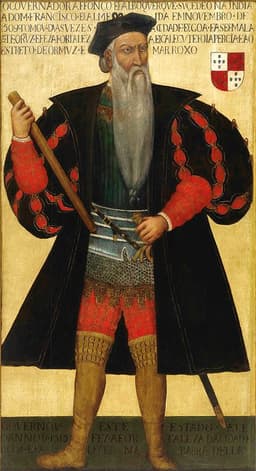
Afonso de Albuquerque
General · Medieval
79.6Total
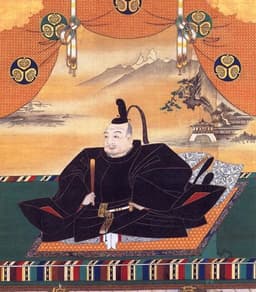
Tokugawa Ieyasu
General · Modern
81.8Total
Basic Information
Born
1453
1543
Died
1515
1616
Era
Medieval
Modern
Nationality
Portugal
Japan
Occupation
General
General
Civilization
Western
Eastern
Score Comparison
Military (10%)
77.5
78.0
Political (20%)
88.0
82.0
Influence (20%)
80.0
88.0
Legacy (20%)
75.0
75.0
Leadership (15%)
78.0
85.0
Strategy (15%)
82.0
82.0
TOTAL
79.6
81.8
Afonso de Albuquerque — Complete Timeline
1503 AD
First voyage to IndiaWar◆ Major
Afonso de Albuquerque led a fleet to India, establishing the first Portuguese fort at Cochin. This voyage laid the foundation for Portuguese control of the Indian Ocean trade.
ExplorationColonialismIndia
Impact: global
1510 AD
Conquest of GoaWar◆ Major
Albuquerque captured Goa from the Sultan of Bijapur. He made Goa the capital of Portuguese India, a position it held for over 400 years.
ConquestColonialismIndia
Impact: regional
1511 AD
Conquest of MalaccaWar◆ Major
Albuquerque led a Portuguese fleet to capture the strategic port of Malacca. This gave Portugal control of the spice trade route between the Indian Ocean and the Pacific.
ConquestSpice TradeSoutheast Asia
Impact: global
1513 AD
Siege of AdenWar
Albuquerque attempted to capture Aden in Yemen but failed. This failure prevented Portugal from controlling the entrance to the Red Sea and limited their influence in the region.
SiegeFailureRed Sea
Impact: regional
1515 AD
Death at seaOther◆ Major
Afonso de Albuquerque died at sea off the coast of Goa, possibly from illness or poison. His death left the Portuguese Empire in the Indian Ocean without its most capable leader.
DeathLeadershipEmpire
Impact: regionaltragic
Tokugawa Ieyasu — Complete Timeline
1600 AD
Battle of SekigaharaWar
Tokugawa Ieyasu led the Eastern Army to victory over Ishida Mitsunari's Western Army at Sekigahara. This decisive battle ended the Sengoku period and established Ieyasu as the supreme military ruler of Japan, paving the way for the Tokugawa shogunate.
Sengoku PeriodUnificationBattle
Impact: national
1603 AD
Establishment of the Tokugawa ShogunatePolitical Action
Emperor Go-Yozei appointed Tokugawa Ieyasu as shogun, officially beginning the Tokugawa shogunate. Ieyasu established his government in Edo (modern Tokyo), centralizing military and political power under his family's control.
ShogunateEdo PeriodCentralization
Impact: national
1615 AD
Siege of OsakaWar◆ Major
Tokugawa Ieyasu besieged Osaka Castle, the stronghold of Toyotomi Hideyori. The castle fell, and Hideyori committed suicide. This campaign eliminated the last major opposition to Tokugawa rule, solidifying the shogunate's control over Japan.
Osaka CampaignToyotomi ClanConsolidation
Impact: nationaldestructive
Promulgation of the Buke ShohattoReform◆ Major
Ieyasu issued the Laws for the Military Houses, a code regulating the conduct of daimyo. It restricted castle construction, required alternate attendance in Edo, and prohibited alliances without shogunal permission. This law helped control the feudal lords.
Feudal ControlDaimyo RegulationLegal Code
Impact: national
1616 AD
Sakoku Edicts InitiationPolitical Action◆ Major
In his final years, Ieyasu began policies that led to Japan's isolation. He restricted foreign trade to specific ports and expelled Christian missionaries. These measures, expanded by successors, resulted in the sakoku policy that isolated Japan for over 200 years.
IsolationismForeign PolicyChristianity
Impact: national
Expert Analysis
Origins
Tokugawa Ieyasu (1543–1616) was born into the Matsudaira clan, a minor daimyo family in Mikawa Province amidst the chaos of the Sengoku period. His childhood was marked by hostage exchanges and betrayal, shaping his cautious patience. Afonso de Albuquerque (1453–1515) was born in Alhandra, Portugal, to a noble family with a tradition of naval service. He served in North Africa before being appointed as the second governor of Portuguese India, driven by a crusading zeal and imperial ambition.
Rise to Power
Ieyasu rose by aligning with Oda Nobunaga and later Toyotomi Hideyoshi, patiently building his power base in the Kanto region. After Hideyoshi's death, he defeated rival coalitions at the Battle of Sekigahara (1600), establishing dominance. He then secured his rule by besieging Osaka Castle (1614–1615), eliminating the Toyotomi clan. Albuquerque's rise came through his aggressive naval campaigns. He captured Goa (1510), making it the capital of Portuguese India, and seized Malacca (1511), controlling the spice trade. He also established bases in Hormuz and attempted to block the Red Sea, but his harsh methods led to political enemies.
Leadership & Governance
Ieyasu's governance was methodical and institutional. He established the Tokugawa shogunate, a feudal system that centralized power through the sankin-kōtai system (alternate attendance) and strict control of daimyo via laws like the Buke Shohatto (1615). He initiated the Sakoku isolation policy, limiting foreign influence. Albuquerque's governance focused on fortifying Portuguese trading posts and enforcing a monopoly on spice trade. He built a network of fortified cities (Goa, Malacca, Hormuz) and implemented a policy of encouraging Portuguese men to marry local women, creating a mixed population loyal to the crown. His rule was pragmatic but often brutal, suppressing revolts with force.
Triumph & Tragedy
Ieyasu's greatest triumph was Sekigahara, which unified Japan under his rule, and the Siege of Osaka that eliminated his last rival. His tragedy lies in the later Sakoku policy, which isolated Japan for centuries, stifling technological and cultural exchange. Albuquerque's triumphs include the conquest of Goa and Malacca, which gave Portugal control of the Indian Ocean trade. His tragedy was his death at sea (1515) while returning from a failed siege of Aden, feeling betrayed by the king who had stripped him of command. He died embittered, his achievements overshadowed by political intrigue.
Character & Destiny
Ieyasu was patient, calculating, and pragmatic—a master of waiting for the right moment. His famous saying, "The strong man is the one who can control his emotions," reflects his stoic demeanor. His destiny was to bring peace to a war-torn Japan and establish a dynasty that ruled for 250 years. Albuquerque was bold, aggressive, and visionary—a crusader who believed in Portuguese supremacy. He was a brilliant strategist but lacked diplomacy, earning enemies both among rivals and his own countrymen. His destiny was to lay the foundations of the Portuguese Empire in the East, but his death prevented him from seeing its full fruition.
Legacy
Ieyasu's legacy is the Tokugawa shogunate, which brought stability, economic growth, and cultural flourishing (Edo period). However, his isolationist policies left Japan vulnerable when the West returned in the 19th century. Albuquerque's legacy is the Portuguese Estado da Índia, which dominated Indian Ocean trade for a century. His fortifications and policies influenced later colonial powers. Both men are remembered as empire-builders: Ieyasu unified Japan, while Albuquerque established a global maritime empire.
Conclusion
Tokugawa Ieyasu and Afonso de Albuquerque were both transformative figures, but Ieyasu's impact was more profound and enduring. He unified a fractured nation and created a stable political system that lasted over 250 years, shaping Japan's identity. Albuquerque's conquests were impressive but fragile; the Portuguese Empire declined within a century due to overextension and competition. Ieyasu's institutional reforms ensured long-term stability, while Albuquerque's empire relied on personal leadership. Score-wise, Ieyasu outranks Albuquerque (82.1 vs 79.9), reflecting his greater strategic depth and lasting legacy. Therefore, Tokugawa Ieyasu is the more significant historical figure.
Rankings
🥇
Tokugawa IeyasuLeader
Mil: 78.0Pol: 82.0Inf: 88.0
81.8
🥈
Afonso de Albuquerque
Mil: 77.5Pol: 88.0Inf: 80.0
79.6
+2.2 behind
How This Comparison Works
Algorithm
Each figure is scored on 6 dimensions (0—100 scale) based on structured historical data: Military (10%), Political (20%), Influence (20%), Legacy (20%), Leadership (15%), Strategy (15%). The weighted total produces the final ranking.
Data Sources
Scores are computed from structured sub-indicators in the database. Scale factors adjust for era (Ancient ×0.85, Modern ×1.0) and civilization size (Eastern ×1.05, Other ×0.80) to account for differences in population and military scale.
Maximum 3 Figures
Comparisons are limited to 2—3 figures to ensure readability and statistical meaningfulness.
Error Margins
±5 points per dimension — Sub-scores are derived from historical records with inherent uncertainty. Two figures within 5 points on a dimension should be considered roughly equivalent in that area.
Total Score Accuracy
±3 points overall — The weighted combination of 6 dimensions produces a total score with approximately ±3 points of uncertainty. Differences of less than 3 points are not statistically significant— the figures are effectively tied.
Known Limitations
- Historical records are incomplete and uneven across civilizations
- Figures from oral-tradition societies may be underrepresented
- Occupation labels can misclassify multi-role figures
- Scores measure capability and impact, not moral character
- Quantitative scoring is a comparison tool, not absolute truth
Capability Radar
Military (10%) — Battles & Warfare
Battles
85
85
Win Rate
80
90
Expansion
95
75
Political (20%) — Governance & Reform
Reform
80
90
Diplomacy
85
85
Economy
80
88
Influence (20%) — Cultural & Global Reach
Cultural
70
85
Global
85
70
Legacy (20%) — Historical Impact
Historical
85
90
Longevity
80
95
Leadership (15%) — Power & Stability
Tenure
70
95
Stability
65
95
Strategy (15%) — Tactics & Innovation
Strategy
95
92
Tactics
90
88
Reform
75
80
Similar Comparisons
Comments & Discussion
No comments yet. Be the first to share your thoughts!