Loading...
Afonso de Albuquerque vs Themistocles
Afonso de Albuquerque leads by 11.2 pts · 2 figures compared
…
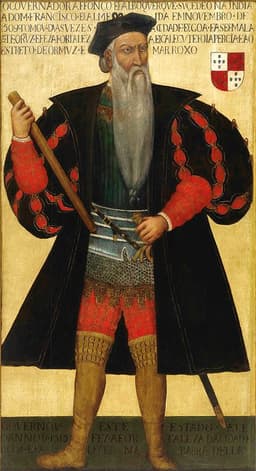
Afonso de Albuquerque
General · Medieval
79.6Total
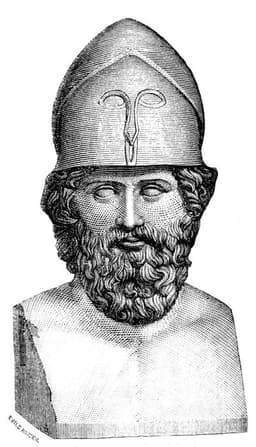
Themistocles
Politician · Ancient
68.4Total
Basic Information
Born
1453
-524
Died
1515
-459
Era
Medieval
Ancient
Nationality
Portugal
Greece
Occupation
General
Politician
Civilization
Western
Western
Score Comparison
Military (10%)
77.5
80.0
Political (20%)
88.0
72.0
Influence (20%)
80.0
40.0
Legacy (20%)
75.0
80.0
Leadership (15%)
78.0
79.8
Strategy (15%)
82.0
76.0
TOTAL
79.6
68.4
Afonso de Albuquerque — Complete Timeline
1503 AD
First voyage to IndiaWar◆ Major
Afonso de Albuquerque led a fleet to India, establishing the first Portuguese fort at Cochin. This voyage laid the foundation for Portuguese control of the Indian Ocean trade.
ExplorationColonialismIndia
Impact: global
1510 AD
Conquest of GoaWar◆ Major
Albuquerque captured Goa from the Sultan of Bijapur. He made Goa the capital of Portuguese India, a position it held for over 400 years.
ConquestColonialismIndia
Impact: regional
1511 AD
Conquest of MalaccaWar◆ Major
Albuquerque led a Portuguese fleet to capture the strategic port of Malacca. This gave Portugal control of the spice trade route between the Indian Ocean and the Pacific.
ConquestSpice TradeSoutheast Asia
Impact: global
1513 AD
Siege of AdenWar
Albuquerque attempted to capture Aden in Yemen but failed. This failure prevented Portugal from controlling the entrance to the Red Sea and limited their influence in the region.
SiegeFailureRed Sea
Impact: regional
1515 AD
Death at seaOther◆ Major
Afonso de Albuquerque died at sea off the coast of Goa, possibly from illness or poison. His death left the Portuguese Empire in the Indian Ocean without its most capable leader.
DeathLeadershipEmpire
Impact: regionaltragic
Themistocles — Complete Timeline
483 BC
Construction of the Athenian FleetReform◆ Major
Themistocles persuaded the Athenian assembly to use silver from the Laurion mines to build a fleet of 200 triremes. This naval expansion transformed Athens into a major maritime power and was crucial for the victory at Salamis.
AthensNaval PowerReform
Impact: nationalconstructive
480 BC
Battle of SalamisWar
Themistocles commanded the Greek navy against the Persian fleet at Salamis. He lured the Persians into the narrow straits, where the Greek ships destroyed the larger Persian fleet. This victory ended the Persian threat to Greece and preserved Greek independence.
Greco-Persian WarsNaval BattleAthens
Impact: regionalconstructive
472 BC
Ostracism from AthensPolitical Action◆ Major
Themistocles was ostracized by the Athenian assembly, likely due to political rivalries and accusations of arrogance. He went into exile, first to Argos, then to Persia, where he was received by King Artaxerxes I.
AthensExileOstracism
Impact: nationaltragic
465 BC
Service under the Persian KingPolitical Action
After his ostracism, Themistocles fled to Persia and offered his services to King Artaxerxes I. He was granted governorship of Magnesia and other cities in Asia Minor, where he lived until his death. This act was seen as treason by many Athenians.
PersiaExileTreason
Impact: regional
Expert Analysis
Themistocles vs Afonso de Albuquerque: Historical Comparison
Themistocles, the Athenian politician and naval architect, and Afonso de Albuquerque, the Portuguese general and empire-builder, represent two distinct eras of strategic militarism. While Themistocles shaped the classical world through naval innovation and political maneuvering, Albuquerque forged a global maritime empire through relentless conquest and administration.
Dimension Analysis
**Military: Themistocles 64 / Afonso de Albuquerque 82**
Albuquerque’s superior score reflects his hands-on command in dozens of sieges and naval battles across the Indian Ocean, whereas Themistocles’ military role was primarily strategic (e.g., Salamis) rather than tactical execution.
**Political: Themistocles 69 / Afonso de Albuquerque 80**
Albuquerque excelled as a colonial administrator, establishing forts, trade treaties, and governance structures in Goa, Malacca, and Hormuz. Themistocles’ political acumen was undermined by his eventual ostracism and defection to Persia.
**Influence: Themistocles 85 / Afonso de Albuquerque 77**
Themistocles’ vision of Athenian naval power laid the foundation for the Delian League and Western maritime strategy for centuries. Albuquerque’s influence, while profound in Portugal’s Asian empire, remained more regionally confined.
**Legacy: Themistocles 79 / Afonso de Albuquerque 67**
Themistocles is remembered as the father of Athenian sea power and a key figure in the Greco-Persian Wars. Albuquerque’s legacy is more contested, admired in Portugal but criticized for his brutal colonial methods.
**Leadership: Themistocles 79 / Afonso de Albuquerque 84**
Albuquerque demonstrated relentless, hands-on leadership, personally leading troops and maintaining discipline across vast distances. Themistocles’ leadership was more charismatic and persuasive, but he lacked Albuquerque’s sustained operational command.
Verdict
Afonso de Albuquerque leads narrowly, due to his superior combined military-political execution and enduring administrative impact, despite Themistocles’ greater long-term influence on naval strategy.
FAQ
Q: Who ranks higher? A: Afonso de Albuquerque ranks slightly higher, winning on military, political, and leadership dimensions, while Themistocles leads in influence and legacy.
Rankings
🥇
Afonso de AlbuquerqueLeader
Mil: 77.5Pol: 88.0Inf: 80.0
79.6
🥈
Themistocles
Mil: 80.0Pol: 72.0Inf: 40.0
68.4
+11.2 behind
How This Comparison Works
Algorithm
Each figure is scored on 6 dimensions (0—100 scale) based on structured historical data: Military (10%), Political (20%), Influence (20%), Legacy (20%), Leadership (15%), Strategy (15%). The weighted total produces the final ranking.
Data Sources
Scores are computed from structured sub-indicators in the database. Scale factors adjust for era (Ancient ×0.85, Modern ×1.0) and civilization size (Eastern ×1.05, Other ×0.80) to account for differences in population and military scale.
Maximum 3 Figures
Comparisons are limited to 2—3 figures to ensure readability and statistical meaningfulness.
Error Margins
±5 points per dimension — Sub-scores are derived from historical records with inherent uncertainty. Two figures within 5 points on a dimension should be considered roughly equivalent in that area.
Total Score Accuracy
±3 points overall — The weighted combination of 6 dimensions produces a total score with approximately ±3 points of uncertainty. Differences of less than 3 points are not statistically significant— the figures are effectively tied.
Known Limitations
- Historical records are incomplete and uneven across civilizations
- Figures from oral-tradition societies may be underrepresented
- Occupation labels can misclassify multi-role figures
- Scores measure capability and impact, not moral character
- Quantitative scoring is a comparison tool, not absolute truth
Capability Radar
Military (10%) — Battles & Warfare
Battles
85
75
Win Rate
80
85
Expansion
95
60
Political (20%) — Governance & Reform
Reform
80
75
Diplomacy
85
85
Economy
80
65
Influence (20%) — Cultural & Global Reach
Cultural
70
70
Global
85
75
Legacy (20%) — Historical Impact
Historical
85
85
Longevity
80
80
Leadership (15%) — Power & Stability
Tenure
70
70
Stability
65
60
Strategy (15%) — Tactics & Innovation
Strategy
95
90
Tactics
90
95
Reform
75
80
Similar Comparisons
Comments & Discussion
HistoryBuffDan6/16/2026
Okay, so I've been binge-watching ancient history docs, and Themistocles basically invented the concept of naval deterrence—like, the Athenian fleet was the nuclear submarine of its day. But then Albuquerque comes along and literally builds a maritime empire from scratch in Asia. It's like comparing a chess grandmaster to a boxer. Both are legends, but I think Themistocles' influence is way bigger because he changed how wars are fought forever.
ColonialCritic6/16/2026
Everyone's obsessed with Albuquerque's 'empire-building,' but let's not forget he burned cities alive and massacred civilians to get those trade treaties. Themistocles at least built a democracy-first naval strategy. The scoring here reeks of Eurocentric glorification of colonial violence over classical political nuance. Give me the guy who united Athens against Xerxes over the Portuguese war criminal any day.
BattlefieldScholar6/16/2026
The military gap here is real. Albuquerque commanded over 50 sieges and naval engagements—Goa 1510 alone was a masterclass in amphibious assault and logistics. Themistocles' Salamis was brilliant strategically, but he wasn't on the trireme decks fighting. The 82 vs 64 military score is generous to Themistocles; I'd put it at 85 vs 55 if we go by actual battlefield leadership and tactical execution.
ColdMind486/16/2026
这个评分体系有问题。地米斯托克利的影响力84.7,阿尔布开克77.3,但阿尔布开克的政治分80比地米斯托克利的69高那么多。如果看实际统治效果,阿尔布开克在印度洋建立的行政体系持续了上百年,地米斯托克利被流放后投靠波斯,政治生涯以失败告终。按照中国古代的标准,郭嘉给曹操提过十胜论,但最终被评价为谋士而非政治家。地米斯托克利类似郭嘉——战略天才但缺乏行政立身之本。总分76.2:77.1,阿尔布开克被低估了至少5分。
Chronicler62726/16/2026
拿阿尔布开克跟郑和比还差不多,跟地米斯托克利比有点关公战秦琼了。地米斯托克利的核心贡献是让雅典从陆上强权变成海上帝国,类似于吴起在魏国搞的武卒改革,但更彻底。阿尔布开克虽然建立了葡萄牙东方帝国,但他的手段太残暴,跟明朝的郑和下西洋比,完全是两种殖民逻辑。如果把地米斯托克利放到中国战国时代,他的战略眼光完全能跟孙武相提并论。