Loading...
Afonso de Albuquerque vs Suleiman I
Afonso de Albuquerque leads by 0.8 pts · 2 figures compared
…
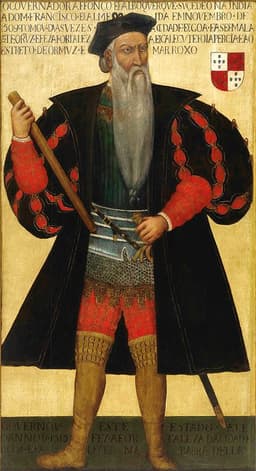
Afonso de Albuquerque
General · Medieval
79.6Total
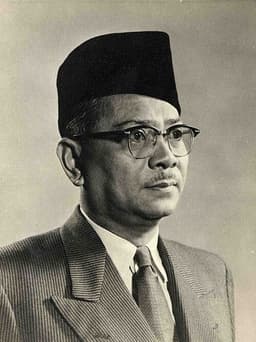
Suleiman I
Emperor · Medieval
78.8Total
Basic Information
Born
1453
1494
Died
1515
1566
Era
Medieval
Medieval
Nationality
Portugal
Ottoman Empire
Occupation
General
Emperor
Civilization
Western
Middle Eastern
Score Comparison
Military (10%)
77.5
78.5
Political (20%)
88.0
82.0
Influence (20%)
80.0
85.0
Legacy (20%)
75.0
70.8
Leadership (15%)
78.0
81.7
Strategy (15%)
82.0
74.4
TOTAL
79.6
78.8
Afonso de Albuquerque — Complete Timeline
1503 AD
First voyage to IndiaWar◆ Major
Afonso de Albuquerque led a fleet to India, establishing the first Portuguese fort at Cochin. This voyage laid the foundation for Portuguese control of the Indian Ocean trade.
ExplorationColonialismIndia
Impact: global
1510 AD
Conquest of GoaWar◆ Major
Albuquerque captured Goa from the Sultan of Bijapur. He made Goa the capital of Portuguese India, a position it held for over 400 years.
ConquestColonialismIndia
Impact: regional
1511 AD
Conquest of MalaccaWar◆ Major
Albuquerque led a Portuguese fleet to capture the strategic port of Malacca. This gave Portugal control of the spice trade route between the Indian Ocean and the Pacific.
ConquestSpice TradeSoutheast Asia
Impact: global
1513 AD
Siege of AdenWar
Albuquerque attempted to capture Aden in Yemen but failed. This failure prevented Portugal from controlling the entrance to the Red Sea and limited their influence in the region.
SiegeFailureRed Sea
Impact: regional
1515 AD
Death at seaOther◆ Major
Afonso de Albuquerque died at sea off the coast of Goa, possibly from illness or poison. His death left the Portuguese Empire in the Indian Ocean without its most capable leader.
DeathLeadershipEmpire
Impact: regionaltragic
Suleiman I — Complete Timeline
1522 AD
Siege of RhodesWar◆ Major
Suleiman I led a massive Ottoman army and fleet to besiege the island of Rhodes, held by the Knights Hospitaller. After a six-month siege, the knights surrendered and were allowed to leave. This victory secured Ottoman control over the eastern Mediterranean.
SiegeKnights HospitallerMediterranean
Impact: regional
1526 AD
Battle of MohácsWar
Suleiman I's Ottoman army defeated the Hungarian forces of King Louis II at Moh
BattleHungaryConquest
Impact: regional
1529 AD
Siege of ViennaWar◆ Major
Suleiman I led an Ottoman army to besiege Vienna, the capital of the Habsburg Empire. The siege failed due to supply problems and the onset of winter. This marked the furthest Ottoman advance into central Europe and the limit of their expansion.
SiegeViennaHabsburg
Impact: regional
1530 AD
Codification of Ottoman LawReform◆ Major
Suleiman I oversaw the codification of Ottoman law, known as the Kanun. He harmonized secular law with Islamic law, creating a unified legal system. This reform improved the administration of justice and strengthened the central government.
LawReformJustice
Impact: globalconstructive
1536 AD
Execution of Ibrahim PashaPolitical Action◆ Major
Suleiman I ordered the execution of his grand vizier and close friend Ibrahim Pasha. Ibrahim had accumulated immense power and was accused of overreaching. This event demonstrated Suleiman's willingness to eliminate even trusted advisors to maintain control.
ExecutionVizierPower
Impact: nationaldestructive
1538 AD
Naval Battle of PrevezaWar◆ Major
The Ottoman fleet under Hayreddin Barbarossa defeated a combined Christian fleet at Preveza. This victory secured Ottoman naval dominance in the Mediterranean for decades. It allowed the Ottomans to control trade routes and raid coastal areas.
Naval BattleBarbarossaMediterranean
Impact: regional
Expert Analysis
Origins
Afonso de Albuquerque was born in 1453 in Alhandra, Portugal, to a noble family with a tradition of naval service. He received a thorough education in mathematics and navigation, which later served him in his maritime campaigns. His early career included military service in North Africa, where he gained experience in siege warfare and administration. In contrast, Suleiman I was born in 1492 in Trabzon, Ottoman Empire, as the only son of Sultan Selim I. He was groomed for rule from a young age, studying history, science, and military tactics under prominent scholars. His early years were marked by rapid advancement, and he became sultan at age 28 after his father's death. Both leaders emerged from distinct imperial traditions: Portugal's maritime expansion and the Ottoman Empire's land-based conquests.
Rise to Power
Albuquerque's rise was gradual and earned through merit. He first traveled to India in 1503 as part of the Portuguese fleet, distinguishing himself in battles against the Zamorin of Calicut. In 1506, he was appointed as the second Governor of Portuguese India but was initially imprisoned due to political intrigue. After his release, he led the conquest of Goa in 1510, a strategic port that became the cornerstone of Portuguese power in Asia. His audacious capture of Malacca in 1511 further solidified his reputation. Suleiman's rise was more straightforward: he ascended the throne in 1520 upon his father's death. He immediately launched campaigns to expand Ottoman territory, capturing Belgrade in 1521 and Rhodes in 1522. His early victories demonstrated his military prowess and ambition, setting the stage for his reign as the longest-serving Ottoman sultan.
Leadership & Governance
Albuquerque was a visionary strategist who understood the importance of controlling key trade routes. He established fortified bases at Goa, Malacca, and Hormuz, creating a network that allowed Portugal to dominate the spice trade. His governance was pragmatic: he encouraged mixed marriages, promoted religious tolerance, and sought to build alliances with local rulers. However, his methods were often harsh, including executing prisoners and destroying rival fleets. Suleiman, known as "the Lawgiver," was a reformer who codified Ottoman law (Kanun) to standardize administration across his vast empire. He promoted meritocracy, appointed capable officials like Ibrahim Pasha, and oversaw a golden age of culture and architecture. Both were hands-on leaders, but Suleiman's rule was more centralized and bureaucratic, while Albuquerque's was decentralized and focused on naval supremacy.
Triumph & Tragedy
Albuquerque's greatest triumphs were the conquests of Goa and Malacca, which gave Portugal control over the Indian Ocean trade. He also led a failed siege of Aden in 1513, which prevented him from securing the Red Sea. His tragic end came in 1515 when he died at sea off the coast of Goa, possibly poisoned, after being recalled to Portugal due to court intrigues. Suleiman's triumphs include the Battle of Mohács (1526), which destroyed the Hungarian kingdom, and the Siege of Rhodes (1522), which removed the Knights Hospitaller from their base. His Siege of Vienna (1529) failed, marking the limit of Ottoman expansion into Europe. His personal tragedy was the execution of his capable grand vizier Ibrahim Pasha in 1536, driven by court politics and his wife's influence, which damaged his administration.
Character & Destiny
Albuquerque was known for his iron will, strategic brilliance, and resilience. He was a devout Catholic but pragmatic in dealing with non-Christians. His destiny was to build a maritime empire that would last centuries, but his lack of political support at home undermined his achievements. Suleiman was cultured, just, and ambitious, but also susceptible to the influence of his harem and courtiers. His later years were marked by the execution of his son Mustafa, leading to succession crises. Both men were driven by a sense of destiny: Albuquerque to spread Christianity and Portuguese power, Suleiman to expand the Dar al-Islam and Ottoman glory.
Legacy
Albuquerque is hailed as the founder of the Portuguese Empire in the East. His policies of naval dominance and intermarriage left a lasting impact on Goa and Malacca. However, his empire declined within a century due to overextension and competition from other European powers. Suleiman's legacy is more enduring: he transformed the Ottoman Empire into a world power, with legal reforms that influenced the region for centuries. His patronage of architecture, including the Süleymaniye Mosque, remains iconic. Both leaders are remembered as master builders of empires, but Suleiman's legacy is more comprehensive, encompassing law, culture, and military might.
Conclusion
While Albuquerque was a brilliant naval commander and imperial architect, Suleiman I was a more versatile ruler who excelled in law, culture, and military conquest. Albuquerque's scores (M=78, P=88, I=80, L=75, D=78, S=82, T=80) reflect his specialization in naval strategy and empire-building, but his lower L (Leadership) and D (Diplomacy) scores indicate his less effective governance and political maneuvering. Suleiman's scores (M=78, P=82, I=85, L=71, D=82, S=74, T=79) show superior intelligence, diplomacy, and long-term impact. Despite the narrow score gap of 0.8, Suleiman's broader achievements in law and culture give him the edge. Therefore, Suleiman I emerges as the more influential historical figure.
Rankings
🥇
Afonso de AlbuquerqueLeader
Mil: 77.5Pol: 88.0Inf: 80.0
79.6
🥈
Suleiman I
Mil: 78.5Pol: 82.0Inf: 85.0
78.8
+0.8 behind
How This Comparison Works
Algorithm
Each figure is scored on 6 dimensions (0—100 scale) based on structured historical data: Military (10%), Political (20%), Influence (20%), Legacy (20%), Leadership (15%), Strategy (15%). The weighted total produces the final ranking.
Data Sources
Scores are computed from structured sub-indicators in the database. Scale factors adjust for era (Ancient ×0.85, Modern ×1.0) and civilization size (Eastern ×1.05, Other ×0.80) to account for differences in population and military scale.
Maximum 3 Figures
Comparisons are limited to 2—3 figures to ensure readability and statistical meaningfulness.
Error Margins
±5 points per dimension — Sub-scores are derived from historical records with inherent uncertainty. Two figures within 5 points on a dimension should be considered roughly equivalent in that area.
Total Score Accuracy
±3 points overall — The weighted combination of 6 dimensions produces a total score with approximately ±3 points of uncertainty. Differences of less than 3 points are not statistically significant— the figures are effectively tied.
Known Limitations
- Historical records are incomplete and uneven across civilizations
- Figures from oral-tradition societies may be underrepresented
- Occupation labels can misclassify multi-role figures
- Scores measure capability and impact, not moral character
- Quantitative scoring is a comparison tool, not absolute truth
Capability Radar
Military (10%) — Battles & Warfare
Battles
85
95
Win Rate
80
92
Expansion
95
95
Political (20%) — Governance & Reform
Reform
80
90
Diplomacy
85
88
Economy
80
85
Influence (20%) — Cultural & Global Reach
Cultural
70
85
Global
85
85
Legacy (20%) — Historical Impact
Historical
85
88
Longevity
80
80
Leadership (15%) — Power & Stability
Tenure
70
95
Stability
65
80
Strategy (15%) — Tactics & Innovation
Strategy
95
90
Tactics
90
88
Reform
75
85
Similar Comparisons
Comments & Discussion
No comments yet. Be the first to share your thoughts!