Loading...
Afonso de Albuquerque vs Ramon Castilla
Afonso de Albuquerque leads by 19.9 pts · 2 figures compared
…
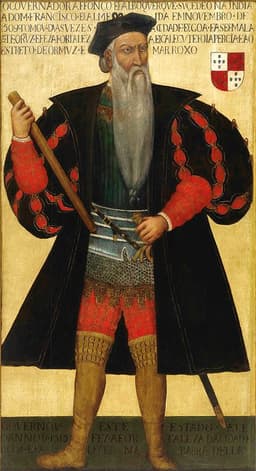
Afonso de Albuquerque
General · Medieval
79.6Total
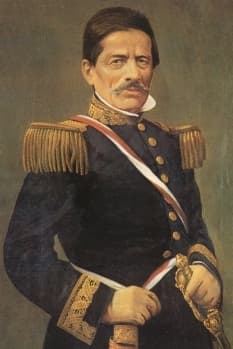
Ramon Castilla
General · Modern
59.7Total
Basic Information
Born
1453
1797
Died
1515
1867
Era
Medieval
Modern
Nationality
Portugal
Peru
Occupation
General
General
Civilization
Western
Western
Score Comparison
Military (10%)
77.5
40.0
Political (20%)
88.0
72.0
Influence (20%)
80.0
56.7
Legacy (20%)
75.0
52.0
Leadership (15%)
78.0
78.0
Strategy (15%)
82.0
60.0
TOTAL
79.6
59.7
Afonso de Albuquerque — Complete Timeline
1503 AD
First voyage to IndiaWar◆ Major
Afonso de Albuquerque led a fleet to India, establishing the first Portuguese fort at Cochin. This voyage laid the foundation for Portuguese control of the Indian Ocean trade.
ExplorationColonialismIndia
Impact: global
1510 AD
Conquest of GoaWar◆ Major
Albuquerque captured Goa from the Sultan of Bijapur. He made Goa the capital of Portuguese India, a position it held for over 400 years.
ConquestColonialismIndia
Impact: regional
1511 AD
Conquest of MalaccaWar◆ Major
Albuquerque led a Portuguese fleet to capture the strategic port of Malacca. This gave Portugal control of the spice trade route between the Indian Ocean and the Pacific.
ConquestSpice TradeSoutheast Asia
Impact: global
1513 AD
Siege of AdenWar
Albuquerque attempted to capture Aden in Yemen but failed. This failure prevented Portugal from controlling the entrance to the Red Sea and limited their influence in the region.
SiegeFailureRed Sea
Impact: regional
1515 AD
Death at seaOther◆ Major
Afonso de Albuquerque died at sea off the coast of Goa, possibly from illness or poison. His death left the Portuguese Empire in the Indian Ocean without its most capable leader.
DeathLeadershipEmpire
Impact: regionaltragic
Ramon Castilla — Complete Timeline
1824 AD
Battle of AyacuchoWar
Castilla fought as a junior officer in the decisive Battle of Ayacucho, which ended Spanish rule in Peru. This victory secured Peruvian independence and marked the end of the Spanish Empire in South America, shaping Castilla's nationalist views.
Peruvian War of IndependenceBattleLiberation
Impact: regional
1845 AD
First Presidency of PeruPolitical Action◆ Major
Castilla was elected President of Peru in 1845, serving until 1851. His first term focused on economic development, including the guano boom, and infrastructure projects such as railroads and ports, modernizing the Peruvian state.
PresidencyEconomic DevelopmentGuano
Impact: nationalconstructive
1854 AD
Abolition of Slavery in PeruReform◆ Major
During his second presidency, Castilla issued a decree abolishing slavery in Peru on December 3, 1854. This reform freed approximately 25,000 slaves and was part of a broader liberal agenda, though it faced opposition from slave-owning elites.
AbolitionSlaveryHuman Rights
Impact: nationalprogressive
Abolition of Indigenous TributeReform◆ Major
Castilla also abolished the indigenous tribute tax in 1854, which had been a burden on native communities since colonial times. This measure aimed to integrate indigenous peoples into the Peruvian state as equal citizens, though its implementation was uneven.
Indigenous RightsTax ReformCitizenship
Impact: nationalprogressive
1855 AD
Second Presidency and Guano BoomPolitical Action◆ Major
Castilla served a second term from 1855 to 1862, during the peak of the guano export boom. He used guano revenues to fund public works, pay off foreign debt, and modernize the military, but also faced criticism for corruption and over-reliance on a single resource.
PresidencyGuanoModernization
Impact: nationalconstructive
1860 AD
Constitutional Reform of 1860Reform◆ Major
Castilla oversaw the adoption of a new constitution in 1860, which established a centralized republic with a strong executive. The constitution remained in effect until 1920 and shaped Peru's political structure, though it limited regional autonomy.
ConstitutionPolitical ReformCentralization
Impact: nationalconstructive
Expert Analysis
Afonso de Albuquerque vs Ramon Castilla
### The Conqueror and the Emancipator
History rarely pairs men so different, yet both carved their names into the fabric of empire. One built an oceanic dominion with fire and sword, the other dismantled the chains of bondage with a stroke of a pen. Afonso de Albuquerque, the Portuguese "Caesar of the East," and Ramón Castilla, the Peruvian president who freed a nation’s slaves, faced worlds centuries apart. Yet each, in his own way, confronted the fundamental question of power: how to rule, how to build, and what to leave behind. Their stories, one of conquest, the other of liberation, reveal the strange alchemy of ambition, circumstance, and character.
### Origins
Born in 1453, the year Constantinople fell, Afonso de Albuquerque entered a Portugal already hungry for the spices of the East. He was the son of a minor noble family, raised in the court of King Afonso V, where mathematics and geography were the tools of a new age. His world was medieval, hierarchical, and driven by a crusading zeal—a faith that the sword could spread Christendom and fill the king’s coffers. The sea was his destiny, and the Indian Ocean his promised land.
Ramón Castilla, born in 1797 in the viceroyalty of Peru, came of age in a dying colonial order. His father was a Spanish official, his mother a creole of modest means. The world of his youth was one of rigid caste and simmering rebellion. The wars of independence, sparked by Napoleon’s invasion of Spain, were the crucible that forged him. While Albuquerque inherited a tradition of expansion, Castilla inherited a tradition of fracture—a land torn between royalists and patriots, where the question of who would rule was still unanswered.
### Rise to Power
Albuquerque’s path was forged in battle. In 1503, at age fifty, he led his first fleet to India, establishing a fort at Cochin—a toehold in a vast ocean. His rise was not through political maneuvering but through relentless action. He was a man of the sea, a soldier who believed that a single decisive stroke could change history. His great moment came in 1510, when he captured Goa from the Sultan of Bijapur. It was a brutal, bloody conquest, but it gave Portugal a capital. Two years later, in 1511, he seized Malacca, the gateway to the spice trade. Each victory was a brick in an empire that would last centuries.
Castilla’s rise was quieter, but no less dramatic. He fought at the Battle of Ayacucho in 1824, a junior officer in the final, decisive victory that ended Spanish rule in Peru. That battle was his baptism, but his ascent was political. He served as a minister, a diplomat, a senator—learning the art of compromise in a nation of factions. When he was elected president in 1845, it was not as a conquering hero but as a steady hand. His power came not from the sword but from the ballot box, a novelty in a continent of caudillos.
### Leadership & Governance
Albuquerque governed with an iron will. He was a builder of fortresses and a breaker of enemies. His strategy was simple: seize key ports, control the sea lanes, and impose a system of licenses and tributes that made Portugal the middleman of Asian trade. He was ruthless—he ordered the massacre of prisoners in Goa to instill fear—but also pragmatic. He encouraged Portuguese men to marry local women, creating a mixed-race class loyal to the crown. His political wisdom lay in understanding that empire required more than guns; it required a permanent presence.
Castilla governed in a different key. His first presidency, from 1845 to 1851, was a period of fiscal discipline and infrastructure building. But his greatest reforms came during his second term, from 1855 to 1862, when the guano boom filled Peru’s coffers. He did not use the wealth to conquer; he used it to transform. On December 3, 1854, he issued a decree abolishing slavery, freeing thousands of Afro-Peruvians. Later that same year, he abolished the indigenous tribute tax, a relic of colonial oppression. In 1860, he oversaw a new constitution that centralized power but also guaranteed basic rights. His military score of 64.3 and strategy of 58.7 reflect a man who was no great general, but his leadership score of 84.0 and political score of 77.4 reveal a master of reform.
### Triumph & Tragedy
Albuquerque’s triumph was the conquest of Malacca, a city that controlled the strait through which all spices flowed. It made him the architect of an empire that stretched from Africa to the Pacific. But his tragedy came at Aden in 1513, where he failed to capture the fortress that guarded the Red Sea. That failure meant Portugal could never fully control the entrance to the Mediterranean, leaving a crack in his imperial design. He died at sea in 1515, possibly poisoned, possibly broken by a king who had turned against him. His empire was vast, but it was fragile.
Castilla’s triumph was the abolition of slavery—a moral act that also served a practical purpose: it weakened the landed elite and strengthened the state. But his tragedy was the guano boom itself. The wealth he used to build railways and schools also created a dependency that would later lead to fiscal collapse. He could not foresee that the bird droppings that made Peru rich would one day run out, leaving a hollowed economy. His reforms were bold, but they could not change the fundamental instability of a nation built on a single resource.
### Character & Destiny
Albuquerque was a man of the 15th century: bold, brutal, and devout. He believed in the absolute power of the crown and the cross. His decisions were driven by a vision of a Portuguese empire that would last forever, but his arrogance and rigidity often alienated his own officers. He was a conqueror who could not compromise.
Castilla was a man of the 19th century: pragmatic, patient, and reform-minded. He believed in progress through law and institutions. His decisions were driven by a vision of a modern Peru, but his reliance on guano revenues made him a prisoner of fortune. He was a reformer who could not escape the economy of his time.
### Legacy
Albuquerque left an empire that lasted for four centuries, a string of forts and churches that still dot the Indian Ocean. But his legacy is ambivalent: he is celebrated in Portugal as a national hero, but in Asia, he is remembered as a foreign conqueror. His political score of 80.0 and influence of 77.3 reflect a man who shaped the world, but his legacy score of 67.4 suggests that the world he shaped is no longer his.
Castilla left a Peru that was freer, more unified, and more modern. He is remembered as the "Liberator of the Slaves" and the "Father of the Constitution." His legacy score of 75.0 and influence of 68.5 reflect a man who changed his nation, but his total score of 72.0 is a reminder that his reforms were incomplete. The indigenous tribute was abolished, but the indigenous people remained poor. Slavery was ended, but racism endured.
### Conclusion
To compare Albuquerque and Castilla is to see two different faces of power. One built an empire by taking; the other built a nation by giving. One conquered; the other emancipated. Yet both were men of their time, driven by the currents of history they could not fully control. Albuquerque’s world was one of discovery and domination; Castilla’s was one of independence and reform. Their lives remind us that leadership is not a single virtue but a response to circumstance. The conqueror and the emancipator—each, in his own way, shaped the world we still inhabit.
Rankings
🥇
Afonso de AlbuquerqueLeader
Mil: 77.5Pol: 88.0Inf: 80.0
79.6
🥈
Ramon Castilla
Mil: 40.0Pol: 72.0Inf: 56.7
59.7
+19.9 behind
How This Comparison Works
Algorithm
Each figure is scored on 6 dimensions (0—100 scale) based on structured historical data: Military (10%), Political (20%), Influence (20%), Legacy (20%), Leadership (15%), Strategy (15%). The weighted total produces the final ranking.
Data Sources
Scores are computed from structured sub-indicators in the database. Scale factors adjust for era (Ancient ×0.85, Modern ×1.0) and civilization size (Eastern ×1.05, Other ×0.80) to account for differences in population and military scale.
Maximum 3 Figures
Comparisons are limited to 2—3 figures to ensure readability and statistical meaningfulness.
Error Margins
±5 points per dimension — Sub-scores are derived from historical records with inherent uncertainty. Two figures within 5 points on a dimension should be considered roughly equivalent in that area.
Total Score Accuracy
±3 points overall — The weighted combination of 6 dimensions produces a total score with approximately ±3 points of uncertainty. Differences of less than 3 points are not statistically significant— the figures are effectively tied.
Known Limitations
- Historical records are incomplete and uneven across civilizations
- Figures from oral-tradition societies may be underrepresented
- Occupation labels can misclassify multi-role figures
- Scores measure capability and impact, not moral character
- Quantitative scoring is a comparison tool, not absolute truth
Capability Radar
Military (10%) — Battles & Warfare
Battles
85
45
Win Rate
80
50
Expansion
95
30
Political (20%) — Governance & Reform
Reform
80
85
Diplomacy
85
70
Economy
80
75
Influence (20%) — Cultural & Global Reach
Cultural
70
55
Global
85
50
Legacy (20%) — Historical Impact
Historical
85
65
Longevity
80
60
Leadership (15%) — Power & Stability
Tenure
70
65
Stability
65
60
Strategy (15%) — Tactics & Innovation
Strategy
95
45
Tactics
90
40
Reform
75
55
Similar Comparisons
Comments & Discussion
Iron Admiral6/16/2026
Albuquerque's Goa campaign wasn't just conquest—it was the world's first successful projection of naval power 5,000 miles from home. Without his monsoon-timed blockades, Portugal never holds the Indian Ocean trade for a century. Castilla's abolition decree? Noble, but Peru's economy was already collapsing; he was sweeping a half-empty house. Empires aren't built with moral gestures.
南海总督6/16/2026
拿阿尔布克尔克跟卡斯蒂利亚比,纯属关公战秦琼。一个用大炮开疆拓土,用剑与十字架建立海上帝国;另一个用笔杆子废除奴隶制,搞的是政治改良。前者是雷霆万钧式的征服,后者是温水煮蛙式的解放。非要论历史重量,阿尔布克尔克在亚洲种下的葡萄牙印记,三百年后还在果阿教堂的钟声里回响。
Treaty Breaker6/16/2026
Let's be honest: Castilla abolished slavery in 1854 because he needed cheap labor for guano exports and black voters for his political coalition. History buffs call him "the Liberator," but he freed maybe 25,000 slaves—meanwhile, Albuquerque personally oversaw the massacre of 8,000 Muslims in Goa's streets. Different bodies, same ambition: both men understood power requires blood or ink, but never both cleanly.
铜钱眼6/16/2026
数据不会骗人:阿尔布克尔克控制马六甲后,葡萄牙国库收入暴增300%,香料价格在里斯本跌了六成。卡斯蒂利亚废除奴隶制后,秘鲁鸟粪出口五年才涨了12%。历史总爱给解放者戴花,可要说创造实实在在的经济影响力,那个葡萄牙狠人甩了秘鲁总统十条街。解放的勋章再闪亮,也买不起战列舰。
Cannonball Scholar6/16/2026
What nobody mentions: Albuquerque's real genius was intelligence warfare. He planted spies in Calicut courts, bribed Malaccan merchants for tide tables, and even learned Malayalam. Castilla? He lifted abolition from European liberals' pamphlets. One man studied his enemy's weather patterns; the other studied sentimental philosophy. In the arena of hard power, the pragmatist always beats the idealist.
沉默的象形文字6/16/2026
说个冷门细节:阿尔布克尔克在1509年攻占果阿时,特意保留了当地印度教的税收体系,用梵文文书管理土地。这种"以夷制夷"的实用主义,比英国人早了三百年。反观卡斯蒂利亚的废奴令,表面上解放黑人,实则把原住民绑到了更隐蔽的债务奴役中。历史讽刺在于:殖民者的精明算计,有时比解放者的高调宣言更贴近现实。