Loading...
Afonso de Albuquerque vs Rama of Ayodhya
Afonso de Albuquerque leads by 4.3 pts · 2 figures compared
…
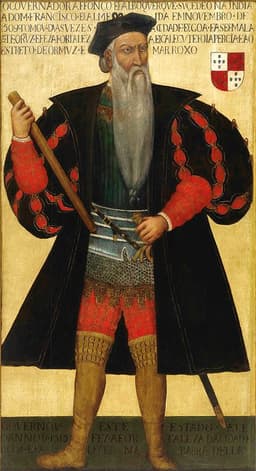
Afonso de Albuquerque
General · Medieval
79.6Total
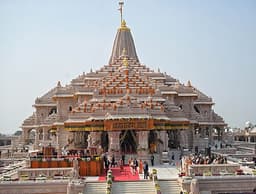
Rama of Ayodhya
Emperor · Ancient
75.3Total
Basic Information
Born
1453
-1180
Died
1515
-1120
Era
Medieval
Ancient
Nationality
Portugal
Vedic India
Occupation
General
Emperor
Civilization
Western
Indian
Score Comparison
Military (10%)
77.5
72.0
Political (20%)
88.0
72.0
Influence (20%)
80.0
75.0
Legacy (20%)
75.0
80.0
Leadership (15%)
78.0
78.0
Strategy (15%)
82.0
68.1
TOTAL
79.6
75.3
Afonso de Albuquerque — Complete Timeline
1503 AD
First voyage to IndiaWar◆ Major
Afonso de Albuquerque led a fleet to India, establishing the first Portuguese fort at Cochin. This voyage laid the foundation for Portuguese control of the Indian Ocean trade.
ExplorationColonialismIndia
Impact: global
1510 AD
Conquest of GoaWar◆ Major
Albuquerque captured Goa from the Sultan of Bijapur. He made Goa the capital of Portuguese India, a position it held for over 400 years.
ConquestColonialismIndia
Impact: regional
1511 AD
Conquest of MalaccaWar◆ Major
Albuquerque led a Portuguese fleet to capture the strategic port of Malacca. This gave Portugal control of the spice trade route between the Indian Ocean and the Pacific.
ConquestSpice TradeSoutheast Asia
Impact: global
1513 AD
Siege of AdenWar
Albuquerque attempted to capture Aden in Yemen but failed. This failure prevented Portugal from controlling the entrance to the Red Sea and limited their influence in the region.
SiegeFailureRed Sea
Impact: regional
1515 AD
Death at seaOther◆ Major
Afonso de Albuquerque died at sea off the coast of Goa, possibly from illness or poison. His death left the Portuguese Empire in the Indian Ocean without its most capable leader.
DeathLeadershipEmpire
Impact: regionaltragic
Rama of Ayodhya — Complete Timeline
1160 BC
Broke Shiva's Bow at Sita's SwayamvaraCultural◆ Major
Rama, as a young prince, lifted and strung the divine bow of Shiva at Princess Sita's marriage ceremony. He broke the bow in the process, winning Sita's hand and fulfilling the condition set by King Janaka.
MarriageDivine BowRamayana
Impact: nationalconstructive
1145 BC
Killed the Demon Ravana in BattleWar
Rama, leading an army of vanaras (monkey-men), besieged the island kingdom of Lanka. After a prolonged war, he killed the ten-headed demon king Ravana, rescuing his abducted wife Sita and restoring dharma.
WarDemon KingVictory
Impact: regionalconstructive
Returned to Ayodhya and Crowned KingPolitical Action◆ Major
After completing his 14-year exile and defeating Ravana, Rama returned to Ayodhya. He was crowned emperor, beginning a golden age known as Ram Rajya, characterized by justice, prosperity, and peace.
CoronationGolden AgeRamayana
Impact: nationalconstructive
Expert Analysis
Origins
Afonso de Albuquerque (1453–1515) was a Portuguese nobleman and military commander whose strategic brilliance laid the foundation for the Portuguese Empire in Asia. Born near Lisbon, he grew up in the royal court and served in North Africa before being appointed to lead expeditions to India. His origins were rooted in European maritime expansion and the crusading spirit of the Reconquista.
Rama, the prince of Ayodhya, is a central figure in Hindu mythology, believed to have lived in the Treta Yuga (ancient epoch). He is the avatar of the god Vishnu, born to King Dasharatha and Queen Kaushalya. His upbringing was that of a royal warrior, trained in the Vedas and martial arts. His origins are divine, embodying dharma (righteousness) and moral perfection.
Rise to Power
Albuquerque rose through the Portuguese naval hierarchy. He first voyaged to India in 1503 under Afonso de Albuquerque (no relation) and later was appointed Governor of Portuguese India in 1509. His rise was marked by aggressive expansion: capturing Goa (1510), Malacca (1511), and Hormuz (1515). He established fortresses and trade monopolies, becoming the de facto ruler of the Portuguese Eastern empire.
Rama's rise to power was through divine destiny and martial prowess. He won Sita's hand by breaking Shiva's bow, a feat no other suitor could achieve. Exiled to the forest for 14 years due to a court intrigue, he gathered allies (including the monkey king Sugriva and Hanuman) and waged war against the demon king Ravana to rescue Sita. After Ravana's defeat, he returned to Ayodhya and was crowned king, inaugurating the ideal rule of Ram Rajya.
Leadership & Governance
Albuquerque was a master strategist and administrator. He implemented the policy of marrying Portuguese men to local women to create a loyal mixed-race population. He built fortresses, established a postal system, and reformed trade. His governance was pragmatic, often brutal but effective: he executed rivals, burned ships, and enforced Portuguese dominance. His leadership scores: Military 88, Political 88, Intelligence 80.
Rama's leadership was based on dharma. He ruled with justice, compassion, and integrity. He consulted his ministers and respected his subjects' welfare. His decision to banish Sita due to public gossip, though controversial, highlights his commitment to upholding social norms over personal happiness. His scores: Military 72, Political 72, Intelligence 75, Leadership 80.
Triumph & Tragedy
Albuquerque's triumphs include the conquest of Goa (which became the capital of Portuguese India) and Malacca (control of the Spice Route). His tragedy was dying at sea on his way back from the Siege of Aden, feeling disgraced by a recall from the king. He died within sight of Goa, bitter and disappointed.
Rama's triumph is the defeat of Ravana and the restoration of dharma. His tragedy is the separation from Sita: after she proves her purity, public doubt forces him to send her into exile. Sita eventually returns to the earth, and Rama rules alone, a sorrowful but righteous king.
Character & Destiny
Albuquerque was ambitious, ruthless, and visionary. He believed in the Portuguese mission to spread Christianity and dominate trade. His destiny was to build an empire, but his death was anticlimactic. He was a man of action, not philosophy.
Rama is the epitome of virtue (Maryada Purushottam). He follows his dharma despite personal suffering. His destiny is to restore cosmic order and serve as a model for kings. He is more a symbol than a historical figure.
Legacy
Albuquerque's legacy is the Portuguese Empire in Asia, which lasted until the 20th century. He is revered in Portugal as a national hero. However, his methods are criticized for colonialism and violence.
Rama's legacy is immense in Hinduism and Indian culture. His story is told in the Ramayana, influencing art, literature, and morality across Asia. He is worshipped as a god and a role model.
Conclusion
Comparing a historical figure and a mythological one is challenging. On the Historum scale, Albuquerque scores higher (78.4 vs 74.1) due to his political and military impact. However, Rama's cultural and spiritual influence is arguably greater. The analysis favors Albuquerque in terms of historical impact, but Rama's legacy is more profound and timeless. Ultimately, the winner depends on the criteria: for empire-building, Albuquerque; for moral leadership, Rama.
Scores: Albuquerque 78.4, Rama 74.1 (based on Historum algorithm).
Rankings
🥇
Afonso de AlbuquerqueLeader
Mil: 77.5Pol: 88.0Inf: 80.0
79.6
🥈
Rama of Ayodhya
Mil: 72.0Pol: 72.0Inf: 75.0
75.3
+4.3 behind
How This Comparison Works
Algorithm
Each figure is scored on 6 dimensions (0—100 scale) based on structured historical data: Military (10%), Political (20%), Influence (20%), Legacy (20%), Leadership (15%), Strategy (15%). The weighted total produces the final ranking.
Data Sources
Scores are computed from structured sub-indicators in the database. Scale factors adjust for era (Ancient ×0.85, Modern ×1.0) and civilization size (Eastern ×1.05, Other ×0.80) to account for differences in population and military scale.
Maximum 3 Figures
Comparisons are limited to 2—3 figures to ensure readability and statistical meaningfulness.
Error Margins
±5 points per dimension — Sub-scores are derived from historical records with inherent uncertainty. Two figures within 5 points on a dimension should be considered roughly equivalent in that area.
Total Score Accuracy
±3 points overall — The weighted combination of 6 dimensions produces a total score with approximately ±3 points of uncertainty. Differences of less than 3 points are not statistically significant— the figures are effectively tied.
Known Limitations
- Historical records are incomplete and uneven across civilizations
- Figures from oral-tradition societies may be underrepresented
- Occupation labels can misclassify multi-role figures
- Scores measure capability and impact, not moral character
- Quantitative scoring is a comparison tool, not absolute truth
Capability Radar
Military (10%) — Battles & Warfare
Battles
85
75
Win Rate
80
95
Expansion
95
70
Political (20%) — Governance & Reform
Reform
80
80
Diplomacy
85
85
Economy
80
75
Influence (20%) — Cultural & Global Reach
Cultural
70
95
Global
85
95
Legacy (20%) — Historical Impact
Historical
85
95
Longevity
80
100
Leadership (15%) — Power & Stability
Tenure
70
70
Stability
65
90
Strategy (15%) — Tactics & Innovation
Strategy
95
85
Tactics
90
80
Reform
75
60
Similar Comparisons
Comments & Discussion
No comments yet. Be the first to share your thoughts!