Loading...
Afonso de Albuquerque vs Prayut Chan-o-cha
Afonso de Albuquerque leads by 31.5 pts · 2 figures compared
…
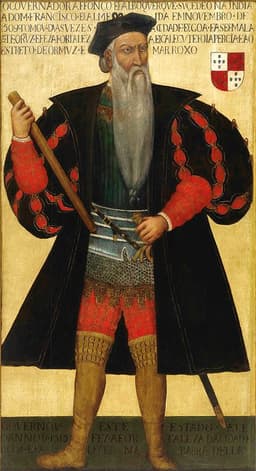
Afonso de Albuquerque
General · Medieval
79.6Total
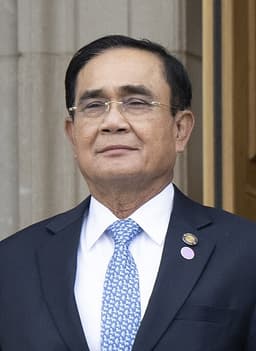
Prayut Chan-o-cha
General · Modern
48.1Total
Basic Information
Born
1453
1954
Died
1515
—
Era
Medieval
Modern
Nationality
Portugal
Thailand
Occupation
General
General
Civilization
Western
Eastern
Score Comparison
Military (10%)
77.5
10.2
Political (20%)
88.0
68.0
Influence (20%)
80.0
51.8
Legacy (20%)
75.0
40.8
Leadership (15%)
78.0
68.0
Strategy (15%)
82.0
35.7
TOTAL
79.6
48.1
Afonso de Albuquerque — Complete Timeline
1503 AD
First voyage to IndiaWar◆ Major
Afonso de Albuquerque led a fleet to India, establishing the first Portuguese fort at Cochin. This voyage laid the foundation for Portuguese control of the Indian Ocean trade.
ExplorationColonialismIndia
Impact: global
1510 AD
Conquest of GoaWar◆ Major
Albuquerque captured Goa from the Sultan of Bijapur. He made Goa the capital of Portuguese India, a position it held for over 400 years.
ConquestColonialismIndia
Impact: regional
1511 AD
Conquest of MalaccaWar◆ Major
Albuquerque led a Portuguese fleet to capture the strategic port of Malacca. This gave Portugal control of the spice trade route between the Indian Ocean and the Pacific.
ConquestSpice TradeSoutheast Asia
Impact: global
1513 AD
Siege of AdenWar
Albuquerque attempted to capture Aden in Yemen but failed. This failure prevented Portugal from controlling the entrance to the Red Sea and limited their influence in the region.
SiegeFailureRed Sea
Impact: regional
1515 AD
Death at seaOther◆ Major
Afonso de Albuquerque died at sea off the coast of Goa, possibly from illness or poison. His death left the Portuguese Empire in the Indian Ocean without its most capable leader.
DeathLeadershipEmpire
Impact: regionaltragic
Prayut Chan-o-cha — Complete Timeline
2014 AD
Led the 2014 military coupPolitical Action
General Prayut Chan-o-cha, as Army Commander-in-Chief, led a coup d'
CoupMilitaryThailand
Impact: nationaldestructive
Appointed Prime Minister by military legislaturePolitical Action◆ Major
Following the coup, Prayut was appointed Prime Minister by the military-controlled National Legislative Assembly. He assumed executive power, leading a government that promised reforms and national reconciliation.
AppointmentMilitary RuleThailand
Impact: national
2017 AD
Promulgation of the 2017 ConstitutionReform◆ Major
Prayut's government oversaw the drafting and approval of a new constitution that strengthened the military's political role and created a fully appointed Senate. The charter was criticized for entrenching military influence.
ConstitutionMilitaryThailand
Impact: national
2019 AD
Re-elected Prime Minister after 2019 electionPolitical Action◆ Major
Prayut was re-elected Prime Minister following a general election that was criticized for being manipulated to favor pro-military parties. He formed a coalition government, continuing his rule under a civilian facade.
ElectionContinuityThailand
Impact: national
Expert Analysis
Afonso de Albuquerque vs Prayut Chan-o-cha
# The General and the Gatekeeper
On a sweltering April morning in 1511, Afonso de Albuquerque stood on the deck of his flagship, the *Flor de la Mar*, watching the smoke rise from the burning city of Malacca. He had just pried open the door to the Spice Islands, and with it, the fate of Asia's trade routes. Five centuries later, in May 2014, another general, Prayut Chan-o-cha, sat in a Bangkok command center, watching his troops surround government buildings. He had just closed a door—on Thailand's fragile democracy. Two men, both generals, both architects of transformation, yet their worlds could not be more different. Why did one build an empire that lasted four centuries, while the other built a political order that still struggles for legitimacy? The answer lies not in their uniforms, but in the eras that shaped them.
Origins
Albuquerque was born in 1453, the year Constantinople fell to the Ottomans, a date that sent shockwaves through Christendom. He was the son of a Portuguese nobleman, raised in the court of King Afonso V, where the air was thick with crusading zeal and the promise of gold from Africa. His Portugal was a small, poor kingdom on the edge of Europe, but it was driven by a desperate hunger—for spices, for souls, for glory. The Reconquista had just ended, and the energy that had expelled the Moors was now turned outward, toward the unknown ocean.
Prayut Chan-o-cha was born in 1954, in the northeastern Thai province of Nakhon Ratchasima, a region of rice paddies and military bases. His Thailand was never colonized, but it was haunted by the shadow of the Cold War. The king was a demigod, the army was the guardian of the nation, and democracy was a fragile experiment that kept failing. Prayut grew up in a world where the military did not just defend borders—it defined the nation. His father was a sergeant, his mother a homemaker. He was not born to rule; he was born to obey, and then to command.
Rise to Power
Albuquerque’s path to power was forged in salt spray and gunpowder. In 1503, at age fifty, he led his first fleet to India, landing at Cochin and building the first Portuguese fort on the subcontinent. He was not a young man, but he was a relentless one. He understood that the Indian Ocean was not a place to trade—it was a place to conquer. While other Portuguese captains sought quick profits, Albuquerque thought in decades. He saw that the key to the East was not gold, but geography: control the choke points, and the trade would flow to you.
Prayut’s rise was slower, more methodical. He joined the army in 1972, just as Thailand’s democracy was crushed by another coup. He climbed the ranks through loyalty and caution, never making waves, never challenging the palace. By 2010, he was Army Commander-in-Chief, a position that made him the king’s sword. When political chaos erupted in 2013—street protests, a paralyzed government, the threat of civil war—Prayut did not seize power; he was handed it. On May 22, 2014, he announced the coup on national television, his face impassive, his voice flat. "To restore peace and order," he said. It was the same phrase every Thai general had used since 1932.
Leadership & Governance
Albuquerque ruled through terror and calculation. When he captured Goa in 1510, he did not simply sack it—he made it his capital. He married Portuguese soldiers to local women, granted land to settlers, and built a hospital and a mint. He was ruthless: after the conquest of Malacca, he ordered the execution of the city’s wealthy merchants to send a message. But he was also visionary. He understood that an empire in Asia could not be run from Lisbon. He wrote to King Manuel I: "If you want to hold India, you must be in India." His military genius lay in his grasp of logistics—he knew that a single fortified port was worth a hundred ships.
Prayut governed by caution and compromise. As prime minister, he did not rewrite Thai society; he froze it. His 2017 constitution was a masterpiece of control: an unelected senate, a judiciary with veto power, and a military that could never be held accountable. He did not crush his opponents; he exhausted them. He banned protests, censored the internet, and jailed critics, but he also handed out welfare cards to the poor. He was not a tyrant in the classic sense—he was a caretaker, a man who believed that Thailand was too fragile for democracy. "I am not here for power," he said in 2019. "I am here to solve problems."
Triumph & Tragedy
Albuquerque’s greatest triumph was Malacca. In July 1511, he sailed into the harbor with eighteen ships and 1,200 men. The Sultan of Malacca had 20,000 soldiers, but he had no cannons. Albuquerque bombarded the city for a month, then stormed the walls. The fall of Malacca broke the Muslim trading network and gave Portugal control of the spice route to Europe. It was the single most important victory in Portuguese history.
His greatest failure was Aden. In 1513, he tried to capture the city at the mouth of the Red Sea, hoping to block the Ottoman route to India. He failed. The walls were too high, his men too sick, his supplies too low. He sailed away, humiliated. That failure meant that the Red Sea remained open to Muslim traders, and the Portuguese Empire never achieved total control of the Indian Ocean. It was a wound that never healed.
Prayut’s triumph was the 2019 election. After five years of military rule, he allowed a vote—but under rules so rigged that his party won without a majority. He was re-elected prime minister, and the international community, weary of sanctions, mostly looked the other way. It was a masterpiece of political engineering: democracy without the risk of change.
His tragedy is that he never won legitimacy. The protests that began in 2020, led by students demanding his resignation, were not about policy—they were about principle. They chanted: "Get out, Prayut." He could not understand why they did not appreciate the stability he had given them. In 2023, he finally stepped down, forced out by a court ruling. He left not with a bang, but with a whimper.
Character & Destiny
Albuquerque was a man of the Renaissance—ambitious, learned, and utterly convinced of his mission. He wrote letters to the king that were part report, part sermon, full of classical references and biblical metaphors. He believed he was building a Christian empire that would outlast him. And he was right. Portuguese remained the language of trade in Asia for two centuries after his death.
Prayut is a man of the modern era—cautious, bureaucratic, and deeply insecure. He does not write letters; he gives press conferences. He does not dream of empires; he dreams of order. His tragedy is that he governed a country that no longer wanted to be governed by generals. The world had changed, but he had not.
Legacy
Albuquerque died at sea in 1515, off the coast of Goa, possibly poisoned, possibly of disease. He was buried in a simple grave in Goa, but his empire lived on. Today, his statue stands in Lisbon and in Panaji, a reminder that one man can change the course of history. His legacy is the Portuguese language in Brazil, the Catholic churches in Kerala, the cashew nuts in Goa.
Prayut’s legacy is harder to see. He is still alive, and his constitution still governs Thailand. But the protests of 2020 showed that his model of controlled democracy is unsustainable. He may be remembered as the general who tried to stop time—and failed.
Conclusion
The difference between these two generals is not one of skill or ambition, but of era. Albuquerque lived in a world where a general could build an empire with a sword and a prayer. Prayut lives in a world where a general can only hold back the tide. Both sought order, but one built for eternity, the other for a season. The lesson is not that one was better than the other, but that history rewards those who understand their time—and punishes those who try to stop it.
Rankings
🥇
Afonso de AlbuquerqueLeader
Mil: 77.5Pol: 88.0Inf: 80.0
79.6
🥈
Prayut Chan-o-cha
Mil: 10.2Pol: 68.0Inf: 51.8
48.1
+31.5 behind
How This Comparison Works
Algorithm
Each figure is scored on 6 dimensions (0—100 scale) based on structured historical data: Military (10%), Political (20%), Influence (20%), Legacy (20%), Leadership (15%), Strategy (15%). The weighted total produces the final ranking.
Data Sources
Scores are computed from structured sub-indicators in the database. Scale factors adjust for era (Ancient ×0.85, Modern ×1.0) and civilization size (Eastern ×1.05, Other ×0.80) to account for differences in population and military scale.
Maximum 3 Figures
Comparisons are limited to 2—3 figures to ensure readability and statistical meaningfulness.
Error Margins
±5 points per dimension — Sub-scores are derived from historical records with inherent uncertainty. Two figures within 5 points on a dimension should be considered roughly equivalent in that area.
Total Score Accuracy
±3 points overall — The weighted combination of 6 dimensions produces a total score with approximately ±3 points of uncertainty. Differences of less than 3 points are not statistically significant— the figures are effectively tied.
Known Limitations
- Historical records are incomplete and uneven across civilizations
- Figures from oral-tradition societies may be underrepresented
- Occupation labels can misclassify multi-role figures
- Scores measure capability and impact, not moral character
- Quantitative scoring is a comparison tool, not absolute truth
Capability Radar
Military (10%) — Battles & Warfare
Battles
85
5
Win Rate
80
5
Expansion
95
5
Political (20%) — Governance & Reform
Reform
80
30
Diplomacy
85
40
Economy
80
35
Influence (20%) — Cultural & Global Reach
Cultural
70
20
Global
85
20
Legacy (20%) — Historical Impact
Historical
85
20
Longevity
80
15
Leadership (15%) — Power & Stability
Tenure
70
60
Stability
65
25
Strategy (15%) — Tactics & Innovation
Strategy
95
15
Tactics
90
10
Reform
75
20
Similar Comparisons
Comments & Discussion
铁血数据控6/16/2026
数据不会说谎:阿尔布开克任期内葡萄牙仅占领约10个关键据点,舰队从不超200艘船,所谓"帝国"实为海盗网络升级版。而巴育治下泰国2014-2023年GDP增长平均仅2.3%,低于其政变前五年的3.8%。两人都是权力劫持者,但一个劫的是香料航线,一个劫的是经济增速。把16世纪殖民地警察和21世纪政变将军相提并论,本身就是对历史的嘲讽。
Conquistador's Ghost6/16/2026
Comparing Albuquerque to Prayut is like comparing a firestorm to a damp match. Albuquerque wasn't just a general; he was a naval revolutionary who understood that controlling the Indian Ocean meant controlling global trade. He didn't seize Malacca for glory—he did it for strategic choke points, which still matter today. Prayut just seized a TV station. One built an empire of spice and saltwater; the other built a junta of parking tickets and photo ops.
帝国蓝图师6/16/2026
拿阿尔布开克对比巴育,简直是对大航海时代殖民者智商的侮辱。阿尔布开克在1510年攻下果阿时,就知道要建海军基地、娶本地寡妇、发行银币,打造永久的葡萄牙东方帝国。巴育呢?2014年政变后除了延长自己的退休年龄和修改宪法,还做了什么有远见的事?一个是帝国建筑师,一个是穿军装的守门人,天壤之别。
Skeptical Logbook6/16/2026
Let's pump the brakes on the romanticized comparison. Albuquerque's "four-century empire" is ahistorical hyperbole—the Portuguese Estado da Índia was a string of coastal forts constantly under siege, not a unified colonial empire. By 1600, the Dutch had already punctured their monopoly. Meanwhile, Prayut's Thailand has had the region's longest continuous military rule in decades. Both built something, but let's not confuse geographical reach with political durability.
Democracy's Gravedigger6/16/2026
Let's be brutally honest: both men are authoritarians who used violence to rewrite political rules. But Albuquerque was honest about his intentions—he called himself a "conqueror" and never pretended to be anything else. Prayut wrapped his coup in a "roadmap to democracy" that went nowhere. One burned Malacca's sultanate to the ground in plain daylight; the other burned Thailand's constitution in the dark while smiling for cameras. The difference is style, not substance.
沉默的修正者6/16/2026
看完这个对比我只想说:别拿殖民者来洗白军事政变。阿尔布开克屠杀马六甲穆斯林商人时,至少没说过这是"恢复和谐"。巴育推翻民选政府后,却大谈"国家改革"和"道德治理"。更讽刺的是,阿尔