Loading...
Afonso de Albuquerque vs Plutarco Elias Calles
Afonso de Albuquerque leads by 21.1 pts · 2 figures compared
…
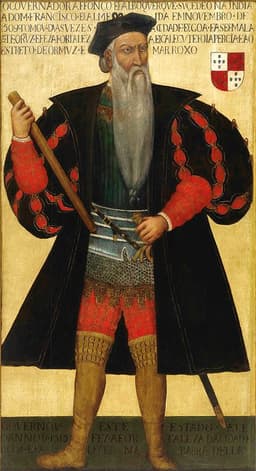
Afonso de Albuquerque
General · Medieval
79.6Total
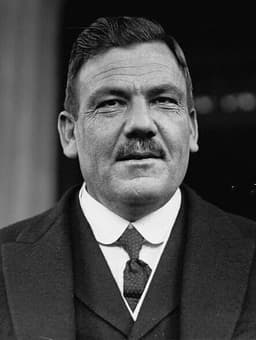
Plutarco Elias Calles
General · Modern
58.5Total
Basic Information
Born
1453
1877
Died
1515
1945
Era
Medieval
Modern
Nationality
Portugal
Mexico
Occupation
General
General
Civilization
Western
Western
Score Comparison
Military (10%)
77.5
40.0
Political (20%)
88.0
70.3
Influence (20%)
80.0
68.0
Legacy (20%)
75.0
40.0
Leadership (15%)
78.0
78.0
Strategy (15%)
82.0
52.5
TOTAL
79.6
58.5
Afonso de Albuquerque — Complete Timeline
1503 AD
First voyage to IndiaWar◆ Major
Afonso de Albuquerque led a fleet to India, establishing the first Portuguese fort at Cochin. This voyage laid the foundation for Portuguese control of the Indian Ocean trade.
ExplorationColonialismIndia
Impact: global
1510 AD
Conquest of GoaWar◆ Major
Albuquerque captured Goa from the Sultan of Bijapur. He made Goa the capital of Portuguese India, a position it held for over 400 years.
ConquestColonialismIndia
Impact: regional
1511 AD
Conquest of MalaccaWar◆ Major
Albuquerque led a Portuguese fleet to capture the strategic port of Malacca. This gave Portugal control of the spice trade route between the Indian Ocean and the Pacific.
ConquestSpice TradeSoutheast Asia
Impact: global
1513 AD
Siege of AdenWar
Albuquerque attempted to capture Aden in Yemen but failed. This failure prevented Portugal from controlling the entrance to the Red Sea and limited their influence in the region.
SiegeFailureRed Sea
Impact: regional
1515 AD
Death at seaOther◆ Major
Afonso de Albuquerque died at sea off the coast of Goa, possibly from illness or poison. His death left the Portuguese Empire in the Indian Ocean without its most capable leader.
DeathLeadershipEmpire
Impact: regionaltragic
Plutarco Elias Calles — Complete Timeline
1915 AD
Governorship of SonoraPolitical Action
Calles served as Governor of Sonora from 1915 to 1919, implementing radical reforms including land redistribution, anti-clerical laws, and labor rights. His governorship established him as a key figure in the Sonoran dynasty and a proponent of revolutionary change.
GovernorshipSonoraReforms
Impact: regionalconstructive
1924 AD
Presidency of MexicoPolitical Action◆ Major
Calles was elected President of Mexico in 1924, serving until 1928. His administration continued revolutionary reforms, including land reform, labor rights, and secularization, but also faced opposition from the Catholic Church and conservative groups.
PresidencyMexican RevolutionReforms
Impact: nationalconstructive
1926 AD
Cristero WarWar◆ Major
Calles enforced anti-clerical laws, including the Calles Law, which restricted the Catholic Church's role in society. This sparked the Cristero War (1926-1929), a violent rebellion by Catholic peasants against the state, resulting in tens of thousands of deaths.
Cristero WarAnti-clericalismReligious Conflict
Impact: nationaldestructive
1928 AD
MaximatoPolitical Action◆ Major
After his presidency, Calles remained the de facto ruler of Mexico during the Maximato (1928-1934), controlling puppet presidents. He continued to influence policy, but his power waned as President L
MaximatoPolitical ControlCárdenas
Impact: national
1929 AD
Founding of the National Revolutionary Party (PNR)Political Action
Calles founded the National Revolutionary Party (PNR) in 1929, which later became the Institutional Revolutionary Party (PRI). This party dominated Mexican politics for over 70 years, institutionalizing the revolution's legacy and centralizing power.
Political PartyPRIInstitutionalization
Impact: nationalconstructive
Expert Analysis
Afonso de Albuquerque vs Plutarco Elias Calles
### The Iron Hand and the Admiral's Compass: Calles and Albuquerque, Builders of Empires
The scene could not be more different. In a dusty Mexican church, men in black suits and sombreros face a firing squad, their crime being loyalty to a faith their government has outlawed. On the other side of the world, a Portuguese admiral, wracked with fever, stares at the Indian Ocean from the deck of a galleon, knowing that with his last breath, an empire of trade routes and fortresses might crumble. Plutarco Elías Calles and Afonso de Albuquerque were both architects of power, but the empires they built—one a political machine, the other a maritime dominion—were forged from vastly different materials. What drove one man to secularize a nation and the other to conquer an ocean?
**Origins**
Plutarco Elías Calles was born in 1877 in the northern Mexican state of Sonora, a frontier region of hard men and harder realities. His father was a failed shopkeeper, his mother a schoolteacher; young Plutarco grew up in a world of poverty and violence, where the only law was that of the local *cacique*. He was a product of the Mexican Revolution, a self-made man who rose from a teacher to a general, learning that survival depended on ruthless pragmatism. His era was one of upheaval, where the old order of Porfirio Díaz had been torn down, and the new order was up for grabs.
Afonso de Albuquerque was born in 1453 near Lisbon, Portugal, into the high nobility. His great-grandfather was a king’s secretary, his father a lord of a small estate. He was a child of the Age of Discovery, a time when Portugal’s caravels were pushing into the unknown Atlantic. Albuquerque learned the sword and the compass at the court of King Afonso V, where the talk was of crusades, spices, and the dream of outflanking Islam. His world was one of maritime glory, not dusty haciendas. Calles was forged in the crucible of a civil war; Albuquerque, in the crucible of a Renaissance court.
**Rise to Power**
Calles’s path to power was through the chaos of revolution. He served as Governor of Sonora from 1915 to 1919, implementing radical land reforms and anti-clerical laws that earned him a reputation as a man of action. His key turning point came in 1924, when he was elected President of Mexico. He did not win by conquest, but by political maneuvering, building a coalition of generals, labor leaders, and agrarian reformers. His rise was a slow, grinding ascent through the ranks of a fractured nation.
Albuquerque’s rise was swifter and more dramatic. In 1503, he led a fleet to India, establishing the first Portuguese fort at Cochin. But his true moment came in 1510, when he captured Goa from the Sultan of Bijapur. He did not wait for orders from Lisbon; he acted on his own authority, a man of the sea who understood that hesitation meant death. His rise was a series of audacious gambles, each one a leap into the unknown.
**Leadership & Governance**
Calles governed Mexico with an iron hand. He enforced the Calles Law of 1926, which restricted the Catholic Church’s role in society, sparking the bloody Cristero War that lasted until 1929. He was a political genius, not a military one—his military score of 64.3 reflects a man who fought with laws and party structures, not armies. In 1929, he founded the National Revolutionary Party (PNR), which later became the Institutional Revolutionary Party (PRI). This was his masterpiece: a political machine that would rule Mexico for seven decades. His governance was about control—of the Church, of the military, of the peasantry.
Albuquerque governed by the sword and the treaty. His conquest of Malacca in 1511 gave Portugal control of the spice trade, and he made Goa the capital of Portuguese India, a position it held for 450 years. His military score of 82.2 reflects a man who led fleets into battle, who understood the art of siege and the diplomacy of fear. He built forts, married Portuguese soldiers to local women, and established a system of trade that enriched his king. His governance was about expansion—of territory, of influence, of trade routes.
**Triumph & Tragedy**
Calles’s greatest triumph was the Maximato, the period from 1928 to 1934 when, after his presidency, he remained the de facto ruler of Mexico, controlling puppet presidents. He had turned himself into the power behind the throne. But his greatest tragedy was the Cristero War, a brutal conflict that killed tens of thousands. His anti-clerical laws, meant to modernize Mexico, instead tore it apart. He won the war, but at a terrible cost to his nation’s soul.
Albuquerque’s greatest triumph was the conquest of Malacca, a city that controlled the choke point of the spice trade. He wrote to his king, “If Malacca is taken, Cairo and Mecca are ruined.” He was right. But his tragedy was the failed Siege of Aden in 1513, where he could not capture the entrance to the Red Sea. This failure meant that Portugal never fully controlled the route to the Holy Land. His death at sea in 1515, possibly from poison, was a lonely end for a man who had built an empire.
**Character & Destiny**
Calles was a man of cold calculation. He once said, “We must be the masters of our own destiny.” His personality was shaped by the brutal realities of revolutionary Mexico, where trust was a luxury he could not afford. He was a builder of systems, not a man of charisma. His destiny was to create the PRI, a party that would outlast him, but also to leave a legacy of division.
Albuquerque was a man of fire. He wrote in his letters, “I am not afraid of anything.” His personality was shaped by the Renaissance ideal of the *uomo universale*—the man who could command, navigate, and fight. He was audacious, even reckless. His destiny was to die at sea, his empire incomplete, but his name forever linked to the Portuguese golden age.
**Legacy**
Calles is remembered as the “Jefe Máximo” of Mexico, the founder of the PRI. His legacy is mixed: he secularized the state, but at the cost of a religious war. Today, his party is gone, but the structures he built—the centralized, authoritarian state—still shape Mexico. His influence score of 78.0 reflects a man who changed his country’s DNA.
Albuquerque is remembered as “The Great” and “The Caesar of the East.” His legacy is the Portuguese Empire in Asia, a network of forts and trade that lasted for centuries. Today, his name is on streets and statues in Goa and Portugal. His legacy score of 67.4 is lower than Calles’s, perhaps because his empire was built on sand—on ships and spice, not on institutions.
**Conclusion**
Calles and Albuquerque built empires, but one built a machine, the other a fleet. Calles’s empire was a political party that controlled a nation; Albuquerque’s was a maritime network that controlled a sea. Both were ruthless, both were visionaries, and both left their worlds changed forever. One secularized a country; the other globalized a continent. In the end, their stories remind us that empires are built not just by force, but by the character of the men who build them—and that character, like their empires, is always a mix of light and shadow.
Rankings
🥇
Afonso de AlbuquerqueLeader
Mil: 77.5Pol: 88.0Inf: 80.0
79.6
🥈
Plutarco Elias Calles
Mil: 40.0Pol: 70.3Inf: 68.0
58.5
+21.1 behind
How This Comparison Works
Algorithm
Each figure is scored on 6 dimensions (0—100 scale) based on structured historical data: Military (10%), Political (20%), Influence (20%), Legacy (20%), Leadership (15%), Strategy (15%). The weighted total produces the final ranking.
Data Sources
Scores are computed from structured sub-indicators in the database. Scale factors adjust for era (Ancient ×0.85, Modern ×1.0) and civilization size (Eastern ×1.05, Other ×0.80) to account for differences in population and military scale.
Maximum 3 Figures
Comparisons are limited to 2—3 figures to ensure readability and statistical meaningfulness.
Error Margins
±5 points per dimension — Sub-scores are derived from historical records with inherent uncertainty. Two figures within 5 points on a dimension should be considered roughly equivalent in that area.
Total Score Accuracy
±3 points overall — The weighted combination of 6 dimensions produces a total score with approximately ±3 points of uncertainty. Differences of less than 3 points are not statistically significant— the figures are effectively tied.
Known Limitations
- Historical records are incomplete and uneven across civilizations
- Figures from oral-tradition societies may be underrepresented
- Occupation labels can misclassify multi-role figures
- Scores measure capability and impact, not moral character
- Quantitative scoring is a comparison tool, not absolute truth
Capability Radar
Military (10%) — Battles & Warfare
Battles
85
45
Win Rate
80
50
Expansion
95
30
Political (20%) — Governance & Reform
Reform
80
85
Diplomacy
85
65
Economy
80
60
Influence (20%) — Cultural & Global Reach
Cultural
70
70
Global
85
60
Legacy (20%) — Historical Impact
Historical
85
75
Longevity
80
70
Leadership (15%) — Power & Stability
Tenure
70
70
Stability
65
55
Strategy (15%) — Tactics & Innovation
Strategy
95
55
Tactics
90
40
Reform
75
60
Similar Comparisons
Comments & Discussion
Conquistador's Ghost6/16/2026
Afonso built an empire of spice and blood—Calles built a machine of bullets and secular terror. Albuquerque’s 1511 sacking of Malacca wasn’t just a raid; it was the cornerstone of a 100-year Portuguese monopoly on nutmeg and cloves. Calles banned religious processions. One man reshaped global trade, the other tormented peasants for wearing crucifixes. The admiral’s cruelty was strategic. Calles’ was petty.
历史毒舌6/16/2026
说Calles是“革命者”?他1926年关闭六百多座教堂的时候,墨西哥农民跪在泥地里哭。Albuquerque至少杀了敌人,没杀自己人的灵魂。Calles把教会改成电影院,Albuquerque在果阿建了医院。这对比不是帝国建筑师对帝国建筑师,是海军上将欺辱一个街头混混。Calles连葡萄牙的一个港口都守不住,还谈什么建造?