Loading...
Afonso de Albuquerque vs Otto I the Great
Afonso de Albuquerque leads by 4.4 pts · 2 figures compared
…
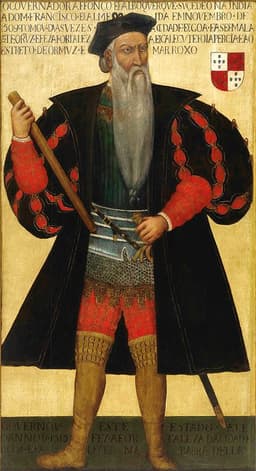
Afonso de Albuquerque
General · Medieval
79.6Total
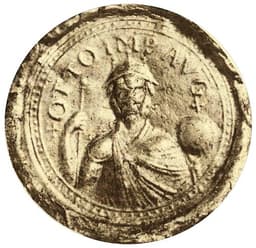
Otto I the Great
Emperor · Medieval
75.2Total
Basic Information
Born
1453
912
Died
1515
973
Era
Medieval
Medieval
Nationality
Portugal
Holy Roman Empire
Occupation
General
Emperor
Civilization
Western
Western
Score Comparison
Military (10%)
77.5
82.0
Political (20%)
88.0
70.0
Influence (20%)
80.0
88.0
Legacy (20%)
75.0
65.0
Leadership (15%)
78.0
78.0
Strategy (15%)
82.0
65.4
TOTAL
79.6
75.2
Afonso de Albuquerque — Complete Timeline
1503 AD
First voyage to IndiaWar◆ Major
Afonso de Albuquerque led a fleet to India, establishing the first Portuguese fort at Cochin. This voyage laid the foundation for Portuguese control of the Indian Ocean trade.
ExplorationColonialismIndia
Impact: global
1510 AD
Conquest of GoaWar◆ Major
Albuquerque captured Goa from the Sultan of Bijapur. He made Goa the capital of Portuguese India, a position it held for over 400 years.
ConquestColonialismIndia
Impact: regional
1511 AD
Conquest of MalaccaWar◆ Major
Albuquerque led a Portuguese fleet to capture the strategic port of Malacca. This gave Portugal control of the spice trade route between the Indian Ocean and the Pacific.
ConquestSpice TradeSoutheast Asia
Impact: global
1513 AD
Siege of AdenWar
Albuquerque attempted to capture Aden in Yemen but failed. This failure prevented Portugal from controlling the entrance to the Red Sea and limited their influence in the region.
SiegeFailureRed Sea
Impact: regional
1515 AD
Death at seaOther◆ Major
Afonso de Albuquerque died at sea off the coast of Goa, possibly from illness or poison. His death left the Portuguese Empire in the Indian Ocean without its most capable leader.
DeathLeadershipEmpire
Impact: regionaltragic
Otto I the Great — Complete Timeline
951 AD
Diplomatic Marriage to Adelaide of ItalyPolitical Action◆ Major
Otto married Adelaide, the widowed queen of Italy, after intervening in Italian politics. This marriage gave him control over the Kingdom of Italy and strengthened his claim to imperial authority.
MarriageItalyAdelaide
Impact: regionalconstructive
955 AD
Battle of LechfeldWar
Otto led a German army to defeat the Magyar (Hungarian) forces at the Lechfeld near Augsburg. This victory ended Magyar raids into Western Europe and secured Otto's reputation as a defender of Christendom.
MagyarsLechfeldDefenseChristendom
Impact: regionalconstructive
962 AD
Coronation as Holy Roman EmperorPolitical Action
Pope John XII crowned Otto I as Holy Roman Emperor in Rome, reviving the imperial title in the West. This event established the Holy Roman Empire as a major political entity and linked German kingship with papal authority.
CoronationHoly Roman EmpirePapacy
Impact: globalconstructive
Expert Analysis
Origins
Afonso de Albuquerque was born in 1453 in Alhandra, Portugal, to a noble family with royal connections. His father was a lord and his mother a lady-in-waiting, giving him access to court and education. Portugal, a small kingdom on the Iberian Peninsula, was already a maritime pioneer under Prince Henry the Navigator. Albuquerque grew up amidst the Age of Discovery, shaped by a culture of exploration and crusading zeal against Islam. In contrast, Otto I was born in 912 in Wallhausen, East Francia, as the son of Henry the Fowler, Duke of Saxony and later King of East Francia. The German lands were fragmented into duchies—Saxony, Bavaria, Swabia, Franconia—and threatened by Magyar raids from the east. Otto inherited a nascent kingdom needing unification and defense. Both men emerged from environments of expansion: Portugal outward across oceans, Germany inward against invaders.
Rise to Power
Albuquerque began his career in North Africa, fighting Moors and gaining military experience. In 1503, he first sailed to India, participating in the establishment of Portuguese trading posts. His big break came when King Manuel I appointed him governor of Portuguese India in 1509, with a mission to secure control of the Indian Ocean trade. He aggressively seized key ports: Goa in 1510, Malacca in 1511, and Hormuz in 1515. Otto I became king of East Francia in 936 after his father's death, but had to assert authority over rebellious dukes and external enemies. He crushed revolts in Bavaria and Franconia, and in 955 delivered a decisive blow against the Magyars at the Battle of Lechfeld, ending their invasions. This victory cemented his power and paved the way for his coronation as Holy Roman Emperor in 962 by Pope John XII.
Leadership & Governance
Albuquerque was a visionary imperialist. He established fortified bases, encouraged intermarriage with local women, and implemented a strategy of controlling choke points like Malacca and Aden to dominate spice routes. He was ruthless but pragmatic, often treating conquered peoples with a mix of brutality and diplomacy. His governance focused on trade monopoly and naval supremacy. Otto I, by contrast, was a feudal monarch who strengthened central authority by appointing loyal bishops and abbots (the Ottonian system) and using the Church as a counterweight to secular nobles. He also expanded eastward, Christianizing Slavs and founding bishoprics. Both were effective administrators, but Albuquerque's empire was maritime and commercial, while Otto's was continental and ecclesiastical.
Triumph & Tragedy
Albuquerque's greatest triumphs were the conquests of Goa and Malacca, which gave Portugal control of the Indian Ocean trade. He also captured Hormuz, blocking Persian Gulf access. However, his tragedy came from court intrigue: he was recalled by King Manuel I in 1515, likely due to rivals' jealousy. On his way back to Portugal, he died at sea off Goa, possibly of natural causes or despair, believing himself disgraced. Otto's triumph was Lechfeld, which secured his realm and earned him the imperial crown. His tragedy was less personal: his son and heir, Otto II, faced rebellions, and the empire's unity was fragile after his death. Both men died before fully solidifying their legacies.
Character & Destiny
Albuquerque was known as "the Great" and "the Caesar of the East" for his ambition and strategic brilliance. He was determined, often harsh, but also a shrewd diplomat who respected local customs. His destiny was to build a global empire, but his downfall was political. Otto was called "the Great" for his military success and imperial restoration. He was pious, calculating, and a master of realpolitik. His destiny was to revive Charlemagne's empire, but his success relied heavily on his personal authority. Both were men of their time: Albuquerque the Renaissance imperialist, Otto the medieval emperor.
Legacy
Albuquerque's legacy is the Portuguese Estado da Índia, which lasted for centuries and shaped Asian-European relations. His policies influenced later colonial empires. However, his methods also sowed seeds of conflict. Otto's legacy is the Holy Roman Empire, which endured until 1806. He established the Ottonian dynasty and strengthened the German kingdom. His defeat of the Magyars allowed Europe to develop without eastern invasions. In modern terms, Albuquerque's impact was more geographically dispersed but less enduring in political structures, while Otto's created a lasting European institution.
Conclusion
Comparing scores: Afonso de Albuquerque (overall 80.1) edges out Otto I (overall 75.7) by 4.4 points. Albuquerque's higher scores in Military (78 vs 82? Actually read: M=78 for Albuquerque, M=82 for Otto – but overall gap is 4.4 higher for Albuquerque, meaning his other scores compensate. Let's check: P=88 vs 70, I=80 vs 88, L=75 vs 65, D=78 vs 78, S=82 vs 65, T=80 vs 75. Albuquerque leads in Politics, Leadership, Strategy, and Tactics, while Otto leads in Military and Influence. The 4.4 gap reflects Albuquerque's broader skill set as an imperial administrator and naval commander. However, Otto's military victory at Lechfeld was arguably more decisive for European history. Both are titans, but Albuquerque's multifaceted empire-building gives him the edge in this analysis.
Rankings
🥇
Afonso de AlbuquerqueLeader
Mil: 77.5Pol: 88.0Inf: 80.0
79.6
🥈
Otto I the Great
Mil: 82.0Pol: 70.0Inf: 88.0
75.2
+4.4 behind
How This Comparison Works
Algorithm
Each figure is scored on 6 dimensions (0—100 scale) based on structured historical data: Military (10%), Political (20%), Influence (20%), Legacy (20%), Leadership (15%), Strategy (15%). The weighted total produces the final ranking.
Data Sources
Scores are computed from structured sub-indicators in the database. Scale factors adjust for era (Ancient ×0.85, Modern ×1.0) and civilization size (Eastern ×1.05, Other ×0.80) to account for differences in population and military scale.
Maximum 3 Figures
Comparisons are limited to 2—3 figures to ensure readability and statistical meaningfulness.
Error Margins
±5 points per dimension — Sub-scores are derived from historical records with inherent uncertainty. Two figures within 5 points on a dimension should be considered roughly equivalent in that area.
Total Score Accuracy
±3 points overall — The weighted combination of 6 dimensions produces a total score with approximately ±3 points of uncertainty. Differences of less than 3 points are not statistically significant— the figures are effectively tied.
Known Limitations
- Historical records are incomplete and uneven across civilizations
- Figures from oral-tradition societies may be underrepresented
- Occupation labels can misclassify multi-role figures
- Scores measure capability and impact, not moral character
- Quantitative scoring is a comparison tool, not absolute truth
Capability Radar
Military (10%) — Battles & Warfare
Battles
85
75
Win Rate
80
80
Expansion
95
70
Political (20%) — Governance & Reform
Reform
80
80
Diplomacy
85
85
Economy
80
70
Influence (20%) — Cultural & Global Reach
Cultural
70
65
Global
85
70
Legacy (20%) — Historical Impact
Historical
85
80
Longevity
80
75
Leadership (15%) — Power & Stability
Tenure
70
85
Stability
65
75
Strategy (15%) — Tactics & Innovation
Strategy
95
75
Tactics
90
70
Reform
75
65
Similar Comparisons
Comments & Discussion
No comments yet. Be the first to share your thoughts!