Loading...
Afonso de Albuquerque vs Nicolas Soult
Afonso de Albuquerque leads by 16.9 pts · 2 figures compared
…
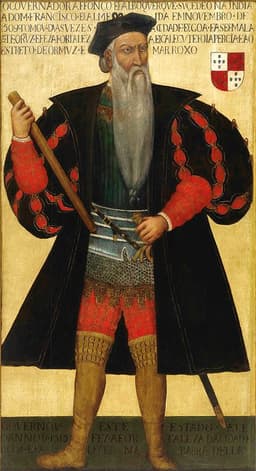
Afonso de Albuquerque
General · Medieval
79.6Total
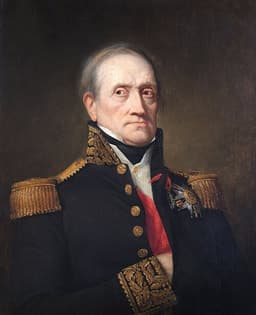
Nicolas Soult
General · Modern
62.7Total
Basic Information
Born
1453
1769
Died
1515
1851
Era
Medieval
Modern
Nationality
Portugal
France
Occupation
General
General
Civilization
Western
Western
Score Comparison
Military (10%)
77.5
74.7
Political (20%)
88.0
55.0
Influence (20%)
80.0
61.0
Legacy (20%)
75.0
54.0
Leadership (15%)
78.0
78.0
Strategy (15%)
82.0
65.4
TOTAL
79.6
62.7
Afonso de Albuquerque — Complete Timeline
1503 AD
First voyage to IndiaWar◆ Major
Afonso de Albuquerque led a fleet to India, establishing the first Portuguese fort at Cochin. This voyage laid the foundation for Portuguese control of the Indian Ocean trade.
ExplorationColonialismIndia
Impact: global
1510 AD
Conquest of GoaWar◆ Major
Albuquerque captured Goa from the Sultan of Bijapur. He made Goa the capital of Portuguese India, a position it held for over 400 years.
ConquestColonialismIndia
Impact: regional
1511 AD
Conquest of MalaccaWar◆ Major
Albuquerque led a Portuguese fleet to capture the strategic port of Malacca. This gave Portugal control of the spice trade route between the Indian Ocean and the Pacific.
ConquestSpice TradeSoutheast Asia
Impact: global
1513 AD
Siege of AdenWar
Albuquerque attempted to capture Aden in Yemen but failed. This failure prevented Portugal from controlling the entrance to the Red Sea and limited their influence in the region.
SiegeFailureRed Sea
Impact: regional
1515 AD
Death at seaOther◆ Major
Afonso de Albuquerque died at sea off the coast of Goa, possibly from illness or poison. His death left the Portuguese Empire in the Indian Ocean without its most capable leader.
DeathLeadershipEmpire
Impact: regionaltragic
Nicolas Soult — Complete Timeline
1805 AD
Battle of AusterlitzWar◆ Major
Soult commanded the IV Corps at Austerlitz. He led the assault on the Pratzen Heights, breaking the Allied center and securing the decisive French victory.
Napoleonic WarsBattleCorps Command
Impact: global
1806 AD
Battle of Jena-AuerstedtWar◆ Major
Soult commanded the IV Corps at Jena. His forces pursued the retreating Prussian army, capturing thousands of prisoners and contributing to the collapse of the Prussian state.
Napoleonic WarsBattlePursuit
Impact: regional
1811 AD
Battle of AlbueraWar◆ Major
Soult commanded the French army at Albuera in Spain. His forces fought a bloody battle against the Anglo-Spanish army, resulting in a tactical stalemate but strategic French withdrawal.
Peninsular WarBattleStalemate
Impact: regional
1814 AD
Battle of ToulouseWar◆ Major
Soult commanded the French army at Toulouse against Wellington. The battle occurred after Napoleon's abdication, and Soult surrendered the city, ending the Peninsular War.
Peninsular WarBattleDefeat
Impact: regional
1830 AD
Minister of WarPolitical Action◆ Major
Soult served as Minister of War under King Louis-Philippe. He reorganized the French army, introduced conscription reforms, and prepared for colonial campaigns in Algeria.
MinistryReformsJuly Monarchy
Impact: nationalconstructive
1832 AD
Prime Minister of FrancePolitical Action◆ Major
Soult served as Prime Minister of France under Louis-Philippe. His government focused on maintaining order, suppressing republican uprisings, and consolidating the July Monarchy.
Prime MinisterJuly MonarchyGovernment
Impact: national
Expert Analysis
Afonso de Albuquerque vs Nicolas Soult
# The Admiral and the Marshal
On a gray December morning in 1515, a dying man was carried onto a ship off the coast of Goa. Afonso de Albuquerque, the architect of Portugal's eastern empire, had just learned that his king had replaced him. He wrote a bitter letter to the monarch, then turned his face to the sea and died—some say of a broken heart, others of poison. Three centuries later, in 1851, another old soldier breathed his last in a château in southern France. Nicolas Soult had been a marshal of Napoleon, a minister of war, and three times prime minister. He died in his bed, rich and honored, having outlived his emperor by thirty years. Two men, two empires, two very different endings. What drives one conqueror to die abandoned at sea and another to die a statesman in his own home?
Origins
Albuquerque was born in 1453, the year Constantinople fell, into a Portuguese noble family with a tradition of royal service. He grew up in a world where the Reconquista had just ended and the Atlantic had opened like a door to unknown riches. His Portugal was a small, poor kingdom on the edge of Europe, but it was hungry. He learned mathematics, astronomy, and the arts of war—not in a classroom, but in the court of Afonso V, where the talk was of crusade and commerce.
Soult came into the world in 1769, in a France still ruled by Bourbon kings. He was the son of a notary, a man of the middle class. His France was a powder keg of Enlightenment ideas and simmering resentments. When the Revolution came in 1789, Soult was twenty years old, a sergeant in the royal army. He watched his officers flee and his world turn upside down. Unlike Albuquerque, who inherited a fixed place in a rigid hierarchy, Soult had to make his own way in a society that had suddenly become fluid.
The difference in their eras shaped everything. Albuquerque lived in an age of monarchy and mission, where a man could conquer in the name of God and king. Soult lived in an age of revolution and ambition, where a man could rise by talent and luck, but where loyalty was a shifting currency.
Rise to Power
Albuquerque's path was slow and deliberate. He spent decades in North Africa, fighting Moors and learning the craft of siege warfare. He was already fifty years old when King Manuel I sent him to India in 1503—an old man by the standards of the time. His first voyage was a success: he built the fort at Cochin, planted the Portuguese flag, and returned with a cargo of pepper. But the real prize was still to come.
Soult's rise was meteoric. By 1794, he was a brigadier general, promoted for his courage at the Battle of Fleurus. He was thirty-five when Napoleon made him a marshal in 1804. The Revolution had torn down the old ladder, and Soult climbed the rubble. He was at Austerlitz in 1805, where his IV Corps broke the Allied center and sealed Napoleon's greatest victory. He was at Jena in 1806, where he chased the Prussian army across the plain, capturing thousands. He was Napoleon's hammer, and he swung it with precision.
But there was a crucial difference. Albuquerque rose by serving a king who trusted him. Soult rose by serving a man who trusted no one. Napoleon gave Soult his baton, but he also gave him a leash—and the leash was short.
Leadership & Governance
Albuquerque was not just a general; he was an empire-builder. When he captured Goa from the Sultan of Bijapur in 1510, he did something unusual: he stayed. He made Goa the capital of Portuguese India, built churches and hospitals, married his soldiers to local women, and established a mint. He understood that conquest was not enough—you had to hold, to govern, to plant roots. When he took Malacca in 1511, he seized the gateway to the Spice Islands and opened a trade route that would enrich Portugal for a century.
Soult was a master of the battlefield but a poor administrator of conquest. In Spain, during the Peninsular War, he fought brilliantly but governed badly. He quarreled with other French marshals, alienated the Spanish population, and failed to secure the territory he had taken. At the Battle of Albuera in 1811, he fought a bloody draw against the Anglo-Spanish army, but he could not hold the ground. Wellington, watching from across the lines, called it the bloodiest battle of the war—and Soult had nothing to show for it.
The difference was vision. Albuquerque saw an empire that would outlast him. Soult saw only the next campaign, the next promotion, the next favor from Napoleon.
Triumph & Tragedy
Albuquerque's greatest moment was the conquest of Malacca in 1511. He sailed into the harbor with eighteen ships, bombarded the city, and stormed the walls. The Sultan fled, and the port fell. Albuquerque wrote to his king: "I have taken the city, and with it the key to all the trade of the East." His greatest failure was the siege of Aden in 1513. He tried to capture the city at the mouth of the Red Sea, hoping to block the Ottoman route to India. He failed. The walls held, his men sickened, and he sailed away. That failure would haunt Portugal for decades, as the Ottomans poured into the Indian Ocean.
Soult's triumph was Austerlitz. He led the assault on the Pratzen Heights, the decisive moment of the battle. When the Allied center broke, Napoleon embraced him and said, "You are the first soldier in Europe." His tragedy was Toulouse in 1814. He fought Wellington after Napoleon had already abdicated, losing men for a cause that was already dead. He knew the war was over, but he fought anyway—out of pride, out of habit, out of a refusal to admit defeat.
Character & Destiny
Albuquerque was a man of iron will and narrow vision. He was ruthless—he ordered the massacre of Muslim prisoners in Goa—but he was also just, in his own way. He punished Portuguese soldiers who raped local women and executed corrupt officials. He believed in order, in hierarchy, in the divine right of kings. When his king turned against him, he could not understand it. He had given everything for Portugal, and Portugal had thrown him away.
Soult was a survivor. He served the Revolution, then Napoleon, then the Bourbons, then Louis-Philippe. He changed sides as easily as he changed uniforms. When Napoleon fell, Soult swore loyalty to the king. When Napoleon returned, Soult swore loyalty again. When Napoleon fell for good, Soult went back to the king. He was not ashamed of this. He called it "political wisdom." Others called it opportunism.
Albuquerque died because he could not bend. Soult lived because he could not break.
Legacy
Albuquerque left an empire. The Portuguese held Goa until 1961, Malacca until 1641, and the spice trade for a century. His name is carved into the map of Asia—Albuquerque Island, the Albuquerque Road in Old Goa. He is remembered as the founder of Portuguese India, the man who made Portugal a global power.
Soult left a name in the history books. He is remembered as a marshal of Napoleon, a competent commander, a political survivor. But his legacy is thinner. He founded no empire, built no institutions, left no mark on the world beyond the battlefield. He is a footnote in the story of Napoleon, a supporting character in someone else's drama.
The difference is not in talent—both were brilliant soldiers. It is not in opportunity—both had the ear of power. The difference is in purpose. Albuquerque served a cause greater than himself. Soult served himself. One built an empire that lasted centuries. The other built a career that lasted a lifetime.
Conclusion
As Albuquerque's ship sailed into the sunset, his body wrapped in the flag of Portugal, he must have wondered if it had all been worth it. The king had betrayed him, the court had forgotten him, and his enemies were closing in. But he had done what he had set out to do. He had planted the cross and the flag in the East, and they would stay there long after he was gone.
Soult, dying in his château at the age of eighty-two, had no such doubts. He had survived every revolution, every war, every change of regime. He had served four kings and one emperor, and he had died rich. But what had he built? What had he left behind? A few memoirs, a statue in his hometown, a memory of a man who knew how to bend with the wind.
History remembers the men who stand firm, even when the wind breaks them. It forgets the men who bend.
Rankings
🥇
Afonso de AlbuquerqueLeader
Mil: 77.5Pol: 88.0Inf: 80.0
79.6
🥈
Nicolas Soult
Mil: 74.7Pol: 55.0Inf: 61.0
62.7
+16.9 behind
How This Comparison Works
Algorithm
Each figure is scored on 6 dimensions (0—100 scale) based on structured historical data: Military (10%), Political (20%), Influence (20%), Legacy (20%), Leadership (15%), Strategy (15%). The weighted total produces the final ranking.
Data Sources
Scores are computed from structured sub-indicators in the database. Scale factors adjust for era (Ancient ×0.85, Modern ×1.0) and civilization size (Eastern ×1.05, Other ×0.80) to account for differences in population and military scale.
Maximum 3 Figures
Comparisons are limited to 2—3 figures to ensure readability and statistical meaningfulness.
Error Margins
±5 points per dimension — Sub-scores are derived from historical records with inherent uncertainty. Two figures within 5 points on a dimension should be considered roughly equivalent in that area.
Total Score Accuracy
±3 points overall — The weighted combination of 6 dimensions produces a total score with approximately ±3 points of uncertainty. Differences of less than 3 points are not statistically significant— the figures are effectively tied.
Known Limitations
- Historical records are incomplete and uneven across civilizations
- Figures from oral-tradition societies may be underrepresented
- Occupation labels can misclassify multi-role figures
- Scores measure capability and impact, not moral character
- Quantitative scoring is a comparison tool, not absolute truth
Capability Radar
Military (10%) — Battles & Warfare
Battles
85
75
Win Rate
80
70
Expansion
95
65
Political (20%) — Governance & Reform
Reform
80
55
Diplomacy
85
65
Economy
80
50
Influence (20%) — Cultural & Global Reach
Cultural
70
45
Global
85
50
Legacy (20%) — Historical Impact
Historical
85
55
Longevity
80
50
Leadership (15%) — Power & Stability
Tenure
70
70
Stability
65
55
Strategy (15%) — Tactics & Innovation
Strategy
95
72
Tactics
90
78
Reform
75
60
Similar Comparisons
Comments & Discussion
CAPTAIN SQUALIDUS6/16/2026
Albuquerque wins on sheer brutality. Soult was a competent marshal and decent administrator, but he’s remembered because Napoleon needed loyalists in 1815. Albuquerque literally forced a king’s ransom from Malacca, burned its mosques, and built a fortress on the bodies. Soult bungled the Peninsular campaign twice and lost at Toulouse after the war was over. One man forged an empire from nothing; the other rode Bonaparte's coattails to a marble tomb.
海洋之狐6/16/2026
单论军事能力,苏尔特未必输给阿尔布克尔克。他指挥过奥斯特里茨左翼,在滑铁卢挡住了威灵顿最猛烈的冲锋。阿尔布克尔克是战略家没错,但他的舰队是葡萄牙几代海权积累的结果,而苏尔特从农家子靠真刀真枪爬到元帅。阿尔布克尔克死得悲壮是事实,但苏尔特活到80岁也是本事——活着才能继续改写自己的评价。
DATA_MANGLER6/16/2026
The "broken heart" story for Albuquerque is romantic nonsense. He likely had dysentery or malaria, not political despair. Also, the empire he "built" was actually a string of coastal forts that required constant reinforcement from Lisbon. By 1580, Spain absorbed Portugal and his legacy collapsed. Soult’s administrative reforms in France outlasted him by a century. Deathbed drama makes a good story, but look at the actual institutional footprint: it’s Soult by a landslide.
帝国残影6/16/2026
两人生前都在洗劫城市、奴役当地人口,但阿尔布克尔克至少敢直面自己的残忍——他公开下令割掉俘虏的鼻子和耳朵来震慑马六甲。苏尔特在西班牙抢劫教堂时,还装模作样地签署“财产保护令”。伪君子比真强盗更令人作呕。阿尔布克尔克死在对自己毕生事业的绝望里,这份悲剧感至少是诚实的;苏尔特死在自家床上,像个什么都没做错的人。
CLASSICS_CLERIC6/16/2026
Compare them to Alexander's successors? Albuquerque is a pure Ptolemy: ruthless conqueror, obsessive about trade routes and centralization. Soult is more like Antigonus—survives every twist of fortune, compromises with everyone, dies old and rich. Albuquerque couldn't adapt; he saw the world as a crusade and himself as its sword. Soult understood that empires run on paperwork and marriage alliances, not just cannon fire. Neither is morally superior, but Soult's toolkit was more durable.