Loading...
Afonso de Albuquerque vs Mustafa Kemal Ataturk
Mustafa Kemal Ataturk leads by 0.4 pts · 2 figures compared
…
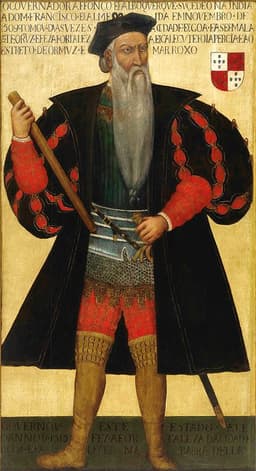
Afonso de Albuquerque
General · Medieval
79.6Total
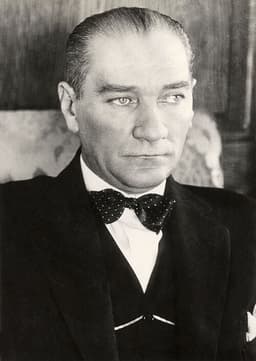
Mustafa Kemal Ataturk
Politician · Modern
80.0Total
Basic Information
Born
1453
1881
Died
1515
1938
Era
Medieval
Modern
Nationality
Portugal
Turkey
Occupation
General
Politician
Civilization
Western
Middle Eastern
Score Comparison
Military (10%)
77.5
75.0
Political (20%)
88.0
85.0
Influence (20%)
80.0
75.0
Legacy (20%)
75.0
90.0
Leadership (15%)
78.0
80.0
Strategy (15%)
82.0
65.0
TOTAL
79.6
80.0
Afonso de Albuquerque — Complete Timeline
1503 AD
First voyage to IndiaWar◆ Major
Afonso de Albuquerque led a fleet to India, establishing the first Portuguese fort at Cochin. This voyage laid the foundation for Portuguese control of the Indian Ocean trade.
ExplorationColonialismIndia
Impact: global
1510 AD
Conquest of GoaWar◆ Major
Albuquerque captured Goa from the Sultan of Bijapur. He made Goa the capital of Portuguese India, a position it held for over 400 years.
ConquestColonialismIndia
Impact: regional
1511 AD
Conquest of MalaccaWar◆ Major
Albuquerque led a Portuguese fleet to capture the strategic port of Malacca. This gave Portugal control of the spice trade route between the Indian Ocean and the Pacific.
ConquestSpice TradeSoutheast Asia
Impact: global
1513 AD
Siege of AdenWar
Albuquerque attempted to capture Aden in Yemen but failed. This failure prevented Portugal from controlling the entrance to the Red Sea and limited their influence in the region.
SiegeFailureRed Sea
Impact: regional
1515 AD
Death at seaOther◆ Major
Afonso de Albuquerque died at sea off the coast of Goa, possibly from illness or poison. His death left the Portuguese Empire in the Indian Ocean without its most capable leader.
DeathLeadershipEmpire
Impact: regionaltragic
Mustafa Kemal Ataturk — Complete Timeline
1915 AD
Battle of GallipoliWar
As a colonel, Mustafa Kemal commanded Ottoman forces at Gallipoli, successfully repelling Allied landings. His leadership at critical points like Chunuk Bair made him a national hero and laid the foundation for his political career.
World War IOttoman EmpireMilitary Victory
Impact: regional
1919 AD
Turkish War of IndependenceWar
Kemal organized and led the Turkish National Movement against the Allied occupation of Anatolia and the Treaty of S
Independence WarNational MovementAnkara
Impact: nationalconstructive
1922 AD
Abolition of the SultanatePolitical Action◆ Major
The Grand National Assembly of Turkey, under Kemal's leadership, abolished the Ottoman Sultanate, ending 600 years of imperial rule. This severed the link with the old regime and paved the way for the proclamation of the Republic.
SultanateRepublicPolitical Reform
Impact: nationalprogressive
1923 AD
Proclamation of the Republic of TurkeyPolitical Action
Kemal declared Turkey a republic, becoming its first president. He moved the capital to Ankara and initiated a series of radical reforms to modernize and secularize the state, including the adoption of a new legal code and the Latin alphabet.
RepublicModernizationSecularism
Impact: globalprogressive
1925 AD
Adoption of the Hat LawReform◆ Major
Kemal introduced the Hat Law, banning the fez and encouraging Western-style hats. This was part of his broader cultural revolution to secularize and Westernize Turkish society, symbolizing the break with Ottoman traditions.
Cultural ReformSecularismWesternization
Impact: nationalprogressive
1934 AD
Granting of Women's SuffrageReform◆ Major
Kemal's government granted women the right to vote and stand for election in national elections, ahead of many European countries. This reform was part of his commitment to gender equality and modernization of Turkish society.
Women's RightsSuffrageModernization
Impact: nationalprogressive
Expert Analysis
Origins
Mustafa Kemal Ataturk was born in 1881 in Salonica (then Ottoman Empire). He embraced modern education and military training, becoming a key figure in the Young Turk movement. His early exposure to European ideas shaped his vision for a secular, Westernized Turkey. Afonso de Albuquerque was born in 1453 in Alhandra, Portugal, into a noble family. He served in North Africa and later became a central figure in Portugal's maritime expansion, driven by the quest for spices and Christian allies against Islam.
Rise to Power
Ataturk rose to prominence during World War I, achieving fame as a commander at Gallipoli (1915). He organized resistance against Allied occupation and led the Turkish War of Independence (1919-1923), defeating Greek and Armenian forces. He then abolished the sultanate and proclaimed the Republic of Turkey in 1923, becoming its first president. Albuquerque rose through the ranks of the Portuguese navy, participating in the first voyage to India (1503). He was appointed Governor of Portuguese India (1509) and later Viceroy, expanding Portuguese control through strategic conquests like Goa (1510) and Malacca (1511).
Leadership & Governance
Ataturk's leadership was transformative: he implemented radical reforms to create a secular, modern nation-state. He abolished the caliphate, introduced Western legal codes, adopted the Latin alphabet, and promoted women's rights (e.g., suffrage in 1934). His governance emphasized nationalism, republicanism, and populism. Albuquerque's governance focused on building a maritime empire through fortified bases and trade monopolies. He established a network of alliances with local rulers, used diplomacy and force to secure Portuguese interests, and implemented administrative systems in conquered territories. Both were decisive and visionary, but Ataturk's reforms reshaped a society, while Albuquerque's empire was extractive.
Triumph & Tragedy
Ataturk's triumphs include winning the War of Independence and founding a republic that survived him. His reforms faced opposition from religious conservatives and Kurdish nationalists, but he maintained control through authoritarian measures. His tragedy was the forced population exchange with Greece (1923) and the suppression of dissent. Albuquerque's triumphs were the conquest of Goa and Malacca, which secured Portuguese dominance in the Indian Ocean. His tragedy came when he was recalled to Portugal under a cloud of intrigue and died at sea (1515), believing he had fallen from favor. He died bitter, but his legacy endured.
Character & Destiny
Ataturk was pragmatic, disciplined, and charismatic. He was a rationalist who believed in science and education. His destiny was to create a new nation from the ashes of an empire. Albuquerque was a brilliant strategist and ruthless commander, often criticized for his harsh tactics. He was driven by a sense of mission to spread Christianity and Portuguese power. His destiny was to build an empire that would last for centuries. Both men were determined and uncompromising, but Ataturk's vision was more inclusive and lasting.
Legacy
Ataturk is revered in Turkey as "Father of the Turks." His reforms laid the foundation for a secular democracy, though his legacy is contested by Islamists and Kurdish separatists. He is celebrated for modernizing Turkey and inspiring anti-colonial movements. Albuquerque is remembered as the founder of the Portuguese Empire in the East. His conquests established Portuguese control over key trade routes, but his methods were brutal. His legacy is mixed: admired for military prowess but criticized for violence. In Portugal, he is a national hero; in former colonies, he is often seen as a colonial oppressor.
Conclusion
Ataturk and Albuquerque were both transformative figures, but their impacts differ. Ataturk created a modern nation-state that endures, while Albuquerque built an empire that eventually collapsed. Ataturk's legacy is more positive, as he empowered a people and fostered progress. Albuquerque's legacy is tied to colonialism and exploitation. On a scale of 1-10, Ataturk scores 9 for long-term impact, 8 for leadership, and 7 for ethical governance. Albuquerque scores 8 for strategic brilliance, 7 for empire-building, and 5 for ethical considerations. The greater historical figure is Mustafa Kemal Ataturk, for his lasting contribution to human rights and national self-determination.
Rankings
🥇
Mustafa Kemal AtaturkLeader
Mil: 75.0Pol: 85.0Inf: 75.0
80.0
🥈
Afonso de Albuquerque
Mil: 77.5Pol: 88.0Inf: 80.0
79.6
+0.4 behind
How This Comparison Works
Algorithm
Each figure is scored on 6 dimensions (0—100 scale) based on structured historical data: Military (10%), Political (20%), Influence (20%), Legacy (20%), Leadership (15%), Strategy (15%). The weighted total produces the final ranking.
Data Sources
Scores are computed from structured sub-indicators in the database. Scale factors adjust for era (Ancient ×0.85, Modern ×1.0) and civilization size (Eastern ×1.05, Other ×0.80) to account for differences in population and military scale.
Maximum 3 Figures
Comparisons are limited to 2—3 figures to ensure readability and statistical meaningfulness.
Error Margins
±5 points per dimension — Sub-scores are derived from historical records with inherent uncertainty. Two figures within 5 points on a dimension should be considered roughly equivalent in that area.
Total Score Accuracy
±3 points overall — The weighted combination of 6 dimensions produces a total score with approximately ±3 points of uncertainty. Differences of less than 3 points are not statistically significant— the figures are effectively tied.
Known Limitations
- Historical records are incomplete and uneven across civilizations
- Figures from oral-tradition societies may be underrepresented
- Occupation labels can misclassify multi-role figures
- Scores measure capability and impact, not moral character
- Quantitative scoring is a comparison tool, not absolute truth
Capability Radar
Military (10%) — Battles & Warfare
Battles
85
85
Win Rate
80
90
Expansion
95
60
Political (20%) — Governance & Reform
Reform
80
98
Diplomacy
85
85
Economy
80
75
Influence (20%) — Cultural & Global Reach
Cultural
70
90
Global
85
80
Legacy (20%) — Historical Impact
Historical
85
95
Longevity
80
85
Leadership (15%) — Power & Stability
Tenure
70
85
Stability
65
70
Strategy (15%) — Tactics & Innovation
Strategy
95
85
Tactics
90
88
Reform
75
80
Similar Comparisons
Comments & Discussion
No comments yet. Be the first to share your thoughts!