Loading...
Afonso de Albuquerque vs Lucius Junius Brutus
Afonso de Albuquerque leads by 6.9 pts · 2 figures compared
…
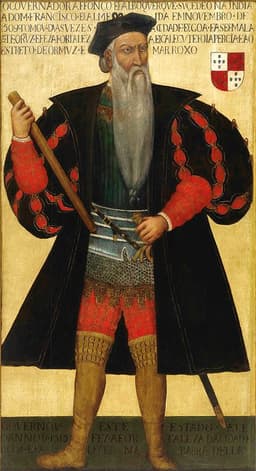
Afonso de Albuquerque
General · Medieval
79.6Total
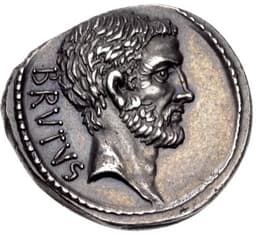
Lucius Junius Brutus
Politician · Ancient
72.7Total
Basic Information
Born
1453
-540
Died
1515
-509
Era
Medieval
Ancient
Nationality
Portugal
Roman Republic
Occupation
General
Politician
Civilization
Western
Western
Score Comparison
Military (10%)
77.5
45.0
Political (20%)
88.0
72.0
Influence (20%)
80.0
75.0
Legacy (20%)
75.0
90.0
Leadership (15%)
78.0
71.0
Strategy (15%)
82.0
54.8
TOTAL
79.6
72.7
Afonso de Albuquerque — Complete Timeline
1503 AD
First voyage to IndiaWar◆ Major
Afonso de Albuquerque led a fleet to India, establishing the first Portuguese fort at Cochin. This voyage laid the foundation for Portuguese control of the Indian Ocean trade.
ExplorationColonialismIndia
Impact: global
1510 AD
Conquest of GoaWar◆ Major
Albuquerque captured Goa from the Sultan of Bijapur. He made Goa the capital of Portuguese India, a position it held for over 400 years.
ConquestColonialismIndia
Impact: regional
1511 AD
Conquest of MalaccaWar◆ Major
Albuquerque led a Portuguese fleet to capture the strategic port of Malacca. This gave Portugal control of the spice trade route between the Indian Ocean and the Pacific.
ConquestSpice TradeSoutheast Asia
Impact: global
1513 AD
Siege of AdenWar
Albuquerque attempted to capture Aden in Yemen but failed. This failure prevented Portugal from controlling the entrance to the Red Sea and limited their influence in the region.
SiegeFailureRed Sea
Impact: regional
1515 AD
Death at seaOther◆ Major
Afonso de Albuquerque died at sea off the coast of Goa, possibly from illness or poison. His death left the Portuguese Empire in the Indian Ocean without its most capable leader.
DeathLeadershipEmpire
Impact: regionaltragic
Lucius Junius Brutus — Complete Timeline
509 BC
Battle of Silva ArsiaWar◆ Major
Brutus led the Roman army against the forces of Tarquinius Superbus and his Etruscan allies at Silva Arsia. During the battle, Brutus and Arruns Tarquinius, the king's son, killed each other in single combat, but the Romans ultimately won the battle, securing the Republic's survival.
BattleSingle CombatFounding Myth
Impact: nationaltragic
Expulsion of the TarquinsPolitical Action
Lucius Junius Brutus led a revolt against the Tarquin monarchy after the rape of Lucretia by Sextus Tarquinius. He organized the Senate and the people to expel the royal family, ending the Roman Kingdom and establishing the Roman Republic with himself as one of the first consuls.
RevolutionFounding of RepublicOverthrow of Monarchy
Impact: globalprogressive
Execution of His SonsPolitical Action◆ Major
Brutus discovered that his own sons, Titus and Tiberius, had conspired to restore the Tarquins. As consul, he ordered their arrest, trial, and execution by beheading in the Forum, demonstrating his unwavering commitment to the Republic over family loyalty.
ExecutionConspiracyRepublican Virtue
Impact: nationaltragic
Oath of BrutusPolitical Action◆ Major
After the expulsion of the Tarquins, Brutus made the Roman people swear an oath never to allow a king to rule Rome again. This oath became a foundational principle of the Republic, reinforcing the commitment to liberty and opposition to tyranny.
OathRepublican IdeologyAnti-Monarchy
Impact: nationalprogressive
Expert Analysis
Lucius Junius Brutus vs Afonso de Albuquerque
# The Founder and the Empire Builder
History has a strange way of pairing its most transformative figures—not in their lifetimes, but in the judgment of posterity. Consider two men who shaped the Western world in radically different ways: Lucius Junius Brutus, who in 509 BCE stood over the bodies of his own sons and swore Rome would never again suffer a king, and Afonso de Albuquerque, who in 1510 captured Goa and declared it the capital of a Portuguese empire that would span the Indian Ocean. One destroyed a monarchy to plant the seeds of a republic; the other built an empire on the bones of conquered sultanates. Both were ruthless. Both were founders. But their worlds, their methods, and their legacies could hardly be more different.
Origins
Lucius Junius Brutus was born into the dying days of Rome's monarchy, around 540 BCE, when the city was still a minor power in central Italy. His family was patrician, but his uncle, King Tarquinius Superbus, was a tyrant who had murdered Brutus's father and brother to secure the throne. To survive, Brutus feigned idiocy—his surname *Brutus* means "dullard" in Latin—and waited. His world was one of clan loyalties, ritual oaths, and the constant threat of Etruscan domination. He was shaped not by books or voyages but by the brutal calculus of survival under a despot.
Afonso de Albuquerque was born in 1453, the year Constantinople fell to the Ottomans, a coincidence that would define his era. Portugal was a small, ambitious kingdom on the Atlantic edge of Europe, already launching ships into the unknown. Albuquerque came from minor nobility, served in North African campaigns, and learned war in the crucible of the Reconquista. But unlike Brutus, he was a man of the Renaissance—literate, numerate, and obsessed with the logistics of global trade. He understood gunpowder, navigation, and the politics of distant courts. His world was expanding, not contracting.
Rise to Power
Brutus seized his moment in 509 BCE, when the rape of Lucretia by the king's son ignited a revolt. He did not lead an army from abroad; he stood in the Roman Forum, brandishing a dagger stained with Lucretia's blood, and roused the people to expel the Tarquins. His path was not one of gradual conquest but of sudden, dramatic political action. He became one of the first two consuls of the new republic, a position he held by acclamation, not inheritance.
Albuquerque rose differently. He first sailed to India in 1503, commanding a fleet that established a Portuguese fort at Cochin. He was not a politician but a general, and his advancement came through results: the capture of Goa in 1510, the seizure of Malacca in 1511. Each victory was a stepping stone, but each also came with enemies at the Portuguese court who resented his ambition. He was appointed Governor of Portuguese India in 1509, but his authority was always contested. Where Brutus acted in a single, decisive uprising, Albuquerque fought a decade-long campaign of siege and sail.
Leadership & Governance
Their styles of rule reveal the chasm between a republican founder and an imperial conqueror. Brutus governed as a consul, sharing power with a colleague and bound by the laws he had helped create. When his own sons conspired to restore the monarchy, he did not pardon them or exile them—he ordered their execution. The historian Livy records that Brutus watched the lictors carry out the sentence, his face unmoved. This was leadership as absolute adherence to principle, a willingness to sacrifice the personal for the political. His military skill was modest—he died in battle at Silva Arsia in 509 BCE—but his political wisdom was supreme. He understood that a republic could only survive if its citizens believed the law was greater than any man.
Albuquerque ruled as a viceroy, issuing decrees from his palace in Goa. He married Portuguese soldiers to local women, encouraged intermarriage, and built a network of fortresses from Hormuz to Malacca. He was a military genius who understood that control of trade routes mattered more than control of territory. When he failed to capture Aden in 1513, it was because he lacked the resources, not the vision. His governance was pragmatic: he tolerated local customs, minted his own coins, and even planned to divert the Nile to weaken the Mamluks. But his power was personal, not institutional. He had no senate, no assembly, no oath of office—only the loyalty of his captains and the fear of his enemies.
Triumph & Tragedy
Brutus's greatest moment was also his most devastating: the execution of his sons. It secured the republic but destroyed his family. His death at Silva Arsia was heroic but incomplete—he fell in battle, but the republic he founded survived for centuries. His tragedy was that he could not enjoy the liberty he created.
Albuquerque's triumph was the conquest of Malacca in 1511, which gave Portugal control of the spice trade and made it a global power. His tragedy came in 1515, when he died at sea off the coast of Goa, possibly poisoned by rivals. He was returning to India after a failed siege at Hormuz, his health broken, his authority undermined by court intrigues in Lisbon. He died believing his empire would collapse without him—and in many ways, it did. The Portuguese Empire in the East never again reached the heights he had envisioned.
Character & Destiny
Brutus was a stoic, a man who believed that duty transcended emotion. His personality was forged in fear and disguise; he spent years pretending to be a fool to survive. When he finally acted, he did so with cold, calculated precision. His destiny was to be the father of a republic he would never see flourish.
Albuquerque was a visionary, a man who believed that will and force could reshape the world. He wrote letters to the king of Portugal describing plans to control the Indian Ocean, redirect rivers, and even invade the Holy Land. His personality was one of relentless ambition, tempered by a practical understanding of logistics. His destiny was to die before his dreams could be realized.
Legacy
Brutus's legacy is immense. He is remembered as the founder of the Roman Republic, an institution that inspired the American Founders and every subsequent republic. His execution of his sons became a parable of civic virtue, retold by Cicero, Livy, and later by Machiavelli. His total legacy score of 90.0 reflects this enduring power—he is a symbol, not just a man.
Albuquerque's legacy is more ambiguous. His conquests laid the foundation for Portuguese dominance in Asia, but his empire was ephemeral. The Portuguese lost Malacca to the Dutch in 1641, and Goa declined into a colonial backwater. His total score of 67.4 reflects the fragility of his achievements. Yet he is still remembered as a military genius, a pioneer of naval empire, and the man who made Portugal a player on the world stage.
Conclusion
What drove these two men to such different outcomes? Brutus was shaped by a world of scarcity and danger, where survival depended on loyalty to a community, not a crown. Albuquerque was shaped by a world of expansion and opportunity, where ambition could be measured in miles of coastline and tons of spice. Brutus founded a republic that lasted five centuries; Albuquerque built an empire that lasted five decades. Yet both understood the same terrible truth: that founding something new requires the sacrifice of something precious—whether it is a son, a life, or a dream. In the end, their stories remind us that history is not a progress from tyranny to freedom, but a cycle of creation and destruction, each founder leaving behind a world he could not have imagined.
Rankings
🥇
Afonso de AlbuquerqueLeader
Mil: 77.5Pol: 88.0Inf: 80.0
79.6
🥈
Lucius Junius Brutus
Mil: 45.0Pol: 72.0Inf: 75.0
72.7
+6.9 behind
How This Comparison Works
Algorithm
Each figure is scored on 6 dimensions (0—100 scale) based on structured historical data: Military (10%), Political (20%), Influence (20%), Legacy (20%), Leadership (15%), Strategy (15%). The weighted total produces the final ranking.
Data Sources
Scores are computed from structured sub-indicators in the database. Scale factors adjust for era (Ancient ×0.85, Modern ×1.0) and civilization size (Eastern ×1.05, Other ×0.80) to account for differences in population and military scale.
Maximum 3 Figures
Comparisons are limited to 2—3 figures to ensure readability and statistical meaningfulness.
Error Margins
±5 points per dimension — Sub-scores are derived from historical records with inherent uncertainty. Two figures within 5 points on a dimension should be considered roughly equivalent in that area.
Total Score Accuracy
±3 points overall — The weighted combination of 6 dimensions produces a total score with approximately ±3 points of uncertainty. Differences of less than 3 points are not statistically significant— the figures are effectively tied.
Known Limitations
- Historical records are incomplete and uneven across civilizations
- Figures from oral-tradition societies may be underrepresented
- Occupation labels can misclassify multi-role figures
- Scores measure capability and impact, not moral character
- Quantitative scoring is a comparison tool, not absolute truth
Capability Radar
Military (10%) — Battles & Warfare
Battles
85
10
Win Rate
80
10
Expansion
95
10
Political (20%) — Governance & Reform
Reform
80
90
Diplomacy
85
40
Economy
80
30
Influence (20%) — Cultural & Global Reach
Cultural
70
70
Global
85
70
Legacy (20%) — Historical Impact
Historical
85
80
Longevity
80
80
Leadership (15%) — Power & Stability
Tenure
70
30
Stability
65
40
Strategy (15%) — Tactics & Innovation
Strategy
95
10
Tactics
90
10
Reform
75
20
Similar Comparisons
Comments & Discussion
BrutusTheBetrayer6/16/2026
Albuquerque actually succeeded in empire-building; Brutus just executed kids and set Rome up for five centuries of aristocratic infighting. Strategic genius? More like political theater. Rome needed municipal reform and land rights for plebeians, not some overhyped patrician drama. Meanwhile, Albuquerque’s seizure of Malacca and Hormuz gave Portugal control of the spice trade. If he had sons to betray, he’d have put them to work loading pepper ships.
古籍侦探6/16/2026
没数据就没真相。Brutus那套“驱逐国王”的故事全靠罗马晚期文人吹嘘,李维写时都隔了五百年。你信一个装傻的贵族真能一夜变革命家?Albuquerque至少有葡萄牙档案馆的敕令、舰队清单、东方地图作证。两人比真实度?一个像野史段子,一个像企业并购案。
ClassicsConnoisseur6/16/2026
You’re all missing the point. Brutus wasn’t an empire builder; he was a republican archetype. His execution of his sons wasn’t just cruelty—it was the foundational myth of *imperium* limited by law. Albuquerque’s Goa may have been a commercial hub, but Brutus established the framework that let Rome absorb neighbors without constant succession crises. One gave birth to a political idea that lasted millennia; the other gave Portugal a lucrative but fragile coastal network.
南海总督6/16/2026
Albuquerque才是个彻头彻尾的现实主义者。Brutus那套共和理想放在亚洲四个月就崩了——不信看看腓尼基城邦。阿尔布开克知道在印度洋立足靠的是堡垒、嫁妆和火器,不是抽象的自由。他娶葡萄牙贵族女子政策联姻,用本地人当骑兵队长,这才是活的帝国术。Brutus杀儿子是道德剧,Albuquerque攻占马六甲是实打实的历史转折。
RevisionistEdge6/16/2026
Let’s be honest: both were glorified pirates. Brutus stole the state from the Tarquins via senatorial coup, then called it “liberation.” Albuquerque looted his way across the Indian Ocean under a crusader’s flag. The real difference? Brutus’s republic eventually produced the rule of law, while Albuquerque’s empire left Goa running on slave labor and opium. Who’s the “better founder” depends on whether you prefer your origins theatrical or blood-soaked, but neither deserves a clean statue.