Loading...
Afonso de Albuquerque vs Louis XI of France
Afonso de Albuquerque leads by 13.4 pts · 2 figures compared
…
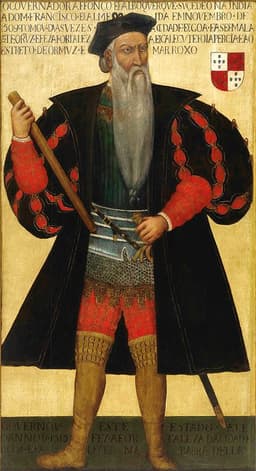
Afonso de Albuquerque
General · Medieval
79.6Total
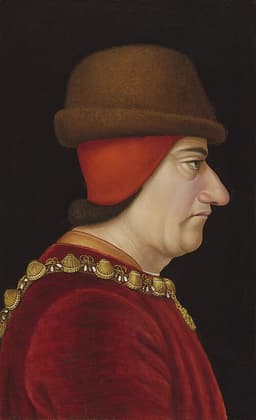
Louis XI of France
Emperor · Medieval
66.2Total
Basic Information
Born
1453
1423
Died
1515
1483
Era
Medieval
Medieval
Nationality
Portugal
France
Occupation
General
Emperor
Civilization
Western
Western
Score Comparison
Military (10%)
77.5
47.5
Political (20%)
88.0
78.0
Influence (20%)
80.0
65.0
Legacy (20%)
75.0
65.0
Leadership (15%)
78.0
78.0
Strategy (15%)
82.0
55.0
TOTAL
79.6
66.2
Afonso de Albuquerque — Complete Timeline
1503 AD
First voyage to IndiaWar◆ Major
Afonso de Albuquerque led a fleet to India, establishing the first Portuguese fort at Cochin. This voyage laid the foundation for Portuguese control of the Indian Ocean trade.
ExplorationColonialismIndia
Impact: global
1510 AD
Conquest of GoaWar◆ Major
Albuquerque captured Goa from the Sultan of Bijapur. He made Goa the capital of Portuguese India, a position it held for over 400 years.
ConquestColonialismIndia
Impact: regional
1511 AD
Conquest of MalaccaWar◆ Major
Albuquerque led a Portuguese fleet to capture the strategic port of Malacca. This gave Portugal control of the spice trade route between the Indian Ocean and the Pacific.
ConquestSpice TradeSoutheast Asia
Impact: global
1513 AD
Siege of AdenWar
Albuquerque attempted to capture Aden in Yemen but failed. This failure prevented Portugal from controlling the entrance to the Red Sea and limited their influence in the region.
SiegeFailureRed Sea
Impact: regional
1515 AD
Death at seaOther◆ Major
Afonso de Albuquerque died at sea off the coast of Goa, possibly from illness or poison. His death left the Portuguese Empire in the Indian Ocean without its most capable leader.
DeathLeadershipEmpire
Impact: regionaltragic
Louis XI of France — Complete Timeline
1464 AD
Established the Postal ServiceReform
Louis XI established a royal postal service, creating a network of relay stations for rapid communication across France. This system improved administrative efficiency and royal control over the realm.
Postal ServiceAdministrationCommunication
Impact: nationalconstructive
1465 AD
Defeated the League of the Public WealWar◆ Major
Louis XI defeated the League of the Public Weal, a coalition of rebellious nobles led by the Duke of Burgundy and the Duke of Berry. The victory at the Battle of Montlh
Civil WarNobilityRoyal Authority
Impact: national
1469 AD
Imprisoned Cardinal BaluePolitical Action
Louis XI imprisoned his own minister, Cardinal Jean Balue, for treason after discovering his secret correspondence with Charles the Bold. Balue was held in an iron cage for over a decade, demonstrating Louis's ruthless treatment of disloyal officials.
ImprisonmentTreasonIron Cage
Impact: nationaldestructive
1474 AD
Supported the Swiss Confederacy against BurgundyWar
Louis XI provided financial and diplomatic support to the Swiss Confederacy in their war against Charles the Bold of Burgundy. This alliance contributed to Burgundy's defeat and the eventual collapse of the Burgundian state.
AllianceSwissBurgundian Wars
Impact: regionalconstructive
1475 AD
Signed the Treaty of PicquignyPolitical Action◆ Major
Louis XI signed the Treaty of Picquigny with King Edward IV of England, ending the Hundred Years' War. The treaty included a payment to Edward IV to withdraw his invading army, securing peace and saving France from invasion.
TreatyHundred Years' WarDiplomacy
Impact: regionalconstructive
1477 AD
Acquired the Duchy of BurgundyWar◆ Major
After the death of Charles the Bold at the Battle of Nancy, Louis XI seized the Duchy of Burgundy and other Burgundian territories. This acquisition significantly expanded the French crown's lands and reduced Burgundian power.
Territorial ExpansionBurgundyRoyal Domain
Impact: regionalconstructive
Expert Analysis
Louis XI of France vs Afonso de Albuquerque
# The Spider and the Sword
In the autumn of 1515, Afonso de Albuquerque lay dying on the deck of his flagship, the *Frol de la Mar*, somewhere off the coast of Goa. He had just learned that a rival had been appointed to replace him as governor of Portuguese India. Within days, he was dead—possibly from illness, possibly from poison, possibly from a broken heart. Meanwhile, across the continent, another master of statecraft had been dead for thirty-two years, but the web he had woven still held. Louis XI of France, the "Universal Spider," had spun a kingdom so tightly bound to the crown that no noble rebellion could ever tear it apart again. One man died in despair, his empire already fraying. The other died in his bed, his kingdom more unified than it had been in centuries. What made the difference between the conqueror who lost everything and the spider who caught everything?
Origins
Afonso de Albuquerque was born in 1453, the year Constantinople fell, an omen that the old world was ending and a new one—global, maritime, Portuguese—was about to begin. He was the second son of a minor noble family, raised in the court of King Afonso V, where he learned mathematics, navigation, and the art of war. The sea was his destiny, and the Indian Ocean his stage.
Louis XI was born thirty years earlier, in 1423, into a France ravaged by the Hundred Years' War. His father, Charles VII, was the "King of Bourges," a monarch who barely ruled half his own kingdom. Louis grew up in a world of shifting alliances, secret betrayals, and the constant threat of English invasion. He learned early that a king's power was not in his sword but in his letters, his spies, and his patience.
The difference in their origins is the difference between a man who inherited a mission and a man who inherited a mess. Albuquerque was born to expand; Louis was born to consolidate.
Rise to Power
Albuquerque's first voyage to India in 1503 was a proving ground. He established the first Portuguese fort at Cochin, a tiny foothold on a vast continent. But his real rise came in 1509, when he was appointed governor of Portuguese India. He was not the first choice—the king had preferred someone else—but Albuquerque had the vision and the ruthlessness that the empire required.
Louis XI became king of France in 1461, but his path to power was anything but smooth. He had spent years in exile at the court of the Duke of Burgundy, plotting against his own father. When Charles VII died, Louis returned to a kingdom seething with noble resentment. Within four years, the League of the Public Weal—a coalition of the most powerful dukes in France—rose against him at the Battle of Montlhéry in 1465. Louis lost the battle but won the war, not by force of arms but by negotiation, bribery, and division. He gave the rebels just enough to keep them from uniting against him again.
Albuquerque conquered; Louis conspired. One took cities; the other took advantage.
Leadership & Governance
Albuquerque's leadership was a study in audacity. In 1510, he captured Goa from the Sultan of Bijapur with a force of barely a thousand men. He made Goa the capital of Portuguese India, a city that would remain Portuguese for over four centuries. In 1511, he took Malacca, the gateway to the Spice Islands, with a fleet of eighteen ships. He understood that the Portuguese Empire in the East could not survive on trade alone—it needed fortresses, alliances, and a permanent presence.
But Albuquerque was also a reformer. He encouraged Portuguese men to marry local women, creating a mixed-race population loyal to the crown. He abolished the practice of sati in Goa and minted the first Portuguese coins in Asia. He was a conqueror who tried to build something lasting.
Louis XI, by contrast, governed through patience and paranoia. He established a royal postal service in 1464, creating a network of relay stations that allowed him to communicate with his officials faster than any rival. He imprisoned his own minister, Cardinal Balue, in an iron cage for seven years after discovering his treason. He supported the Swiss Confederacy against Charles the Bold of Burgundy, preferring to let others fight his battles. When Charles the Bold died at the Battle of Nancy in 1477, Louis seized the Duchy of Burgundy without striking a single blow.
Albuquerque won battles; Louis won territories. One was a hammer; the other was a web.
Triumph & Tragedy
Albuquerque's greatest triumph was the conquest of Malacca in 1511. It gave Portugal control of the spice trade, the most lucrative commerce in the world. But his greatest tragedy came two years later, when he failed to capture Aden in Yemen. This failure meant that the Red Sea remained open to Muslim shipping, and the Portuguese never fully controlled the Indian Ocean.
His death in 1515 was the final tragedy. He died believing his life's work had been undone, replaced by a rival who would dismantle his policies. In fact, much of what he built survived, but his personal end was bitter.
Louis XI's greatest triumph was the Treaty of Picquigny in 1475. By paying off Edward IV of England to withdraw his invasion force, Louis ended the Hundred Years' War not with a battle but with a bribe. It was the ultimate spider's move. His greatest tragedy was personal: he spent his final years in terror of death, locking himself in his fortress at Plessis-lez-Tours, surrounded by astrologers and guards. The man who had outmaneuvered every enemy could not outmaneuver his own mortality.
Character & Destiny
Albuquerque was a man of action, driven by a vision of a Portuguese empire that would span the globe. He was courageous, charismatic, and sometimes cruel. He burned towns, executed prisoners, and once ordered the ears and noses of captured pirates to be cut off. But he was also capable of generosity and vision.
Louis XI was a man of calculation, driven by a single goal: the unity of France under the crown. He was suspicious, frugal, and indifferent to glory. He wore plain clothes, ate simple food, and spent his evenings reading dispatches from his spies. He was not loved, but he was feared.
Their characters shaped their fates. Albuquerque's boldness won him an empire but also made him enemies who worked to destroy him. Louis's caution won him a kingdom and kept him on the throne for twenty-two years.
Legacy
Albuquerque is remembered as the founder of the Portuguese Empire in the East. His legacy score of 67.4 reflects a reputation that has faded with the empire he built. Today, he is a footnote in the history of European colonialism, a name in Portuguese textbooks and a statue in Goa.
Louis XI is remembered as the architect of French absolutism. His legacy score of 80.0 reflects his enduring impact on the shape of France. He is the king who broke the power of the nobility, centralized the administration, and laid the groundwork for the absolute monarchy of Louis XIV. His methods were ugly, but his results were lasting.
Conclusion
The spider and the sword: two men, two visions, two fates. Albuquerque conquered half the world but never secured his own place in it. Louis XI conquered only France, but he made it his own. Perhaps the lesson is that empires built on conquest are fragile, while kingdoms built on administration endure. Or perhaps the lesson is simpler: it is better to be a spider than a sword, because spiders know how to survive.
Rankings
🥇
Afonso de AlbuquerqueLeader
Mil: 77.5Pol: 88.0Inf: 80.0
79.6
🥈
Louis XI of France
Mil: 47.5Pol: 78.0Inf: 65.0
66.2
+13.4 behind
How This Comparison Works
Algorithm
Each figure is scored on 6 dimensions (0—100 scale) based on structured historical data: Military (10%), Political (20%), Influence (20%), Legacy (20%), Leadership (15%), Strategy (15%). The weighted total produces the final ranking.
Data Sources
Scores are computed from structured sub-indicators in the database. Scale factors adjust for era (Ancient ×0.85, Modern ×1.0) and civilization size (Eastern ×1.05, Other ×0.80) to account for differences in population and military scale.
Maximum 3 Figures
Comparisons are limited to 2—3 figures to ensure readability and statistical meaningfulness.
Error Margins
±5 points per dimension — Sub-scores are derived from historical records with inherent uncertainty. Two figures within 5 points on a dimension should be considered roughly equivalent in that area.
Total Score Accuracy
±3 points overall — The weighted combination of 6 dimensions produces a total score with approximately ±3 points of uncertainty. Differences of less than 3 points are not statistically significant— the figures are effectively tied.
Known Limitations
- Historical records are incomplete and uneven across civilizations
- Figures from oral-tradition societies may be underrepresented
- Occupation labels can misclassify multi-role figures
- Scores measure capability and impact, not moral character
- Quantitative scoring is a comparison tool, not absolute truth
Capability Radar
Military (10%) — Battles & Warfare
Battles
85
45
Win Rate
80
50
Expansion
95
60
Political (20%) — Governance & Reform
Reform
80
80
Diplomacy
85
90
Economy
80
75
Influence (20%) — Cultural & Global Reach
Cultural
70
60
Global
85
65
Legacy (20%) — Historical Impact
Historical
85
80
Longevity
80
75
Leadership (15%) — Power & Stability
Tenure
70
85
Stability
65
70
Strategy (15%) — Tactics & Innovation
Strategy
95
70
Tactics
90
55
Reform
75
65
Similar Comparisons
Comments & Discussion
No comments yet. Be the first to share your thoughts!