Loading...
Afonso de Albuquerque vs Julius Maada Bio
Afonso de Albuquerque leads by 28.4 pts · 2 figures compared
…
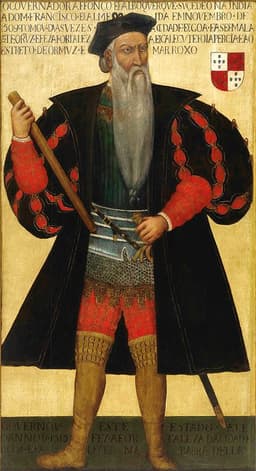
Afonso de Albuquerque
General · Medieval
79.6Total
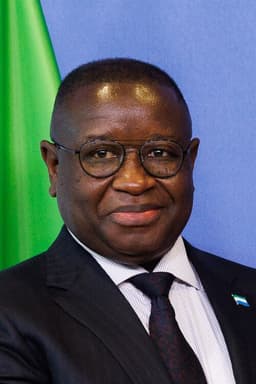
Julius Maada Bio
General · Modern
51.2Total
Basic Information
Born
1453
1964
Died
1515
—
Era
Medieval
Modern
Nationality
Portugal
Sierra Leone
Occupation
General
General
Civilization
Western
Other
Score Comparison
Military (10%)
77.5
50.0
Political (20%)
88.0
45.0
Influence (20%)
80.0
53.3
Legacy (20%)
75.0
45.0
Leadership (15%)
78.0
70.0
Strategy (15%)
82.0
43.7
TOTAL
79.6
51.2
Afonso de Albuquerque — Complete Timeline
1503 AD
First voyage to IndiaWar◆ Major
Afonso de Albuquerque led a fleet to India, establishing the first Portuguese fort at Cochin. This voyage laid the foundation for Portuguese control of the Indian Ocean trade.
ExplorationColonialismIndia
Impact: global
1510 AD
Conquest of GoaWar◆ Major
Albuquerque captured Goa from the Sultan of Bijapur. He made Goa the capital of Portuguese India, a position it held for over 400 years.
ConquestColonialismIndia
Impact: regional
1511 AD
Conquest of MalaccaWar◆ Major
Albuquerque led a Portuguese fleet to capture the strategic port of Malacca. This gave Portugal control of the spice trade route between the Indian Ocean and the Pacific.
ConquestSpice TradeSoutheast Asia
Impact: global
1513 AD
Siege of AdenWar
Albuquerque attempted to capture Aden in Yemen but failed. This failure prevented Portugal from controlling the entrance to the Red Sea and limited their influence in the region.
SiegeFailureRed Sea
Impact: regional
1515 AD
Death at seaOther◆ Major
Afonso de Albuquerque died at sea off the coast of Goa, possibly from illness or poison. His death left the Portuguese Empire in the Indian Ocean without its most capable leader.
DeathLeadershipEmpire
Impact: regionaltragic
Julius Maada Bio — Complete Timeline
1992 AD
1992 Sierra Leonean coup d'étatPolitical Action◆ Major
Julius Maada Bio was a member of the National Provisional Ruling Council (NPRC) that overthrew President Joseph Momoh in a military coup. Bio served as a key figure in the junta, which promised to end the civil war but faced criticism for human rights abuses.
CoupSierra LeoneCivil War
Impact: nationaldestructive
1996 AD
Brief tenure as head of statePolitical Action◆ Major
Bio led a palace coup within the NPRC in January 1996, becoming head of state. He oversaw the transition to civilian rule, handing over power to Ahmad Tejan Kabbah after elections in March 1996, a move that earned him praise for restoring democracy.
TransitionDemocracyCoup
Impact: nationalconstructive
2018 AD
Election as President of Sierra LeonePolitical Action◆ Major
Bio won the 2018 Sierra Leonean presidential election as the candidate of the Sierra Leone People's Party, defeating Samura Kamara in a runoff. His victory marked a return to power for the SLPP after a decade in opposition.
ElectionSierra LeonePresidency
Impact: nationalconstructive
2023 AD
Re-election amid economic challengesPolitical Action◆ Major
Bio was re-elected in 2023 with 56.6% of the vote, but the election was disputed by the opposition. His second term has been marked by economic difficulties, including high inflation and debt, as well as allegations of authoritarianism.
ElectionSierra LeoneEconomy
Impact: national
Expert Analysis
Afonso de Albuquerque vs Julius Maada Bio
The Conqueror and the Democrat
On a sun-scorched morning in 1510, Afonso de Albuquerque stormed the gates of Goa, his sword still wet with the blood of Bijapur’s defenders. Five centuries later, in 2018, Julius Maada Bio stood before a ballot box in Freetown, his military uniform long exchanged for a suit, waiting for votes to decide his fate. One man carved an empire with steel; the other rebuilt a nation with ink. What separates a general who conquers from a general who governs? The answer lies not in their uniforms, but in the centuries between them.
Origins
Albuquerque was born in 1453, the year Constantinople fell, into a Portugal obsessed with breaking the Muslim stranglehold on spice routes. His father was a courtier, his family steeped in crusading tradition. He learned war as a young knight fighting in North Africa, where the Reconquista’s spirit still burned. The world he knew was one of uncharted oceans, rival kingdoms, and a Pope who blessed conquest as divine duty.
Julius Maada Bio entered the world in 1964, a child of postcolonial Sierra Leone. His country had won independence just three years earlier, inheriting borders drawn by Europeans and a fragile democracy. He grew up in a land rich in diamonds but poor in peace, where soldiers often decided who ruled. By his twenties, he had seen his nation spiral into corruption and chaos—a crucible that would forge a very different kind of general.
Rise to Power
Albuquerque’s path was that of a royal servant. In 1503, he led his first fleet to India, establishing a fort at Cochin. Portugal’s king, Manuel I, saw in him a weapon: ruthless, disciplined, and utterly loyal. His rise came through victories, not politics. He was appointed governor of Portuguese India in 1509 because he had proven he could take and hold territory.
Bio’s ascent was messier. In 1992, he was a young officer in a coup that overthrew President Joseph Momoh, joining the National Provisional Ruling Council. Power came not from a king’s favor but from a gun and a moment of national desperation. Four years later, in 1996, he staged a palace coup within the junta, becoming head of state himself. But where Albuquerque conquered for a crown, Bio governed to give power away—overseeing elections that handed the presidency to a civilian. It was a strange move for a general, and it cost him. He lost the 1996 election, then spent decades in the political wilderness.
Leadership & Governance
Albuquerque ruled like a storm. After capturing Goa in 1510, he made it the capital of Portuguese India, encouraging Portuguese men to marry local women to create a loyal mixed-race population. He seized Malacca in 1511, controlling the spice trade that made Portugal rich. He built forts, burned enemy fleets, and wrote letters to his king demanding more ships and men. His strategy was simple: dominate choke points—the Strait of Malacca, the Red Sea, the Persian Gulf—and squeeze Asia’s trade into Portuguese hands. Yet he failed at Aden in 1513, a defeat that left the Red Sea open to rivals. His governance was absolute, his justice swift, his vision imperial.
Bio governs differently. As president from 2018, he inherited a country shattered by a brutal civil war and the Ebola epidemic. His military score is low—37.5—because he is not a warrior; he is a politician in a general’s shadow. He won the 2018 election on promises of free education and economic revival. His leadership score of 72 reflects a man who has learned that in a democracy, you cannot simply command—you must persuade. He faces corruption, debt, and an opposition that disputes his 2023 re-election. Where Albuquerque built walls, Bio builds coalitions.
Triumph & Tragedy
Albuquerque’s greatest moment was the conquest of Malacca in 1511. With just 1,200 men and 18 ships, he seized a city of 100,000, opening the Spice Islands to Portugal. His tragedy came at sea in 1515. Returning from a failed campaign, he learned that the king had replaced him. Broken, possibly poisoned, he died on his ship within sight of Goa. He had built an empire, but his king feared his ambition.
Bio’s triumph was the 2018 election itself—a peaceful transfer of power in a country where soldiers had long decided who ruled. His tragedy is the weight of expectation. Sierra Leone remains one of the world’s poorest nations. His second term, won amid disputed results, has seen protests and economic pain. He is no conqueror; he is a caretaker of a fragile state.
Character & Destiny
Albuquerque was a man of iron certainty. He believed Portugal was chosen by God to spread Christianity and control trade. This conviction made him fearless but inflexible. He could not imagine a world where he did not command. His destiny was to die alone, replaced, his empire already beginning to fray.
Bio is a man of calculated patience. He seized power, then surrendered it. He lost elections, then returned. His military past taught him discipline, but his political present demands compromise. He has survived by knowing when to fight and when to step back. His destiny is still unfolding, but it is measured not in conquered ports but in stable elections.
Legacy
Albuquerque is remembered as the founder of the Portuguese Empire in Asia. His legacy score of 67.4 reflects his lasting impact—Goa remained Portuguese until 1961. But he is also a symbol of colonial violence, a man who burned cities and enslaved people. His name evokes both admiration for strategic genius and horror at imperial brutality.
Bio’s legacy is still being written. His legacy score of 59 is lower, partly because he governs a small, struggling nation. Yet his path—from coup leader to democratically elected president—offers a rare story of redemption in African politics. He may not be remembered as a great conqueror, but as a general who learned that true power comes from the ballot box, not the barrel of a gun.
Conclusion
Albuquerque and Bio never met, but they share a question: What does it mean to lead? For the Portuguese general, leadership meant imposing order on chaos, carving a Christian empire from Muslim and Hindu lands. For the Sierra Leonean president, leadership means restoring order after chaos, building a democracy from the ashes of war. One used a sword to open the world; the other uses a vote to heal his country. The difference between them is not just four centuries—it is the difference between conquest and consent, between empire and nation. And perhaps, in that difference, lies the whole story of our changing world.
Rankings
🥇
Afonso de AlbuquerqueLeader
Mil: 77.5Pol: 88.0Inf: 80.0
79.6
🥈
Julius Maada Bio
Mil: 50.0Pol: 45.0Inf: 53.3
51.2
+28.4 behind
How This Comparison Works
Algorithm
Each figure is scored on 6 dimensions (0—100 scale) based on structured historical data: Military (10%), Political (20%), Influence (20%), Legacy (20%), Leadership (15%), Strategy (15%). The weighted total produces the final ranking.
Data Sources
Scores are computed from structured sub-indicators in the database. Scale factors adjust for era (Ancient ×0.85, Modern ×1.0) and civilization size (Eastern ×1.05, Other ×0.80) to account for differences in population and military scale.
Maximum 3 Figures
Comparisons are limited to 2—3 figures to ensure readability and statistical meaningfulness.
Error Margins
±5 points per dimension — Sub-scores are derived from historical records with inherent uncertainty. Two figures within 5 points on a dimension should be considered roughly equivalent in that area.
Total Score Accuracy
±3 points overall — The weighted combination of 6 dimensions produces a total score with approximately ±3 points of uncertainty. Differences of less than 3 points are not statistically significant— the figures are effectively tied.
Known Limitations
- Historical records are incomplete and uneven across civilizations
- Figures from oral-tradition societies may be underrepresented
- Occupation labels can misclassify multi-role figures
- Scores measure capability and impact, not moral character
- Quantitative scoring is a comparison tool, not absolute truth
Capability Radar
Military (10%) — Battles & Warfare
Battles
85
15
Win Rate
80
20
Expansion
95
5
Political (20%) — Governance & Reform
Reform
80
50
Diplomacy
85
55
Economy
80
45
Influence (20%) — Cultural & Global Reach
Cultural
70
30
Global
85
20
Legacy (20%) — Historical Impact
Historical
85
35
Longevity
80
25
Leadership (15%) — Power & Stability
Tenure
70
55
Stability
65
40
Strategy (15%) — Tactics & Innovation
Strategy
95
20
Tactics
90
25
Reform
75
10
Similar Comparisons
Comments & Discussion
No comments yet. Be the first to share your thoughts!