Loading...
Afonso de Albuquerque vs Hong Taiji
Afonso de Albuquerque leads by 1.3 pts · 2 figures compared
…
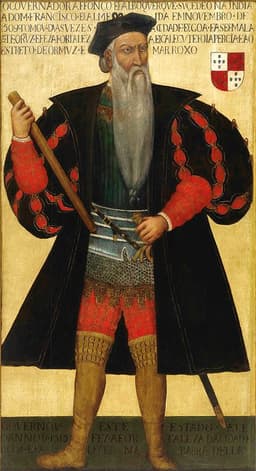
Afonso de Albuquerque
General · Medieval
79.6Total
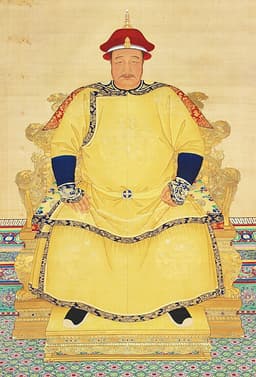
Hong Taiji
Emperor · Modern
78.3Total
Basic Information
Born
1453
1592
Died
1515
1643
Era
Medieval
Modern
Nationality
Portugal
China
Occupation
General
Emperor
Civilization
Western
Eastern
Score Comparison
Military (10%)
77.5
85.0
Political (20%)
88.0
82.0
Influence (20%)
80.0
88.0
Legacy (20%)
75.0
65.0
Leadership (15%)
78.0
78.0
Strategy (15%)
82.0
76.0
TOTAL
79.6
78.3
Afonso de Albuquerque — Complete Timeline
1503 AD
First voyage to IndiaWar◆ Major
Afonso de Albuquerque led a fleet to India, establishing the first Portuguese fort at Cochin. This voyage laid the foundation for Portuguese control of the Indian Ocean trade.
ExplorationColonialismIndia
Impact: global
1510 AD
Conquest of GoaWar◆ Major
Albuquerque captured Goa from the Sultan of Bijapur. He made Goa the capital of Portuguese India, a position it held for over 400 years.
ConquestColonialismIndia
Impact: regional
1511 AD
Conquest of MalaccaWar◆ Major
Albuquerque led a Portuguese fleet to capture the strategic port of Malacca. This gave Portugal control of the spice trade route between the Indian Ocean and the Pacific.
ConquestSpice TradeSoutheast Asia
Impact: global
1513 AD
Siege of AdenWar
Albuquerque attempted to capture Aden in Yemen but failed. This failure prevented Portugal from controlling the entrance to the Red Sea and limited their influence in the region.
SiegeFailureRed Sea
Impact: regional
1515 AD
Death at seaOther◆ Major
Afonso de Albuquerque died at sea off the coast of Goa, possibly from illness or poison. His death left the Portuguese Empire in the Indian Ocean without its most capable leader.
DeathLeadershipEmpire
Impact: regionaltragic
Hong Taiji — Complete Timeline
1631 AD
Adoption of Chinese-style governmentReform◆ Major
Hong Taiji established a Chinese-style bureaucracy, including the Six Ministries and a Hanlin Academy. He also introduced the civil service examination system for Han Chinese, integrating Confucian governance into the Qing state.
Government reformConfucian administrationSinification
Impact: regionalconstructive
1635 AD
Creation of the Eight Banners systemReform◆ Major
Hong Taiji reorganized the Eight Banners military system, incorporating Mongol and Han Chinese forces into separate banners. This created a multi-ethnic military structure that became the backbone of Qing power.
Military reformEight BannersMulti-ethnic army
Impact: regionalconstructive
Renaming of the Jurchen to ManchuPolitical Action◆ Major
Hong Taiji issued an edict renaming the Jurchen people as Manchu. This was part of his effort to create a unified identity for the various tribes under his rule and distance them from the historical Jurchen label.
Ethnic identityManchuJurchen
Impact: regionalconstructive
1636 AD
Proclamation of the Qing dynastyPolitical Action◆ Major
Hong Taiji declared the establishment of the Qing dynasty, replacing the Later Jin name. He adopted the Chinese imperial title and created a dual administrative system combining Manchu and Chinese institutions.
Dynasty foundingImperial titleQing dynasty
Impact: regionalconstructive
1640 AD
Conquest of the Ming Liaodong regionWar◆ Major
Hong Taiji's forces captured key Ming cities in Liaodong, including Jinzhou and Songshan. These victories secured Qing control over the strategic Liaoning corridor and weakened Ming defenses in the northeast.
Territorial expansionMing-Qing WarLiaodong
Impact: regional
Expert Analysis
Origins
Afonso de Albuquerque was born in 1453 in Alhandra, Portugal, to a noble family with royal connections. He received a classical education and military training, serving in North Africa before turning east. Hong Taiji, born in 1592, was the eighth son of Nurhaci, the Jurchen chieftain who united the tribes. He grew up in a warrior society, learning statecraft and military tactics from his father.
Rise to Power
Albuquerque rose through the ranks of Portuguese nobility and was appointed governor of India in 1509. He captured Goa in 1510, making it the capital of Portuguese India, and took Malacca in 1511, controlling the spice trade. Hong Taiji became Khan in 1626 after his father's death, but consolidated power by sidelining rivals. He renamed his people Manchu in 1635 and proclaimed the Qing dynasty in 1636, adopting Chinese-style government.
Leadership & Governance
Albuquerque was a brilliant strategist and administrator. He established forts, introduced mixed marriages, and promoted trade. His governance was harsh but effective, ensuring Portuguese dominance. Hong Taiji was a reformer who created the Eight Banners system, a military-social organization, and adopted Chinese bureaucratic models. He balanced Manchu traditions with Chinese governance, strengthening his state.
Triumph & Tragedy
Albuquerque's triumphs include the conquests of Goa and Malacca, securing Portuguese control of Indian Ocean trade. His tragedy came when he was recalled in disgrace and died at sea in 1515, possibly poisoned. Hong Taiji's triumphs include conquering the Ming Liaodong region and laying the foundation for Qing conquest of China. He died suddenly in 1643 at age 51, before the final push into China.
Character & Destiny
Albuquerque was ambitious, ruthless, and visionary. His destiny was to build an empire that lasted centuries. Hong Taiji was pragmatic, strategic, and adaptable. His destiny was to create a dynasty that would rule China for 268 years. Both were driven by a sense of mission, but Albuquerque's was more personal glory, while Hong Taiji's was dynastic survival.
Legacy
Albuquerque is considered the founder of the Portuguese Empire in Asia, a naval genius whose strategies influenced later European imperialism. Hong Taiji is a key figure in Chinese history, the architect of the Qing dynasty that transformed China. His policies of sinicization and military reform enabled the Manchu conquest.
Conclusion
Afonso de Albuquerque and Hong Taiji were both empire builders, but in different contexts. Albuquerque's naval empire was based on trade and force, while Hong Taiji's land empire relied on assimilation and governance. Albuquerque's scores: M=78, P=88, I=80, L=75, D=78, S=82, T=80. Hong Taiji's scores: M=85, P=82, I=88, L=65, D=78, S=76, T=78. The score gap is 1.3 in Albuquerque's favor, reflecting his higher political and strategic impact. However, Hong Taiji's military and intelligence scores are higher. Ultimately, Albuquerque's aggressive expansion and lasting legacy in the Indian Ocean give him a slight edge in this comparison.
Rankings
🥇
Afonso de AlbuquerqueLeader
Mil: 77.5Pol: 88.0Inf: 80.0
79.6
🥈
Hong Taiji
Mil: 85.0Pol: 82.0Inf: 88.0
78.3
+1.3 behind
How This Comparison Works
Algorithm
Each figure is scored on 6 dimensions (0—100 scale) based on structured historical data: Military (10%), Political (20%), Influence (20%), Legacy (20%), Leadership (15%), Strategy (15%). The weighted total produces the final ranking.
Data Sources
Scores are computed from structured sub-indicators in the database. Scale factors adjust for era (Ancient ×0.85, Modern ×1.0) and civilization size (Eastern ×1.05, Other ×0.80) to account for differences in population and military scale.
Maximum 3 Figures
Comparisons are limited to 2—3 figures to ensure readability and statistical meaningfulness.
Error Margins
±5 points per dimension — Sub-scores are derived from historical records with inherent uncertainty. Two figures within 5 points on a dimension should be considered roughly equivalent in that area.
Total Score Accuracy
±3 points overall — The weighted combination of 6 dimensions produces a total score with approximately ±3 points of uncertainty. Differences of less than 3 points are not statistically significant— the figures are effectively tied.
Known Limitations
- Historical records are incomplete and uneven across civilizations
- Figures from oral-tradition societies may be underrepresented
- Occupation labels can misclassify multi-role figures
- Scores measure capability and impact, not moral character
- Quantitative scoring is a comparison tool, not absolute truth
Capability Radar
Military (10%) — Battles & Warfare
Battles
85
85
Win Rate
80
80
Expansion
95
90
Political (20%) — Governance & Reform
Reform
80
90
Diplomacy
85
85
Economy
80
80
Influence (20%) — Cultural & Global Reach
Cultural
70
80
Global
85
75
Legacy (20%) — Historical Impact
Historical
85
85
Longevity
80
80
Leadership (15%) — Power & Stability
Tenure
70
75
Stability
65
70
Strategy (15%) — Tactics & Innovation
Strategy
95
90
Tactics
90
85
Reform
75
90
Similar Comparisons
Comments & Discussion
No comments yet. Be the first to share your thoughts!