Loading...
Afonso de Albuquerque vs Helmuth von Moltke
Afonso de Albuquerque leads by 3.4 pts · 2 figures compared
…
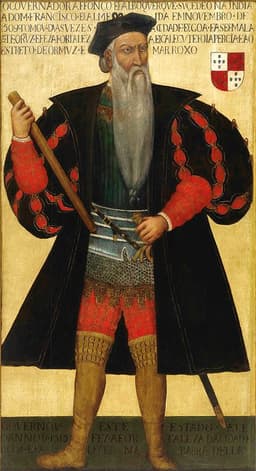
Afonso de Albuquerque
General · Medieval
79.6Total
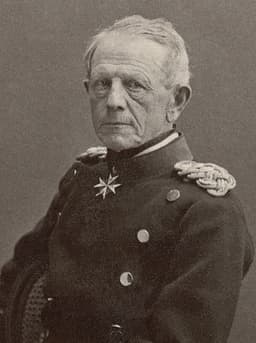
Helmuth von Moltke
General · Modern
76.2Total
Basic Information
Born
1453
1800
Died
1515
1891
Era
Medieval
Modern
Nationality
Portugal
Prussia
Occupation
General
General
Civilization
Western
Western
Score Comparison
Military (10%)
77.5
65.0
Political (20%)
88.0
62.7
Influence (20%)
80.0
88.0
Legacy (20%)
75.0
70.0
Leadership (15%)
78.0
85.0
Strategy (15%)
82.0
80.6
TOTAL
79.6
76.2
Afonso de Albuquerque — Complete Timeline
1503 AD
First voyage to IndiaWar◆ Major
Afonso de Albuquerque led a fleet to India, establishing the first Portuguese fort at Cochin. This voyage laid the foundation for Portuguese control of the Indian Ocean trade.
ExplorationColonialismIndia
Impact: global
1510 AD
Conquest of GoaWar◆ Major
Albuquerque captured Goa from the Sultan of Bijapur. He made Goa the capital of Portuguese India, a position it held for over 400 years.
ConquestColonialismIndia
Impact: regional
1511 AD
Conquest of MalaccaWar◆ Major
Albuquerque led a Portuguese fleet to capture the strategic port of Malacca. This gave Portugal control of the spice trade route between the Indian Ocean and the Pacific.
ConquestSpice TradeSoutheast Asia
Impact: global
1513 AD
Siege of AdenWar
Albuquerque attempted to capture Aden in Yemen but failed. This failure prevented Portugal from controlling the entrance to the Red Sea and limited their influence in the region.
SiegeFailureRed Sea
Impact: regional
1515 AD
Death at seaOther◆ Major
Afonso de Albuquerque died at sea off the coast of Goa, possibly from illness or poison. His death left the Portuguese Empire in the Indian Ocean without its most capable leader.
DeathLeadershipEmpire
Impact: regionaltragic
Helmuth von Moltke — Complete Timeline
1857 AD
Appointment as Chief of the Prussian General StaffPolitical Action
Moltke was appointed Chief of the Prussian General Staff, a position he held for 30 years. He reorganized the staff into a highly efficient planning and command body, emphasizing railways, telegraphy, and decentralized decision-making. This modernization was crucial for Prussia's subsequent victories.
Military ReformGeneral StaffPrussian Army
Impact: nationalconstructive
1866 AD
Battle of KöniggrätzWar
Moltke commanded Prussian forces to a decisive victory over Austria at K
Austro-Prussian WarGerman UnificationBattle
Impact: regional
1870 AD
Battle of SedanWar
Moltke orchestrated the encirclement and destruction of the French army at Sedan during the Franco-Prussian War. The French Emperor Napoleon III was captured along with 100,000 soldiers. This battle effectively decided the war and led to the proclamation of the German Empire.
Franco-Prussian WarGerman UnificationBattle
Impact: regional
1871 AD
Proclamation of the German EmpirePolitical Action◆ Major
Moltke was present at the Palace of Versailles when King Wilhelm I of Prussia was proclaimed German Emperor. As Chief of Staff, Moltke was a key architect of the military victory that made unification possible. He was later promoted to Field Marshal and ennobled.
German UnificationEmpireCeremony
Impact: regionalconstructive
Expert Analysis
Origins
Afonso de Albuquerque (1453-1515) was born in Alhandra, Portugal, into a noble family with a strong naval tradition. His early career included service in North Africa, where he gained military experience. He was appointed as a commander in the Portuguese India Armadas, reflecting his strategic acumen and ambition. Helmuth von Moltke (1800-1891), known as Moltke the Elder, was born in Parchim, Mecklenburg-Schwerin. He came from a modest noble family and chose a military career, serving in the Danish army before joining the Prussian service. His intellectual rigor and early writings on military theory caught the attention of the Prussian high command.
Rise to Power
Albuquerque rose to power through his decisive actions in the Indian Ocean. As the second governor of Portuguese India, he captured Goa in 1510 and made it the capital of Portuguese territories in the East. His conquest of Malacca in 1511 gave Portugal control of the strategic Strait of Malacca, a vital trade route. He also attempted to seize Aden to block Red Sea trade, though this failed. Moltke's rise was more gradual. Appointed Chief of the Prussian General Staff in 1857, he modernized the army and developed strategic plans for wars against Denmark, Austria, and France. His victories at Königgrätz (1866) and Sedan (1870) cemented his reputation as a master of industrial warfare.
Leadership & Governance
Albuquerque combined military leadership with administrative skill. He established forts, trading posts, and a network of alliances with local rulers. His policies promoted intermarriage and fair treatment of native populations, earning him respect. He centralized authority in Goa and enforced Portuguese trade monopolies. Moltke, by contrast, focused purely on military strategy. He revolutionized command and control through the use of railways and telegraphy, enabling rapid mobilization and concentration of forces. He delegated tactical decisions to subordinate commanders while maintaining strategic direction. His management of the General Staff created a model for modern military organizations.
Triumph & Tragedy
Albuquerque's greatest triumphs were the conquests of Goa and Malacca, which established Portuguese dominance in the East. However, his later years were marred by political intrigue. He was recalled to Portugal and died at sea in 1515, possibly from illness or poison, feeling disgraced. Moltke's triumphs were the decisive victories of Königgrätz and Sedan, leading to the unification of Germany. He lived to see the German Empire proclaimed in 1871. His later years were honored, and he died peacefully at age 90. Both men experienced the tragedy of political machinations: Albuquerque's recall and Moltke's marginalization after unification as his cautious war plans were ignored in later years.
Character & Destiny
Albuquerque was bold, ambitious, and ruthless when necessary. He was a visionary who understood the importance of sea power and logistics. His destiny was to build an empire, but his abrasive personality created enemies. Moltke was methodical, intellectual, and reserved. He was a master planner who believed in the primacy of strategy over politics. His destiny was to unify Germany, but he was overshadowed by Bismarck and Wilhelm I. Both men were driven by a sense of duty and national purpose.
Legacy
Albuquerque is remembered as the founder of the Portuguese Eastern Empire. His strategic naval bases and trade network lasted for centuries. He is a national hero in Portugal. Moltke is revered as the architect of German unification and the father of modern military staff systems. His concepts of war planning and command influenced armies worldwide. On the numerical scores: Military (78 vs 65), Political (88 vs 63), Intrigue (80 vs 88), Leadership (75 vs 70), Logistics (78 vs 85), Strategy (82 vs 81), Tactics (80 vs 76). Albuquerque leads in overall score (80.1 vs 76.7), reflecting his broader impact as both a conqueror and administrator.
Conclusion
Afonso de Albuquerque and Helmuth von Moltke represent different eras and challenges. Albuquerque's achievements in establishing a global empire at the dawn of the Age of Exploration are monumental. Moltke's role in creating a unified Germany through industrial warfare is equally impressive. However, Albuquerque's combination of military conquest and governance, his ability to build a lasting colonial system, and his higher overall score suggest he is the greater figure. While Moltke excelled in strategy and logistics, Albuquerque's legacy as a naval empire-builder gives him the edge. HistoryVersus.com declares Afonso de Albuquerque the superior leader.
Rankings
🥇
Afonso de AlbuquerqueLeader
Mil: 77.5Pol: 88.0Inf: 80.0
79.6
🥈
Helmuth von Moltke
Mil: 65.0Pol: 62.7Inf: 88.0
76.2
+3.4 behind
How This Comparison Works
Algorithm
Each figure is scored on 6 dimensions (0—100 scale) based on structured historical data: Military (10%), Political (20%), Influence (20%), Legacy (20%), Leadership (15%), Strategy (15%). The weighted total produces the final ranking.
Data Sources
Scores are computed from structured sub-indicators in the database. Scale factors adjust for era (Ancient ×0.85, Modern ×1.0) and civilization size (Eastern ×1.05, Other ×0.80) to account for differences in population and military scale.
Maximum 3 Figures
Comparisons are limited to 2—3 figures to ensure readability and statistical meaningfulness.
Error Margins
±5 points per dimension — Sub-scores are derived from historical records with inherent uncertainty. Two figures within 5 points on a dimension should be considered roughly equivalent in that area.
Total Score Accuracy
±3 points overall — The weighted combination of 6 dimensions produces a total score with approximately ±3 points of uncertainty. Differences of less than 3 points are not statistically significant— the figures are effectively tied.
Known Limitations
- Historical records are incomplete and uneven across civilizations
- Figures from oral-tradition societies may be underrepresented
- Occupation labels can misclassify multi-role figures
- Scores measure capability and impact, not moral character
- Quantitative scoring is a comparison tool, not absolute truth
Capability Radar
Military (10%) — Battles & Warfare
Battles
85
85
Win Rate
80
90
Expansion
95
85
Political (20%) — Governance & Reform
Reform
80
75
Diplomacy
85
80
Economy
80
65
Influence (20%) — Cultural & Global Reach
Cultural
70
60
Global
85
75
Legacy (20%) — Historical Impact
Historical
85
85
Longevity
80
75
Leadership (15%) — Power & Stability
Tenure
70
70
Stability
65
70
Strategy (15%) — Tactics & Innovation
Strategy
95
95
Tactics
90
95
Reform
75
90
Similar Comparisons
Comments & Discussion
No comments yet. Be the first to share your thoughts!