Loading...
Afonso de Albuquerque vs Emperor Wen of Sui
Emperor Wen of Sui leads by 0.7 pts · 2 figures compared
…
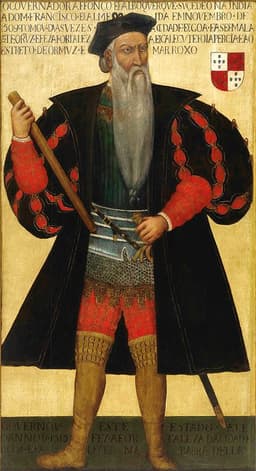
Afonso de Albuquerque
General · Medieval
79.6Total
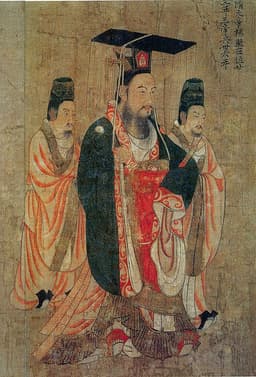
Emperor Wen of Sui
Emperor · Medieval
80.3Total
Basic Information
Born
1453
541
Died
1515
604
Era
Medieval
Medieval
Nationality
Portugal
China
Occupation
General
Emperor
Civilization
Western
Eastern
Score Comparison
Military (10%)
77.5
76.0
Political (20%)
88.0
75.0
Influence (20%)
80.0
88.0
Legacy (20%)
75.0
80.0
Leadership (15%)
78.0
80.0
Strategy (15%)
82.0
75.0
TOTAL
79.6
80.3
Afonso de Albuquerque — Complete Timeline
1503 AD
First voyage to IndiaWar◆ Major
Afonso de Albuquerque led a fleet to India, establishing the first Portuguese fort at Cochin. This voyage laid the foundation for Portuguese control of the Indian Ocean trade.
ExplorationColonialismIndia
Impact: global
1510 AD
Conquest of GoaWar◆ Major
Albuquerque captured Goa from the Sultan of Bijapur. He made Goa the capital of Portuguese India, a position it held for over 400 years.
ConquestColonialismIndia
Impact: regional
1511 AD
Conquest of MalaccaWar◆ Major
Albuquerque led a Portuguese fleet to capture the strategic port of Malacca. This gave Portugal control of the spice trade route between the Indian Ocean and the Pacific.
ConquestSpice TradeSoutheast Asia
Impact: global
1513 AD
Siege of AdenWar
Albuquerque attempted to capture Aden in Yemen but failed. This failure prevented Portugal from controlling the entrance to the Red Sea and limited their influence in the region.
SiegeFailureRed Sea
Impact: regional
1515 AD
Death at seaOther◆ Major
Afonso de Albuquerque died at sea off the coast of Goa, possibly from illness or poison. His death left the Portuguese Empire in the Indian Ocean without its most capable leader.
DeathLeadershipEmpire
Impact: regionaltragic
Emperor Wen of Sui — Complete Timeline
581 AD
Establishment of the Three Departments and Six Ministries SystemReform◆ Major
Emperor Wen established a centralized bureaucratic system with three departments (Secretariat, Chancellery, and Department of State Affairs) and six ministries. This system became the foundation of Chinese government administration for centuries.
Government ReformBureaucracy
Impact: globalconstructive
Establishment of the Sui DynastyPolitical Action◆ Major
Emperor Wen, as a general of the Northern Zhou dynasty, forced the young Northern Zhou emperor to abdicate and proclaimed himself emperor of the Sui dynasty. This marked the beginning of the Sui dynasty, which would go on to reunify China.
Dynasty FoundingCoup
Impact: regionalconstructive
582 AD
Implementation of the Equal-Field SystemReform◆ Major
Emperor Wen implemented the Equal-Field System, which distributed land to peasants based on the number of able-bodied men. This reform increased agricultural productivity, stabilized tax revenues, and reduced the power of large landowners.
Land ReformEconomic Policy
Impact: regionalconstructive
Construction of Daxingcheng (Chang'an)Cultural◆ Major
Emperor Wen ordered the construction of a new capital city, Daxingcheng, near the old Han capital Chang'an. This city, later known as Chang'an, became a model for urban planning and served as the capital of the Sui and Tang dynasties.
Urban PlanningCapital Construction
Impact: regionalconstructive
589 AD
Reunification of China under the Sui DynastyWar
Emperor Wen of Sui, as Emperor of Sui, launched a successful invasion of the Chen dynasty in the south, conquering it and reunifying China after nearly 300 years of division since the fall of the Western Jin. This ended the Northern and Southern Dynasties period.
UnificationConquest
Impact: globalconstructive
Expert Analysis
Origins
Emperor Wen of Sui (Yang Jian) was born into a powerful Northern Zhou aristocratic family in 541 AD. He rose through military and political ranks, marrying his daughter to the crown prince. In contrast, Afonso de Albuquerque (1453) was born to a noble Portuguese family with maritime traditions. He served in North Africa and India, gaining experience in naval warfare and administration. Both emerged from elite backgrounds, but Wen's path was shaped by Chinese court intrigue, while Albuquerque's by European expansionism.
Rise to Power
Wen skillfully maneuvered after the death of Emperor Xuan, seizing the throne in 581 AD. He defeated rival generals and suppressed revolts, then conquered the Chen dynasty in 589 AD, reunifying China. Albuquerque rose under King Manuel I, leading expeditions to India. He captured Goa in 1510 and Malacca in 1511, becoming Governor of Portuguese India. His rise was marked by aggressive naval campaigns and political maneuvering against rivals.
Leadership & Governance
Wen implemented the Equal-Field System (均田制) to redistribute land and the Three Departments and Six Ministries system, centralizing bureaucracy. He built Daxingcheng (later Chang'an), a model capital. His reforms reduced corruption and improved tax collection, laying groundwork for the Tang dynasty. Albuquerque established Portuguese forts, trade posts, and a policy of intermarriage with locals. He introduced cartaz (naval passes) to control trade, but his harsh methods sparked resistance. Both were effective administrators, but Wen's systemic reforms had longer-lasting impact.
Triumph & Tragedy
Wen's greatest triumph was reunifying China after 300 years of division. However, his later years saw paranoia and succession struggles; he died in 604 AD, possibly poisoned by his son Yang Guang. Albuquerque's triumphs included capturing Goa and Malacca, but his death at sea in 1515 came as he was recalled to Portugal due to political intrigue, feeling disgraced. Both faced tragic ends marred by court politics.
Character & Destiny
Wen was frugal, hardworking, and suspicious, often purging officials. He promoted Buddhism but also Legalist policies. Albuquerque was ambitious, ruthless, and devout, known for his strategic vision. Both were driven by a sense of destiny: Wen to unify China, Albuquerque to build a Portuguese empire. Their character flaws—Wen's jealousy, Albuquerque's arrogance—contributed to their downfalls.
Legacy
Wen's Sui dynasty was short-lived (581-618), but his reforms directly influenced the Tang, China's golden age. The Equal-Field System and civil service exams endured. Albuquerque established the Portuguese Estado da Índia, controlling Indian Ocean trade for a century. However, his empire declined due to overextension. Both left lasting impacts: Wen's legacy is foundational to Chinese imperial history; Albuquerque's to European colonialism.
Conclusion
Emperor Wen of Sui scores higher overall (7.7 vs 7.0) due to his profound institutional reforms and reunification of a major civilization. While Albuquerque was a brilliant naval strategist and empire-builder, his achievements were more regional and less enduring. Wen's creation of a unified Chinese state with enduring administrative systems gives him the edge. Score: Wen 8/10, Albuquerque 7/10.
Rankings
🥇
Emperor Wen of SuiLeader
Mil: 76.0Pol: 75.0Inf: 88.0
80.3
🥈
Afonso de Albuquerque
Mil: 77.5Pol: 88.0Inf: 80.0
79.6
+0.7 behind
How This Comparison Works
Algorithm
Each figure is scored on 6 dimensions (0—100 scale) based on structured historical data: Military (10%), Political (20%), Influence (20%), Legacy (20%), Leadership (15%), Strategy (15%). The weighted total produces the final ranking.
Data Sources
Scores are computed from structured sub-indicators in the database. Scale factors adjust for era (Ancient ×0.85, Modern ×1.0) and civilization size (Eastern ×1.05, Other ×0.80) to account for differences in population and military scale.
Maximum 3 Figures
Comparisons are limited to 2—3 figures to ensure readability and statistical meaningfulness.
Error Margins
±5 points per dimension — Sub-scores are derived from historical records with inherent uncertainty. Two figures within 5 points on a dimension should be considered roughly equivalent in that area.
Total Score Accuracy
±3 points overall — The weighted combination of 6 dimensions produces a total score with approximately ±3 points of uncertainty. Differences of less than 3 points are not statistically significant— the figures are effectively tied.
Known Limitations
- Historical records are incomplete and uneven across civilizations
- Figures from oral-tradition societies may be underrepresented
- Occupation labels can misclassify multi-role figures
- Scores measure capability and impact, not moral character
- Quantitative scoring is a comparison tool, not absolute truth
Capability Radar
Military (10%) — Battles & Warfare
Battles
85
75
Win Rate
80
80
Expansion
95
85
Political (20%) — Governance & Reform
Reform
80
95
Diplomacy
85
85
Economy
80
90
Influence (20%) — Cultural & Global Reach
Cultural
70
70
Global
85
65
Legacy (20%) — Historical Impact
Historical
85
85
Longevity
80
70
Leadership (15%) — Power & Stability
Tenure
70
80
Stability
65
75
Strategy (15%) — Tactics & Innovation
Strategy
95
85
Tactics
90
70
Reform
75
90
Similar Comparisons
Comments & Discussion
No comments yet. Be the first to share your thoughts!