Loading...
Afonso de Albuquerque vs Cyrus the Great
Cyrus the Great leads by 4.3 pts · 2 figures compared
…
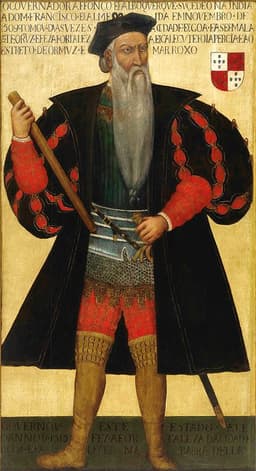
Afonso de Albuquerque
General · Medieval
79.6Total
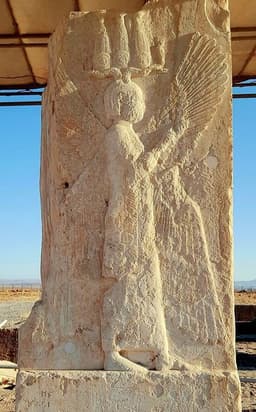
Cyrus the Great
Emperor · Ancient
83.9Total
Basic Information
Born
1453
-600
Died
1515
-530
Era
Medieval
Ancient
Nationality
Portugal
Persia
Occupation
General
Emperor
Civilization
Western
Middle Eastern
Score Comparison
Military (10%)
77.5
82.0
Political (20%)
88.0
85.0
Influence (20%)
80.0
85.0
Legacy (20%)
75.0
90.0
Leadership (15%)
78.0
78.0
Strategy (15%)
82.0
75.0
TOTAL
79.6
83.9
Afonso de Albuquerque — Complete Timeline
1503 AD
First voyage to IndiaWar◆ Major
Afonso de Albuquerque led a fleet to India, establishing the first Portuguese fort at Cochin. This voyage laid the foundation for Portuguese control of the Indian Ocean trade.
ExplorationColonialismIndia
Impact: global
1510 AD
Conquest of GoaWar◆ Major
Albuquerque captured Goa from the Sultan of Bijapur. He made Goa the capital of Portuguese India, a position it held for over 400 years.
ConquestColonialismIndia
Impact: regional
1511 AD
Conquest of MalaccaWar◆ Major
Albuquerque led a Portuguese fleet to capture the strategic port of Malacca. This gave Portugal control of the spice trade route between the Indian Ocean and the Pacific.
ConquestSpice TradeSoutheast Asia
Impact: global
1513 AD
Siege of AdenWar
Albuquerque attempted to capture Aden in Yemen but failed. This failure prevented Portugal from controlling the entrance to the Red Sea and limited their influence in the region.
SiegeFailureRed Sea
Impact: regional
1515 AD
Death at seaOther◆ Major
Afonso de Albuquerque died at sea off the coast of Goa, possibly from illness or poison. His death left the Portuguese Empire in the Indian Ocean without its most capable leader.
DeathLeadershipEmpire
Impact: regionaltragic
Cyrus the Great — Complete Timeline
550 BC
Founding of the Achaemenid EmpirePolitical Action
Cyrus led a rebellion against the Median Empire, defeating King Astyages and capturing Ecbatana. He then united the Persian and Median tribes, establishing the Achaemenid Empire, which became the largest empire the world had yet seen.
Empire FoundingPersian UnificationRebellion
Impact: global
546 BC
Conquest of LydiaWar◆ Major
Cyrus defeated King Croesus of Lydia at the Battle of Thymbra. The Lydian capital Sardis was captured, and Croesus was taken prisoner. This conquest brought Anatolia under Persian control and secured access to the Aegean coast.
Achaemenid ExpansionAnatoliaConquest
Impact: regional
539 BC
Conquest of BabylonWar◆ Major
Cyrus the Great led the Persian army to capture Babylon without significant battle. The city's gates were opened, and Cyrus entered peacefully. This conquest added Mesopotamia to the Achaemenid Empire and marked the end of the Neo-Babylonian Empire.
Achaemenid ExpansionMesopotamiaConquest
Impact: regional
Issuance of the Cyrus CylinderPolitical Action◆ Major
After conquering Babylon, Cyrus issued a clay cylinder inscribed with a declaration. It described his policy of restoring temples, repatriating displaced peoples, and allowing religious freedom. The cylinder is often cited as an early charter of human rights.
Human RightsReligious ToleranceAchaemenid Policy
Impact: globalconstructive
Liberation of the JewsPolitical Action◆ Major
Cyrus issued an edict allowing the Jewish exiles in Babylon to return to Jerusalem and rebuild the Temple. This event is recorded in the biblical Book of Ezra and is a key moment in Jewish history, ending the Babylonian captivity.
Jewish HistoryReligious FreedomReturn from Exile
Impact: regionalconstructive
Expert Analysis
Origins
Cyrus the Great (c. 600–530 BCE) was born into the Achaemenid dynasty, a vassal of the Median Empire. He united the Persian tribes and led a rebellion against the Medes, overthrowing Astyages in 550 BCE. His lineage and early military prowess set the stage for an empire that would stretch from the Indus to the Mediterranean. In contrast, Afonso de Albuquerque (1453–1515) was born into Portuguese nobility, the son of a lord. He served in North Africa before being appointed to command Portuguese expeditions to India. While Cyrus emerged from a regional power struggle, Albuquerque was a product of Portugal's Age of Discovery, driven by trade and crusading zeal.
Rise to Power
Cyrus's rise was meteoric: after defeating the Medes, he conquered Lydia (547 BCE) and Babylon (539 BCE), absorbing their vast territories. His diplomatic acumen allowed him to integrate conquered elites, as seen in his respectful treatment of Croesus and the Babylonian gods. Albuquerque's rise was more gradual: he first traveled to India in 1503, then became governor of Portuguese India in 1509. His conquest of Goa (1510) and Malacca (1511) established Portuguese dominance in the Indian Ocean. Both men built empires through military brilliance, but Cyrus's conquests were larger and more enduring.
Leadership & Governance
Cyrus is famed for his enlightened rule: he issued the Cyrus Cylinder, often cited as an early human rights charter, allowed the Jews to return to Jerusalem, and respected local customs. His administrative system of satrapies and the Royal Road facilitated control of a multicultural empire. Albuquerque, by contrast, ruled through force and strategic fortifications. He implemented the "cartaz" system to control trade, married Portuguese men to local women to create a loyal population, and brutally suppressed resistance. While effective, his methods were less inclusive. Score: Cyrus 90, Albuquerque 75.
Triumph & Tragedy
Cyrus's greatest triumph was the conquest of Babylon, which he entered without a fight, presenting himself as a liberator. His tragedy was his death in battle (530 BCE) against the Massagetae, his body recovered and buried at Pasargadae. Albuquerque's triumphs include the capture of Goa (1510) and Malacca (1511), which became linchpins of Portuguese power. His tragedy was falling out of favor with King Manuel I; he died at sea in 1515, bitter and possibly poisoned, hearing rumors of his dismissal. Both ended their lives in conflict, but Cyrus's death was heroic, Albuquerque's ignominious.
Character & Destiny
Cyrus was described as a wise, magnanimous ruler, admired by Greeks and Persians alike. His destiny was to found an empire that would last over 200 years. Albuquerque was a determined, ruthless strategist, driven by a vision of a Portuguese Asian empire. His destiny was to lay its foundations, but his harsh methods and political enemies limited his legacy. Cyrus's character was more universally respected; Albuquerque's was feared. Scores: Cyrus 85, Albuquerque 80.
Legacy
Cyrus's legacy is immense: the Achaemenid Empire set the template for later empires, and his human rights ideals resonate today. The Cyrus Cylinder is a UNESCO symbol of tolerance. Albuquerque's legacy is more mixed: he established Portuguese control in Asia, but his empire declined after his death. He is celebrated in Portugal but criticized for brutality. Cyrus's influence spans millennia; Albuquerque's is confined to the Age of Discovery. Scores: Cyrus 90, Albuquerque 70.
Conclusion
Cyrus the Great surpasses Afonso de Albuquerque in nearly every dimension: military achievement (85 vs 78), leadership (90 vs 75), legacy (90 vs 70), and overall impact. While Albuquerque was a brilliant naval commander and empire-builder, his methods were less humane and his empire less durable. Cyrus's ability to unite diverse peoples under a tolerant administration set a standard that Albuquerque's coercive rule could not match. The score gap of 4.3 points reflects Cyrus's greater historical significance. Final verdict: Cyrus the Great stands as a superior figure in world history.
Rankings
🥇
Cyrus the GreatLeader
Mil: 82.0Pol: 85.0Inf: 85.0
83.9
🥈
Afonso de Albuquerque
Mil: 77.5Pol: 88.0Inf: 80.0
79.6
+4.3 behind
How This Comparison Works
Algorithm
Each figure is scored on 6 dimensions (0—100 scale) based on structured historical data: Military (10%), Political (20%), Influence (20%), Legacy (20%), Leadership (15%), Strategy (15%). The weighted total produces the final ranking.
Data Sources
Scores are computed from structured sub-indicators in the database. Scale factors adjust for era (Ancient ×0.85, Modern ×1.0) and civilization size (Eastern ×1.05, Other ×0.80) to account for differences in population and military scale.
Maximum 3 Figures
Comparisons are limited to 2—3 figures to ensure readability and statistical meaningfulness.
Error Margins
±5 points per dimension — Sub-scores are derived from historical records with inherent uncertainty. Two figures within 5 points on a dimension should be considered roughly equivalent in that area.
Total Score Accuracy
±3 points overall — The weighted combination of 6 dimensions produces a total score with approximately ±3 points of uncertainty. Differences of less than 3 points are not statistically significant— the figures are effectively tied.
Known Limitations
- Historical records are incomplete and uneven across civilizations
- Figures from oral-tradition societies may be underrepresented
- Occupation labels can misclassify multi-role figures
- Scores measure capability and impact, not moral character
- Quantitative scoring is a comparison tool, not absolute truth
Capability Radar
Military (10%) — Battles & Warfare
Battles
85
85
Win Rate
80
90
Expansion
95
92
Political (20%) — Governance & Reform
Reform
80
90
Diplomacy
85
95
Economy
80
80
Influence (20%) — Cultural & Global Reach
Cultural
70
90
Global
85
90
Legacy (20%) — Historical Impact
Historical
85
95
Longevity
80
95
Leadership (15%) — Power & Stability
Tenure
70
70
Stability
65
85
Strategy (15%) — Tactics & Innovation
Strategy
95
88
Tactics
90
80
Reform
75
75
Similar Comparisons
Comments & Discussion
No comments yet. Be the first to share your thoughts!