Loading...
Afonso de Albuquerque vs Cao Cao
Afonso de Albuquerque leads by 2.1 pts · 2 figures compared
…
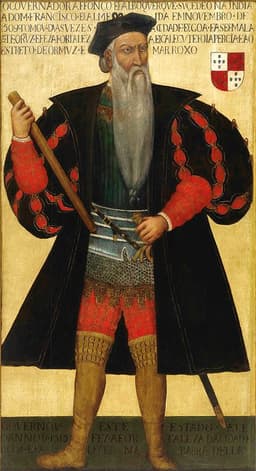
Afonso de Albuquerque
General · Medieval
79.6Total
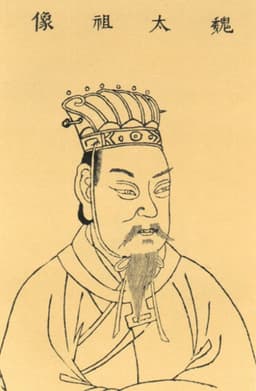
Cao Cao
General · Ancient
77.5Total
Basic Information
Born
1453
155
Died
1515
220
Era
Medieval
Ancient
Nationality
Portugal
China
Occupation
General
General
Civilization
Western
Eastern
Score Comparison
Military (10%)
77.5
88.0
Political (20%)
88.0
59.0
Influence (20%)
80.0
82.0
Legacy (20%)
75.0
83.0
Leadership (15%)
78.0
64.4
Strategy (15%)
82.0
89.4
TOTAL
79.6
77.5
Afonso de Albuquerque — Complete Timeline
1503 AD
First voyage to IndiaWar◆ Major
Afonso de Albuquerque led a fleet to India, establishing the first Portuguese fort at Cochin. This voyage laid the foundation for Portuguese control of the Indian Ocean trade.
ExplorationColonialismIndia
Impact: global
1510 AD
Conquest of GoaWar◆ Major
Albuquerque captured Goa from the Sultan of Bijapur. He made Goa the capital of Portuguese India, a position it held for over 400 years.
ConquestColonialismIndia
Impact: regional
1511 AD
Conquest of MalaccaWar◆ Major
Albuquerque led a Portuguese fleet to capture the strategic port of Malacca. This gave Portugal control of the spice trade route between the Indian Ocean and the Pacific.
ConquestSpice TradeSoutheast Asia
Impact: global
1513 AD
Siege of AdenWar
Albuquerque attempted to capture Aden in Yemen but failed. This failure prevented Portugal from controlling the entrance to the Red Sea and limited their influence in the region.
SiegeFailureRed Sea
Impact: regional
1515 AD
Death at seaOther◆ Major
Afonso de Albuquerque died at sea off the coast of Goa, possibly from illness or poison. His death left the Portuguese Empire in the Indian Ocean without its most capable leader.
DeathLeadershipEmpire
Impact: regionaltragic
Cao Cao — Complete Timeline
190 AD
Formation of the Coalition against Dong ZhuoPolitical Action
Cao Cao joined a coalition of regional warlords led by Yuan Shao to overthrow the tyrannical chancellor Dong Zhuo, who had seized control of the Han court. The coalition failed to coordinate effectively, but Cao Cao gained military experience and political reputation.
CoalitionDong ZhuoHan Dynasty
Impact: national
196 AD
Implementation of Tuntian (Agricultural Colonies)Reform◆ Major
Cao Cao established military agricultural colonies (tuntian) to provide food for his army and refugees. Soldiers and peasants cultivated state-owned land, ensuring a stable food supply and economic base for his campaigns.
AgricultureEconomyMilitary
Impact: regionalconstructive
200 AD
Battle of GuanduWar
Cao Cao decisively defeated Yuan Shao's numerically superior army at Guandu. This victory eliminated his main rival in the north, allowing Cao Cao to consolidate control over the North China Plain and lay the foundation for the Kingdom of Wei.
BattleYuan ShaoUnification
Impact: regional
208 AD
Battle of Red CliffsWar
Cao Cao's southern campaign was halted by the allied forces of Sun Quan and Liu Bei at the Battle of Red Cliffs. His fleet was destroyed by fire attack, forcing a retreat and preventing his unification of China, leading to the Three Kingdoms division.
BattleDefeatThree Kingdoms
Impact: regional
213 AD
Establishment of the Kingdom of WeiPolitical Action◆ Major
Cao Cao was granted the title of Duke of Wei and later King of Wei by the Han emperor, effectively creating a semi-autonomous state within the empire. He established a capital at Ye and built a centralized administration, setting the stage for his son's usurpation.
WeiStatehoodHan Dynasty
Impact: national
Expert Analysis
Origins
Afonso de Albuquerque (1453–1515) was a Portuguese nobleman who became the architect of the Portuguese Empire in the East. Born near Lisbon, he served as a courtier under King John II and later as a naval commander under King Manuel I. His early career included service in North Africa, where he gained military experience. In 1503, he made his first voyage to India, setting the stage for his later conquests.
Cao Cao (155–220 CE) was born into a powerful family during the crumbling Eastern Han dynasty. He rose through the ranks as a military officer, suppressing rebellions and gaining a reputation for cunning and ruthlessness. His early career was marked by the formation of a coalition against the warlord Dong Zhuo, which established him as a key player in the chaotic Three Kingdoms period.
Rise to Power
Albuquerque rose to power through his appointment as Governor of Portuguese India in 1509. He implemented a strategy of capturing key coastal cities to control trade routes. His first major success was the conquest of Goa in 1510, which became the capital of Portuguese India. He followed this with the capture of Malacca in 1511, a vital hub for the spice trade. These victories cemented his reputation as a brilliant naval commander and strategist.
Cao Cao's rise was more complex. He initially served under the Han dynasty, but after the death of Emperor Ling, he seized control of the emperor and used his authority to expand his territory. His decisive victory at the Battle of Guandu in 200 CE against rival Yuan Shao gave him control of northern China. He then implemented the Tuntian system, military agricultural colonies that ensured a stable food supply for his army, strengthening his power base.
Leadership & Governance
Albuquerque was a visionary leader who understood the importance of naval power and trade. He established a network of fortified ports, enforced Portuguese monopoly on spice trade, and promoted intermarriage with local women to create a loyal population. His governance was pragmatic, but his harsh methods—like executing prisoners and destroying rival fleets—created enemies.
Cao Cao was both a military genius and an effective administrator. He centralized government, promoted agriculture, and attracted talented advisors. He was known for his humility in seeking counsel and his ability to inspire loyalty. However, his ruthlessness, such as massacring civilians and executing rivals, earned him a reputation as a tyrant. His leadership style blended Confucian ethics with Legalist pragmatism.
Triumph & Tragedy
Albuquerque's greatest triumph was the capture of Malacca, which gave Portugal control of the East Indies trade. He also led expeditions to the Red Sea, attempting to capture Aden in 1513, though the siege failed. His tragedy came in 1515 when he was recalled to Portugal due to court intrigues. He died at sea, possibly poisoned, bitter and believing his work was undone.
Cao Cao's greatest triumph was the Battle of Guandu, which unified northern China. He also established the Kingdom of Wei, laying the foundation for his son's later claim to the imperial throne. His tragedy was the Battle of Red Cliffs in 208 CE, where his massive fleet was defeated by an alliance of Sun Quan and Liu Bei, preventing him from conquering southern China. This defeat marked the end of his expansion.
Character & Destiny
Albuquerque was driven by a sense of mission to spread Christianity and Portuguese influence. He was brave, strategic, and often merciful to surrendered enemies, but also ruthless when necessary. His destiny was to create an empire that outlasted him, though he died in disgrace.
Cao Cao was a complex figure: a brilliant poet, strategist, and administrator, but also a manipulative and ambitious warlord. He famously said, "Better to betray the world than have the world betray me." His destiny was to unify the north, but his ambition to conquer all of China was thwarted by his defeat at Red Cliffs.
Legacy
Albuquerque's legacy is the Portuguese Empire in Asia, which lasted for centuries. He is celebrated in Portugal as a national hero and is considered one of the greatest naval commanders in history. His strategies influenced later colonial powers.
Cao Cao's legacy is more controversial. He is remembered as a cunning and capable ruler in Chinese history, though often villainized in literature like *Romance of the Three Kingdoms*. His administrative reforms and military strategies had a lasting impact on Chinese governance.
Conclusion
Afonso de Albuquerque and Cao Cao were both brilliant strategists who expanded their empires through conquest and governance. Albuquerque's naval tactics and establishment of trade networks were more innovative in a global context, while Cao Cao's unification of northern China was a monumental achievement. However, Albuquerque's legacy as the founder of a vast overseas empire and his ability to project power across oceans gives him a slight edge. Scores: Albuquerque (78,88,80,75,78,82,80) vs Cao Cao (88,59,82,83,64,89,78). The score gap of 2.1 reflects Albuquerque's higher overall impact on world history. Final verdict: Afonso de Albuquerque.
Rankings
🥇
Afonso de AlbuquerqueLeader
Mil: 77.5Pol: 88.0Inf: 80.0
79.6
🥈
Cao Cao
Mil: 88.0Pol: 59.0Inf: 82.0
77.5
+2.1 behind
How This Comparison Works
Algorithm
Each figure is scored on 6 dimensions (0—100 scale) based on structured historical data: Military (10%), Political (20%), Influence (20%), Legacy (20%), Leadership (15%), Strategy (15%). The weighted total produces the final ranking.
Data Sources
Scores are computed from structured sub-indicators in the database. Scale factors adjust for era (Ancient ×0.85, Modern ×1.0) and civilization size (Eastern ×1.05, Other ×0.80) to account for differences in population and military scale.
Maximum 3 Figures
Comparisons are limited to 2—3 figures to ensure readability and statistical meaningfulness.
Error Margins
±5 points per dimension — Sub-scores are derived from historical records with inherent uncertainty. Two figures within 5 points on a dimension should be considered roughly equivalent in that area.
Total Score Accuracy
±3 points overall — The weighted combination of 6 dimensions produces a total score with approximately ±3 points of uncertainty. Differences of less than 3 points are not statistically significant— the figures are effectively tied.
Known Limitations
- Historical records are incomplete and uneven across civilizations
- Figures from oral-tradition societies may be underrepresented
- Occupation labels can misclassify multi-role figures
- Scores measure capability and impact, not moral character
- Quantitative scoring is a comparison tool, not absolute truth
Capability Radar
Military (10%) — Battles & Warfare
Battles
85
95
Win Rate
80
88
Expansion
95
92
Political (20%) — Governance & Reform
Reform
80
88
Diplomacy
85
82
Economy
80
86
Influence (20%) — Cultural & Global Reach
Cultural
70
85
Global
85
75
Legacy (20%) — Historical Impact
Historical
85
92
Longevity
80
90
Leadership (15%) — Power & Stability
Tenure
70
85
Stability
65
78
Strategy (15%) — Tactics & Innovation
Strategy
95
96
Tactics
90
97
Reform
75
90
Similar Comparisons
Comments & Discussion
No comments yet. Be the first to share your thoughts!