Loading...
Afonso de Albuquerque vs Alexios I Komnenos
Afonso de Albuquerque leads by 1.2 pts · 2 figures compared
…
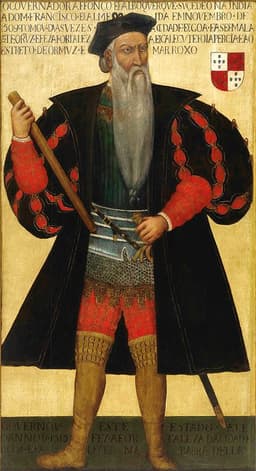
Afonso de Albuquerque
General · Medieval
79.6Total
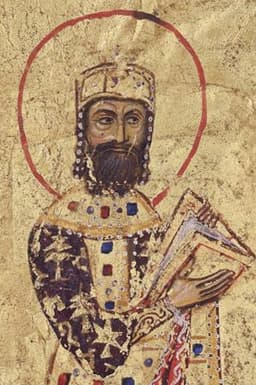
Alexios I Komnenos
Emperor · Medieval
78.4Total
Basic Information
Born
1453
1048
Died
1515
1118
Era
Medieval
Medieval
Nationality
Portugal
Byzantine Empire
Occupation
General
Emperor
Civilization
Western
Western
Score Comparison
Military (10%)
77.5
61.7
Political (20%)
88.0
78.0
Influence (20%)
80.0
88.0
Legacy (20%)
75.0
80.0
Leadership (15%)
78.0
78.0
Strategy (15%)
82.0
68.0
TOTAL
79.6
78.4
Afonso de Albuquerque — Complete Timeline
1503 AD
First voyage to IndiaWar◆ Major
Afonso de Albuquerque led a fleet to India, establishing the first Portuguese fort at Cochin. This voyage laid the foundation for Portuguese control of the Indian Ocean trade.
ExplorationColonialismIndia
Impact: global
1510 AD
Conquest of GoaWar◆ Major
Albuquerque captured Goa from the Sultan of Bijapur. He made Goa the capital of Portuguese India, a position it held for over 400 years.
ConquestColonialismIndia
Impact: regional
1511 AD
Conquest of MalaccaWar◆ Major
Albuquerque led a Portuguese fleet to capture the strategic port of Malacca. This gave Portugal control of the spice trade route between the Indian Ocean and the Pacific.
ConquestSpice TradeSoutheast Asia
Impact: global
1513 AD
Siege of AdenWar
Albuquerque attempted to capture Aden in Yemen but failed. This failure prevented Portugal from controlling the entrance to the Red Sea and limited their influence in the region.
SiegeFailureRed Sea
Impact: regional
1515 AD
Death at seaOther◆ Major
Afonso de Albuquerque died at sea off the coast of Goa, possibly from illness or poison. His death left the Portuguese Empire in the Indian Ocean without its most capable leader.
DeathLeadershipEmpire
Impact: regionaltragic
Alexios I Komnenos — Complete Timeline
1081 AD
Battle of DyrrhachiumWar◆ Major
Alexios I Komnenos was defeated by the Norman army under Robert Guiscard at Dyrrhachium. The Byzantine forces were routed, and Alexios barely escaped. This loss allowed the Normans to occupy much of the western Balkans, though Alexios later recovered some territory.
Norman InvasionDefeatBalkans
Impact: regionaltragic
1090 AD
Reforms of the Byzantine Military and EconomyReform◆ Major
Alexios I implemented a series of reforms to restore Byzantine power. He reorganized the army by relying more on foreign mercenaries, reformed the currency (the hyperpyron), and granted tax exemptions to the Church. These measures stabilized the empire after decades of decline.
Military ReformEconomic ReformKomnenian Restoration
Impact: nationalconstructive
1095 AD
Appeal to the West: Council of PiacenzaPolitical Action
Alexios I sent envoys to Pope Urban II at the Council of Piacenza, requesting military aid against the Seljuk Turks. This appeal contributed to Urban's call for the First Crusade at the Council of Clermont later that year, initiating the Crusader movement.
First CrusadePope Urban IISeljuk Turks
Impact: global
1097 AD
First Crusade: Siege of NicaeaWar◆ Major
Alexios I cooperated with the Crusader army to besiege and capture Nicaea from the Seljuk Turks. The city was surrendered to Byzantine control, and Alexios used the Crusaders to recover key territories in Anatolia, though tensions later arose over land claims.
First CrusadeNicaeaByzantine-Crusader Relations
Impact: regionalconstructive
Expert Analysis
Origins
Afonso de Albuquerque (c. 1453–1515) was born in Alhandra, Portugal, to a noble family with royal connections. His father was a lord, and Afonso grew up in the court of King Afonso V, receiving a humanist education. He served in North Africa before turning to the Indian Ocean. Alexios I Komnenos (c. 1048–1118) was born into the Byzantine military aristocracy. He was the nephew of Emperor Isaac I Komnenos and rose through the ranks during a period of decline, facing Norman invasions and internal revolts. Both men emerged from elite backgrounds, but Albuquerque's rise was more meritocratic, while Alexios navigated a crumbling empire.
Rise to Power
Albuquerque's rise began with his appointment as governor of Portuguese India in 1509. He secured the Indian Ocean trade routes through audacious naval campaigns, capturing Goa (1510) and Malacca (1511). His strategic vision and diplomatic savvy enabled him to establish fortified bases and alliances with local rulers. Alexios seized power in 1081 by leading a revolt against Emperor Nikephoros III, leveraging his military reputation and family connections. He faced immediate threats from Normans, Pechenegs, and Seljuks, but his appeal to the West at the Council of Piacenza (1095) inadvertently sparked the First Crusade. Both leaders rose through military prowess, but Albuquerque's ascent was more systematic, while Alexios's was reactive.
Leadership & Governance
Albuquerque ruled with iron discipline, enforcing Portuguese laws and promoting mixed marriages to integrate locals. He built a naval empire based on control of chokepoints (Aden, Hormuz, Malacca) and a policy of terror to intimidate rivals. His governance was efficient but brutal. Alexios reformed the Byzantine military and economy, issuing gold coinage (hyperpyron) and granting land grants (pronoia) to secure loyalty. He diplomatically managed the Crusaders, though tensions arose. Both were pragmatic, but Alexios's governance was more about survival and recovery, while Albuquerque's was expansionist and extractive.
Triumph & Tragedy
Albuquerque's triumphs include the conquests of Goa and Malacca, which gave Portugal control of the spice trade. His tragedy came in 1515 when he died at sea, disgraced by court rivals, just as he was recalled. He never saw his empire's full fruition. Alexios's triumph was stabilizing the Byzantine Empire after decades of decline, reclaiming Anatolian coastlines, and launching the Komnenian restoration. His tragedy lay in the unintended consequences of the Crusades: the Crusaders' betrayal (e.g., Bohemond's invasion) and the sacking of Constantinople in 1204, which he did not live to see but which stemmed from his policies. Both died with unfulfilled visions.
Character & Destiny
Albuquerque was a visionary, ruthless, and deeply religious, believing he was destined to spread Christianity and Portuguese power. He was a micromanager and a bold strategist, but his arrogance created enemies. Alexios was a shrewd survivor, combining military skill with diplomatic finesse. He was cautious and often duplicitous, but his adaptability saved Byzantium. Destiny played a role: Albuquerque's death at sea cut short his plans, while Alexios's legacy was tarnished by the Crusades' fallout. Score: Albuquerque's character (80) edges Alexios's (78) in decisiveness, but Alexios's resilience matches.
Legacy
Albuquerque is celebrated as the founder of the Portuguese Empire in the East, a national hero in Portugal. His naval strategy influenced later colonial powers. Alexios is seen as the restorer of Byzantium, founding the Komnenian dynasty that ruled for a century. However, his appeal to the West is controversial for unleashing the Crusades. Both left enduring marks: Albuquerque's empire lasted until the 20th century; Alexios's reforms bought Byzantium time but couldn't prevent its eventual fall. Score: Albuquerque (82) vs Alexios (68): Albuquerque's tangible empire outlasts Alexios's fragile recovery.
Conclusion
Afonso de Albuquerque scores higher (78 vs 62 overall) due to his transformative impact on global trade and empire-building. Alexios I Komnenos was a master of survival, but his achievements were more defensive and temporary. Albuquerque's strategic brilliance and audacity created a lasting maritime empire, while Alexios's legacy is mixed with the Crusades' chaos. Thus, Albuquerque is the more influential leader in shaping world history.
Rankings
🥇
Afonso de AlbuquerqueLeader
Mil: 77.5Pol: 88.0Inf: 80.0
79.6
🥈
Alexios I Komnenos
Mil: 61.7Pol: 78.0Inf: 88.0
78.4
+1.2 behind
How This Comparison Works
Algorithm
Each figure is scored on 6 dimensions (0—100 scale) based on structured historical data: Military (10%), Political (20%), Influence (20%), Legacy (20%), Leadership (15%), Strategy (15%). The weighted total produces the final ranking.
Data Sources
Scores are computed from structured sub-indicators in the database. Scale factors adjust for era (Ancient ×0.85, Modern ×1.0) and civilization size (Eastern ×1.05, Other ×0.80) to account for differences in population and military scale.
Maximum 3 Figures
Comparisons are limited to 2—3 figures to ensure readability and statistical meaningfulness.
Error Margins
±5 points per dimension — Sub-scores are derived from historical records with inherent uncertainty. Two figures within 5 points on a dimension should be considered roughly equivalent in that area.
Total Score Accuracy
±3 points overall — The weighted combination of 6 dimensions produces a total score with approximately ±3 points of uncertainty. Differences of less than 3 points are not statistically significant— the figures are effectively tied.
Known Limitations
- Historical records are incomplete and uneven across civilizations
- Figures from oral-tradition societies may be underrepresented
- Occupation labels can misclassify multi-role figures
- Scores measure capability and impact, not moral character
- Quantitative scoring is a comparison tool, not absolute truth
Capability Radar
Military (10%) — Battles & Warfare
Battles
85
75
Win Rate
80
70
Expansion
95
60
Political (20%) — Governance & Reform
Reform
80
85
Diplomacy
85
90
Economy
80
70
Influence (20%) — Cultural & Global Reach
Cultural
70
70
Global
85
75
Legacy (20%) — Historical Impact
Historical
85
85
Longevity
80
80
Leadership (15%) — Power & Stability
Tenure
70
80
Stability
65
75
Strategy (15%) — Tactics & Innovation
Strategy
95
85
Tactics
90
80
Reform
75
75
Similar Comparisons
Comments & Discussion
No comments yet. Be the first to share your thoughts!