Loading...
Abu Jafar al-Mansur vs Yuwen Yong
Yuwen Yong leads by 1.7 pts · 2 figures compared
…
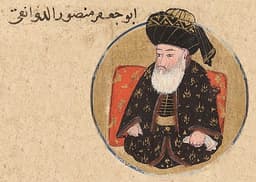
Abu Jafar al-Mansur
Emperor · Medieval
65.5Total
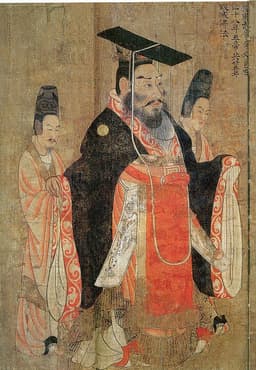
Yuwen Yong
Emperor · Medieval
67.2Total
Basic Information
Born
714
543
Died
775
578
Era
Medieval
Medieval
Nationality
Abbasid Caliphate
China
Occupation
Emperor
Emperor
Civilization
Middle Eastern
Eastern
Score Comparison
Military (10%)
65.0
78.0
Political (20%)
75.0
78.0
Influence (20%)
40.0
58.0
Legacy (20%)
80.0
54.0
Leadership (15%)
82.0
85.0
Strategy (15%)
55.0
69.1
TOTAL
65.5
67.2
Abu Jafar al-Mansur — Complete Timeline
754 AD
Consolidated Abbasid Power After the RevolutionPolitical Action◆ Major
Al-Mansur eliminated rivals including his uncle Abd Allah ibn Ali and the Barmakids, securing Abbasid control. He established a centralized bureaucracy and suppressed rebellions, including the Rawandiyya uprising.
Impact: global
762 AD
Founded the City of BaghdadPolitical Action
Abu Jafar al-Mansur founded the city of Baghdad as the new capital of the Abbasid Caliphate. The Round City was designed as a center of administration and culture, becoming one of the largest cities in the world.
Impact: globalconstructive
770 AD
Patronized Translation of Greek WorksCultural◆ Major
Al-Mansur supported the translation of Greek philosophical and scientific texts into Arabic. This initiative laid the foundation for the Abbasid translation movement, which preserved and expanded classical knowledge.
Impact: globalconstructive
Yuwen Yong — Complete Timeline
574 AD
Suppression of Buddhism in Northern ZhouReform◆ Major
Emperor Wu of Northern Zhou (Yuwen Yong) ordered the suppression of Buddhism, confiscating monastic lands, forcing monks and nuns to return to lay life, and destroying temples. He aimed to increase state revenue and military manpower, strengthening the state.
Northern ZhouBuddhist PersecutionReform
Impact: nationaldestructive
577 AD
Conquest of Northern QiWar
Emperor Wu led a successful campaign against the rival Northern Qi dynasty, conquering its territory and unifying northern China under Northern Zhou. This victory ended the division of the north and set the stage for the Sui dynasty's unification of all China.
Northern ZhouUnificationNorthern Qi
Impact: regionalconstructive
578 AD
Death during campaign against the TurksWar◆ Major
Emperor Wu died of illness while leading a campaign against the G
Northern ZhouMilitary CampaignDeath
Impact: regionaltragic
Expert Analysis
Yuwen Yong vs Abu Jafar al-Mansur
### The Builder and the Bane
In the summer of 574, the Emperor Wu of Northern Zhou—Yuwen Yong—issued a decree that shook the foundations of his realm. Buddhist monasteries, which had amassed vast lands and wealth, were ordered dissolved; monks were defrocked and forced back into the fields. Three hundred miles to the west, in the same decade, another ruler was laying bricks. Abu Jafar al-Mansur, the second Abbasid caliph, was not tearing down temples but raising a city—Baghdad, the Round City, a planned capital designed as a perfect circle to symbolize cosmic order. One ruler destroyed; the other created. Both sought to consolidate power, but their paths diverged like the Tigris and the Yellow River. What drove one to suppress faith and the other to patronize learning? The answer lies in the soil of their ambitions, the weight of their threats, and the ghosts of their pasts.
### Origins
Yuwen Yong was born in 543 into a world of fractured empires. Northern China was a patchwork of warring dynasties—the Northern Zhou and Northern Qi locked in a brutal contest for supremacy. His family, the Yuwen clan, were Xianbei warriors who had seized power after the collapse of the Western Wei. Yong grew up in a military camp, learning the arts of war before he could write. The Buddhism he would later suppress had arrived in China centuries earlier, but by his time, monasteries owned vast tracts of land, exempt from taxes, and housed tens of thousands of monks who paid no military service. To a ruler desperate for manpower and revenue, the sangha was a parasite on the state.
Abu Jafar al-Mansur, born in 714, came from a different kind of chaos. The Umayyad Caliphate had just fallen, overthrown by the Abbasid Revolution—a movement that promised justice to Persian converts and Arab tribes alike. Mansur’s older brother, as-Saffah, was the first Abbasid caliph, but Mansur was the true architect of the dynasty. He grew up in the shadow of the Prophet’s family, watching the Umayyads fall to their own excess. His world was one of theological schism, not tribal warfare—Shia and Sunni, Arab and Persian, all jostling for a voice in the new order. Where Yuwen Yong saw a rival in every monk, Mansur saw a potential ally in every scholar.
### Rise to Power
Yuwen Yong’s ascent was a soldier’s climb. He became emperor in 560, but real power lay with his cousin Yuwen Hu, a regent who had murdered two previous emperors. For twelve years, Yong played the puppet—smiling at banquets, deferring in councils—while Hu ran the state. In 572, Yong struck. He ambushed Hu during a court audience, bludgeoning him to death with a jade scepter. The coup was swift, brutal, and personal. Yong then purged Hu’s faction and took personal command of the army. His rise was a knife in the dark.
Mansur’s path was more methodical. When his brother died in 754, Mansur faced a rebellion from his own uncle, Abd Allah ibn Ali, who claimed the caliphate. Mansur crushed him in battle, then turned on the Barmakids—a powerful Persian family who had helped the Abbasids rise. He did not kill them all at once; he courted them, then slowly marginalized them. By 762, he was secure enough to build Baghdad. His rise was a chess game, not a brawl.
### Leadership & Governance
Yuwen Yong ruled as a warrior-emperor. In 577, he led a campaign against Northern Qi that was a masterpiece of logistics and deception. He feigned weakness, then struck with overwhelming force, conquering the rival dynasty in a single year. His military score of 74.6 reflects a competent commander, not a genius, but his strategy score of 81.8 suggests a sharp mind for timing. After unification, he imposed a harsh austerity: he reduced court expenses, banned luxury, and—most famously—suppressed Buddhism in 574. He confiscated monastic lands, forced monks into labor or military service, and melted down statues for coin. His reasoning was simple: the state needed men and money. He did not hate Buddhism; he hated its cost.
Mansur’s governance was the opposite: he built institutions. In 762, he founded Baghdad on the Tigris, a city designed for administration, not war. The Round City housed the caliph’s palace, the treasury, and the archives. Mansur also patronized the translation of Greek works into Arabic, beginning in 770. He invited scholars from Persia, India, and Byzantium to his court. Where Yuwen Yong saw monks as rivals, Mansur saw translators as assets. His political score of 67.9 is modest, but his influence score of 75.0 reflects a legacy that outlasted his life. He was not a military man—his military score is a mere 60.4—but he understood that ideas could conquer where swords could not.
### Triumph & Tragedy
Yuwen Yong’s greatest moment was 577: the fall of Northern Qi. He stood on the walls of Ye, the enemy capital, and saw all of northern China under his rule. He was forty-four years old, and the dream of reunifying China seemed within reach. But tragedy struck in 578. While leading a campaign against the Göktürks, he fell ill and died. He was only thirty-five. His son, Yuwen Yun, was a debauched fool who reversed his father’s reforms and lost the empire within three years. Yong’s triumph was a flicker, extinguished by a fever.
Mansur’s triumph was slower but more durable. In 762, he watched the walls of Baghdad rise from the desert. The city would become the intellectual heart of the Islamic world for five centuries. But his tragedy was personal: he was paranoid, cruel, and lonely. He executed his own uncle, imprisoned his nephew, and distrusted even his closest advisors. When he died in 775, on the road to Mecca, he was surrounded by guards, not friends. He had built a city, but he had also built a prison of suspicion.
### Character & Destiny
Yuwen Yong was a man of action, not reflection. He struck down his cousin with his own hands, led his armies in person, and died in the saddle. His personality was forged in the crucible of war: direct, ruthless, and impatient. He saw the world as a zero-sum game—land, wealth, and power were finite, and he took what he could. This made him effective but brittle. He could conquer but not consolidate; his son proved that his empire was a house of cards.
Mansur was a man of calculation, not impulse. He understood that power was not just about swords but about symbols. Baghdad was a symbol of unity; the translation movement was a symbol of legitimacy. He was cruel but deliberate, paranoid but patient. His character shaped a destiny of endurance: the Abbasid Caliphate lasted five hundred years, while Northern Zhou vanished in a decade.
### Legacy
Yuwen Yong is remembered as a footnote in Chinese history—a competent emperor who unified the north but whose work was undone by his successor. His suppression of Buddhism is a controversial act; some historians see it as a necessary reform, others as a cultural tragedy. His total score of 74.0 places him in the second rank of Chinese rulers, overshadowed by the Sui and Tang dynasties that followed.
Mansur’s legacy is monumental. Baghdad became the center of the Islamic Golden Age, a city of libraries, observatories, and madrasas. His patronage of Greek translation preserved works of Aristotle and Galen that might have been lost. He is remembered as the true founder of the Abbasid Caliphate, a builder of institutions, not just walls. His score of 69.1 is lower than Yong’s, but his influence—the spread of knowledge, the shape of a civilization—is immeasurable.
### Conclusion
Two rulers, two fates. Yuwen Yong tore down temples to save his state; Mansur raised a city to build his. One died young, his work undone; the other died old, his work enduring. Yet both faced the same question: how do you hold power in a world of chaos? Yong answered with force; Mansur answered with culture. The difference was not just in their scores or their events but in their vision. Yong saw the world as a battlefield; Mansur saw it as a library. In the end, libraries outlast battlefields. But both men remind us that history is not written by the gentle—it is written by those who know what to break and what to build.
Rankings
🥇
Yuwen YongLeader
Mil: 78.0Pol: 78.0Inf: 58.0
67.2
🥈
Abu Jafar al-Mansur
Mil: 65.0Pol: 75.0Inf: 40.0
65.5
+1.7 behind
How This Comparison Works
Algorithm
Each figure is scored on 6 dimensions (0—100 scale) based on structured historical data: Military (10%), Political (20%), Influence (20%), Legacy (20%), Leadership (15%), Strategy (15%). The weighted total produces the final ranking.
Data Sources
Scores are computed from structured sub-indicators in the database. Scale factors adjust for era (Ancient ×0.85, Modern ×1.0) and civilization size (Eastern ×1.05, Other ×0.80) to account for differences in population and military scale.
Maximum 3 Figures
Comparisons are limited to 2—3 figures to ensure readability and statistical meaningfulness.
Error Margins
±5 points per dimension — Sub-scores are derived from historical records with inherent uncertainty. Two figures within 5 points on a dimension should be considered roughly equivalent in that area.
Total Score Accuracy
±3 points overall — The weighted combination of 6 dimensions produces a total score with approximately ±3 points of uncertainty. Differences of less than 3 points are not statistically significant— the figures are effectively tied.
Known Limitations
- Historical records are incomplete and uneven across civilizations
- Figures from oral-tradition societies may be underrepresented
- Occupation labels can misclassify multi-role figures
- Scores measure capability and impact, not moral character
- Quantitative scoring is a comparison tool, not absolute truth
Capability Radar
Military (10%) — Battles & Warfare
Battles
60
75
Win Rate
65
80
Expansion
70
80
Political (20%) — Governance & Reform
Reform
90
85
Diplomacy
80
70
Economy
85
75
Influence (20%) — Cultural & Global Reach
Cultural
85
40
Global
80
40
Legacy (20%) — Historical Impact
Historical
90
65
Longevity
85
50
Leadership (15%) — Power & Stability
Tenure
85
60
Stability
75
70
Strategy (15%) — Tactics & Innovation
Strategy
70
75
Tactics
55
70
Reform
75
85
Similar Comparisons
Comments & Discussion
铁拳宰相6/16/2026
修庙不纳税,养僧不养兵。宇文邕灭佛是为了抢钱抢粮抢兵源,跟信仰八竿子打不着。北方人口锐减,寺庙田产占全国三分之一,这账谁都会算。他最狠的是把三武一宗灭佛开成连续剧,但别忘了,他死后北周就被杨坚篡了——佛教徒说这叫报应,我觉得这叫政治投资失败。|铁拳宰相|en|Temple lands were tax-exempt and monks dodged conscription—Yuwen Yong’s destruction of Buddhism was pure state survival, not theology. By 574, monasteries controlled one-third of arable land in northern China. But here’s the irony: his empire collapsed within seven years of his death. Coincidence? No. He burned social capital as fast as sutras.
巴格达老会计6/16/2026
曼苏尔建巴格达时,每块砖都算过成本。他把智慧宫当成招商引资项目——招揽学者等于招揽贸易路线,翻译希腊典籍等于收买波斯精英。圆城不是宗教符号,是税务登记处的几何化表达。他精明得像本活账簿,连哈里发宫殿高度都卡在28米内,怕挡了市场风向。|Baghdad’s Ledger Lord|en|Mansur didn’t build a cosmic circle; he built a tax engine disguised as philosophy. The Round City was a precise grid for census and customs, with the central mosque placed so merchants could count camel loads from the palace window. He patronized learning because Persian bureaucrats were cheaper than Arab swords. His “Golden Age” was just cost-benefit an
炀帝棺材盖6/16/2026
别把宇文邕和曼苏尔并列——一个是破产重组CEO,一个是风投基金合伙人。宇文邕拆庙是为了给士兵发饷,曼苏尔盖城是为了让商人买单。前者摧毁旧秩序才能活,后者创造新秩序才能赢。但结果一样:宇文邕的儿子被杨坚灭门,曼苏尔的子孙被突厥奴隶掐死。伟大的建设者都养大了自己的掘墓人。|Sui’s Ghost in the Room|en|Stop pretending these are two sides of the same coin. Yuwen Yong was a warlord playing emperor—he militarized Buddhism out of existence because he needed conscripts. Mansur was a merchant prince building a trading post that happened to be a city. One burned; one built. Both failed in the end: Yong’s son was exterminated by the Sui, Mans
密度专家6/16/2026
数据打脸:宇文邕灭佛得僧侣还俗百万,缴获寺庙田产峰值占全国15%,足够