Loading...
Abu Jafar al-Mansur vs Parakramabahu I
Parakramabahu I leads by 0.6 pts · 2 figures compared
…
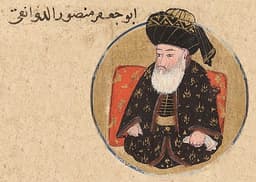
Abu Jafar al-Mansur
Emperor · Medieval
65.5Total
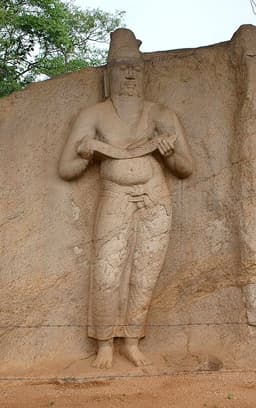
Parakramabahu I
Emperor · Medieval
66.1Total
Basic Information
Born
714
1123
Died
775
1186
Era
Medieval
Medieval
Nationality
Abbasid Caliphate
Sri Lanka
Occupation
Emperor
Emperor
Civilization
Middle Eastern
Indian
Score Comparison
Military (10%)
65.0
82.0
Political (20%)
75.0
72.0
Influence (20%)
40.0
61.0
Legacy (20%)
80.0
52.0
Leadership (15%)
82.0
82.0
Strategy (15%)
55.0
65.4
TOTAL
65.5
66.1
Abu Jafar al-Mansur — Complete Timeline
754 AD
Consolidated Abbasid Power After the RevolutionPolitical Action◆ Major
Al-Mansur eliminated rivals including his uncle Abd Allah ibn Ali and the Barmakids, securing Abbasid control. He established a centralized bureaucracy and suppressed rebellions, including the Rawandiyya uprising.
Impact: global
762 AD
Founded the City of BaghdadPolitical Action
Abu Jafar al-Mansur founded the city of Baghdad as the new capital of the Abbasid Caliphate. The Round City was designed as a center of administration and culture, becoming one of the largest cities in the world.
Impact: globalconstructive
770 AD
Patronized Translation of Greek WorksCultural◆ Major
Al-Mansur supported the translation of Greek philosophical and scientific texts into Arabic. This initiative laid the foundation for the Abbasid translation movement, which preserved and expanded classical knowledge.
Impact: globalconstructive
Parakramabahu I — Complete Timeline
1153 AD
Unification of Sri LankaWar
Parakramabahu I unified the entire island of Sri Lanka under his rule after a series of military campaigns. He defeated the rulers of Ruhuna and other regional kingdoms, ending a period of fragmentation.
Impact: national
1160 AD
Construction of Parakrama SamudraOther◆ Major
Parakramabahu I constructed the Parakrama Samudra, a massive man-made sea of interconnected tanks and canals near Polonnaruwa. This irrigation system, covering over 5,000 acres, was a major engineering achievement.
Impact: regionalconstructive
1165 AD
Invasion of BurmaWar◆ Major
Parakramabahu I launched a naval invasion of Burma (Pagan Kingdom) in retaliation for a trade dispute. The Sinhalese fleet captured the port of Kusumiya and sacked the city, demonstrating Sri Lanka's naval power.
Impact: regional
Reform of the Buddhist SanghaReform◆ Major
Parakramabahu I convened a council to purify the Buddhist Sangha. He expelled corrupt monks and re-established discipline, strengthening Theravada Buddhism in Sri Lanka.
Impact: nationalconstructive
1170 AD
Construction of Polonnaruwa VatadageCultural◆ Major
Parakramabahu I built the Polonnaruwa Vatadage, a circular relic house for the Tooth Relic of the Buddha. This structure is considered a masterpiece of Sinhalese architecture.
Impact: nationalconstructive
Expert Analysis
Abu Jafar al-Mansur vs Parakramabahu I
### The Builder and the Caliph: Two Paths to Immortality
In the sweltering heat of 1160, a king stood on the banks of a vast, newly dug reservoir in the heart of Sri Lanka. Parakramabahu I surveyed the *Parakrama Samudra*, a man-made sea of interlocking canals and tanks, and declared a boast that would echo through the centuries: “Not even a drop of water that falls from the sky should go to the sea without being useful to man.” Two years earlier, in 762, another ruler had watched the sun rise over the perfectly circular walls of a city rising from the Mesopotamian plain. Abu Jafar al-Mansur, the second Abbasid caliph, had just founded Baghdad, the “Round City,” and with it, a new axis for the world. Both men sought to reshape their worlds, but they did so with different hands: one with a spade and a sword, the other with a pen and a palace.
### Origins
Parakramabahu was born in 1123 into a fractured island. Sri Lanka was a patchwork of warring principalities, and his youth was steeped in the martial tradition of the Sinhalese kings. His father, a regional ruler, taught him that power was a prize to be taken, and the boy grew up obsessed with the idea of reuniting the island. Al-Mansur, born in 714, came from a lineage of revolutionaries. His family, the Abbasids, had overthrown the Umayyad Caliphate in a bloody coup, and his childhood was a school of paranoia and cunning. Where Parakramabahu learned to fight, al-Mansur learned to scheme. One was forged in the heat of battle; the other, in the cold calculus of court intrigue.
### Rise to Power
Parakramabahu’s path was a campaign of steel. In 1153, after years of brutal warfare, he defeated his rivals and unified the entire island under one crown. It was a turning point won by the sword, and the Sinhalese chronicles record that he “made the earth tremble” with his armies. Al-Mansur’s rise was quieter but no less ruthless. In 754, he consolidated Abbasid power by eliminating his uncle, Abd Allah ibn Ali, and the powerful Barmakid family. He did not conquer a land; he purged a court. One man took a throne by storming the gates; the other, by quietly locking the doors.
### Leadership & Governance
As rulers, their styles diverged like two rivers from the same mountain. Parakramabahu was a hands-on engineer of empire. He reformed the Buddhist Sangha in 1165, expelling corrupt monks and restoring discipline, and then turned his attention to the land. The *Parakrama Samudra* was not a vanity project; it was a hydraulic masterpiece that irrigated thousands of acres, transforming Sri Lanka into a rice bowl. He also built the Polonnaruwa Vatadage in 1170, a circular relic house for the Tooth Relic of the Buddha, blending faith with statecraft. His military campaigns, like the 1165 naval invasion of Burma—launched over a trade dispute—were bold, expensive, and ultimately unsustainable.
Al-Mansur, by contrast, ruled from a desk. His greatest achievement was the founding of Baghdad in 762, a city designed as a perfect circle—a symbol of cosmic order and centralized power. He patronized the translation of Greek works into Arabic in 770, sparking the Abbasid Golden Age. While Parakramabahu built tanks, al-Mansur built libraries. The caliph’s military score of 60.4 lagged behind the king’s 64.2, but his political score of 67.9 edged out Parakramabahu’s 67.1. Al-Mansur understood that an empire held by ideas lasts longer than one held by force.
### Triumph & Tragedy
Parakramabahu’s triumph was the unification of Sri Lanka and the irrigation system that still bears his name. His tragedy was that his ambitions exceeded his resources. The Burmese campaign drained the treasury, and after his death in 1186, the island quickly fragmented again. He built a golden age, but it was brittle. Al-Mansur’s triumph was Baghdad, a city that became the intellectual capital of the world for five centuries. His tragedy was personal: he died in 775 on a pilgrimage to Mecca, haunted by the ghosts of the rivals he had murdered. One king saw his work crumble; the other saw his city thrive, but both paid a price in blood.
### Character & Destiny
Parakramabahu was a man of action, driven by a vision of unity and self-sufficiency. His boast about the water was not just rhetoric; it was a philosophy. He believed that a ruler’s duty was to wring every drop of potential from his domain. Al-Mansur was a man of suspicion, driven by a need to control. He once said, “The caliphate is a trust, and I am the trustee of God.” His paranoia made him effective but cold. One king’s character led him to build with his own hands; the other’s led him to build with the minds of others.
### Legacy
Today, Parakramabahu is remembered as the last great king of medieval Sri Lanka. The *Parakrama Samudra* still waters the fields, and his statues stand in Polonnaruwa, a testament to a ruler who tried to tame nature itself. Al-Mansur is remembered as the architect of Baghdad, the founder of a dynasty that would produce Harun al-Rashid and the *House of Wisdom*. His total score of 69.1 barely edges Parakramabahu’s 69.0, but the difference is telling: one built for his time, the other for all time.
### Conclusion
Standing by the *Parakrama Samudra*, one feels the weight of water and work. Walking through the ruins of the Round City, one feels the weight of words and wisdom. Both men sought to leave a mark on the earth, but they chose different tools. Parakramabahu dug canals; al-Mansur dug foundations. One created a sea; the other, a city. And in the end, water evaporates, but ideas endure. The king’s boast is still heard in the rustle of paddy fields; the caliph’s vision still whispers in the pages of ancient manuscripts. Which legacy is greater? Perhaps the answer lies not in the stone or the soil, but in the question itself.
Rankings
🥇
Parakramabahu ILeader
Mil: 82.0Pol: 72.0Inf: 61.0
66.1
🥈
Abu Jafar al-Mansur
Mil: 65.0Pol: 75.0Inf: 40.0
65.5
+0.6 behind
How This Comparison Works
Algorithm
Each figure is scored on 6 dimensions (0—100 scale) based on structured historical data: Military (10%), Political (20%), Influence (20%), Legacy (20%), Leadership (15%), Strategy (15%). The weighted total produces the final ranking.
Data Sources
Scores are computed from structured sub-indicators in the database. Scale factors adjust for era (Ancient ×0.85, Modern ×1.0) and civilization size (Eastern ×1.05, Other ×0.80) to account for differences in population and military scale.
Maximum 3 Figures
Comparisons are limited to 2—3 figures to ensure readability and statistical meaningfulness.
Error Margins
±5 points per dimension — Sub-scores are derived from historical records with inherent uncertainty. Two figures within 5 points on a dimension should be considered roughly equivalent in that area.
Total Score Accuracy
±3 points overall — The weighted combination of 6 dimensions produces a total score with approximately ±3 points of uncertainty. Differences of less than 3 points are not statistically significant— the figures are effectively tied.
Known Limitations
- Historical records are incomplete and uneven across civilizations
- Figures from oral-tradition societies may be underrepresented
- Occupation labels can misclassify multi-role figures
- Scores measure capability and impact, not moral character
- Quantitative scoring is a comparison tool, not absolute truth
Capability Radar
Military (10%) — Battles & Warfare
Battles
60
75
Win Rate
65
80
Expansion
70
70
Political (20%) — Governance & Reform
Reform
90
80
Diplomacy
80
70
Economy
85
75
Influence (20%) — Cultural & Global Reach
Cultural
85
65
Global
80
40
Legacy (20%) — Historical Impact
Historical
90
70
Longevity
85
60
Leadership (15%) — Power & Stability
Tenure
85
85
Stability
75
80
Strategy (15%) — Tactics & Innovation
Strategy
70
75
Tactics
55
70
Reform
75
65
Similar Comparisons
Comments & Discussion
No comments yet. Be the first to share your thoughts!