Loading...
Abu Jafar al-Mansur vs Otto II
Abu Jafar al-Mansur leads by 22.3 pts · 2 figures compared
…
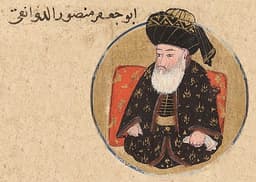
Abu Jafar al-Mansur
Emperor · Medieval
65.5Total
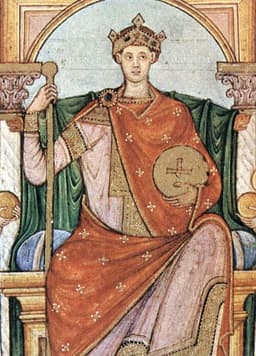
Otto II
Emperor · Medieval
43.2Total
Basic Information
Born
714
955
Died
775
983
Era
Medieval
Medieval
Nationality
Abbasid Caliphate
Holy Roman Empire
Occupation
Emperor
Emperor
Civilization
Middle Eastern
Western
Score Comparison
Military (10%)
65.0
10.0
Political (20%)
75.0
36.5
Influence (20%)
40.0
54.1
Legacy (20%)
80.0
44.2
Leadership (15%)
82.0
51.9
Strategy (15%)
55.0
43.3
TOTAL
65.5
43.2
Abu Jafar al-Mansur — Complete Timeline
754 AD
Consolidated Abbasid Power After the RevolutionPolitical Action◆ Major
Al-Mansur eliminated rivals including his uncle Abd Allah ibn Ali and the Barmakids, securing Abbasid control. He established a centralized bureaucracy and suppressed rebellions, including the Rawandiyya uprising.
Impact: global
762 AD
Founded the City of BaghdadPolitical Action
Abu Jafar al-Mansur founded the city of Baghdad as the new capital of the Abbasid Caliphate. The Round City was designed as a center of administration and culture, becoming one of the largest cities in the world.
Impact: globalconstructive
770 AD
Patronized Translation of Greek WorksCultural◆ Major
Al-Mansur supported the translation of Greek philosophical and scientific texts into Arabic. This initiative laid the foundation for the Abbasid translation movement, which preserved and expanded classical knowledge.
Impact: globalconstructive
Otto II — Complete Timeline
967 AD
Imperial Coronation (967)Cultural◆ Major
Otto II was crowned Holy Roman Emperor by Pope John XIII on December 25, 967, in Rome. He was co-emperor with his father, Otto I, until the latter's death in 973. This coronation confirmed the Ottonian dynasty's control over the imperial title.
CoronationEmperorOttonian
Impact: regionalconstructive
972 AD
Marriage to Theophanu (972)Political Action◆ Major
Otto II married Theophanu, a Byzantine princess, in Rome on April 14, 972. This marriage was a diplomatic triumph, symbolizing the recognition of the Ottonian dynasty by the Byzantine Empire. Theophanu later served as regent for their son, Otto III.
MarriageDiplomacyByzantine
Impact: regionalconstructive
980 AD
Campaign in Italy (980-983)War◆ Major
Otto II launched a major campaign in Italy to assert imperial control over the south and counter Byzantine influence. He captured Taranto and Benevento but faced resistance from local Lombard and Muslim forces. The campaign ended in disaster at Stilo.
CampaignItalyImperial Ambition
Impact: regional
982 AD
Battle of Stilo (982)War◆ Major
Otto II led a campaign against the Byzantine Empire and the Emirate of Sicily in southern Italy. At the Battle of Stilo (or Cape Colonna), his army was ambushed and defeated by a Muslim coalition. Otto barely escaped, and the defeat weakened imperial authority in Italy.
BattleDefeatItaly
Impact: regionaldestructive
983 AD
Death of Otto IIOther◆ Major
Otto II died unexpectedly on December 7, 983, in Rome, possibly from malaria. He was only 28 years old. His death left his three-year-old son, Otto III, as heir, leading to a regency and a period of instability in the Holy Roman Empire.
DeathSuccessionRegency
Impact: regionaltragic
Expert Analysis
Origins
Abu Jafar al-Mansur (born c. 714) was a member of the Abbasid family, descended from al-Abbas, an uncle of the Prophet Muhammad. He grew up in the Umayyad Caliphate's final decades, witnessing the revolutionary movement that would bring his family to power. His early life was shaped by the Abbasid propaganda network in Khurasan, where his brother al-Saffah laid the groundwork for the revolt. Al-Mansur's education emphasized statecraft and military command, preparing him for a role in the new regime.
Otto II (born 955) was the son of Otto I, the first Holy Roman Emperor, and Adelaide of Italy. Raised in the imperial court, he was groomed for rule from an early age. He received a Latin education and was trained in military affairs. His coronation as co-emperor in 967 at age 12 reflected his father's desire to secure the succession. Otto II's early exposure to governance came through campaigns alongside Otto I in Italy and against rebellious nobles.
Rise to Power
Al-Mansur became caliph in 754 after his brother al-Saffah's death. His first challenge was eliminating rivals: he executed his uncle Abd Allah ibn Ali, who had claimed the caliphate, and later purged the Barmakid family, who had grown too powerful. He centralized administration by creating the office of vizier and establishing a postal intelligence network. His founding of Baghdad in 762 as the new capital symbolized the shift from Umayyad Syria to Abbasid Iraq. The Round City was designed with concentric walls housing government buildings, a mosque, and the caliph's palace.
Otto II's rise was smoother. He was crowned co-emperor in 967 and succeeded his father in 973. His early reign focused on suppressing rebellions in Lorraine and Bavaria. He aimed to continue Otto I's policies of expanding imperial control in Italy. In 980, he launched a major campaign to assert authority over southern Italy, which was contested by Byzantines and Muslims. He captured Taranto and Benevento, but his ambitions were checked by the Battle of Stilo in 982, where his army was defeated by a coalition led by the Emirate of Sicily.
Leadership & Governance
Al-Mansur ruled with a firm hand, prioritizing stability and centralization. He used patronage to attract scholars, commissioning translations of Greek works on philosophy, medicine, and astronomy. This intellectual investment would later fuel the Abbasid Golden Age. He maintained a professional army, but his military score of 65.0 reflects limited expansion compared to earlier caliphs. His political score of 75.0 is higher due to his successful consolidation of power and bureaucratic reforms.
Otto II's governance was constrained by the feudal system. He relied on dukes and bishops to administer territories. His political score of 36.5 indicates limited control over the empire; nobles often acted independently. His military score of 10.0 is low due to the catastrophic defeat at Stilo, which exposed the limits of his power. His strategy score of 43.3 suggests poor planning in the Italian campaign. He attempted to strengthen ties with Byzantium through his marriage to Theophanu, but this did not translate into military success.
Triumph & Tragedy
Al-Mansur's greatest triumph was founding Baghdad, which became a center of learning and trade for centuries. He also suppressed the rebellion of Muhammad al-Nafs al-Zakiyya in 762, securing Abbasid rule. His tragedy was the ruthless elimination of allies like the Barmakids, which created a culture of distrust. The massacre of the Barmakids in 803 (though after his death, it stemmed from his policies) damaged the caliphate's administrative talent.
Otto II's triumph was his marriage to Theophanu, which elevated the Holy Roman Empire's prestige. His coronation as co-emperor solidified the Ottonian dynasty. His tragedy was the Battle of Stilo, where he barely escaped death. The defeat ended his southern Italian ambitions and weakened imperial authority. His early death at 28 left a three-year-old heir, plunging the empire into a regency crisis.
Character & Destiny
Al-Mansur was meticulous and suspicious. He personally oversaw Baghdad's construction and kept detailed records. His paranoia led to purges but also ensured no rivals could challenge him. His legacy score of 80.0 reflects the enduring impact of his institutions. He scored 82.0 in leadership for his ability to direct a vast state.
Otto II was ambitious but reckless. He underestimated the coalition against him at Stilo. His early death prevented him from learning from mistakes. Historians note his determination but lack of strategic foresight. His leadership score of 51.9 is moderate; he could inspire loyalty but failed to achieve lasting military gains.
Legacy
Al-Mansur's Baghdad became the intellectual capital of the Islamic world, housing the House of Wisdom. His administrative reforms set the template for later Islamic states. The translation movement he patronized preserved Greek knowledge and influenced European Renaissance. His legacy score of 80.0 is high because his actions shaped the course of Islamic civilization.
Otto II's legacy is overshadowed by his father and son. His Italian campaign failed, and his death caused instability. However, his marriage to Theophanu introduced Byzantine cultural influences to the German court. His influence score of 54.1 reflects his role in the Ottonian dynasty's continuity. His overall score of 43.2 is low due to military and political shortcomings.
Conclusion
Abu Jafar al-Mansur had greater impact than Otto II. Al-Mansur's total score of 65.5 exceeds Otto II's 43.2 by 22.3 points. While Otto II's reign was brief and marked by defeat, al-Mansur founded a city that became a global center of learning and consolidated a dynasty that ruled for centuries. Al-Mansur's political and leadership scores (75.0, 82.0) dwarf Otto II's (36.5, 51.9). The gap in military scores (65.0 vs 10.0) is stark, as Otto II's only major battle was a disaster. Al-Mansur's legacy score of 80.0 versus 44.2 confirms his enduring influence. Otto II, though ambitious, left no comparable institution or cultural movement. Thus, al-Mansur stands as the more consequential ruler.
Rankings
🥇
Abu Jafar al-MansurLeader
Mil: 65.0Pol: 75.0Inf: 40.0
65.5
🥈
Otto II
Mil: 10.0Pol: 36.5Inf: 54.1
43.2
+22.3 behind
How This Comparison Works
Algorithm
Each figure is scored on 6 dimensions (0—100 scale) based on structured historical data: Military (10%), Political (20%), Influence (20%), Legacy (20%), Leadership (15%), Strategy (15%). The weighted total produces the final ranking.
Data Sources
Scores are computed from structured sub-indicators in the database. Scale factors adjust for era (Ancient ×0.85, Modern ×1.0) and civilization size (Eastern ×1.05, Other ×0.80) to account for differences in population and military scale.
Maximum 3 Figures
Comparisons are limited to 2—3 figures to ensure readability and statistical meaningfulness.
Error Margins
±5 points per dimension — Sub-scores are derived from historical records with inherent uncertainty. Two figures within 5 points on a dimension should be considered roughly equivalent in that area.
Total Score Accuracy
±3 points overall — The weighted combination of 6 dimensions produces a total score with approximately ±3 points of uncertainty. Differences of less than 3 points are not statistically significant— the figures are effectively tied.
Known Limitations
- Historical records are incomplete and uneven across civilizations
- Figures from oral-tradition societies may be underrepresented
- Occupation labels can misclassify multi-role figures
- Scores measure capability and impact, not moral character
- Quantitative scoring is a comparison tool, not absolute truth
Capability Radar
Military (10%) — Battles & Warfare
Battles
60
45
Win Rate
65
40
Expansion
70
35
Political (20%) — Governance & Reform
Reform
90
35
Diplomacy
80
30
Economy
85
30
Influence (20%) — Cultural & Global Reach
Cultural
85
30
Global
80
25
Legacy (20%) — Historical Impact
Historical
90
35
Longevity
85
30
Leadership (15%) — Power & Stability
Tenure
85
40
Stability
75
25
Strategy (15%) — Tactics & Innovation
Strategy
70
40
Tactics
55
35
Reform
75
30
Similar Comparisons
Comments & Discussion
No comments yet. Be the first to share your thoughts!