Loading...
Abu Jafar al-Mansur vs Alexios I Komnenos
Alexios I Komnenos leads by 12.9 pts · 2 figures compared
…
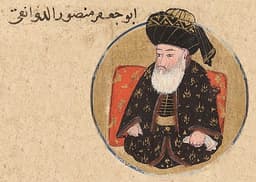
Abu Jafar al-Mansur
Emperor · Medieval
65.5Total
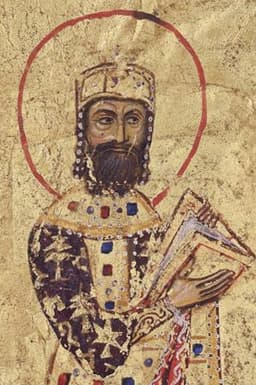
Alexios I Komnenos
Emperor · Medieval
78.4Total
Basic Information
Born
714
1048
Died
775
1118
Era
Medieval
Medieval
Nationality
Abbasid Caliphate
Byzantine Empire
Occupation
Emperor
Emperor
Civilization
Middle Eastern
Western
Score Comparison
Military (10%)
65.0
61.7
Political (20%)
75.0
78.0
Influence (20%)
40.0
88.0
Legacy (20%)
80.0
80.0
Leadership (15%)
82.0
78.0
Strategy (15%)
55.0
68.0
TOTAL
65.5
78.4
Abu Jafar al-Mansur — Complete Timeline
754 AD
Consolidated Abbasid Power After the RevolutionPolitical Action◆ Major
Al-Mansur eliminated rivals including his uncle Abd Allah ibn Ali and the Barmakids, securing Abbasid control. He established a centralized bureaucracy and suppressed rebellions, including the Rawandiyya uprising.
Impact: global
762 AD
Founded the City of BaghdadPolitical Action
Abu Jafar al-Mansur founded the city of Baghdad as the new capital of the Abbasid Caliphate. The Round City was designed as a center of administration and culture, becoming one of the largest cities in the world.
Impact: globalconstructive
770 AD
Patronized Translation of Greek WorksCultural◆ Major
Al-Mansur supported the translation of Greek philosophical and scientific texts into Arabic. This initiative laid the foundation for the Abbasid translation movement, which preserved and expanded classical knowledge.
Impact: globalconstructive
Alexios I Komnenos — Complete Timeline
1081 AD
Battle of DyrrhachiumWar◆ Major
Alexios I Komnenos was defeated by the Norman army under Robert Guiscard at Dyrrhachium. The Byzantine forces were routed, and Alexios barely escaped. This loss allowed the Normans to occupy much of the western Balkans, though Alexios later recovered some territory.
Norman InvasionDefeatBalkans
Impact: regionaltragic
1090 AD
Reforms of the Byzantine Military and EconomyReform◆ Major
Alexios I implemented a series of reforms to restore Byzantine power. He reorganized the army by relying more on foreign mercenaries, reformed the currency (the hyperpyron), and granted tax exemptions to the Church. These measures stabilized the empire after decades of decline.
Military ReformEconomic ReformKomnenian Restoration
Impact: nationalconstructive
1095 AD
Appeal to the West: Council of PiacenzaPolitical Action
Alexios I sent envoys to Pope Urban II at the Council of Piacenza, requesting military aid against the Seljuk Turks. This appeal contributed to Urban's call for the First Crusade at the Council of Clermont later that year, initiating the Crusader movement.
First CrusadePope Urban IISeljuk Turks
Impact: global
1097 AD
First Crusade: Siege of NicaeaWar◆ Major
Alexios I cooperated with the Crusader army to besiege and capture Nicaea from the Seljuk Turks. The city was surrendered to Byzantine control, and Alexios used the Crusaders to recover key territories in Anatolia, though tensions later arose over land claims.
First CrusadeNicaeaByzantine-Crusader Relations
Impact: regionalconstructive
Expert Analysis
Alexios I Komnenos vs Abu Jafar al-Mansur
### The Emperor and the Caliph: Two Paths to Power in a Medieval World
In the winter of 1095, a desperate emperor stood before the Pope of the Roman Church. Alexios I Komnenos had come to Piacenza not as a conqueror, but as a supplicant, his once-mighty Byzantine Empire reduced to a trembling fragment. Half a continent away, three centuries earlier, another ruler had watched his own capital rise from the desert floor. Abu Jafar al-Mansur, the second Abbasid caliph, personally oversaw the construction of Baghdad’s circular walls, a perfect city designed for a perfect age. Both men sought to save their civilizations. One unleashed a flood that would drown his own world; the other built a city that would illuminate the world for centuries. Why did their paths diverge so dramatically?
### Origins: The Weight of Inheritance
Alexios was born in 1048 into the Byzantine military aristocracy, a world of crumbling frontiers and courtly intrigue. The empire he inherited in 1081 was a corpse propped up by ceremony: the Seljuk Turks had shattered the imperial army at Manzikert a decade earlier, Norman adventurers were carving up Italy, and the treasury was empty. Alexios had no time for grand visions—he needed to survive the next season.
Al-Mansur, born in 714, came of age in a very different moment. The Abbasid Revolution had just toppled the Umayyad Caliphate, and the new dynasty was drunk on possibility. His half-brother al-Saffah had seized power, but it was al-Mansur who would shape the victory into a permanent order. Where Alexios looked out at a world collapsing, al-Mansur looked out at a world waiting to be organized.
### Rise to Power: The Coup and the Consolidation
Alexios seized the throne at the age of 33 through a military coup, riding into Constantinople at the head of his army. He was a general first, an emperor second. His legitimacy was fragile, resting on battlefield loyalty rather than divine right. Within months of his coronation, he faced the Norman invasion at Dyrrhachium in 1081, a catastrophic defeat that saw his army routed. He learned that day that survival required cunning, not glory.
Al-Mansur’s rise was more surgical. He had already been the architect of the Abbasid revolution, but after his brother’s death in 754, he methodically eliminated rivals: his uncle Abd Allah ibn Ali, then the powerful Barmakid family, then anyone who might dream of wearing the caliphal ring. He did not win battles against foreign enemies; he won the silent war of succession. By 762, when he founded Baghdad, he had no rivals left.
### Leadership & Governance: Iron vs. Silk
Alexios governed like a man fighting a fire with his bare hands. His military reforms of 1090 were desperate improvisations: he hired foreign mercenaries, granted tax exemptions to local lords in exchange for soldiers, and debased the currency to pay for it all. He was not building a system—he was patching a leaky ship. His political wisdom lay in his ability to negotiate, to promise what he could not deliver, and to keep his enemies guessing. When he appealed to Pope Urban II in 1095, he asked for a few thousand mercenaries. He got a crusade.
Al-Mansur ruled with the confidence of a man who believed he was building for eternity. The Round City of Baghdad was not just a capital—it was a statement. Its four gates pointed toward the great regions of the world, and at its center stood the caliph’s palace and the Great Mosque. He patronized the translation of Greek philosophy and science into Arabic, turning Baghdad into a magnet for scholars from Persia, India, and beyond. His governance was less about crisis management and more about creating the infrastructure of a civilization.
### Triumph & Tragedy: The Siege and the City
Alexios’s greatest triumph was also his greatest betrayal. The First Crusade, which he had inadvertently summoned, arrived at the walls of Nicaea in 1097. He skillfully negotiated the city’s surrender, using the Crusaders as his battering ram then diplomatically outmaneuvering them. But the Crusaders never forgave him for what they saw as trickery. The alliance was poisoned from the start. Alexios won the city but lost the trust of the West, a debt his successors would pay in blood.
Al-Mansur’s triumph was Baghdad itself. The new capital became the intellectual and commercial heart of the medieval world, a city of libraries, observatories, and markets that would dwarf Constantinople and Paris. But his tragedy was personal: he was a paranoid ruler who saw conspiracies everywhere. The Barmakids, who had helped build his dynasty, were destroyed on a whim. The city he built would survive him, but the trust he destroyed would haunt his successors.
### Character & Destiny: The Survivor and the Builder
Alexios was a pragmatist. He lied when necessary, compromised when possible, and fought only when forced. His personality was shaped by constant pressure; he learned to bend rather than break. This made him an effective survivor but a poor visionary. He could not foresee that his plea for help would unleash the Crusades, a force that would ultimately shatter the Byzantine Empire he had spent his life repairing.
Al-Mansur was a visionary with a streak of iron. He saw the future and built it, but he saw enemies everywhere. His paranoia was the price of his ambition: to build a new order, he had to destroy every alternative. His character gave him the courage to found Baghdad, but it also left him isolated, a king in a city he had designed to be the center of the world, trusting no one.
### Legacy: The City and the Crusade
Alexios left behind a dynasty, the Komnenian restoration, and a wound that would not heal. The Crusades he started would eventually turn on Byzantium, culminating in the Fourth Crusade’s sack of Constantinople in 1204. His legacy is ambiguous: he saved his empire for a generation but doomed it for a century. Today, he is remembered as a clever, desperate emperor who played a game he could not control.
Al-Mansur left behind Baghdad, the City of Peace, a beacon of learning that would light the Dark Ages for Europe. The House of Wisdom he inspired would preserve Aristotle and Galen, Euclid and Ptolemy, until the Renaissance could reclaim them. His legacy is clear: he built a city that became a civilization.
### Conclusion
Two rulers, two centuries, two worlds. Alexios fought to save what was already dying; al-Mansur built what would live long after him. One summoned a flood he could not control; the other dug a well that would water the desert. In the end, the difference between them is not talent or courage—it is the difference between a man who must react to history and a man who can shape it. Alexios was a great emperor of a fading empire. Al-Mansur was the founder of a new world. Which one would you rather be?
Rankings
🥇
Alexios I KomnenosLeader
Mil: 61.7Pol: 78.0Inf: 88.0
78.4
🥈
Abu Jafar al-Mansur
Mil: 65.0Pol: 75.0Inf: 40.0
65.5
+12.9 behind
How This Comparison Works
Algorithm
Each figure is scored on 6 dimensions (0—100 scale) based on structured historical data: Military (10%), Political (20%), Influence (20%), Legacy (20%), Leadership (15%), Strategy (15%). The weighted total produces the final ranking.
Data Sources
Scores are computed from structured sub-indicators in the database. Scale factors adjust for era (Ancient ×0.85, Modern ×1.0) and civilization size (Eastern ×1.05, Other ×0.80) to account for differences in population and military scale.
Maximum 3 Figures
Comparisons are limited to 2—3 figures to ensure readability and statistical meaningfulness.
Error Margins
±5 points per dimension — Sub-scores are derived from historical records with inherent uncertainty. Two figures within 5 points on a dimension should be considered roughly equivalent in that area.
Total Score Accuracy
±3 points overall — The weighted combination of 6 dimensions produces a total score with approximately ±3 points of uncertainty. Differences of less than 3 points are not statistically significant— the figures are effectively tied.
Known Limitations
- Historical records are incomplete and uneven across civilizations
- Figures from oral-tradition societies may be underrepresented
- Occupation labels can misclassify multi-role figures
- Scores measure capability and impact, not moral character
- Quantitative scoring is a comparison tool, not absolute truth
Capability Radar
Military (10%) — Battles & Warfare
Battles
60
75
Win Rate
65
70
Expansion
70
60
Political (20%) — Governance & Reform
Reform
90
85
Diplomacy
80
90
Economy
85
70
Influence (20%) — Cultural & Global Reach
Cultural
85
70
Global
80
75
Legacy (20%) — Historical Impact
Historical
90
85
Longevity
85
80
Leadership (15%) — Power & Stability
Tenure
85
80
Stability
75
75
Strategy (15%) — Tactics & Innovation
Strategy
70
85
Tactics
55
80
Reform
75
75
Similar Comparisons
Comments & Discussion
RevisionistCritic6/16/2026
Calling al-Mansur a visionary ignores his brutal consolidation—he murdered rivals, including his own uncle. Alexios at least played by Byzantine court rules, not genocide. Baghdad's "light" came from al-Mansur's iron fist. Give me Alexios's flawed pragmatism over a caliph who built libraries on a foundation of skulls. Different morals, same Machiavellian reality.
EmpireSaver6/16/2026
Alexios begged the West for help but got a crusade he couldn't control—classic short-term thinking. Al-Mansur built Baghdad from scratch, a circular masterpiece that became the world's intellectual hub. One man's desperation opened Pandora's box; the other's vision created a golden age. Alexios was reactive, al-Mansur deliberate. Manzikert broke the Byzantines, but the Abbasids rose from revolution—different foundations, different fates.
数据怀疑者6/16/2026
别吹什么巴格达的黄金时代了,曼苏尔建城时靠的是强迫劳动和波斯官僚,数据上看当时阿拔斯税收也全靠压榨农民。阿莱克修斯至少直面了军事崩溃,曼苏尔不过是继承了革命的烂摊子再包装。所谓"圆城之光",背后是征服者的血腥账本。
ClassicsScholar6/16/2026
Alexios's appeal to the West was a tactical blunder wrapped in imperial tradition. He invoked Roman legitimacy but got Frankish chaos. Al-Mansur, by contrast, studied Sasanian governance and Greek philosophy to build Baghdad's House of Wisdom. The difference? Alexios clung to a dying past; al-Mansur engineered a new synthesis. One recycled old forms; the other invented a future.
历史迷6/16/2026
阿莱克修斯那年冬天在皮亚琴察的屈辱,换来的是十字军这把双刃剑。曼苏尔却亲自丈量巴格达的城墙,把首都建成伊斯兰世界的明珠。一个为生存乞求外力,一个为永恒规划蓝图。曼苏尔赢了未来,阿莱克修斯只能收拾残局。