Loading...
Abu Jafar al-Mansur vs Kublai Khan
Kublai Khan leads by 8.8 pts · 2 figures compared
…
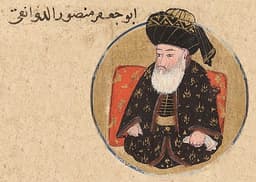
Abu Jafar al-Mansur
Emperor · Medieval
65.5Total
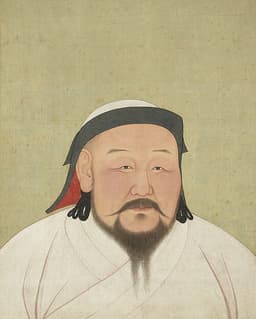
Kublai Khan
Emperor · Medieval
74.3Total
Basic Information
Born
714
1215
Died
775
1294
Era
Medieval
Medieval
Nationality
Abbasid Caliphate
Mongolia
Occupation
Emperor
Emperor
Civilization
Middle Eastern
Eastern
Score Comparison
Military (10%)
65.0
77.5
Political (20%)
75.0
79.2
Influence (20%)
40.0
75.0
Legacy (20%)
80.0
70.0
Leadership (15%)
82.0
72.0
Strategy (15%)
55.0
76.0
TOTAL
65.5
74.3
Abu Jafar al-Mansur — Complete Timeline
754 AD
Consolidated Abbasid Power After the RevolutionPolitical Action◆ Major
Al-Mansur eliminated rivals including his uncle Abd Allah ibn Ali and the Barmakids, securing Abbasid control. He established a centralized bureaucracy and suppressed rebellions, including the Rawandiyya uprising.
Impact: global
762 AD
Founded the City of BaghdadPolitical Action
Abu Jafar al-Mansur founded the city of Baghdad as the new capital of the Abbasid Caliphate. The Round City was designed as a center of administration and culture, becoming one of the largest cities in the world.
Impact: globalconstructive
770 AD
Patronized Translation of Greek WorksCultural◆ Major
Al-Mansur supported the translation of Greek philosophical and scientific texts into Arabic. This initiative laid the foundation for the Abbasid translation movement, which preserved and expanded classical knowledge.
Impact: globalconstructive
Kublai Khan — Complete Timeline
1260 AD
Adoption of Tibetan Buddhism as State ReligionCultural◆ Major
Kublai Khan appointed the Tibetan lama Drog
Tibetan BuddhismReligionMongol-Tibet Relations
Impact: regional
1271 AD
Proclamation of the Yuan DynastyPolitical Action◆ Major
Kublai Khan officially proclaimed the Yuan dynasty, adopting a Chinese-style dynastic name. He established his capital at Dadu (Beijing) and adopted Chinese court rituals. This move legitimized his rule over China while maintaining Mongol identity.
Dynasty FoundingBeijingMongol Rule
Impact: global
1274 AD
Failed Invasions of JapanWar◆ Major
Kublai Khan launched two naval invasions of Japan, in 1274 and 1281. Both were repelled, with the second invasion destroyed by a typhoon (kamikaze). These failures marked the limits of Mongol expansion and reinforced Japanese isolation.
Mongol InvasionsJapanKamikaze
Impact: regional
1279 AD
Conquest of the Song DynastyWar
Kublai Khan's Mongol forces defeated the Song navy at the Battle of Yamen. The last Song emperor drowned, ending the Song dynasty. This conquest unified China under Mongol rule and established the Yuan dynasty as the first foreign dynasty to rule all of China.
Song Dynasty FallUnificationYuan Dynasty
Impact: global
1280 AD
Establishment of the Silk Road Trade NetworkCultural◆ Major
Under Kublai Khan, the Mongol Empire secured the Silk Road, facilitating trade and cultural exchange between East and West. Marco Polo visited his court. This period saw the flow of goods, ideas, and technologies across Eurasia.
Silk RoadTradeCultural Exchange
Impact: globalconstructive
Expert Analysis
Kublai Khan vs Abu Jafar al-Mansur
# The Emperor and the Caliph: Two Paths to Power in the Medieval World
On a spring morning in 1274, Kublai Khan stood on a Korean peninsula and watched his armada sail east toward Japan—the largest naval invasion the world had ever seen. Half a world away and five centuries earlier, Abu Jafar al-Mansur paced the dusty plains of Mesopotamia, sketching the outline of a perfect circle in the sand—a city that would become Baghdad. Both men sought to build empires that would outlast them. One would unite China and open the Silk Road; the other would create a capital that became the intellectual heart of the Islamic world. Yet their fates diverged in ways that reveal the deepest forces shaping medieval civilization.
Origins
Kublai Khan was born in 1215 into the saddle of a conquering horde. His grandfather was Genghis Khan, the man who had forged the Mongol Empire from the steppes of Central Asia. Kublai grew up surrounded by the smell of horse leather and the sound of war drums, but he was different from his warrior kin. He learned to read Chinese texts and showed an early fascination with settled civilization—a trait that would both elevate and isolate him among the Mongol elite.
Al-Mansur, by contrast, was born in 714 into a family of revolutionaries. The Abbasids had spent decades quietly undermining the Umayyad Caliphate, building networks of support among Persians, Shia Muslims, and discontented Arabs. Al-Mansur learned politics as a whispered conspiracy, not a shouted battle cry. His world was one of letters, alliances, and careful calculation—a world where a single misplaced word could end a life.
The difference in their origins is not merely cultural. Kublai inherited an empire built on speed and terror; al-Mansur inherited a movement built on persuasion and patience. One had to learn to rule; the other had to learn to conquer.
Rise to Power
Kublai’s path to power was a civil war. In 1260, after the death of his brother Möngke Khan, Kublai fought his own sibling, Ariq Böke, for control of the Mongol Empire. He won, but the victory fractured the unity of the Mongol world. Kublai chose to base his power in China rather than Mongolia, a decision that alienated many traditionalists. He was no longer just a Khan—he was becoming something new.
Al-Mansur’s rise was quieter but no less bloody. After the Abbasid Revolution overthrew the Umayyads in 750, the first Abbasid caliph, al-Saffah, died in 754. Al-Mansur inherited a caliphate still trembling with rebellion. He eliminated his uncle Abd Allah ibn Ali, who had claimed the throne, and systematically crushed rivals among the Barmakids and other powerful families. Where Kublai fought open battles, al-Mansur fought in the shadows.
The key turning point for al-Mansur came in 762, when he founded Baghdad. The “Round City” was a statement: the Abbasids were here to stay. For Kublai, the turning point was 1271, when he proclaimed the Yuan Dynasty—adopting a Chinese-style name and making clear that he was not just a Mongol conqueror but a Chinese emperor.
Leadership & Governance
As rulers, the two men could not have been more different. Kublai governed through a hybrid system: Mongols held military power, Chinese officials managed civil administration, and foreigners like Marco Polo served as intermediaries. He was pragmatic, tolerant of religions (he adopted Tibetan Buddhism as the state religion in 1260 while allowing Nestorian Christians, Muslims, and Daoists to practice freely), and deeply interested in commerce. His reign secured the Silk Road, connecting East and West as never before.
Al-Mansur was a builder of institutions. He patronized the translation of Greek philosophical and scientific works into Arabic, laying the foundation for the Abbasid translation movement that would later flourish under his successors. Baghdad became not just a political capital but a center of learning, drawing scholars from Persia, India, and Byzantium. Where Kublai conquered territories, al-Mansur conquered minds.
Yet both men understood the importance of legitimacy. Kublai needed to appear Chinese to rule China; al-Mansur needed to appear Islamic to rule the caliphate. Both succeeded—but in very different ways.
Triumph & Tragedy
Kublai’s greatest triumph was the conquest of the Song Dynasty in 1279. At the Battle of Yamen, his forces destroyed the Song navy, and the last Song emperor drowned, ending centuries of Chinese resistance. For the first time in history, all of China was united under a single ruler—and that ruler was a Mongol.
His greatest tragedy was Japan. In 1274 and again in 1281, Kublai launched massive naval invasions. Both failed. The second invasion was destroyed by a typhoon—the *kamikaze*, or “divine wind,” as the Japanese called it. Tens of thousands of Mongol soldiers drowned. Kublai never understood why the gods had abandoned him.
Al-Mansur’s triumph was Baghdad itself—a city that would become one of the greatest in human history. His tragedy was more subtle: he never fully trusted anyone. He lived in constant fear of assassination, and his paranoia poisoned his later years. The same cunning that had brought him to power isolated him in old age.
Character & Destiny
Kublai was a man of appetites—for land, for knowledge, for luxury. He surrounded himself with scholars and engineers, built a summer capital at Shangdu (Coleridge’s Xanadu), and tried to conquer everything he could see. His ambition was boundless, but so was his loneliness. He was a Mongol who loved Chinese culture, a conqueror who wanted to be loved.
Al-Mansur was a man of discipline. He was frugal, calculating, and suspicious. He once said, “The caliphate is a garden whose walls are the law, and whose gate is war.” He saw ruling as a burden, not a pleasure. Where Kublai expanded, al-Mansur consolidated.
These personalities shaped their fates. Kublai’s ambition led him to overreach—Japan, Vietnam, Java. Al-Mansur’s caution kept his realm stable but limited his vision. One died with his empire still expanding; the other died with his capital still being built.
Legacy
Kublai Khan’s legacy is the Yuan Dynasty, which lasted less than a century but transformed China. He opened the country to the world, connected it to the Silk Road, and left behind a memory of power that would inspire later emperors. His influence score of 78.0 reflects the breadth of his impact—from Marco Polo’s travels to the Mongol peace that enabled global trade.
Al-Mansur’s legacy is more enduring. Baghdad became the intellectual capital of the medieval world, and the translation movement he sponsored preserved Greek philosophy and science for future generations. His political score of 67.9 underestimates his achievement: he built the infrastructure of a civilization.
Conclusion
Standing on that Korean shore in 1274, Kublai Khan saw an ocean he could not cross. Al-Mansur, sketching his perfect circle in the Mesopotamian dust, saw a city he could not finish. Both men reached the limits of their power—but in very different ways. Kublai’s limits were geographic; al-Mansur’s were human. One tried to conquer the world; the other tried to build it. In the end, the builder may have left a deeper mark. The Mongol Empire collapsed; Baghdad’s light, though dimmed, never fully went out.
Rankings
🥇
Kublai KhanLeader
Mil: 77.5Pol: 79.2Inf: 75.0
74.3
🥈
Abu Jafar al-Mansur
Mil: 65.0Pol: 75.0Inf: 40.0
65.5
+8.8 behind
How This Comparison Works
Algorithm
Each figure is scored on 6 dimensions (0—100 scale) based on structured historical data: Military (10%), Political (20%), Influence (20%), Legacy (20%), Leadership (15%), Strategy (15%). The weighted total produces the final ranking.
Data Sources
Scores are computed from structured sub-indicators in the database. Scale factors adjust for era (Ancient ×0.85, Modern ×1.0) and civilization size (Eastern ×1.05, Other ×0.80) to account for differences in population and military scale.
Maximum 3 Figures
Comparisons are limited to 2—3 figures to ensure readability and statistical meaningfulness.
Error Margins
±5 points per dimension — Sub-scores are derived from historical records with inherent uncertainty. Two figures within 5 points on a dimension should be considered roughly equivalent in that area.
Total Score Accuracy
±3 points overall — The weighted combination of 6 dimensions produces a total score with approximately ±3 points of uncertainty. Differences of less than 3 points are not statistically significant— the figures are effectively tied.
Known Limitations
- Historical records are incomplete and uneven across civilizations
- Figures from oral-tradition societies may be underrepresented
- Occupation labels can misclassify multi-role figures
- Scores measure capability and impact, not moral character
- Quantitative scoring is a comparison tool, not absolute truth
Capability Radar
Military (10%) — Battles & Warfare
Battles
60
95
Win Rate
65
90
Expansion
70
95
Political (20%) — Governance & Reform
Reform
90
88
Diplomacy
80
85
Economy
85
90
Influence (20%) — Cultural & Global Reach
Cultural
85
85
Global
80
85
Legacy (20%) — Historical Impact
Historical
90
90
Longevity
85
80
Leadership (15%) — Power & Stability
Tenure
85
90
Stability
75
80
Strategy (15%) — Tactics & Innovation
Strategy
70
92
Tactics
55
85
Reform
75
88
Similar Comparisons
Comments & Discussion
MongolNavyNerd6/16/2026
Kublai's Japan invasion was a logistical catastrophe that revealed the limits of Mongol power. Sending 4,400 ships with 100,000 men against a prepared samurai defense was hubris, not brilliance. The typhoon that destroyed his fleet wasn't divine intervention—it was predictable seasonal weather his generals ignored. He united China, sure, but his naval overreach cost more lives than any land campaign.|
圆城哲匠6/16/2026
Al-Mansur的巴格达建城计划才是真正的统治艺术。他不是靠马背征服,而是在底格里斯河畔精确绘制了直径2.7公里的"和平之城",四座城门分别指向大马士革、库法、巴士拉和呼罗珊。这不仅是地理布局,更是权力网络——每条大道都通向帝国心脏。Kublai用舰队堆砌野心,Mansur用几何定义永恒。|
SilkRoadSkeptic6/16/2026
Stop romanticizing Kublai for "opening the Silk Road." The Mongol Pax was brutal pragmatism—he taxed every merchant caravan at 5%, executed bandits by the hundreds, and relocated entire populations to secure trade routes. Meanwhile, Al-Mansur's Baghdad had paper mills churning out translations of Greek philosophy. One guy made transcontinental trade safe; the other made knowledge accessible. Pick your legacy.|
血色蓝图6/16/2026
Revisionist view: Al-Mansur屠杀阿布·穆斯林时流的血绝不比Kublai少。他建巴格达的钱来自对呼罗珊农民的压榨,而大圆城中心的正宫藏了2000名后宫侍妾。Kublai至少允许汉人保留部分习俗,Mansur却用"正统"清洗了所有异见者。两位都是独裁者,区别只在于Mansur的圆城是天圆地方,而Kublai的元大都是棋盘格局。|
BotanyBoyKhan6/16/2026
Fun fact: Kublai's court had a botanical garden with over 1,000 plant species from conquered lands—including rhubarb from Tibet that reached Europe. Al-Mansur's Baghdad had a House of Wisdom with star charts and algebra formulae. Kublai wanted to taste the world; Mansur wanted to measure it. I'll take the astronomer over the gustatorial imperialist any day. Science beats soup.