Loading...
This comparison has not been analyzed yet.
One-time AI generation (~1 minute). Scores and timeline are already available below.
Abu Jafar al-Mansur vs John the Fearless
Abu Jafar al-Mansur leads by 14.4 pts · 2 figures compared
…
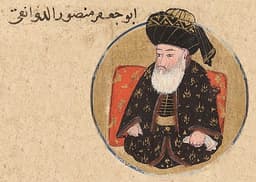
Abu Jafar al-Mansur
Emperor · Medieval
65.5Total

John the Fearless
Emperor · Medieval
51.1Total
Basic Information
Born
714
1371
Died
775
1419
Era
Medieval
Medieval
Nationality
Abbasid Caliphate
Burgundy
Occupation
Emperor
Emperor
Civilization
Middle Eastern
Western
Score Comparison
Military (10%)
65.0
20.0
Political (20%)
75.0
54.7
Influence (20%)
40.0
54.9
Legacy (20%)
80.0
47.5
Leadership (15%)
82.0
62.2
Strategy (15%)
55.0
60.0
TOTAL
65.5
51.1
Abu Jafar al-Mansur — Complete Timeline
754 AD
Consolidated Abbasid Power After the RevolutionPolitical Action◆ Major
Al-Mansur eliminated rivals including his uncle Abd Allah ibn Ali and the Barmakids, securing Abbasid control. He established a centralized bureaucracy and suppressed rebellions, including the Rawandiyya uprising.
Impact: global
762 AD
Founded the City of BaghdadPolitical Action
Abu Jafar al-Mansur founded the city of Baghdad as the new capital of the Abbasid Caliphate. The Round City was designed as a center of administration and culture, becoming one of the largest cities in the world.
Impact: globalconstructive
770 AD
Patronized Translation of Greek WorksCultural◆ Major
Al-Mansur supported the translation of Greek philosophical and scientific texts into Arabic. This initiative laid the foundation for the Abbasid translation movement, which preserved and expanded classical knowledge.
Impact: globalconstructive
John the Fearless — Complete Timeline
1408 AD
Battle of OthéeWar◆ Major
John the Fearless, as Duke of Burgundy, led forces to crush a revolt in the Prince-Bishopric of Li
BattleLiègeBurgundian Expansion
Impact: regionaldestructive
1418 AD
Capture of ParisWar◆ Major
John the Fearless's Burgundian forces captured Paris from the Armagnacs, restoring his influence over the French royal court. This allowed him to control King Charles VI and dominate French politics until his assassination.
Military CampaignParisArmagnac-Burgundian Conflict
Impact: regional
1419 AD
Assassination on the Bridge of MontereauPolitical Action
John the Fearless was assassinated by followers of the Dauphin Charles during a parley on the bridge of Montereau. His death escalated the Armagnac-Burgundian civil war and led to the Burgundian alliance with the English in the Hundred Years' War.
AssassinationHundred Years' WarCivil War
Impact: regionaltragic
1420 AD
Treaty of TroyesPolitical Action◆ Major
Although signed after his death, John the Fearless's alliance with the English paved the way for the Treaty of Troyes, which recognized Henry V as heir to the French throne. His assassination had made the Burgundian-English alliance possible.
TreatyHundred Years' WarBurgundian-English Alliance
Impact: regional
This comparison has not been analyzed yet.
One-time AI generation (~1 minute). Scores and timeline are already available below.
Rankings
🥇
Abu Jafar al-MansurLeader
Mil: 65.0Pol: 75.0Inf: 40.0
65.5
🥈
John the Fearless
Mil: 20.0Pol: 54.7Inf: 54.9
51.1
+14.4 behind
How This Comparison Works
Algorithm
Each figure is scored on 6 dimensions (0—100 scale) based on structured historical data: Military (10%), Political (20%), Influence (20%), Legacy (20%), Leadership (15%), Strategy (15%). The weighted total produces the final ranking.
Data Sources
Scores are computed from structured sub-indicators in the database. Scale factors adjust for era (Ancient ×0.85, Modern ×1.0) and civilization size (Eastern ×1.05, Other ×0.80) to account for differences in population and military scale.
Maximum 3 Figures
Comparisons are limited to 2—3 figures to ensure readability and statistical meaningfulness.
Error Margins
±5 points per dimension — Sub-scores are derived from historical records with inherent uncertainty. Two figures within 5 points on a dimension should be considered roughly equivalent in that area.
Total Score Accuracy
±3 points overall — The weighted combination of 6 dimensions produces a total score with approximately ±3 points of uncertainty. Differences of less than 3 points are not statistically significant— the figures are effectively tied.
Known Limitations
- Historical records are incomplete and uneven across civilizations
- Figures from oral-tradition societies may be underrepresented
- Occupation labels can misclassify multi-role figures
- Scores measure capability and impact, not moral character
- Quantitative scoring is a comparison tool, not absolute truth
Capability Radar
Military (10%) — Battles & Warfare
Battles
60
45
Win Rate
65
40
Expansion
70
40
Political (20%) — Governance & Reform
Reform
90
35
Diplomacy
80
60
Economy
85
45
Influence (20%) — Cultural & Global Reach
Cultural
85
40
Global
80
30
Legacy (20%) — Historical Impact
Historical
90
50
Longevity
85
35
Leadership (15%) — Power & Stability
Tenure
85
50
Stability
75
30
Strategy (15%) — Tactics & Innovation
Strategy
70
55
Tactics
55
50
Reform
75
30
Similar Comparisons
Comments & Discussion
No comments yet. Be the first to share your thoughts!