Loading...
Abu Jafar al-Mansur vs Emperor Sujin
Abu Jafar al-Mansur leads by 13.9 pts · 2 figures compared
…
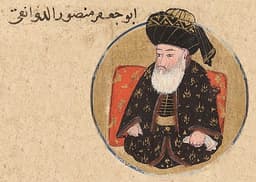
Abu Jafar al-Mansur
Emperor · Medieval
65.5Total
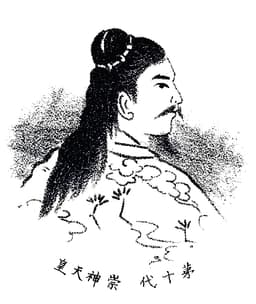
Emperor Sujin
Emperor · Ancient
51.6Total
Basic Information
Born
714
-148
Died
775
-30
Era
Medieval
Ancient
Nationality
Abbasid Caliphate
Japan
Occupation
Emperor
Emperor
Civilization
Middle Eastern
Eastern
Score Comparison
Military (10%)
65.0
50.0
Political (20%)
75.0
68.0
Influence (20%)
40.0
47.1
Legacy (20%)
80.0
43.3
Leadership (15%)
82.0
72.0
Strategy (15%)
55.0
30.3
TOTAL
65.5
51.6
Abu Jafar al-Mansur — Complete Timeline
754 AD
Consolidated Abbasid Power After the RevolutionPolitical Action◆ Major
Al-Mansur eliminated rivals including his uncle Abd Allah ibn Ali and the Barmakids, securing Abbasid control. He established a centralized bureaucracy and suppressed rebellions, including the Rawandiyya uprising.
Impact: global
762 AD
Founded the City of BaghdadPolitical Action
Abu Jafar al-Mansur founded the city of Baghdad as the new capital of the Abbasid Caliphate. The Round City was designed as a center of administration and culture, becoming one of the largest cities in the world.
Impact: globalconstructive
770 AD
Patronized Translation of Greek WorksCultural◆ Major
Al-Mansur supported the translation of Greek philosophical and scientific texts into Arabic. This initiative laid the foundation for the Abbasid translation movement, which preserved and expanded classical knowledge.
Impact: globalconstructive
Emperor Sujin — Complete Timeline
100 BC
Organized the Yamato StateReform◆ Major
Emperor Sujin is recorded in the Nihon Shoki as having organized the Yamato state, establishing administrative structures and military garrisons. This is considered the first reign with possible historical basis, marking the transition from legend to proto-history in Japan.
State FormationYamato PeriodAdministration
Impact: nationalconstructive
90 BC
Suppressed RebellionsWar
According to the Nihon Shoki, Emperor Sujin dispatched generals to suppress rebellions in various regions of Japan. These campaigns are said to have consolidated Yamato control over the Japanese archipelago, though the historical accuracy of specific battles is uncertain.
Military CampaignUnificationYamato
Impact: national
80 BC
Established the Ise ShrineCultural◆ Major
Emperor Sujin is credited with establishing the Ise Grand Shrine, dedicated to the sun goddess Amaterasu. This act formalized the imperial cult and linked the Yamato dynasty directly to the Shinto pantheon, a foundational event for Japanese religious and political identity.
ShintoImperial CultReligion
Impact: nationalconstructive
Expert Analysis
Emperor Sujin vs Abu Jafar al-Mansur
### The Founder and the Forger: Al-Mansur and Emperor Sujin
On a dusty plain in Mesopotamia, in the year 762, a man stood before a circle of bricks. He was Abu Jafar al-Mansur, the second caliph of the Abbasid dynasty, and he was about to do something audacious: build a new capital from nothing, a perfect circle of a city that would be called Baghdad. Half a world away and nearly a millennium earlier, another ruler, a man known only as Emperor Sujin, was said to be doing something equally foundational in the misty valleys of Yamato, Japan. He was organizing a state, suppressing rebellions, and establishing a shrine to the sun goddess that would become the spiritual heart of a nation. One man built a city of stone and reason; the other built a myth of blood and gods. Why did their paths diverge so completely, and what drove the different outcomes of their reigns?
### Origins
Al-Mansur was born in 714 into the heart of a revolutionary family. The Abbasids had seized power from the Umayyad Caliphate by promising justice and a return to Islamic purity, but their rule was built on a precarious foundation of shifting alliances and tribal loyalties. Al-Mansur was a product of this world—a man of the desert and the court, where survival depended on cunning, ruthlessness, and an unblinking eye for threats. His world was one of parchment, poets, and poison.
Emperor Sujin, by contrast, is a figure shrouded in the mists of legend. The *Nihon Shoki*, a chronicle compiled centuries after his supposed reign, places his birth around 148 BCE and his death in 30 BCE. He is the first emperor for whom any historical record exists, but that record is more myth than fact. His Japan was not a unified state but a loose confederation of clans, where the Yamato court was just one powerful family among many. Sujin’s origins are not those of a political revolutionary but of a ritual chieftain, a figure whose authority came not from armies or treasuries but from his connection to the gods.
### Rise to Power
Al-Mansur’s rise was a brutal, calculated affair. He did not inherit power; he seized it. After the Abbasid Revolution, he faced immediate threats from his own uncle, Abd Allah ibn Ali, and from powerful families like the Barmakids. In 754, he consolidated his power by eliminating these rivals with cold efficiency. He understood that in the caliphate, mercy was a luxury he could not afford.
Sujin’s rise is recorded as a matter of lineage. He was the tenth emperor of Japan, and his claim to the throne was based on descent from the sun goddess Amaterasu. There is no record of a power struggle, no political maneuvering. His authority was accepted, not fought for. The difference is stark: one man clawed his way to the top; the other was born there, or so the story goes.
### Leadership & Governance
Al-Mansur’s leadership was that of a master builder and a ruthless administrator. His greatest achievement was the founding of Baghdad in 762. The city was not just a capital; it was a statement. Its circular design, known as the Round City, was a symbol of cosmic order and centralized power. He patronized the translation of Greek philosophical and scientific texts into Arabic, a cultural initiative in 770 that laid the foundation for the Islamic Golden Age. His political score of 67.9 reflects a man who understood that power required not just swords but libraries. Yet his military score was a modest 60.4, and his strategy a low 57.0. He was not a general; he was a builder of systems.
Sujin’s governance, as recorded, was about organization and ritual. He is credited with establishing the administrative structure of the Yamato state around 100 BCE, dividing the land into provinces and appointing governors. He suppressed rebellions by dispatching generals, a military action that suggests a ruler consolidating control but with a military score of only 25.8. His most lasting act was the establishment of the Ise Grand Shrine around 80 BCE, dedicated to Amaterasu. This was not a city of libraries but a shrine of silence. His leadership score of 86.6 is remarkably high, but it is a leadership of myth, not of measurable reform.
### Triumph & Tragedy
Al-Mansur’s greatest triumph was Baghdad itself. The city became the intellectual and commercial heart of the world, a place where scholars from Persia, India, and Greece exchanged ideas. His tragedy was the same as his triumph: the ruthlessness that built the city also poisoned its politics. He died in 775, leaving a stable but paranoid state, one where the seeds of future decay had already been sown.
Sujin’s greatest moment was his death, for it was only then that his legend truly began. The *Nihon Shoki* records that he reigned for 68 years, a span that suggests a stable, peaceful rule. His tragedy is that we know so little about him. He is a ghost, a placeholder in the imperial line. His triumph is that his name survived at all, a testament to the power of ritual over reality.
### Character & Destiny
Al-Mansur’s character was forged in the crucible of revolution. He was suspicious, calculating, and visionary. He understood that power was a thing to be hoarded and wielded. His decisions—the elimination of rivals, the founding of a new capital, the patronage of scholarship—were all driven by a desire to secure his dynasty. His destiny was to be the architect of an empire.
Sujin’s character is unknowable. He is a figure of legend, a symbol of the divine right of the Yamato clan. His decisions were not his own; they were the actions required by his role. His destiny was to be the ancestor, the link between the gods and the emperors who would follow. He did not shape his era; his era shaped him.
### Legacy
Al-Mansur’s legacy is Baghdad. The city he founded became the center of the Abbasid Caliphate, a beacon of learning and culture that influenced the world for centuries. His patronage of translation preserved Greek philosophy and science, knowledge that would later spark the European Renaissance. His legacy score of 70.0 reflects a man whose work outlived his dynasty.
Sujin’s legacy is the Ise Shrine and the idea of imperial continuity. The shrine he established remains the most sacred site in Shinto, rebuilt every twenty years in an unbroken tradition. His influence score of 67.8 is comparable to al-Mansur’s, but it is an influence of faith, not of fact. He is remembered not for what he did but for what he represented.
### Conclusion
Two men, two worlds. Al-Mansur built a city of reason, a circle of power that became the center of the world. Sujin built a shrine of myth, a gate to the gods that became the heart of a nation. One used libraries and laws to forge his legacy; the other used ritual and bloodlines. Their different outcomes were not accidents of fate but products of their eras. Al-Mansur lived in a world of warring empires and competing ideas, where a man could remake the world with bricks and books. Sujin lived in a world of clans and spirits, where a man could only preserve the order he inherited. In the end, both succeeded. Baghdad still stands, a city of memory and conflict. The Ise Shrine still stands, a place of silence and renewal. The founder and the forger, each built what his age demanded.
Rankings
🥇
Abu Jafar al-MansurLeader
Mil: 65.0Pol: 75.0Inf: 40.0
65.5
🥈
Emperor Sujin
Mil: 50.0Pol: 68.0Inf: 47.1
51.6
+13.9 behind
How This Comparison Works
Algorithm
Each figure is scored on 6 dimensions (0—100 scale) based on structured historical data: Military (10%), Political (20%), Influence (20%), Legacy (20%), Leadership (15%), Strategy (15%). The weighted total produces the final ranking.
Data Sources
Scores are computed from structured sub-indicators in the database. Scale factors adjust for era (Ancient ×0.85, Modern ×1.0) and civilization size (Eastern ×1.05, Other ×0.80) to account for differences in population and military scale.
Maximum 3 Figures
Comparisons are limited to 2—3 figures to ensure readability and statistical meaningfulness.
Error Margins
±5 points per dimension — Sub-scores are derived from historical records with inherent uncertainty. Two figures within 5 points on a dimension should be considered roughly equivalent in that area.
Total Score Accuracy
±3 points overall — The weighted combination of 6 dimensions produces a total score with approximately ±3 points of uncertainty. Differences of less than 3 points are not statistically significant— the figures are effectively tied.
Known Limitations
- Historical records are incomplete and uneven across civilizations
- Figures from oral-tradition societies may be underrepresented
- Occupation labels can misclassify multi-role figures
- Scores measure capability and impact, not moral character
- Quantitative scoring is a comparison tool, not absolute truth
Capability Radar
Military (10%) — Battles & Warfare
Battles
60
10
Win Rate
65
10
Expansion
70
20
Political (20%) — Governance & Reform
Reform
90
50
Diplomacy
80
30
Economy
85
30
Influence (20%) — Cultural & Global Reach
Cultural
85
30
Global
80
10
Legacy (20%) — Historical Impact
Historical
90
40
Longevity
85
30
Leadership (15%) — Power & Stability
Tenure
85
40
Stability
75
40
Strategy (15%) — Tactics & Innovation
Strategy
70
10
Tactics
55
10
Reform
75
20
Similar Comparisons
Comments & Discussion
MythBusterMansur6/16/2026
Al-Mansur actually built his "perfect circle" Baghdad on the ruins of the ancient Sasanian capital Ctesiphon—that's like claiming credit for a pizza delivery when you just reheated leftovers. The Abbasid caliph was a brilliant propagandist who marketed raw military conquest as divine urban planning. Meanwhile, Sujin isn't even proven to exist outside of 8th-century Yamato court mythology. We're comparing a real but overhyped warlord to a literary ghost. Give me a break.
史海沉钩6/16/2026
说苏神天皇“建立国家”?《日本书纪》里他镇压土蜘蛛(原住民)的记载和《古事记》的叙事冲突严重,更像是7世纪朝廷为了天皇神性而编造的“创世之祖”。阿尔曼苏尔呢?至少在塔巴里史里他真建过圆城、真杀过伯尔麦克家族。一个坐实了开国之基,一个活在竹简笔尖下——“神话创始者”vs“史实奠基人”,谁更有底气?我押曼苏尔,至少他不用靠天照大神背书。
ClassicsClash6/16/2026
The comparison suffers from a fatal asymmetry: Sujin's "reign" is dated to roughly 97 BC to 30 BC in the *Nihon Shoki*, but archaeologists find zero contemporary evidence of such a centralized Yamato state until the Kofun period around AD 300. Al-Mansur's Baghdad foundation in AD 762 is corroborated by multiple independent sources including Christian chroniclers. The "founder" comparison is intellectually lazy—Sujin is a literary retrojection, al-Mansur is a historical actor. Apples and celestia
半信半疑6/16/2026
“圆城”巴格达的建设明确记录在雅库比的《列国志》里,曼苏尔甚至亲自划定了城门位置和城墙周长——干的是工程总监的活。而苏神天皇的“磯城瑞篱宫”呢?《日本书纪》连地基都没挖出来,只在后世的祭祀遗迹里勉强圆说。一个在泥里打桩,一个在纸上画饼,结果一个成了伊斯兰文明心脏,一个成了皇室族谱注脚。谁配称“奠基”,还不清楚吗?
WarWonkMan6/16/2026
Al-Mansur's military consolidation was brutally effective: he destroyed the Umayyad remnants at the Battle of Zab in 750, then methodically purged his own generals like Abu Muslim. That's hard power. Sujin's alleged military campaigns—against rebellious generals and local chieftains—read like boilerplate dynastic apologia, with no archaeological markers like mass graves or fortification ruins. One commander built an empire with blood and logistics; the other built a narrative with ink and