Loading...
Abu Jafar al-Mansur vs Dantidurga
Abu Jafar al-Mansur leads by 6.8 pts · 2 figures compared
…
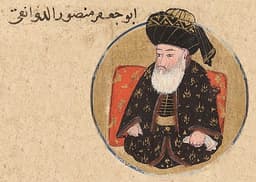
Abu Jafar al-Mansur
Emperor · Medieval
65.5Total
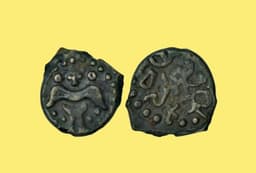
Dantidurga
Emperor · Medieval
58.7Total
Basic Information
Born
714
735
Died
775
756
Era
Medieval
Medieval
Nationality
Abbasid Caliphate
India
Occupation
Emperor
Emperor
Civilization
Middle Eastern
Indian
Score Comparison
Military (10%)
65.0
67.5
Political (20%)
75.0
68.0
Influence (20%)
40.0
56.4
Legacy (20%)
80.0
50.0
Leadership (15%)
82.0
65.7
Strategy (15%)
55.0
52.5
TOTAL
65.5
58.7
Abu Jafar al-Mansur — Complete Timeline
754 AD
Consolidated Abbasid Power After the RevolutionPolitical Action◆ Major
Al-Mansur eliminated rivals including his uncle Abd Allah ibn Ali and the Barmakids, securing Abbasid control. He established a centralized bureaucracy and suppressed rebellions, including the Rawandiyya uprising.
Impact: global
762 AD
Founded the City of BaghdadPolitical Action
Abu Jafar al-Mansur founded the city of Baghdad as the new capital of the Abbasid Caliphate. The Round City was designed as a center of administration and culture, becoming one of the largest cities in the world.
Impact: globalconstructive
770 AD
Patronized Translation of Greek WorksCultural◆ Major
Al-Mansur supported the translation of Greek philosophical and scientific texts into Arabic. This initiative laid the foundation for the Abbasid translation movement, which preserved and expanded classical knowledge.
Impact: globalconstructive
Dantidurga — Complete Timeline
753 AD
Founding of the Rashtrakuta DynastyPolitical Action
Dantidurga overthrew his overlord, the Chalukya king Kirtivarman II, in a coup. He established the Rashtrakuta dynasty as the dominant power in the Deccan, with Manyakheta as his capital. This marked the beginning of a new imperial era.
Impact: regionalconstructive
754 AD
Performance of the Hiranyagarbha RitualCultural
Dantidurga performed the Hiranyagarbha (golden womb) ritual, a Vedic ceremony that symbolically rebirthed him as a Kshatriya. This legitimized his rule by claiming a higher caste status, as the Rashtrakutas were originally of humble origin.
Impact: nationalconstructive
755 AD
Conquest of MalwaWar◆ Major
Dantidurga led a military campaign into Malwa, defeating the Gurjara-Pratihara ruler Nagabhata I. He annexed the region, expanding Rashtrakuta territory northward. This victory established Rashtrakuta influence in central India.
Impact: regionaldestructive
Expert Analysis
Abu Jafar al-Mansur vs Dantidurga
### The Founder and the Builder
In the year 753, on the dusty plains of the Deccan, a feudatory named Dantidurga turned on his master. The Chalukya king Kirtivarman II, whose dynasty had ruled for two centuries, was overthrown in a sudden, decisive coup. Half a world away, in 754, another man—Abu Jafar al-Mansur—was consolidating a very different kind of power. Having just become the second caliph of the Abbasid dynasty, he began a systematic purge of his rivals, eliminating even his own uncle to secure his throne. One founded a dynasty through a single, audacious act of rebellion; the other built an empire through cold, calculated statecraft. Both were medieval emperors, but their paths, their tools, and their legacies could not have been more different.
### Origins
Dantidurga emerged from the shadow of the Chalukya empire, a vassal ruler in what is now central India. The Deccan of the 8th century was a world of competing regional powers—Chalukyas, Pallavas, and the rising Gurjara-Pratiharas to the north. Dantidurga was a warrior from the Rashtrakuta clan, a people whose origins remain debated but who had long served as Chalukya subordinates. His world was one of direct, personal power: a king was as strong as his sword arm and his ability to command loyalty from local chieftains.
Al-Mansur, born in 714, was the son of a different kind of world. He was a member of the Abbasid family, a clan that had orchestrated a massive revolution against the Umayyad Caliphate, toppling a dynasty that had ruled from Spain to India. He was a product of a sophisticated, cosmopolitan civilization—the Islamic world, which by the mid-8th century had absorbed Persian, Greek, and Indian knowledge. Where Dantidurga’s legitimacy came from conquest and ritual, al-Mansur’s came from ideology, religion, and a bureaucratic machinery that stretched across continents.
### Rise to Power
Dantidurga’s rise was swift and personal. In 753, he simply rebelled. The Chalukya king Kirtivarman II was caught off guard, and the coup succeeded. To legitimize his new status, Dantidurga performed the Hiranyagarbha ritual in 754—a Vedic ceremony in which a golden womb was constructed, and the ruler emerged from it as if reborn a Kshatriya (warrior caste). It was a brilliant piece of political theater: a symbolic claim to the highest rank in the Hindu social order. The next year, in 755, he marched into Malwa, defeating the powerful Gurjara-Pratihara ruler Nagabhata I and annexing the region. In just three years, Dantidurga had gone from a subordinate to an emperor.
Al-Mansur’s path was far more treacherous. He did not seize power; he inherited it, but only after a civil war. His brother, the first Abbasid caliph al-Saffah, died in 754, and al-Mansur had to immediately fight for his position. He faced a rebellion from his own uncle, Abd Allah ibn Ali, whom he ruthlessly crushed. More subtly, he neutralized the powerful Barmakid family, who had been key allies during the revolution. Al-Mansur understood that in an empire built on a revolution, the revolutionaries themselves were the greatest threat. He spent his early reign not conquering new lands, but purging his own court.
### Leadership & Governance
Dantidurga’s leadership was that of a warrior-king. His military scores (57.7) and strategy (45.1) suggest a competent but not extraordinary commander—his victory over the Chalukyas was more a coup than a great battle. His genius lay in political timing and ritual legitimation. The Hiranyagarbha ceremony was not mere superstition; it was a masterstroke that allowed him to claim a status his birth did not grant him. His governance was probably personal and feudal: he rewarded loyal followers with land, and his authority depended on his ability to lead from the front.
Al-Mansur was the opposite: a political genius with a military score of 60.4 and a political score of 67.9. He never led armies personally; instead, he built institutions. His greatest act was founding the city of Baghdad in 762. The “Round City” was a marvel of urban planning: a perfect circle, four miles in diameter, with the caliph’s palace and the great mosque at its center. It was a statement of power—a capital designed not for defense, but for administration. Al-Mansur also began the translation of Greek philosophical and scientific works into Arabic, laying the foundation for the Golden Age of Islam. He understood that an empire was not held by swords alone, but by ideas.
### Triumph & Tragedy
Dantidurga’s triumph was his founding of the Rashtrakuta dynasty, which would go on to become one of the great powers of medieval India, ruling for over two centuries. His tragedy was his short reign—he died in 756, just three years after his coup. He left a dynasty, but not a legacy of reform or culture. His successors, particularly the great Amoghavarsha, would build the empire’s cultural splendor, but Dantidurga himself was a flash of lightning, brilliant and brief.
Al-Mansur’s triumph was the Abbasid Caliphate itself. He took a revolutionary movement and turned it into a stable, enduring empire. Baghdad became the richest city in the world, and the Abbasid dynasty would last until 1258. His tragedy was his paranoia. He trusted no one, and his reign was marked by the execution of former allies and the suppression of dissent. He died in 775, a lonely, suspicious man, but one who had built an empire that would outlast him by five centuries.
### Character & Destiny
Dantidurga’s character was that of a gambler. He risked everything on a single throw of the dice—a rebellion against his overlord—and won. His destiny was to be a founder, not a builder. He opened a door; others walked through it. Al-Mansur’s character was that of a chess player. He thought ten moves ahead, sacrificed pieces (including family) without hesitation, and saw the board in its entirety. His destiny was to be an architect, not a conqueror. He built the stage upon which others would perform.
### Legacy
Dantidurga is remembered today as the founder of the Rashtrakuta dynasty, a footnote in Indian history that later grew into a chapter. His total score of 57.2 reflects a figure who was important but not transformative. Al-Mansur, with a total score of 69.1, is remembered as the true founder of the Abbasid Caliphate—the man who turned a revolution into a civilization. Baghdad, the translation movement, the administrative structures—all are his legacy.
### Conclusion
Dantidurga and al-Mansur represent two faces of medieval kingship: the warrior and the statesman. One seized power with a sword and a ritual; the other built an empire with a pen and a plan. Both succeeded, but their successes were of different orders. Dantidurga’s dynasty would eventually fade; al-Mansur’s city still stands. In the end, the difference is not in what they conquered, but in what they built. Dantidurga conquered a kingdom; al-Mansur built a world.
Rankings
🥇
Abu Jafar al-MansurLeader
Mil: 65.0Pol: 75.0Inf: 40.0
65.5
🥈
Dantidurga
Mil: 67.5Pol: 68.0Inf: 56.4
58.7
+6.8 behind
How This Comparison Works
Algorithm
Each figure is scored on 6 dimensions (0—100 scale) based on structured historical data: Military (10%), Political (20%), Influence (20%), Legacy (20%), Leadership (15%), Strategy (15%). The weighted total produces the final ranking.
Data Sources
Scores are computed from structured sub-indicators in the database. Scale factors adjust for era (Ancient ×0.85, Modern ×1.0) and civilization size (Eastern ×1.05, Other ×0.80) to account for differences in population and military scale.
Maximum 3 Figures
Comparisons are limited to 2—3 figures to ensure readability and statistical meaningfulness.
Error Margins
±5 points per dimension — Sub-scores are derived from historical records with inherent uncertainty. Two figures within 5 points on a dimension should be considered roughly equivalent in that area.
Total Score Accuracy
±3 points overall — The weighted combination of 6 dimensions produces a total score with approximately ±3 points of uncertainty. Differences of less than 3 points are not statistically significant— the figures are effectively tied.
Known Limitations
- Historical records are incomplete and uneven across civilizations
- Figures from oral-tradition societies may be underrepresented
- Occupation labels can misclassify multi-role figures
- Scores measure capability and impact, not moral character
- Quantitative scoring is a comparison tool, not absolute truth
Capability Radar
Military (10%) — Battles & Warfare
Battles
60
60
Win Rate
65
65
Expansion
70
65
Political (20%) — Governance & Reform
Reform
90
45
Diplomacy
80
55
Economy
85
50
Influence (20%) — Cultural & Global Reach
Cultural
85
40
Global
80
30
Legacy (20%) — Historical Impact
Historical
90
55
Longevity
85
50
Leadership (15%) — Power & Stability
Tenure
85
40
Stability
75
45
Strategy (15%) — Tactics & Innovation
Strategy
70
60
Tactics
55
55
Reform
75
40
Similar Comparisons
Comments & Discussion
SultanOfSand6/16/2026
Al-Mansur was the real empire builder here. Dantidurga's rebellion was a glorified gangster takeover—he swapped one Deccan boss for another. But al-Mansur? He personally designed Baghdad's circular walls, created a bureaucratic machine with the vizier system, and purged 30,000 Umayyad loyalists after the revolution. That's systematic power, not a lucky sword swing. One founded a city-state dynasty; the other forged a civilization's capital. No contest.
铁血书生6/16/2026
别被曼苏尔的圆城忽悠了——那根本是沙漠里的镀金牢笼。丹蒂杜尔迦的政变才叫艺术:一夜间端掉查鲁基亚王朝,连剑都来不及出鞘就成了统治者。曼苏尔呢?杀了亲叔叔还建了个官僚机构把自己粘在王座上,这叫治国?这叫高级官僚病。56岁病死的算计狂,哪比得上一个靠直觉开局的军阀?
NumismaticNerd6/16/2026
The real story is in the coins. Dantidurga's Rashtrakuta issues are crude silver copies of Chalukya designs—he literally stamped his name over existing dies. Al-Mansur reformed the entire Islamic coinage system, standardizing weight and gold purity across three continents. That's not just power; that's economic engineering. One guy reused the neighbors' template; the other built a monetary empire that lasted centuries. Show me Dantidurga's fiscal legacy, and then we'll talk.
丝路回响6/16/2026
你们全搞错了重点。曼苏尔建巴格达可不是什么创意工程——他是偷了萨珊波斯帝国的城市设计图纸,加了点伊斯兰粉刷。丹蒂杜尔迦的拉什特拉库塔王朝才是真原创:他们让梵语与俗语共存,建了埃洛拉石窟里的凯拉萨神庙,那可比任何圆城更震撼。一个抄波斯作业的官僚,一个雕刻永恒遗产的战士,选谁还需要犹豫?