Loading...
Abu Jafar al-Mansur vs Alp Tigin
Abu Jafar al-Mansur leads by 15.0 pts · 2 figures compared
…
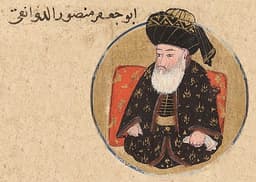
Abu Jafar al-Mansur
Emperor · Medieval
65.5Total
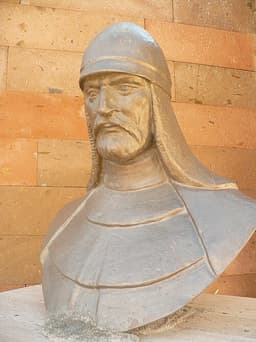
Alp Tigin
Emperor · Medieval
50.5Total
Basic Information
Born
714
911
Died
775
963
Era
Medieval
Medieval
Nationality
Abbasid Caliphate
Ghaznavid Empire
Occupation
Emperor
Emperor
Civilization
Middle Eastern
Middle Eastern
Score Comparison
Military (10%)
65.0
55.0
Political (20%)
75.0
33.6
Influence (20%)
40.0
56.4
Legacy (20%)
80.0
49.2
Leadership (15%)
82.0
50.7
Strategy (15%)
55.0
60.0
TOTAL
65.5
50.5
Abu Jafar al-Mansur — Complete Timeline
754 AD
Consolidated Abbasid Power After the RevolutionPolitical Action◆ Major
Al-Mansur eliminated rivals including his uncle Abd Allah ibn Ali and the Barmakids, securing Abbasid control. He established a centralized bureaucracy and suppressed rebellions, including the Rawandiyya uprising.
Impact: global
762 AD
Founded the City of BaghdadPolitical Action
Abu Jafar al-Mansur founded the city of Baghdad as the new capital of the Abbasid Caliphate. The Round City was designed as a center of administration and culture, becoming one of the largest cities in the world.
Impact: globalconstructive
770 AD
Patronized Translation of Greek WorksCultural◆ Major
Al-Mansur supported the translation of Greek philosophical and scientific texts into Arabic. This initiative laid the foundation for the Abbasid translation movement, which preserved and expanded classical knowledge.
Impact: globalconstructive
Alp Tigin — Complete Timeline
961 AD
Rebellion against the SamanidsPolitical Action◆ Major
Alp Tigin rebelled against the Samanid ruler Mansur I after being passed over for a governorship. He marched from Nishapur to Ghazni, defeating Samanid forces along the way, and established his own rule in eastern Afghanistan.
Impact: regional
963 AD
Consolidation of GhazniPolitical Action
Alp Tigin fortified Ghazni and organized a military state based on slave soldiers (ghilman). He established a stable administration that attracted scholars and merchants, turning Ghazni into a major regional power center.
Impact: regionalconstructive
Expert Analysis
Alp Tigin vs Abu Jafar al-Mansur
### The Slave Who Built a Dynasty and the Prince Who Built a City
In the year 762, two men were shaping the future of the Islamic world from opposite ends of the social ladder. In what is now Iraq, the Abbasid Caliph Abu Jafar al-Mansur was laying the first bricks of a circular city that would become Baghdad, a monument to his vision of a unified, learned empire. A thousand miles to the east, in the Afghan highlands, a former Turkic slave named Alp Tigin was fortifying the fortress of Ghazni, building a military state on the backs of other enslaved soldiers. One was born to rule; the other had to seize rule. One built a capital of ideas; the other built a machine of war. Their stories, though separated by decades and distance, reveal two distinct paths to power in the medieval Middle East—and two very different kinds of legacy.
### Origins
Alp Tigin entered history as a blank slate. Born a Turkic slave in 911, he was purchased and trained in the Samanid military system, which relied on *ghilman*—enslaved soldiers who could rise to the highest ranks through loyalty and ability. For a man with no lineage, no tribe, and no name to inherit, the only way forward was through the sword. His world was one of precarious ambition, where a commander’s life depended on the whims of a master.
Abu Jafar al-Mansur, by contrast, was born into the blood of the Prophet Muhammad. His family had led the Abbasid revolution that toppled the Umayyad Caliphate in 750, and his brother, al-Saffah, became the first Abbasid caliph. Mansur was raised in the corridors of power, learning statecraft, theology, and the art of eliminating rivals. His origin was not a deficit to overcome but a birthright to defend.
### Rise to Power
Alp Tigin’s rise was a story of rebellion and survival. In 961, after serving as a Samanid governor in Nishapur, he was passed over for a promotion. Rather than accept this humiliation, he marched his army toward the Samanid capital, defying his former master. Defeated in open battle, he retreated to the eastern frontier, where he seized the remote fortress of Ghazni in 963. There, he declared himself independent, using his slave soldiers as the core of a new military state. His power was not granted by any dynasty—it was carved from the margins of a crumbling empire.
Al-Mansur’s rise was more methodical and ruthless. Upon becoming caliph in 754, he faced immediate threats from his own family. His uncle, Abd Allah ibn Ali, claimed the throne, and Mansur crushed him. He then turned on the powerful Barmakid family, who had helped the Abbasids rise, and had them destroyed. By 762, he had eliminated every potential rival, centralizing power in his own hands. He did not rebel against an empire; he became the empire.
### Leadership & Governance
Alp Tigin governed as a warlord. His state at Ghazni was built on the *ghilman* system: enslaved soldiers who owed their loyalty solely to him. He organized a stable administration around this military machine, but his vision was narrow. He did not found cities, patronize scholars, or build institutions. His goal was survival and expansion through force. His leadership was effective in the short term, but it lacked the cultural and ideological depth to outlast him.
Al-Mansur, in contrast, governed as a philosopher-king. He founded Baghdad in 762 as the “Round City,” a perfectly planned capital designed to symbolize Abbasid authority and cosmic order. He did not stop at bricks and mortar. In 770, he began patronizing the translation of Greek philosophical and scientific texts into Arabic, laying the foundation for the Abbasid Golden Age. He invited scholars, astronomers, and physicians to his court. His governance was not just about power—it was about creating a civilization.
### Triumph & Tragedy
Alp Tigin’s greatest triumph was his death in 963, having established a dynasty that would endure for nearly two centuries. His slave soldiers became the nucleus of the Ghaznavid Empire, which under his successors would sweep into India and become a major power. But his tragedy was that he never saw it. He died before the empire he founded reached its zenith, and his state remained fragile, dependent on the loyalty of his *ghilman*—a system that could easily turn against his heirs.
Al-Mansur’s triumph was Baghdad itself. The city became the intellectual capital of the world, a center of learning that preserved and advanced human knowledge. His tragedy was the cost of that triumph. He was a paranoid, calculating ruler who poisoned family members and crushed dissent. The same ruthlessness that built the Abbasid state also sowed the seeds of its eventual fragmentation. His name, “al-Mansur” (the Victorious), was earned through blood.
### Character & Destiny
Alp Tigin was a pragmatist. He had no illusions about divine right or cosmic order. He knew that power came from the sword and could be lost by the same. His decisions were tactical, not ideological. He did not dream of building a capital of culture; he dreamed of holding Ghazni against the Samanids. His character was shaped by his origins as a slave—resourceful, wary, and fiercely independent.
Al-Mansur was a visionary, but also a tyrant. He believed that the Abbasid Caliphate was God’s chosen instrument, and he saw himself as its guardian. His ruthlessness was not a flaw but a feature of his ideology. He eliminated rivals not just for power, but for the sake of a unified, orthodox Islamic state. His character was shaped by his birth as a prince—confident, calculating, and convinced of his own destiny.
### Legacy
Alp Tigin’s legacy is the Ghaznavid Empire, which would reach its height under Mahmud of Ghazni and become a major force in Central and South Asia. But his personal legacy is that of a slave who became a king—a testament to the fluid social mobility of the medieval Islamic world. He is remembered not as a builder of cities or a patron of learning, but as the founder of a dynasty.
Al-Mansur’s legacy is more enduring. Baghdad remained the center of Islamic civilization for five centuries. The translation movement he started preserved Aristotle, Galen, and Ptolemy for the world. His name is etched into the history of science, philosophy, and urban planning. He is remembered as the true founder of the Abbasid Caliphate, the man who turned a revolutionary movement into a civilization.
### Conclusion
Alp Tigin and al-Mansur were both founders, but they founded very different things. One built a state; the other built a world. One relied on the loyalty of enslaved soldiers; the other on the power of ideas. Their differences were not merely personal—they reflected the two great forces that shaped medieval Islamic history: the military slave system and the imperial caliphate. One was born to nothing and made himself a king. One was born to everything and made himself a legend. Both remind us that power, in the end, is not inherited or seized—it is built, brick by brick, sword by sword, book by book.
Rankings
🥇
Abu Jafar al-MansurLeader
Mil: 65.0Pol: 75.0Inf: 40.0
65.5
🥈
Alp Tigin
Mil: 55.0Pol: 33.6Inf: 56.4
50.5
+15.0 behind
How This Comparison Works
Algorithm
Each figure is scored on 6 dimensions (0—100 scale) based on structured historical data: Military (10%), Political (20%), Influence (20%), Legacy (20%), Leadership (15%), Strategy (15%). The weighted total produces the final ranking.
Data Sources
Scores are computed from structured sub-indicators in the database. Scale factors adjust for era (Ancient ×0.85, Modern ×1.0) and civilization size (Eastern ×1.05, Other ×0.80) to account for differences in population and military scale.
Maximum 3 Figures
Comparisons are limited to 2—3 figures to ensure readability and statistical meaningfulness.
Error Margins
±5 points per dimension — Sub-scores are derived from historical records with inherent uncertainty. Two figures within 5 points on a dimension should be considered roughly equivalent in that area.
Total Score Accuracy
±3 points overall — The weighted combination of 6 dimensions produces a total score with approximately ±3 points of uncertainty. Differences of less than 3 points are not statistically significant— the figures are effectively tied.
Known Limitations
- Historical records are incomplete and uneven across civilizations
- Figures from oral-tradition societies may be underrepresented
- Occupation labels can misclassify multi-role figures
- Scores measure capability and impact, not moral character
- Quantitative scoring is a comparison tool, not absolute truth
Capability Radar
Military (10%) — Battles & Warfare
Battles
60
45
Win Rate
65
50
Expansion
70
50
Political (20%) — Governance & Reform
Reform
90
20
Diplomacy
80
30
Economy
85
20
Influence (20%) — Cultural & Global Reach
Cultural
85
30
Global
80
30
Legacy (20%) — Historical Impact
Historical
90
45
Longevity
85
40
Leadership (15%) — Power & Stability
Tenure
85
25
Stability
75
25
Strategy (15%) — Tactics & Innovation
Strategy
70
45
Tactics
55
40
Reform
75
30
Similar Comparisons
Comments & Discussion
TURKIC_WARLORD6/16/2026
Alp Tigin's Ghaznavid state was nothing but a slave-soldier enterprise that crumbled the moment a stronger Turkic commander showed up. Mansur built Baghdad with city planners, engineers, and philosophers — Tigin built Ghazni with captured boys and stolen swords. One created a civilization, the other a barracks. The Samanid ghilman system produced mercenaries, not statesmen. Mansur's legacy outlasted his empire by a millennium; Tigin's legacy lasted about as long as his last heir could hold a swo
丝绸路上的捕食者6/16/2026
别拿兵马俑和紫禁城比。曼苏尔建巴格达时雇了天文学家、法学家和翻译家——这哪是建城,分明是铸造文明的心脏。提金占伽兹尼不过是个兵痞抢了座山头,靠奴隶打仗的政权注定烂在土里。曼苏尔的智慧城模型后来被西班牙科尔多瓦抄去用了三百年,你告诉我提金留下啥?一堆没有铭文的突厥墓罢了。|
CALIPHATE_STAN6/16/2026
Let's be honest: Abu Jafar didn't just build a city, he built an idea. The Round City of Baghdad was literally designed as a cosmic mandala — four gates aligned to the cardinal directions, a ceremonial heart from which all law and knowledge would radiate. Alp Tigin's Ghazni was a robber baron's redoubt, a military camp with walls. Mansur patronized the translation of Aristotle and Galen while Tigin's court was busy teaching horses to trample peasants. Don't equate a caliph's vision with a warlor
白银书吏6/16/2026
历史课本总爱吹捧曼苏尔,但你们忘了他爷爷那辈人如何屠杀倭马亚家族的吗?曼苏尔建城的银子是从波斯税务官鞭子底下榨出来的,而提金至少给了中亚草原奴隶一条上升通道。没有伽兹尼的军事体系,突厥奴隶兵哪来的机会反噬阿拉伯帝国?曼苏尔的阿拉伯霸权才是真正的一潭死水,提金的刀子倒是劈开了亚洲权力重新洗牌的大门。|
GHILMAN_REALIST6/16/2026
Alp Tigin represents the raw reality of medieval power: merit through violence. He wasn't born a prince, didn't inherit a caliphate, and never claimed divine right. He was a commodity who bought his own freedom with blood. Mansur inherited a revolution his family didn't even start. The Round City wasn't his vision; it was a compilation of Sasanian and Persian urban planning copied by courtiers. Give me the self-made Turk over the entitled Arab any day. History rewards those who earn it.|