Loading...
Abu Jafar al-Mansur vs Albert III of Austria
Abu Jafar al-Mansur leads by 12.1 pts · 2 figures compared
…
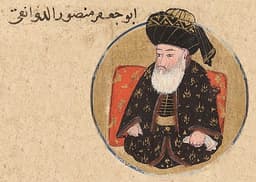
Abu Jafar al-Mansur
Emperor · Medieval
65.5Total
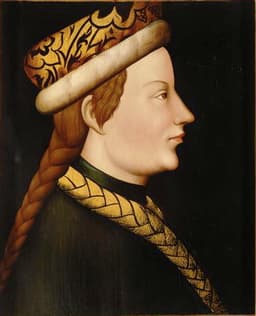
Albert III of Austria
Emperor · Medieval
53.4Total
Basic Information
Born
714
1349
Died
775
1395
Era
Medieval
Medieval
Nationality
Abbasid Caliphate
Austria
Occupation
Emperor
Emperor
Civilization
Middle Eastern
Western
Score Comparison
Military (10%)
65.0
50.0
Political (20%)
75.0
54.7
Influence (20%)
40.0
53.3
Legacy (20%)
80.0
44.2
Leadership (15%)
82.0
80.0
Strategy (15%)
55.0
38.6
TOTAL
65.5
53.4
Abu Jafar al-Mansur — Complete Timeline
754 AD
Consolidated Abbasid Power After the RevolutionPolitical Action◆ Major
Al-Mansur eliminated rivals including his uncle Abd Allah ibn Ali and the Barmakids, securing Abbasid control. He established a centralized bureaucracy and suppressed rebellions, including the Rawandiyya uprising.
Impact: global
762 AD
Founded the City of BaghdadPolitical Action
Abu Jafar al-Mansur founded the city of Baghdad as the new capital of the Abbasid Caliphate. The Round City was designed as a center of administration and culture, becoming one of the largest cities in the world.
Impact: globalconstructive
770 AD
Patronized Translation of Greek WorksCultural◆ Major
Al-Mansur supported the translation of Greek philosophical and scientific texts into Arabic. This initiative laid the foundation for the Abbasid translation movement, which preserved and expanded classical knowledge.
Impact: globalconstructive
Albert III of Austria — Complete Timeline
1379 AD
Founded the Albertinian Line of the HabsburgsPolitical Action◆ Major
Albert III, along with his brother Leopold III, divided the Habsburg territories in the Treaty of Neuberg. Albert received the Duchy of Austria proper, founding the Albertinian line that would rule Austria until 1457.
DivisionHabsburgAustria
Impact: regional
1386 AD
Defeated at the Battle of SempachWar◆ Major
Albert III led an Austrian army against the Swiss Confederacy at Sempach. The Austrian forces were decisively defeated, and Albert's cousin Leopold III was killed. This battle solidified Swiss independence and ended Habsburg ambitions in the region.
BattleSwiss ConfederacyDefeat
Impact: regionaltragic
Expert Analysis
Albert III of Austria vs Abu Jafar al-Mansur
# The Builder and the Bureaucrat: Two Visions of Medieval Power
On a dusty August morning in 1386, Duke Albert III of Austria watched his knights charge uphill into the Swiss pikes at Sempach, a battle that would shatter his ambitions and leave him scrambling to salvage what remained of his authority. Just over a century earlier, in the summer of 762, a very different ruler—Abu Jafar al-Mansur of the Abbasid Caliphate—stood on the banks of the Tigris River, overseeing the construction of a perfect circle of brick and ambition, a city he called Madinat al-Salam, the City of Peace, which the world would come to know as Baghdad. One man built an empire of land; the other built an empire of mind. Their stories, separated by faith and geography, reveal how two medieval rulers shaped their worlds through choices that echoed down centuries.
Origins
Albert III was born in 1349 into a Habsburg dynasty already old in power but young in consolidation. His father, Duke Albert II, had begun the slow work of stitching together the scattered Austrian duchies, but the son inherited a realm more defined by its fractures than its unity. The Holy Roman Empire in the late fourteenth century was a patchwork of competing princes, free cities, and ecclesiastical lords, where a duke's authority depended less on imperial decree than on his ability to outmaneuver rivals. Albert grew up in a world of constant negotiation, where bloodlines mattered but brute force decided the final outcome.
Al-Mansur, born in 714, emerged from a very different crucible. The Abbasid Revolution had toppled the Umayyad Caliphate in 750, and his brother al-Saffah had claimed the caliphate amid the blood of dynastic slaughter. Al-Mansur learned early that power in the Islamic world was a knife's edge—one slip, and the Abbasids would follow the Umayyads into oblivion. His upbringing was steeped in the political theology of the caliphate, where rule was justified by piety and genealogy, but secured by ruthlessness. Where Albert saw a world of feudal obligations, al-Mansur saw a world of ideological contest.
Rise to Power
Albert III entered the historical stage through inheritance, not revolution. When his father died in 1365, he ruled jointly with his brother Leopold III, a partnership that lasted fourteen years before fracturing. The Treaty of Neuberg in 1379 divided the Habsburg lands: Albert took Austria proper, Leopold took Styria, Carinthia, and Tyrol. This was not a grand ascent but a careful partition, a recognition that the Habsburg holdings had grown too unwieldy for one man. Albert's power came not from conquest but from compromise, and his reign would be defined by the limits this imposed.
Al-Mansur's rise was anything but peaceful. When his brother died in 754, al-Mansur faced immediate rebellion from his uncle Abd Allah ibn Ali, who commanded a veteran army. He crushed the revolt with a combination of military force and political assassination, then turned on the Barmakids, the powerful Persian family who had helped the Abbasids seize power. By 755, al-Mansur had eliminated every serious rival, establishing a precedent that the caliphate would tolerate no competition. His path to power was paved with the bodies of allies and enemies alike.
Leadership & Governance
Albert III governed as a medieval duke governed: through personal relationships, local privileges, and the careful management of noble factions. His military score of 41.5 reflects the disaster at Sempach in 1386, where Swiss infantry—outnumbered but fighting on ground of their choosing—annihilated his cavalry. The battle exposed the limits of traditional feudal warfare against motivated infantry, but Albert's political score of 57.6 suggests he understood that governance required more than battlefield victories. He spent his later years consolidating the Albertinian line, securing inheritances, and managing the complex web of Habsburg alliances.
Al-Mansur, by contrast, governed as an architect of civilization. His political score of 67.9 and leadership score of 79.4 reflect a ruler who understood that power required institutions, not just armies. The founding of Baghdad in 762 was his masterstroke—a capital designed as a perfect circle, with the caliph's palace at its center, surrounded by administrative offices, markets, and residential quarters. But more importantly, al-Mansur patronized the translation of Greek philosophical and scientific texts into Arabic, a decision that would transform Islamic civilization into the world's leading center of knowledge. While Albert managed a duchy, al-Mansur built a world city.
Triumph & Tragedy
Albert's tragedy lies in Sempach. The battle was not just a defeat but a symbol of the limits of Habsburg ambition against the rising power of the Swiss Confederacy. His triumph was more modest: the Treaty of Neuberg, which created the Albertinian line, ensured that his descendants would continue to rule Austria for generations. His legacy of 58.4 reflects a ruler who held what he had but failed to expand it.
Al-Mansur's triumph was Baghdad, a city that would become the intellectual capital of the medieval world. His tragedy was the price of that achievement: the blood he spilled to secure his throne, the rivals he destroyed, the families he purged. His influence score of 75.0 and legacy score of 70.0 acknowledge that he built something that outlasted him, but the cost was measured in human lives.
Character & Destiny
Albert III was a consolidator, not a visionary. His personality—cautious, legalistic, focused on inheritance and stability—shaped a reign of maintenance rather than transformation. He accepted the division of Habsburg lands because he could not imagine a unified Austria; his destiny was to preserve what his ancestors had built, not to build anew.
Al-Mansur was a builder and a destroyer. His paranoia drove him to eliminate rivals, but his vision drove him to create institutions that would outlast any single ruler. He understood that empire required not just swords but books, not just governors but scholars. His destiny was to lay the foundations of a golden age he would not live to see.
Legacy
Albert III is remembered today as a footnote in Habsburg history, the founder of a line that would eventually produce the great Habsburg emperors of the early modern period. His name appears in genealogical tables and regional histories, but few outside Austria recall his reign.
Al-Mansur is remembered as the second founder of the Abbasid Caliphate, the man who gave Baghdad its shape and purpose. The House of Wisdom, the translation movement, the flowering of Islamic philosophy and science—all trace their origins to his patronage. His name echoes through the streets of a city that still bears his mark.
Conclusion
Two rulers, two worlds, two legacies. Albert III of Austria managed a duchy; Abu Jafar al-Mansur built a civilization. One fought to hold what he had; the other dared to imagine what could be. In the end, the difference between them is not merely the difference between a duke and a caliph, but between a man who accepted the world as it was and a man who insisted on remaking it. The Swiss pikemen who broke Albert's cavalry at Sempach are long forgotten; the scholars who translated Aristotle in Baghdad are not. Some rulers govern their time; others govern the future.
Rankings
🥇
Abu Jafar al-MansurLeader
Mil: 65.0Pol: 75.0Inf: 40.0
65.5
🥈
Albert III of Austria
Mil: 50.0Pol: 54.7Inf: 53.3
53.4
+12.1 behind
How This Comparison Works
Algorithm
Each figure is scored on 6 dimensions (0—100 scale) based on structured historical data: Military (10%), Political (20%), Influence (20%), Legacy (20%), Leadership (15%), Strategy (15%). The weighted total produces the final ranking.
Data Sources
Scores are computed from structured sub-indicators in the database. Scale factors adjust for era (Ancient ×0.85, Modern ×1.0) and civilization size (Eastern ×1.05, Other ×0.80) to account for differences in population and military scale.
Maximum 3 Figures
Comparisons are limited to 2—3 figures to ensure readability and statistical meaningfulness.
Error Margins
±5 points per dimension — Sub-scores are derived from historical records with inherent uncertainty. Two figures within 5 points on a dimension should be considered roughly equivalent in that area.
Total Score Accuracy
±3 points overall — The weighted combination of 6 dimensions produces a total score with approximately ±3 points of uncertainty. Differences of less than 3 points are not statistically significant— the figures are effectively tied.
Known Limitations
- Historical records are incomplete and uneven across civilizations
- Figures from oral-tradition societies may be underrepresented
- Occupation labels can misclassify multi-role figures
- Scores measure capability and impact, not moral character
- Quantitative scoring is a comparison tool, not absolute truth
Capability Radar
Military (10%) — Battles & Warfare
Battles
60
20
Win Rate
65
25
Expansion
70
20
Political (20%) — Governance & Reform
Reform
90
40
Diplomacy
80
45
Economy
85
40
Influence (20%) — Cultural & Global Reach
Cultural
85
30
Global
80
20
Legacy (20%) — Historical Impact
Historical
90
35
Longevity
85
30
Leadership (15%) — Power & Stability
Tenure
85
60
Stability
75
35
Strategy (15%) — Tactics & Innovation
Strategy
70
25
Tactics
55
20
Reform
75
15
Similar Comparisons
Comments & Discussion
No comments yet. Be the first to share your thoughts!