Loading...
Abu Bakr vs Yuwen Yong
Abu Bakr leads by 9.9 pts · 2 figures compared
…
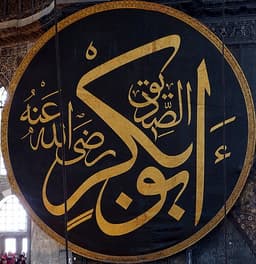
Abu Bakr
Emperor · Medieval
77.1Total
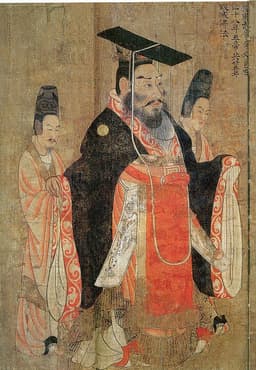
Yuwen Yong
Emperor · Medieval
67.2Total
Basic Information
Born
573
543
Died
634
578
Era
Medieval
Medieval
Nationality
Rashidun Caliphate
China
Occupation
Emperor
Emperor
Civilization
Middle Eastern
Eastern
Score Comparison
Military (10%)
74.7
78.0
Political (20%)
62.7
78.0
Influence (20%)
88.0
58.0
Legacy (20%)
80.0
54.0
Leadership (15%)
77.2
85.0
Strategy (15%)
66.3
69.1
TOTAL
77.1
67.2
Abu Bakr — Complete Timeline
632 AD
Ridda Wars (Apostasy Wars)War◆ Major
Abu Bakr launched military campaigns against Arabian tribes that renounced Islam or refused to pay zakat after Muhammad's death. The wars, led by generals like Khalid ibn al-Walid, reestablished Muslim control over Arabia and consolidated the caliphate.
Ridda WarsConsolidationRashidun
Impact: regional
Election as First CaliphPolitical Action
After the death of Muhammad, Abu Bakr was elected as the first caliph (successor) at Saqifah. His election unified the Muslim community, though it caused controversy among some supporters of Ali. He became the leader of the nascent Islamic state.
CaliphateSuccessionRashidun
Impact: global
633 AD
Compilation of the QuranCultural◆ Major
Abu Bakr ordered the compilation of the Quran into a single written manuscript after many memorizers died in the Ridda Wars. Zayd ibn Thabit collected verses from various sources, creating the first official codex, which later served as the basis for Uthman's standard text.
QuranCompilationRashidun
Impact: globalconstructive
634 AD
Death of Abu BakrPolitical Action◆ Major
Abu Bakr died after a brief illness, having designated Umar as his successor. His caliphate lasted only two years but established the foundations of the Islamic state, including the expansion beyond Arabia and the preservation of the Quran.
DeathSuccessionRashidun
Impact: global
Yuwen Yong — Complete Timeline
574 AD
Suppression of Buddhism in Northern ZhouReform◆ Major
Emperor Wu of Northern Zhou (Yuwen Yong) ordered the suppression of Buddhism, confiscating monastic lands, forcing monks and nuns to return to lay life, and destroying temples. He aimed to increase state revenue and military manpower, strengthening the state.
Northern ZhouBuddhist PersecutionReform
Impact: nationaldestructive
577 AD
Conquest of Northern QiWar
Emperor Wu led a successful campaign against the rival Northern Qi dynasty, conquering its territory and unifying northern China under Northern Zhou. This victory ended the division of the north and set the stage for the Sui dynasty's unification of all China.
Northern ZhouUnificationNorthern Qi
Impact: regionalconstructive
578 AD
Death during campaign against the TurksWar◆ Major
Emperor Wu died of illness while leading a campaign against the G
Northern ZhouMilitary CampaignDeath
Impact: regionaltragic
Expert Analysis
Yuwen Yong vs Abu Bakr
### The Two-Year Emperor and the Six-Year Unifier
In the year 632, as the Prophet Muhammad lay dying in Medina, a crisis of succession threatened to tear apart the fragile Muslim community. Across the world, in a divided China still reeling from centuries of fragmentation, a boy named Yuwen Yong was growing up in the shadow of a brutal regime. One man would become a caliph who ruled for just two years; the other an emperor who reigned for six. Both faced the monumental task of unifying fractured lands, but their paths, their methods, and their legacies could not have been more different. Why did one leave an empire that would stretch from Spain to India, while the other left a dynasty that crumbled within decades?
### Origins
Abu Bakr was born around 573 in Mecca, a merchant city of polytheistic tribes. He was a cloth trader, known for his honesty and gentle nature—a man who earned the nickname *Al-Siddiq*, "the Truthful." When his close friend Muhammad began preaching Islam, Abu Bakr was the first free adult male to convert, a decision that cost him social standing but cemented his bond with the Prophet. He was not a warrior by instinct; his power came from trust, from being the man who stood beside Muhammad in the cave during the Hijra, sharing the Prophet's exile.
Yuwen Yong, born in 543, was a prince of the Xianbei-ruled Northern Zhou dynasty, a regime born from the ashes of rebellion. His father was a general, his uncle an emperor, and his early life was a crucible of violence. At age fourteen, he witnessed his elder brother, the emperor, murdered by a tyrannical regent. To survive, Yuwen Yong learned to feign incompetence, playing the fool while plotting in secret. His world was one of court intrigue, ethnic tension between Han Chinese and Xianbei elites, and the constant threat of assassination. Where Abu Bakr's authority derived from moral example, Yuwen Yong's would be forged in blood and calculation.
### Rise to Power
Abu Bakr's rise was almost accidental. When Muhammad died in 632, the Muslim community panicked. Some tribes refused to pay the religious tax, others declared their own prophets. At Saqifah, a hastily convened meeting of Medina's leaders, Abu Bakr was elected caliph—not because he sought power, but because he was the only figure who could hold the fractious Ansar and Muhajirun together. His election was a political compromise, a desperate choice to prevent civil war.
Yuwen Yong's ascent was far more deliberate. In 560, after a series of palace coups, he seized the throne at age seventeen, but real power remained with his cousin Yuwen Hu, a ruthless regent who had already murdered two emperors. For twelve years, Yuwen Yong played the role of a passive puppet, granting his cousin honors and pretending to be weak. Then, in 572, he struck. During a routine visit to the regent's palace, Yuwen Yong ambushed Yuwen Hu with a jade scepter, and his guards finished the job. It was not an election; it was an assassination, the calculated end of a long patience.
### Leadership & Governance
As caliph, Abu Bakr faced the Ridda Wars—a series of campaigns against Arabian tribes that had renounced Islam after Muhammad's death. He did not lead armies personally; instead, he dispatched generals like Khalid ibn al-Walid, trusting their military judgment while providing strategic direction. His genius was political: he insisted that apostasy was not just rebellion but heresy, transforming a tribal conflict into a holy war. He also ordered the compilation of the Quran into a single manuscript, preserving the faith's scripture when hundreds of its memorizers died in battle. His leadership was gentle but firm, a shepherd's crook wrapped in iron.
Yuwen Yong ruled with an iron fist and a legalist mind. He suppressed Buddhism in 574, confiscating monastery lands, forcing monks and nuns back into secular life, and burning scriptures. This was not religious zealotry but state-building: the Buddhist establishment had grown wealthy and independent, draining tax revenue and manpower. He also reformed the military, merging Xianbei cavalry with Han infantry, and standardized weights and measures. His conquest of the rival Northern Qi in 577 was a masterpiece of strategy—a lightning campaign that exploited the enemy's internal divisions. Where Abu Bakr unified through faith, Yuwen Yong unified through force and bureaucracy.
### Triumph & Tragedy
Abu Bakr's greatest triumph was the completion of the Ridda Wars, which left Arabia united under a single Islamic state. His greatest tragedy was his brevity: he died in 634 after only two years, having designated Umar as his successor. He never saw the conquest of Persia or Syria, never witnessed the empire he founded expand beyond the desert.
Yuwen Yong's triumph was the unification of northern China, a feat that had eluded warlords for centuries. He died in 578 at age thirty-five, struck down by illness while campaigning against the Göktürks. His tragedy was that his son, Emperor Xuan, was a debauched tyrant who reversed his father's reforms, leading to the collapse of Northern Zhou just three years later. Yuwen Yong's empire was a candle that burned bright and then guttered out.
### Character & Destiny
Abu Bakr was a man of quiet confidence. He trusted others, delegated authority, and ruled through consensus. His destiny was to be the foundation—the first stone of a building that would outlast him. Yuwen Yong was a man of icy calculation. He trusted no one, centralized power, and ruled through fear. His destiny was to be the architect of a structure that collapsed because he had not trained others to hold it up. One built a faith; the other built a machine.
### Legacy
Today, Abu Bakr is remembered as the first caliph, the "Companion in the Cave," the man who preserved the Quran. His legacy is the Sunni Caliphate itself, a institution that would shape world history for a millennium. Yuwen Yong is a footnote in Chinese histories, remembered as a capable emperor who suppressed Buddhism and unified the north—but whose work was undone by his own son. His legacy is a cautionary tale: that even the strongest ruler cannot save a dynasty from a bad heir.
### Conclusion
These two men, separated by deserts and centuries, faced the same essential challenge: how to hold together a world that was falling apart. Abu Bakr succeeded because he understood that unity requires faith, not just force. Yuwen Yong succeeded because he understood that force, properly applied, can create order—but not loyalty. One left a civilization; the other left a lesson. In the end, the two-year emperor built something that lasted, while the six-year unifier built something that vanished. Perhaps that is the deepest difference of all: the difference between founding a religion and ruling a state.
Rankings
🥇
Abu BakrLeader
Mil: 74.7Pol: 62.7Inf: 88.0
77.1
🥈
Yuwen Yong
Mil: 78.0Pol: 78.0Inf: 58.0
67.2
+9.9 behind
How This Comparison Works
Algorithm
Each figure is scored on 6 dimensions (0—100 scale) based on structured historical data: Military (10%), Political (20%), Influence (20%), Legacy (20%), Leadership (15%), Strategy (15%). The weighted total produces the final ranking.
Data Sources
Scores are computed from structured sub-indicators in the database. Scale factors adjust for era (Ancient ×0.85, Modern ×1.0) and civilization size (Eastern ×1.05, Other ×0.80) to account for differences in population and military scale.
Maximum 3 Figures
Comparisons are limited to 2—3 figures to ensure readability and statistical meaningfulness.
Error Margins
±5 points per dimension — Sub-scores are derived from historical records with inherent uncertainty. Two figures within 5 points on a dimension should be considered roughly equivalent in that area.
Total Score Accuracy
±3 points overall — The weighted combination of 6 dimensions produces a total score with approximately ±3 points of uncertainty. Differences of less than 3 points are not statistically significant— the figures are effectively tied.
Known Limitations
- Historical records are incomplete and uneven across civilizations
- Figures from oral-tradition societies may be underrepresented
- Occupation labels can misclassify multi-role figures
- Scores measure capability and impact, not moral character
- Quantitative scoring is a comparison tool, not absolute truth
Capability Radar
Military (10%) — Battles & Warfare
Battles
65
75
Win Rate
70
80
Expansion
85
80
Political (20%) — Governance & Reform
Reform
85
85
Diplomacy
80
70
Economy
70
75
Influence (20%) — Cultural & Global Reach
Cultural
70
40
Global
85
40
Legacy (20%) — Historical Impact
Historical
85
65
Longevity
90
50
Leadership (15%) — Power & Stability
Tenure
60
60
Stability
75
70
Strategy (15%) — Tactics & Innovation
Strategy
75
75
Tactics
60
70
Reform
80
85
Similar Comparisons
Comments & Discussion
TheSteppeSage6/16/2026
Yuwen Yong was a military pragmatist who understood that true unification requires blood and iron, not just faith. While Abu Bakr held the nascent Muslim community together through personal loyalty and religious authority, Yong systematically dismantled the Xianbei aristocracy's power, reformed military households, and conquered Northern Qi in a single brilliant campaign. A caliph who ruled two years is a footnote; a six-year emperor who reshaped an entire dynasty's command structure is a strate
铁血粮草官6/16/2026
别跟我谈信仰,谈粮食。宇文邕灭佛是经济账:北周当时僧尼占人口十分之一,却掌控大量免税田产。他一声令下,三百万僧尼还俗,四万寺庙充公,财政收入直接翻倍。阿布·贝克尔在位两年光打仗,连稳定的税基都没建立。谁真正懂得治国?一个拆庙建仓,一个靠圣战透支,结论很明白。
SkepticalAlexandrian6/16/2026
The comparison mistranslates Abu Bakr's legacy through modern imperial lenses. He didn't "unify" an empire—he suppressed tribal revolts during the Ridda Wars, preserving a fragile religious coalition that his successors turned into conquest. Yuwen Yong actually unified a fractured China by annexing Northern Qi, a tangible state with borders and bureaucracy. Apples to oranges: one held a theological band together; the other conquered a rival kingdom with an established tax system. Only one statis
六朝梦碎人6/16/2026
宇文邕的悲剧在被他孙子杨坚摘了桃子。他苦心经营十二年,改革府兵制、打压关陇门阀,结果北周亡在他死后才两年。阿布·贝克尔虽短命,却创造了延续六个世纪的哈里发体制。评价统治者不能只算在位时间,要看制度寿命。宇文邕是匠人铸剑,剑未淬火就断了;阿布·贝克尔是点火之人,火燃烧了千年。历史的讽刺在于:实干家输给了符号。