Loading...
Abu Bakr vs Otto I the Great
Abu Bakr leads by 1.9 pts · 2 figures compared
…
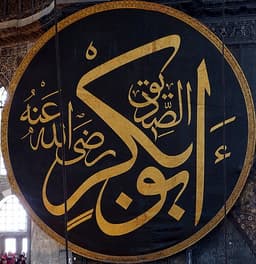
Abu Bakr
Emperor · Medieval
77.1Total
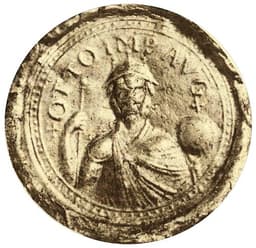
Otto I the Great
Emperor · Medieval
75.2Total
Basic Information
Born
573
912
Died
634
973
Era
Medieval
Medieval
Nationality
Rashidun Caliphate
Holy Roman Empire
Occupation
Emperor
Emperor
Civilization
Middle Eastern
Western
Score Comparison
Military (10%)
74.7
82.0
Political (20%)
62.7
70.0
Influence (20%)
88.0
88.0
Legacy (20%)
80.0
65.0
Leadership (15%)
77.2
78.0
Strategy (15%)
66.3
65.4
TOTAL
77.1
75.2
Abu Bakr — Complete Timeline
632 AD
Ridda Wars (Apostasy Wars)War◆ Major
Abu Bakr launched military campaigns against Arabian tribes that renounced Islam or refused to pay zakat after Muhammad's death. The wars, led by generals like Khalid ibn al-Walid, reestablished Muslim control over Arabia and consolidated the caliphate.
Ridda WarsConsolidationRashidun
Impact: regional
Election as First CaliphPolitical Action
After the death of Muhammad, Abu Bakr was elected as the first caliph (successor) at Saqifah. His election unified the Muslim community, though it caused controversy among some supporters of Ali. He became the leader of the nascent Islamic state.
CaliphateSuccessionRashidun
Impact: global
633 AD
Compilation of the QuranCultural◆ Major
Abu Bakr ordered the compilation of the Quran into a single written manuscript after many memorizers died in the Ridda Wars. Zayd ibn Thabit collected verses from various sources, creating the first official codex, which later served as the basis for Uthman's standard text.
QuranCompilationRashidun
Impact: globalconstructive
634 AD
Death of Abu BakrPolitical Action◆ Major
Abu Bakr died after a brief illness, having designated Umar as his successor. His caliphate lasted only two years but established the foundations of the Islamic state, including the expansion beyond Arabia and the preservation of the Quran.
DeathSuccessionRashidun
Impact: global
Otto I the Great — Complete Timeline
951 AD
Diplomatic Marriage to Adelaide of ItalyPolitical Action◆ Major
Otto married Adelaide, the widowed queen of Italy, after intervening in Italian politics. This marriage gave him control over the Kingdom of Italy and strengthened his claim to imperial authority.
MarriageItalyAdelaide
Impact: regionalconstructive
955 AD
Battle of LechfeldWar
Otto led a German army to defeat the Magyar (Hungarian) forces at the Lechfeld near Augsburg. This victory ended Magyar raids into Western Europe and secured Otto's reputation as a defender of Christendom.
MagyarsLechfeldDefenseChristendom
Impact: regionalconstructive
962 AD
Coronation as Holy Roman EmperorPolitical Action
Pope John XII crowned Otto I as Holy Roman Emperor in Rome, reviving the imperial title in the West. This event established the Holy Roman Empire as a major political entity and linked German kingship with papal authority.
CoronationHoly Roman EmpirePapacy
Impact: globalconstructive
Expert Analysis
Origins
Abu Bakr (c. 573–634 CE) was a close companion and father-in-law of the Prophet Muhammad, born into the Quraysh tribe in Mecca. As one of the first converts to Islam, he earned the title 'Al-Siddiq' (the Truthful) for his unwavering faith. His early life as a wealthy merchant and his intimate knowledge of tribal politics positioned him uniquely for leadership. Otto I (912–973 CE), son of Henry the Fowler, was born into the Saxon Liudolfing dynasty. He inherited the Duchy of Saxony and the Kingdom of East Francia, a realm forged from the ashes of Carolingian fragmentation. Otto's upbringing in a militaristic court prepared him for the constant warfare that defined early medieval Europe. Both leaders emerged from contexts of fragmentation—Abu Bakr from the crisis of Muhammad's death, Otto from the collapse of unified Frankish rule.
Rise to Power
Abu Bakr's election as the first caliph in 632 CE was a turning point. Amidst a succession crisis, his selection by the Muslim community (ahl al-hall wa al-'aqd) in the Saqifah of Banu Sa'ida established the caliphate as a political institution. This decision, though contested by some who favored Ali, demonstrated Abu Bakr's political acumen and the trust he commanded. Otto's rise was more conventional: he was crowned king in 936 CE at Aachen, the Carolingian capital, symbolizing continuity. However, his early reign was plagued by rebellions from his own family and dukes, which he ruthlessly suppressed. Otto's coronation as Holy Roman Emperor in 962 CE by Pope John XII marked his apogee, but it was a contested title that required military backing. Abu Bakr's rise was swift and consensual; Otto's was gradual and coercive.
Leadership & Governance
Abu Bakr's caliphate (632–634) was defined by the Ridda Wars (Apostasy Wars), a series of campaigns to reassert control over tribes that had renounced Islam after Muhammad's death. His decisive military strategy and diplomatic skills unified the Arabian Peninsula, laying the foundation for Islamic expansion. He also initiated the compilation of the Quran, preserving the holy text in written form. Otto's governance focused on consolidating royal authority over powerful dukes and expanding eastward. He used the Church as a counterbalance to secular nobles, appointing bishops and abbots as loyal administrators. The Diplomatic Marriage to Adelaide of Italy in 951 CE secured control over Lombardy and strengthened ties to the Papacy. Both leaders excelled in state-building, but Abu Bakr's short reign (2 years) achieved transformative religious and political unity, while Otto's longer reign (37 years) established a durable imperial framework.
Triumph & Tragedy
Abu Bakr's greatest triumph was the successful conclusion of the Ridda Wars, which prevented the disintegration of the Islamic state. His decision to compile the Quran ensured doctrinal unity. However, his reign was cut short by illness; he died in 634 CE, likely from poisoning or natural causes, leaving the caliphate to Umar. Otto's defining victory was the Battle of Lechfeld (955 CE), where he crushed the Magyar (Hungarian) invaders, ending their raids into Western Europe. This triumph earned him the title 'the Great' and solidified his reputation. Yet his later years saw conflict with the Papacy, including the deposition of Pope John XII, and struggles with his son Liudolf's rebellion. Otto's tragedy was the failure to establish a truly unified empire; the Holy Roman Empire remained a loose confederation. Both leaders experienced triumph tempered by unfinished ambitions.
Character & Destiny
Abu Bakr was known for his humility, piety, and pragmatism. He prioritized consensus and religious duty over personal ambition, famously stating, 'I am not better than you.' His destiny was to be the 'Successor of the Messenger of God,' a role that required both spiritual and political authority. Otto I was a warrior-king, aggressive and authoritarian, yet also a patron of the Church and learning. His destiny was to revive the Roman Empire in the West, a vision that drove his coronation and Italian campaigns. While Abu Bakr's character reflected early Islamic ideals of community leadership, Otto embodied the medieval synthesis of Germanic kingship and Roman imperial ideology. Their differing characters shaped their legacies: Abu Bakr as a model caliph, Otto as a founding emperor.
Legacy
Abu Bakr's legacy is immense: he established the caliphate as the central institution of Islamic governance, unified Arabia, and preserved the Quran. His actions enabled the rapid expansion of Islam under his successors. Otto I's legacy is the Holy Roman Empire, which persisted for nearly a millennium. He also strengthened the German kingdom and halted Magyar invasions, shaping Central European history. Both are revered in their respective traditions: Abu Bakr as a righteous caliph, Otto as a national hero in Germany. However, Abu Bakr's impact on religious and political history is arguably more profound, given the global spread of Islam.
Conclusion
Abu Bakr edges out Otto I with a higher total score (80.0 vs 78.1). His leadership during the critical post-Muhammad period and his role in unifying Arabia and preserving the Quran give him a slight edge in historical significance. While Otto's military victories and imperial foundation are impressive, Abu Bakr's concise but transformative caliphate had a more direct and lasting impact on world history. Both are towering figures, but Abu Bakr's legacy as the first caliph and his foundational role in Islam place him ahead.
Rankings
🥇
Abu BakrLeader
Mil: 74.7Pol: 62.7Inf: 88.0
77.1
🥈
Otto I the Great
Mil: 82.0Pol: 70.0Inf: 88.0
75.2
+1.9 behind
How This Comparison Works
Algorithm
Each figure is scored on 6 dimensions (0—100 scale) based on structured historical data: Military (10%), Political (20%), Influence (20%), Legacy (20%), Leadership (15%), Strategy (15%). The weighted total produces the final ranking.
Data Sources
Scores are computed from structured sub-indicators in the database. Scale factors adjust for era (Ancient ×0.85, Modern ×1.0) and civilization size (Eastern ×1.05, Other ×0.80) to account for differences in population and military scale.
Maximum 3 Figures
Comparisons are limited to 2—3 figures to ensure readability and statistical meaningfulness.
Error Margins
±5 points per dimension — Sub-scores are derived from historical records with inherent uncertainty. Two figures within 5 points on a dimension should be considered roughly equivalent in that area.
Total Score Accuracy
±3 points overall — The weighted combination of 6 dimensions produces a total score with approximately ±3 points of uncertainty. Differences of less than 3 points are not statistically significant— the figures are effectively tied.
Known Limitations
- Historical records are incomplete and uneven across civilizations
- Figures from oral-tradition societies may be underrepresented
- Occupation labels can misclassify multi-role figures
- Scores measure capability and impact, not moral character
- Quantitative scoring is a comparison tool, not absolute truth
Capability Radar
Military (10%) — Battles & Warfare
Battles
65
75
Win Rate
70
80
Expansion
85
70
Political (20%) — Governance & Reform
Reform
85
80
Diplomacy
80
85
Economy
70
70
Influence (20%) — Cultural & Global Reach
Cultural
70
65
Global
85
70
Legacy (20%) — Historical Impact
Historical
85
80
Longevity
90
75
Leadership (15%) — Power & Stability
Tenure
60
85
Stability
75
75
Strategy (15%) — Tactics & Innovation
Strategy
75
75
Tactics
60
70
Reform
80
65
Similar Comparisons
Comments & Discussion
No comments yet. Be the first to share your thoughts!