Loading...
Abu Bakr vs Emperor Sujin
Abu Bakr leads by 25.5 pts · 2 figures compared
…
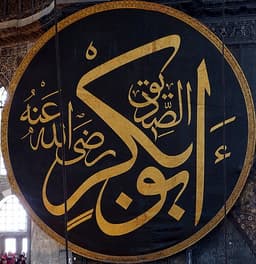
Abu Bakr
Emperor · Medieval
77.1Total
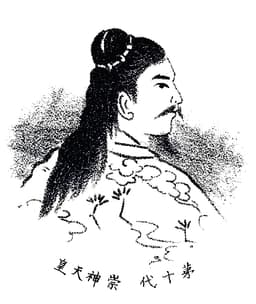
Emperor Sujin
Emperor · Ancient
51.6Total
Basic Information
Born
573
-148
Died
634
-30
Era
Medieval
Ancient
Nationality
Rashidun Caliphate
Japan
Occupation
Emperor
Emperor
Civilization
Middle Eastern
Eastern
Score Comparison
Military (10%)
74.7
50.0
Political (20%)
62.7
68.0
Influence (20%)
88.0
47.1
Legacy (20%)
80.0
43.3
Leadership (15%)
77.2
72.0
Strategy (15%)
66.3
30.3
TOTAL
77.1
51.6
Abu Bakr — Complete Timeline
632 AD
Ridda Wars (Apostasy Wars)War◆ Major
Abu Bakr launched military campaigns against Arabian tribes that renounced Islam or refused to pay zakat after Muhammad's death. The wars, led by generals like Khalid ibn al-Walid, reestablished Muslim control over Arabia and consolidated the caliphate.
Ridda WarsConsolidationRashidun
Impact: regional
Election as First CaliphPolitical Action
After the death of Muhammad, Abu Bakr was elected as the first caliph (successor) at Saqifah. His election unified the Muslim community, though it caused controversy among some supporters of Ali. He became the leader of the nascent Islamic state.
CaliphateSuccessionRashidun
Impact: global
633 AD
Compilation of the QuranCultural◆ Major
Abu Bakr ordered the compilation of the Quran into a single written manuscript after many memorizers died in the Ridda Wars. Zayd ibn Thabit collected verses from various sources, creating the first official codex, which later served as the basis for Uthman's standard text.
QuranCompilationRashidun
Impact: globalconstructive
634 AD
Death of Abu BakrPolitical Action◆ Major
Abu Bakr died after a brief illness, having designated Umar as his successor. His caliphate lasted only two years but established the foundations of the Islamic state, including the expansion beyond Arabia and the preservation of the Quran.
DeathSuccessionRashidun
Impact: global
Emperor Sujin — Complete Timeline
100 BC
Organized the Yamato StateReform◆ Major
Emperor Sujin is recorded in the Nihon Shoki as having organized the Yamato state, establishing administrative structures and military garrisons. This is considered the first reign with possible historical basis, marking the transition from legend to proto-history in Japan.
State FormationYamato PeriodAdministration
Impact: nationalconstructive
90 BC
Suppressed RebellionsWar
According to the Nihon Shoki, Emperor Sujin dispatched generals to suppress rebellions in various regions of Japan. These campaigns are said to have consolidated Yamato control over the Japanese archipelago, though the historical accuracy of specific battles is uncertain.
Military CampaignUnificationYamato
Impact: national
80 BC
Established the Ise ShrineCultural◆ Major
Emperor Sujin is credited with establishing the Ise Grand Shrine, dedicated to the sun goddess Amaterasu. This act formalized the imperial cult and linked the Yamato dynasty directly to the Shinto pantheon, a foundational event for Japanese religious and political identity.
ShintoImperial CultReligion
Impact: nationalconstructive
Expert Analysis
Emperor Sujin vs Abu Bakr
# The Caliph and the Emperor
In the year 632, as the Prophet Muhammad lay dying in Medina, two vastly different worlds were stirring. In the Arabian Peninsula, a crisis of succession threatened to shatter the fragile unity of a new faith. In the Japanese archipelago, a semi-legendary ruler was laying the foundations of a state that would endure for millennia. Abu Bakr, the aging merchant who became Islam’s first caliph, and Emperor Sujin, the shadowy figure who may have been Japan’s first historical sovereign, never knew of each other’s existence. Yet their parallel struggles—to consolidate power, define governance, and create lasting institutions—reveal how leadership in the ancient world was shaped by the raw materials of geography, time, and faith.
Origins
Abu Bakr was born in 573 into the Quraysh tribe of Mecca, a city of merchants and pilgrims. His life before Islam was unremarkable: a cloth trader, known for honesty and a gentle temperament. What set him apart was his friendship with Muhammad, a bond so deep that the Prophet once said, “If I were to take a friend, I would take Abu Bakr.” When Muhammad began preaching, Abu Bakr was among the first to believe, spending his wealth to free enslaved converts and standing by the Prophet during the darkest years in Mecca. He was a man of the city, of commerce and faith—practical, loyal, and deeply rooted in the communal life of the tribe.
Emperor Sujin, by contrast, emerges from a world of mist and myth. According to the *Nihon Shoki*, compiled centuries after his reign, he was the tenth emperor of Japan, ruling from around 97 BCE to 30 BCE. Historians debate his very existence; he is the first emperor for whom there is any credible evidence, but the line between legend and history blurs. He is said to have been a descendant of the sun goddess Amaterasu, a divine lineage that would define Japanese sovereignty for two thousand years. His world was one of clan warfare, rice cultivation, and Shinto rituals—a land of forests and islands, where power was measured not in armies but in ancestral claims.
The differences in their origins are stark. Abu Bakr came from a society of writing, trade, and monotheism, where history was recorded in scripture. Sujin came from a pre-literate, polytheistic world, where history was preserved in oral epics and later written down to legitimize a ruling house. One man’s authority derived from faith and election; the other’s, from blood and ritual.
Rise to Power
Abu Bakr’s rise was sudden and contested. When Muhammad died in 632, the Muslim community faced an existential crisis: who would lead? The Ansar (Medinan converts) gathered at Saqifah to choose a leader, while the Muhajirun (Meccan emigrants) rushed to assert their claim. In a tense meeting, Abu Bakr was elected as the first caliph—not by divine appointment, but by consensus. His first words as caliph were a warning: “I have been given authority over you, but I am not the best of you. If I do well, help me; if I do wrong, correct me.” His legitimacy rested on the fragile will of a community that had just lost its prophet.
Sujin’s path to power is obscured by legend. The *Nihon Shoki* records that he ascended the throne after his father, Emperor Kaika, and immediately faced turmoil: plagues, rebellions, and a sense that the gods were angry. Unlike Abu Bakr, Sujin did not need to win an election; his claim was hereditary, sanctified by Shinto mythology. But hereditary claims are only as strong as the sword that enforces them. Sujin’s early reign was marked by uprisings that tested his authority—and his response would shape the Yamato state.
Leadership & Governance
Abu Bakr’s caliphate lasted only two years, from 632 to 634, but it was a whirlwind of crisis and consolidation. The Ridda Wars (Apostasy Wars) erupted as Arabian tribes, seeing Muhammad’s death as the end of their allegiance, refused to pay the zakat tax and renounced Islam. Abu Bakr could have compromised; instead, he declared war on the apostates with a ferocity that shocked even his companions. “By God, if they withhold a single rope of a camel they used to give to the Prophet, I will fight them for it,” he reportedly said. His generals—Khalid ibn al-Walid, in particular—crushed the rebellions, reuniting Arabia under Muslim rule. This was not mere conquest; it was a theological imperative. For Abu Bakr, political unity was inseparable from religious obedience.
Beyond war, Abu Bakr undertook a quieter but equally momentous act: he ordered the compilation of the Quran. After the Battle of Yamama, where many Quran-memorizers died, Umar urged Abu Bakr to preserve the revelations in writing. The caliph hesitated—how could he do what the Prophet had not?—but eventually agreed. The result was the first complete manuscript of Islam’s holy book, a decision that saved the faith from fragmentation.
Sujin’s governance, as recorded in the *Nihon Shoki*, was less about theology and more about structure. He organized the Yamato state by establishing administrative districts, appointing provincial governors, and centralizing tax collection. He also suppressed rebellions by dispatching generals like Ōhiko and Takeuchi no Sukune to pacify the regions—a military campaign that, unlike Abu Bakr’s, was not about enforcing a creed but about asserting imperial authority over rival clans. His most enduring act was the establishment of the Ise Grand Shrine, dedicated to Amaterasu. By linking the imperial line to the sun goddess, Sujin created a spiritual foundation for rule that would outlast any army.
The contrast is instructive. Abu Bakr’s leadership was reactive, forged in the heat of crisis; Sujin’s was proactive, building institutions for a future he could barely imagine. One man’s state was a community of believers; the other’s, a hierarchy of clans.
Triumph & Tragedy
Abu Bakr’s triumph was the unification of Arabia—a feat that seemed impossible when he took power. Within two years, he had turned a scattering of tribes into a single polity ready to burst beyond the peninsula. His tragedy was his brevity. He died in 634, probably of illness, having designated Umar as his successor. His caliphate was a bridge between prophecy and empire, but he did not live to see the conquests that his policies enabled. In a sense, his greatest success—the survival of Islam as a unified faith—was also his quietest; it took centuries to fully appreciate.
Sujin’s triumph was the consolidation of the Yamato state, which would evolve into imperial Japan. The Ise Shrine, still standing today, is a testament to his vision. His tragedy is obscurity. Unlike Abu Bakr, whose life is documented in detail, Sujin remains a ghost—his deeds recorded in a text written centuries later, his historicity debated. He is remembered not as a man but as a symbol: the first emperor who made the state real.
Character & Destiny
Abu Bakr’s character was defined by humility and resolve. He was called *Al-Siddiq* (the Truthful), a title earned through unwavering faith. Yet his decisions—the Ridda Wars, the Quran compilation—reveal a leader who could be ruthless when necessary. His destiny was to be the first, the foundation upon which the Islamic empire was built. He did not seek power; power sought him, and he wielded it with a sense of sacred duty.
Sujin’s character is harder to discern. The *Nihon Shoki* portrays him as a sage ruler, but the text is more concerned with legitimizing the imperial line than with psychological depth. His destiny was to be a bridge between myth and history—a figure whose very existence allowed later emperors to claim an unbroken lineage back to the gods. Where Abu Bakr’s personality shaped his decisions, Sujin’s decisions shaped a personality that would be idealized for millennia.
Legacy
Abu Bakr is remembered as the first caliph, the unifier of Arabia, and the preserver of the Quran. His legacy is both political and spiritual: he set the precedent for how Muslim rulers would be chosen, how dissent would be handled, and how scripture would be safeguarded. In Sunni Islam, he is revered as the greatest of the caliphs, a model of piety and leadership.
Sujin’s legacy is more diffuse. He is venerated in Shinto tradition as the first historical emperor, and his establishment of the Ise Shrine remains central to Japanese religious identity. But his true impact lies in the structure he created—the Yamato state that would become Japan. Without him, the imperial line might have remained a myth; with him, it became a political reality.
Conclusion
Standing at the dawn of their respective civilizations, Abu Bakr and Sujin faced the same fundamental question: how to build a lasting order from chaos. One answered with faith and war, the other with ritual and administration. One’s story is recorded in scripture, the other’s in legend. Yet both succeeded—not because they were perfect, but because they understood the raw materials of their worlds. Abu Bakr knew that Arabia needed a prophet’s legacy to hold it together; Sujin knew that Japan needed a divine emperor to unify its clans. Their differences are the differences of two civilizations, each finding its own path to order. And in that, they are more alike than they might seem: two men who, in the crucible of crisis, built the foundations of worlds that would outlast them.
Rankings
🥇
Abu BakrLeader
Mil: 74.7Pol: 62.7Inf: 88.0
77.1
🥈
Emperor Sujin
Mil: 50.0Pol: 68.0Inf: 47.1
51.6
+25.5 behind
How This Comparison Works
Algorithm
Each figure is scored on 6 dimensions (0—100 scale) based on structured historical data: Military (10%), Political (20%), Influence (20%), Legacy (20%), Leadership (15%), Strategy (15%). The weighted total produces the final ranking.
Data Sources
Scores are computed from structured sub-indicators in the database. Scale factors adjust for era (Ancient ×0.85, Modern ×1.0) and civilization size (Eastern ×1.05, Other ×0.80) to account for differences in population and military scale.
Maximum 3 Figures
Comparisons are limited to 2—3 figures to ensure readability and statistical meaningfulness.
Error Margins
±5 points per dimension — Sub-scores are derived from historical records with inherent uncertainty. Two figures within 5 points on a dimension should be considered roughly equivalent in that area.
Total Score Accuracy
±3 points overall — The weighted combination of 6 dimensions produces a total score with approximately ±3 points of uncertainty. Differences of less than 3 points are not statistically significant— the figures are effectively tied.
Known Limitations
- Historical records are incomplete and uneven across civilizations
- Figures from oral-tradition societies may be underrepresented
- Occupation labels can misclassify multi-role figures
- Scores measure capability and impact, not moral character
- Quantitative scoring is a comparison tool, not absolute truth
Capability Radar
Military (10%) — Battles & Warfare
Battles
65
10
Win Rate
70
10
Expansion
85
20
Political (20%) — Governance & Reform
Reform
85
50
Diplomacy
80
30
Economy
70
30
Influence (20%) — Cultural & Global Reach
Cultural
70
30
Global
85
10
Legacy (20%) — Historical Impact
Historical
85
40
Longevity
90
30
Leadership (15%) — Power & Stability
Tenure
60
40
Stability
75
40
Strategy (15%) — Tactics & Innovation
Strategy
75
10
Tactics
60
10
Reform
80
20
Similar Comparisons
Comments & Discussion
MILITIA_MAX6/16/2026
Anyone claiming Sujin is "historical" is buying into Yamato propaganda. We have zero contemporary records for this guy—the Nihon Shoki was written 500 years later to retroactively legitimize the imperial line. Meanwhile, Abu Bakr's immediate consolidation of Arabia is documented by early Islamic historians, coins, and inscriptions. Sujin is a ghost. Abu Bakr is a statesman. One rewrote history; the other made it. Call Sujin an "emperor" if you want to mythologize, but don't pretend the compariso
数据铁匠6/16/2026
说苏仁是“日本第一个历史天皇”?别逗了,公元三世纪日本连文字都没有,这纯粹是靠后代编史书给祖先贴金。而阿布·巴克尔在632年接手的是一个新兴宗教的政治框架,有明确账目、部落盟约和军事行动可查。苏仁连自己是不是真人都存疑,拿他跟一个实际治理半岛的哈里发比,就像拿神话里的盘古跟罗马皇帝对比。历史比较得有硬货,不能靠传说充数。
THEOCRACY_TAP6/16/2026
The real divide here is institutional legacy versus personal charisma. Abu Bakr didn't just succeed Muhammad—he institutionalized the caliphate, created the first systematic zakat collection, and launched campaigns that preserved the Quran's textual integrity. Sujin? He allegedly expanded cultivation and built shrines. That's pre-state chieftain work, not imperial governance. The Abbasids inherited Bakr's administrative DNA. Japan's imperial house inherited Sujin's name, maybe. That's the differ
典册掌眼6/16/2026
别被“万年一系”忽悠了。苏仁在《古事记》里的定位,明显是政治神学产物——他被安排在神武之后第七代,恰好填补了从神话到“历史”的过渡空白。这不是偶然,而是八世纪编史官在制造连续性神话。而阿布·巴克尔面临的是真实危机:叛教运动、伪先知涌现、部落分裂。他动手打了里达战争,两年内完成了政治统一。一个是符号,一个是实干家。历史不骗人,但史料会骗人。
AXIS_LUPERCAL6/16/2026
Here's what nobody says: both men are products of their successor's propaganda. Sujin's "ten great generals" campaign mirrors Augustus's manipulation of Romulus myth—stories written to justify current power. Abu Bakr's portrait in early Sunni tradition as the humble, infallible companion is equally curated, especially after the First Fitna. But Sujin's narrative is far weaker archaeologically: no inscriptions, no contemporary accounts. Bakr at least has the backing of early papyri. I trust the p