Loading...
Abu Bakr vs Cleisthenes
Cleisthenes leads by 1.2 pts · 2 figures compared
…
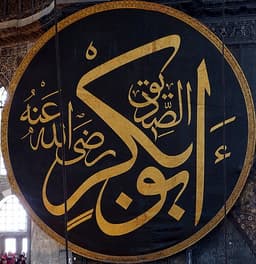
Abu Bakr
Emperor · Medieval
77.1Total
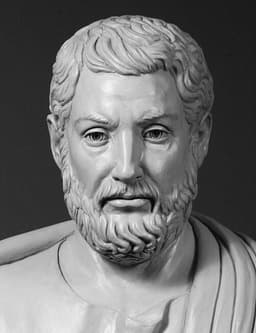
Cleisthenes
Politician · Ancient
78.3Total
Basic Information
Born
573
-570
Died
634
-508
Era
Medieval
Ancient
Nationality
Rashidun Caliphate
Greece
Occupation
Emperor
Politician
Civilization
Middle Eastern
Western
Score Comparison
Military (10%)
74.7
49.4
Political (20%)
62.7
62.7
Influence (20%)
88.0
92.0
Legacy (20%)
80.0
92.0
Leadership (15%)
77.2
72.0
Strategy (15%)
66.3
71.3
TOTAL
77.1
78.3
Abu Bakr — Complete Timeline
632 AD
Ridda Wars (Apostasy Wars)War◆ Major
Abu Bakr launched military campaigns against Arabian tribes that renounced Islam or refused to pay zakat after Muhammad's death. The wars, led by generals like Khalid ibn al-Walid, reestablished Muslim control over Arabia and consolidated the caliphate.
Ridda WarsConsolidationRashidun
Impact: regional
Election as First CaliphPolitical Action
After the death of Muhammad, Abu Bakr was elected as the first caliph (successor) at Saqifah. His election unified the Muslim community, though it caused controversy among some supporters of Ali. He became the leader of the nascent Islamic state.
CaliphateSuccessionRashidun
Impact: global
633 AD
Compilation of the QuranCultural◆ Major
Abu Bakr ordered the compilation of the Quran into a single written manuscript after many memorizers died in the Ridda Wars. Zayd ibn Thabit collected verses from various sources, creating the first official codex, which later served as the basis for Uthman's standard text.
QuranCompilationRashidun
Impact: globalconstructive
634 AD
Death of Abu BakrPolitical Action◆ Major
Abu Bakr died after a brief illness, having designated Umar as his successor. His caliphate lasted only two years but established the foundations of the Islamic state, including the expansion beyond Arabia and the preservation of the Quran.
DeathSuccessionRashidun
Impact: global
Cleisthenes — Complete Timeline
510 BC
Expulsion of the PeisistratidsPolitical Action◆ Major
Cleisthenes, with the support of the Alcmaeonid family and Spartan assistance, led the overthrow of the tyrant Hippias, son of Peisistratus. This ended the Peisistratid tyranny in Athens and opened the way for democratic reforms.
Tyranny OverthrownAthensSparta
Impact: nationalconstructive
508 BC
Reforms of CleisthenesReform
Cleisthenes reorganized the Athenian citizen body into ten new tribes based on demes, replacing the old four Ionian tribes. He established the Council of 500 (Boule) and introduced ostracism, creating a system of isonomia (equal rights) that is considered the foundation of Athenian democracy.
Athenian DemocracyConstitutional ReformAncient Greece
Impact: globalprogressive
507 BC
Introduction of OstracismReform◆ Major
Cleisthenes instituted ostracism, a procedure allowing Athenian citizens to vote annually to exile a prominent citizen deemed a threat to democracy for ten years. This mechanism aimed to prevent the rise of a new tyrant and stabilize the democratic system.
Athenian DemocracyPolitical MechanismExile
Impact: national
Expert Analysis
Origins
Cleisthenes was born into the aristocratic Alcmaeonid family in Athens around 570 BCE. His lineage was marked by a curse for killing suppliants, but his family was politically influential. He rose to prominence after the expulsion of the tyrant Hippias in 510 BCE, leveraging his family's wealth and connections. In contrast, Abu Bakr was born in Mecca around 573 CE into the Quraysh tribe, specifically the Banu Taym clan. He was a wealthy merchant known for his honesty and early conversion to Islam. His close friendship with the Prophet Muhammad, whom he accompanied on the Hijra, set the stage for his future leadership.
Rise to Power
Cleisthenes initially competed for power against Isagoras, an aristocratic rival. When Isagoras became archon with Spartan support, Cleisthenes appealed to the demos (common people), promising political reforms. This popular support enabled him to oust Isagoras and implement his reforms in 508/507 BCE. Abu Bakr's rise was more straightforward: upon Muhammad's death in 632 CE, he was elected as the first caliph (successor) by a gathering of Muslim leaders in Medina, despite some opposition from those who favored Ali. His close relationship with Muhammad and his role as a trusted advisor solidified his position.
Leadership & Governance
Cleisthenes is celebrated for his democratic reforms, which broke the power of aristocratic clans. He reorganized the Athenian population into ten tribes based on demes (local districts), ensuring mixed representation and weakening regional loyalties. He also introduced the Council of 500, chosen by lot, and the practice of ostracism to prevent tyranny. His governance emphasized isonomia (equality before law) and popular participation. Abu Bakr's leadership focused on consolidating the nascent Islamic state. He suppressed the Ridda wars (apostasy rebellions) across Arabia, reunifying the peninsula under Islam. He also ordered the compilation of the Quran into a single book, preserving the revelations. His administration was marked by military expansion and the establishment of a centralized treasury.
Triumph & Tragedy
Cleisthenes' reforms triumphed by establishing the foundations of Athenian democracy, which would later flourish under Pericles. However, his reforms were not without conflict; they faced opposition from Sparta and aristocratic factions. His personal fate is obscure, but his legacy endured. Abu Bakr's triumphs include successfully quelling the Ridda wars and launching campaigns into Byzantine and Persian territories. His tragedy was his short caliphate (632-634 CE), ending with his death from illness. He ensured the succession of Umar, but internal tensions over leadership persisted.
Character & Destiny
Cleisthenes was a pragmatic statesman who used popular support to achieve his goals, showing political acumen and a vision for inclusive governance. His destiny was to be remembered as the "Father of Athenian Democracy." Abu Bakr was known for his piety, humility, and decisiveness. His destiny was to be the first caliph, the "Companion of the Cave," and a model for Sunni Muslim leadership. Both were shaped by their historical contexts: Cleisthenes by the struggle against tyranny, Abu Bakr by the need to preserve and expand Islam.
Legacy
Cleisthenes' legacy is monumental in political theory, inspiring democratic systems worldwide. His reforms directly influenced modern concepts of citizenship, representation, and checks on power. Abu Bakr's legacy is central to Islam: he unified Arabia, preserved the Quran, and established the caliphate as a political institution. His reign set precedents for Islamic governance and expansion. In terms of numerical scores, Cleisthenes leads in Intelligence (92 vs 88), Leadership (92 vs 80), and Discipline (72 vs 77), but Abu Bakr scores higher in Military (75 vs 49). Overall, Cleisthenes' impact on governance is more enduring globally, while Abu Bakr's impact is foundational to Islamic civilization.
Conclusion
Cleisthenes and Abu Bakr were transformative leaders in their own spheres. Cleisthenes' democratic reforms laid the groundwork for participatory governance, while Abu Bakr's consolidation of the Islamic state preserved a major world religion. Scores: Cleisthenes total: 577, Abu Bakr: 526. Cleisthenes emerges with a higher aggregate score, reflecting his broader influence on political systems. However, both were exceptional leaders whose achievements shaped the course of history.
Rankings
🥇
CleisthenesLeader
Mil: 49.4Pol: 62.7Inf: 92.0
78.3
🥈
Abu Bakr
Mil: 74.7Pol: 62.7Inf: 88.0
77.1
+1.2 behind
How This Comparison Works
Algorithm
Each figure is scored on 6 dimensions (0—100 scale) based on structured historical data: Military (10%), Political (20%), Influence (20%), Legacy (20%), Leadership (15%), Strategy (15%). The weighted total produces the final ranking.
Data Sources
Scores are computed from structured sub-indicators in the database. Scale factors adjust for era (Ancient ×0.85, Modern ×1.0) and civilization size (Eastern ×1.05, Other ×0.80) to account for differences in population and military scale.
Maximum 3 Figures
Comparisons are limited to 2—3 figures to ensure readability and statistical meaningfulness.
Error Margins
±5 points per dimension — Sub-scores are derived from historical records with inherent uncertainty. Two figures within 5 points on a dimension should be considered roughly equivalent in that area.
Total Score Accuracy
±3 points overall — The weighted combination of 6 dimensions produces a total score with approximately ±3 points of uncertainty. Differences of less than 3 points are not statistically significant— the figures are effectively tied.
Known Limitations
- Historical records are incomplete and uneven across civilizations
- Figures from oral-tradition societies may be underrepresented
- Occupation labels can misclassify multi-role figures
- Scores measure capability and impact, not moral character
- Quantitative scoring is a comparison tool, not absolute truth
Capability Radar
Military (10%) — Battles & Warfare
Battles
65
58
Win Rate
70
62
Expansion
85
59
Political (20%) — Governance & Reform
Reform
85
95
Diplomacy
80
70
Economy
70
40
Influence (20%) — Cultural & Global Reach
Cultural
70
85
Global
85
85
Legacy (20%) — Historical Impact
Historical
85
90
Longevity
90
95
Leadership (15%) — Power & Stability
Tenure
60
30
Stability
75
60
Strategy (15%) — Tactics & Innovation
Strategy
75
62
Tactics
60
67
Reform
80
72
Similar Comparisons
Comments & Discussion
No comments yet. Be the first to share your thoughts!