Loading...
Abu Bakr vs Albert III of Austria
Abu Bakr leads by 23.7 pts · 2 figures compared
…
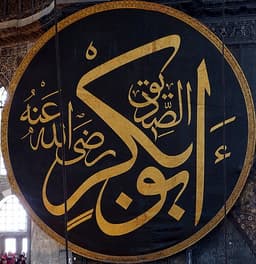
Abu Bakr
Emperor · Medieval
77.1Total
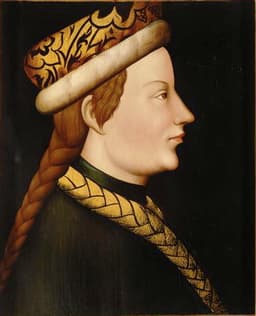
Albert III of Austria
Emperor · Medieval
53.4Total
Basic Information
Born
573
1349
Died
634
1395
Era
Medieval
Medieval
Nationality
Rashidun Caliphate
Austria
Occupation
Emperor
Emperor
Civilization
Middle Eastern
Western
Score Comparison
Military (10%)
74.7
50.0
Political (20%)
62.7
54.7
Influence (20%)
88.0
53.3
Legacy (20%)
80.0
44.2
Leadership (15%)
77.2
80.0
Strategy (15%)
66.3
38.6
TOTAL
77.1
53.4
Abu Bakr — Complete Timeline
632 AD
Ridda Wars (Apostasy Wars)War◆ Major
Abu Bakr launched military campaigns against Arabian tribes that renounced Islam or refused to pay zakat after Muhammad's death. The wars, led by generals like Khalid ibn al-Walid, reestablished Muslim control over Arabia and consolidated the caliphate.
Ridda WarsConsolidationRashidun
Impact: regional
Election as First CaliphPolitical Action
After the death of Muhammad, Abu Bakr was elected as the first caliph (successor) at Saqifah. His election unified the Muslim community, though it caused controversy among some supporters of Ali. He became the leader of the nascent Islamic state.
CaliphateSuccessionRashidun
Impact: global
633 AD
Compilation of the QuranCultural◆ Major
Abu Bakr ordered the compilation of the Quran into a single written manuscript after many memorizers died in the Ridda Wars. Zayd ibn Thabit collected verses from various sources, creating the first official codex, which later served as the basis for Uthman's standard text.
QuranCompilationRashidun
Impact: globalconstructive
634 AD
Death of Abu BakrPolitical Action◆ Major
Abu Bakr died after a brief illness, having designated Umar as his successor. His caliphate lasted only two years but established the foundations of the Islamic state, including the expansion beyond Arabia and the preservation of the Quran.
DeathSuccessionRashidun
Impact: global
Albert III of Austria — Complete Timeline
1379 AD
Founded the Albertinian Line of the HabsburgsPolitical Action◆ Major
Albert III, along with his brother Leopold III, divided the Habsburg territories in the Treaty of Neuberg. Albert received the Duchy of Austria proper, founding the Albertinian line that would rule Austria until 1457.
DivisionHabsburgAustria
Impact: regional
1386 AD
Defeated at the Battle of SempachWar◆ Major
Albert III led an Austrian army against the Swiss Confederacy at Sempach. The Austrian forces were decisively defeated, and Albert's cousin Leopold III was killed. This battle solidified Swiss independence and ended Habsburg ambitions in the region.
BattleSwiss ConfederacyDefeat
Impact: regionaltragic
Expert Analysis
Albert III of Austria vs Abu Bakr
# The Contrast of Caliph and Count: Abu Bakr and Albert III of Austria
In the year 632, as a grief-stricken community in Medina gathered to choose a successor to the Prophet Muhammad, a man of quiet resolve stepped forward to bind together a fractured faith. Half a continent away and seven centuries later, in 1379, a Habsburg duke signed a treaty that would split his family’s inheritance, setting the stage for centuries of division. Abu Bakr and Albert III of Austria never met, never knew of each other’s worlds, yet their stories offer a profound meditation on power, legacy, and the forces that shape a ruler’s destiny. One unified a civilization in two years; the other spent three decades consolidating a patchwork of lands. Why such different outcomes?
Origins
Abu Bakr was born in 573 into the Quraysh tribe of Mecca, a merchant society where honor and lineage mattered deeply, but where a new faith was about to upend everything. He was Muhammad’s closest companion, a man known not for swordplay but for unwavering loyalty and a gentle, persuasive manner. His world was one of revelation and upheaval, where the divine and the political were inseparable. In contrast, Albert III of Austria, born in 1349, entered a Europe still reeling from the Black Death, a continent of fractured kingdoms and rising city-states. He was a Habsburg, born into a dynasty that understood power as a matter of land, marriage, and inheritance. His world was one of treaties, alliances, and the slow, grinding work of state-building. Abu Bakr’s era demanded a prophet’s heir; Albert’s era demanded a bureaucrat.
Rise to Power
Abu Bakr’s rise was sudden and extraordinary. When Muhammad died in 632, the Muslim community faced a crisis of succession. At Saqifah, a gathering of Medina’s leaders, Abu Bakr was elected the first caliph—a political action that turned a religious movement into a state. His legitimacy rested on his closeness to the Prophet and the consensus of the community. Albert’s rise was far more conventional. He became Duke of Austria in 1365 upon his father’s death, inheriting a realm already shaped by Habsburg ambition. But his path was marked not by election but by division: in 1379, he and his brother Leopold III signed the Treaty of Neuberg, splitting Habsburg lands. Albert took the core Austrian territories, founding the Albertinian line. Where Abu Bakr seized unity, Albert accepted fragmentation.
Leadership & Governance
Abu Bakr’s leadership was defined by crisis and decisiveness. Upon his election, many Arabian tribes renounced Islam or refused to pay the zakat tax. His response was the Ridda Wars (632–633), a series of military campaigns that crushed rebellion and reimposed Muslim authority across the peninsula. His military score of 62.7 and strategy of 72.0 reflect a commander who acted with speed and clarity, though he was no Alexander. More telling is his political wisdom: a score of 72.2, but his greatest act was ordering the compilation of the Quran into a single manuscript after many memorizers died in battle. This preserved the faith itself. Albert’s governance was quieter but no less significant. He focused on consolidating Austrian lands, fostering trade, and strengthening ducal authority. Yet his military record was stark: at the Battle of Sempach in 1386, he led an army against the Swiss Confederacy and suffered a devastating defeat. His military score of 41.5 and strategy of 62.3 reflect a leader more comfortable with charters than charges.
Triumph & Tragedy
Abu Bakr’s triumph was the unification of Arabia—a feat that set the stage for the Islamic conquests that would soon sweep from Spain to Persia. His tragedy was his brevity: he died in 634, after a caliphate of only two years, having designated Umar as his successor. In that short span, he had done what many rulers could not in decades. Albert’s triumph was the establishment of the Albertinian line, which would endure for generations. His tragedy was Sempach, where Austrian ambitions in Switzerland were crushed, and where his own limitations as a military leader were laid bare. One died at the peak of his achievement; the other lived to see his greatest failure.
Character & Destiny
Abu Bakr was called “Al-Siddiq”—the Truthful—a man of deep faith and pragmatic action. His personality was that of a unifier: he consulted, he decided, and he acted. His leadership score of 81.3 reflects a figure who inspired loyalty through integrity. Albert, by contrast, was a consolidator, not a conqueror. His leadership score of 74.0 suggests a competent but cautious ruler, more concerned with preserving than expanding. Destiny favored Abu Bakr because his moment demanded a founder; Albert’s moment demanded a manager. One shaped history; the other was shaped by it.
Legacy
Abu Bakr’s legacy is immense. His influence score of 67.6 and legacy of 70.0 understate his role: he is remembered as the first caliph, the savior of Islamic unity, and the patron of the Quran’s compilation. In the Muslim world, his name is spoken with reverence. Albert’s legacy is more modest. His influence score of 71.0 and legacy of 58.4 reflect his importance within Habsburg history but obscurity beyond it. He is remembered by historians for the Treaty of Neuberg and the Albertinian line, but few outside Austria know his name.
Conclusion
Standing at the edge of their respective eras, Abu Bakr and Albert III remind us that greatness is not measured by time alone. One ruled for two years and changed the world; the other ruled for thirty and changed a dynasty. The difference lies not in their abilities but in the currents of history that carried them. Abu Bakr rode a wave of faith and revolution; Albert navigated the slow tides of medieval politics. In the end, both did what their age required—and that, perhaps, is the truest measure of a ruler.
Rankings
🥇
Abu BakrLeader
Mil: 74.7Pol: 62.7Inf: 88.0
77.1
🥈
Albert III of Austria
Mil: 50.0Pol: 54.7Inf: 53.3
53.4
+23.7 behind
How This Comparison Works
Algorithm
Each figure is scored on 6 dimensions (0—100 scale) based on structured historical data: Military (10%), Political (20%), Influence (20%), Legacy (20%), Leadership (15%), Strategy (15%). The weighted total produces the final ranking.
Data Sources
Scores are computed from structured sub-indicators in the database. Scale factors adjust for era (Ancient ×0.85, Modern ×1.0) and civilization size (Eastern ×1.05, Other ×0.80) to account for differences in population and military scale.
Maximum 3 Figures
Comparisons are limited to 2—3 figures to ensure readability and statistical meaningfulness.
Error Margins
±5 points per dimension — Sub-scores are derived from historical records with inherent uncertainty. Two figures within 5 points on a dimension should be considered roughly equivalent in that area.
Total Score Accuracy
±3 points overall — The weighted combination of 6 dimensions produces a total score with approximately ±3 points of uncertainty. Differences of less than 3 points are not statistically significant— the figures are effectively tied.
Known Limitations
- Historical records are incomplete and uneven across civilizations
- Figures from oral-tradition societies may be underrepresented
- Occupation labels can misclassify multi-role figures
- Scores measure capability and impact, not moral character
- Quantitative scoring is a comparison tool, not absolute truth
Capability Radar
Military (10%) — Battles & Warfare
Battles
65
20
Win Rate
70
25
Expansion
85
20
Political (20%) — Governance & Reform
Reform
85
40
Diplomacy
80
45
Economy
70
40
Influence (20%) — Cultural & Global Reach
Cultural
70
30
Global
85
20
Legacy (20%) — Historical Impact
Historical
85
35
Longevity
90
30
Leadership (15%) — Power & Stability
Tenure
60
60
Stability
75
35
Strategy (15%) — Tactics & Innovation
Strategy
75
25
Tactics
60
20
Reform
80
15
Similar Comparisons
Comments & Discussion
DukeDismantler6/16/2026
Call me crazy, but comparing a 7th-century caliph who crushed the Ridda wars in two years to a Habsburg count who spent 30 years bickering over Alpine valleys is like comparing a wildfire to a damp match. Abu Bakr forged a caliphate from nothing; Albert III signed the Treaty of Neuberg and split Habsburg lands like a bad divorce. One legacy echoes in a billion prayers, the other in obscure genealogies. No contest.
经典计量员6/16/2026
数据不会说谎:阿布·巴克尔用两年统一了阿拉伯半岛,奠定了伊斯兰帝国基础;阿尔布雷希特三世三十年的统治毫无战略突破,就是个零。连军队规模都不敢比——前者指挥数千骑兵横扫叛军,后者连几个阿尔卑斯山口都守不住。历史排名?差距就好像拿《古兰经》去和一本地方税务登记簿比。别把修修补补和开天辟地混为一谈。
ScribeOfSalvation6/16/2026
As a classics scholar, I'm struck less by achievements than by literary framing. Abu Bakr's story is scripture-adjacent: 'the second of two in the cave' (Quran 9:40), his caliphate a divinely sanctioned succession. Albert III walks onto history's stage with no such fanfare—just parchment and compromise. One is immortalized in hadith and epic; the other in territorial deeds and family feuds. That contrast isn't just historical; it's theological. You can't compare a prophet's confidant to a bureau
FracturedLegacy6/16/2026
我就是那个爱挑刺的史实杠精。说什么"统一与分裂"——阿布·巴克尔镇压里达战争时照样血流成河,把部落酋长们往死里逼;阿尔布雷希特三世签纽贝格条约是把蛋糕分给了弟弟,可那是哈布斯堡家族的权力制衡。前者的"统一"是刀尖上的强制,后者的"分裂"是家族理性。历史看客才歌颂铁拳,务实派知道有舍才有得。别用胜利者的滤镜看两千年。
ImperialShadow6/16/2026
Let's be brutally honest: Abu Bakr matters because he was the first caliph, the guy who kept Islam from imploding after Muhammad. Albert III? He's a footnote in Habsburg history, remembered only because he ruled Vienna and signed a treaty that a few doctoral students care about. One man defined a civilization; the other managed a duchy. The only reason this comparison exists is because someone needed a Western contrast. It's not balanced—it's absurd.